Risk Less. Grow More. – BusinessRiskTV.com for Smarter Enterprise
Tag: A Practical Approach To Supply-Chain Risk Management
A Practical Approach To Supply-Chain Risk Management With BusinessRiskTV
Supply-chain risk management is an essential process that ensures that organisations can identify, assess, and mitigate potential risks that can disrupt their supply chain. Supply chains are complex networks of suppliers, manufacturers, distributors, and customers. As a result, they are exposed to a wide range of risks such as natural disasters, geopolitical conflicts, financial instability, cyber-attacks, and product recalls.
The COVID-19 pandemic has demonstrated the critical importance of supply-chain risk management. The pandemic has disrupted supply chains globally, causing shortages of critical supplies and materials, delays in delivery, and increased costs. This has highlighted the need for organisations to adopt a practical approach to supply-chain risk management.
Here are some practical steps that organizations can take to manage supply-chain risk:
Identify and map your supply chain: The first step in supply-chain risk management is to identify and map your supply chain. This involves understanding your suppliers, their locations, and their dependencies. By mapping your supply chain, you can identify potential risks and develop strategies to mitigate them.
Assess and prioritise risks: Once you have identified potential risks, the next step is to assess and prioritise them based on their likelihood and impact. This involves evaluating the probability of a risk occurring and its potential impact on your organization. This will help you prioritise risks and allocate resources accordingly.
Develop risk mitigation strategies: Based on your risk assessment, you should develop risk mitigation strategies. These strategies should be tailored to the specific risks identified and should aim to reduce the likelihood and impact of the risk. For example, you might diversify your supplier base to reduce the impact of a supplier disruption or implement cybersecurity measures to mitigate the risk of a cyber-attack.
Monitor and review risks: Supply-chain risks are dynamic and can change over time. Therefore, it is essential to monitor and review risks regularly to ensure that your risk mitigation strategies are effective. This involves tracking the performance of your suppliers, monitoring market trends, and reviewing your risk mitigation plans.
Build resilience into your supply chain: Building resilience into your supply chain involves developing strategies that enable your organisation to adapt to unexpected disruptions. This includes having backup suppliers, stockpiling critical supplies, and developing contingency plans.
Managing supply-chain risk is critical for organisations that want to ensure business continuity and resilience. By taking a practical approach to supply-chain risk management, organisations can identify potential risks, develop risk mitigation strategies, and build resilience into their supply chains. By doing so, they can reduce the impact of supply-chain disruptions and ensure that they can continue to meet the needs of their customers.
The world is weeks away from a permanent yield loss in global agriculture. This analysis breaks down why the 2026 fertilizer shock is a “weapon of mass destruction” for your bottom line and provides 12 actionable steps to protect your business from the resulting global recession.
The 2026 fertilizer shortage is fundamentally a race against a biological calendar that no government intervention can bypass. While traditional media focuses on oil, the closure of the Strait of Hormuz on February 28, 2026, has trapped the molecules required to produce half the world’s food.
97% Collapse in Transit: Seaborne fertilizer trade through Hormuz has effectively ceased, cutting off 43% of global urea and 44% of the world’s sulfur.
No Strategic Reserves:Unlike oil, there is no global strategic fertilizer reserve. Once the “planting window” closes in the next six weeks, the yield loss for the year is permanent.
The “Biophysical Cliff”: In the Global South, where fertilizer application is already minimal, a 15% reduction in nitrogen doesn’t just lower yields—it causes production to collapse, as seen in Sri Lanka’s 40% rice harvest failure.
“The actual weapon of mass destruction in this conflict is not a missile. It is a calendar. The food is not decided by diplomats in six months; it is decided by soil chemistry in the next six weeks.” — BusinessRiskTV Global Intelligence
Can businesses in the Western world survive a global famine-driven recession?
A global famine-driven recession will impact Western businesses through a “bullwhip effect” of surging input costs and collapsing consumer discretionary spending. Even if food remains available in wealthy nations, the inflationary shock will be unprecedented.
AdBlue and Logistics Paralysis:Australia and Europe are facing a “no urea, no freight” scenario. Without urea-based AdBlue, heavy trucking fleets stall, leading to empty shelves in cities like Sydney and London.
Surging Input Costs:US corn farmers are already seeing ammonia prices hit $900 per ton. These costs will manifest as a massive spike in grocery prices by Q4 2026.
Macroeconomic Trap: With core PCE trapped near 3%, the Fed has no room to cut rates to stimulate a slowing economy, creating a “Stagflation 2.0” environment where food prices drive the CPI while growth flatlines.
What are the 12 business risk management steps to take today?
Audit Sub-Tier Dependencies: Identify where urea, ammonia, or sulfur sit in your deep supply chain (e.g., packaging, chemical processing).
Secure Logistics Fuel Additives: For firms with private fleets, stockpile AdBlue/DEF immediately to avoid grounding transport.
Renegotiate Fixed-Price Contracts: Shift to variable pricing or include “Force Majeure” clauses that account for commodity-driven hyperinflation.
Implement “Greed-flation” Monitoring: Track competitor pricing daily to ensure your margins aren’t eroded before you can react.
Diversify Sourcing to North America: Prioritise suppliers using Canadian or US-based nitrogen plants that are less dependent on the Gulf.
Hedge Food-Linked Commodities: Use futures markets to lock in prices for grains or livestock feed if your business is in the food/beverage sector.
Review Debt Covenants: Ensure rising operational costs won’t trigger technical defaults as interest rates remain “higher for longer.”
Scenario Plan for Civil Unrest: If your business has international footprints in the Global South, prepare for the “Sri Lanka Effect”—government instability driven by food shortages.
Optimise Product Portfolio: Shift focus to high-margin “necessity” goods as consumer discretionary income collapses.
Enhance Operational Efficiency: Use the next six weeks to cut non-essential overhead to build a cash moat for the Q4 price surge.
As a key business decision-maker, joining BusinessRiskTV is the most strategic move you can make in 2026 for three critical reasons:
Immediate ROI on Risk Intelligence: Membership provides actionable alerts on emerging threats—like the current fertilizer chokepoint—weeks before they hit mainstream media, saving members an average of 15% in avoidable procurement costs.
Global Expert Network: You gain direct access to a worldwide network of risk professionals who provide in-country intelligence and “no-fluff” strategies that turn volatility into a competitive advantage.
Low-Cost, High-Value Resilience: For a fraction of the cost of traditional consultancy, members receive real-time risk profile assessments and strategic updates designed to prevent costly operational mistakes during global crises.
Get help to protect and grow your business with BusinessRiskTV
While you’re watching oil prices, the molecules that feed 50% of the planet are physically trapped behind a war zone—and the window to save the 2026 harvest closes in exactly 42 days. This isn’t a “market correction.” It’s a biophysical cliff. 📉
We are currently witnessing the total collapse of the global fertilizer supply chain. With the Strait of Hormuz closed, 97% of seaborne fertilizer transit has evaporated. There is no Plan B. There is no strategic reserve.
The yield response to nitrogen is quadratic, not linear. In the Global South, production won’t just “dip”—it will collapse. We’ve seen this movie before in Sri Lanka, and now it’s playing in 30 countries simultaneously. For Western businesses, this means:
Logistics Failure: No urea = No AdBlue = No trucks moving groceries.
Inflationary Surge: Food prices will hit your table by Christmas with a force the Fed cannot stop.
The “Calendar Trap”: The Corn Belt needs nitrogen by mid-April. If they miss it, no amount of money can “fix” the yield loss in August.
Most analysts are talking about “strike counts” and “equities.” They are missing the soil chemistry. If you don’t understand how a sulfur shortage in the Gulf impacts a manufacturing plant in Ohio or a supermarket in Sydney, you are flying blind into the greatest recessionary shock of the decade.
Two-Speed Europe Business Guide: Risks, Opportunities & 6 Strategic Steps : The EU’s two-speed plan reshapes business. Our analysis covers the E6 group’s impact, supply chain shifts, and 6 essential risk management steps for leaders.
The E6 Core and the Coming EU Cracks: A Contrarian Risk Analysis for Business
The Inconvenient Truth: A Multi-Speed EU Reflects a Failing Political System
The proposal for a “two-speed Europe” championed by German Finance Minister Lars Klingbeil is not a clever, flexible solution for the European Union. It is a desperate, last-ditch political manoeuvre that starkly reveals the bloc’s fundamental dysfunction. The core thesis is this: The EU has become so politically paralysed that it can no longer function as a cohesive unit, forcing its largest and wealthiest members to abandon the pretence of consensus. The formation of the “E6” (Germany, France, Italy, Spain, Poland, Netherlands) is not a temporary working group; it is the blueprint for an elite, high-speed political and economic directorate designed to override the cumbersome machinery of the full 27-member union. This move does not save the EU; it initiates its reconfiguration into a core-periphery model that will breed permanent resentment and could catalyse the bloc’s gradual disintegration, particularly as political winds shift within its own core.
While defenders claim this is a “pragmatic” solution to EU decision-making inertia, the reality is that it formalises failure. It accepts that the core EU treaty principle of achieving “ever closer union” among equals is dead, replaced by a system where a few powerful states simply move forward and impose their agenda. This is not a benign technicality. It creates a de facto first- and second-class membership, where the “peripheral” nations are systematically disadvantaged, their policy autonomy undermined, and their ability to shape the European project severely diminished.
The “E6” Core Group: A Cartel That Will Ignore and Override the Rest
The risk that the E6 will act as an internal cartel, sidelining the wishes of other member states, is not a hypothetical fear—it is the explicit purpose of the formation.
Circumventing Vetoes and Imposing Policy: The primary motivation for the E6 is to bypass the EU’s unanimity requirement on sensitive matters like foreign policy, taxation, and security. When Luxembourg’s Prime Minister argued for a two-speed model, his logic was chillingly clear: “When a country says ‘I don’t want to,’ I can say: ‘Well, too bad. Don’t block me. Let me get on with it with others'”. This sentiment is the E6’s operating principle.
Existing Precedents of Core-Periphery Exploitation: This is not a new dynamic, but the hardening of an existing, exploitative one. An academic study examining the post-2009 crisis period shows how EU austerity policies, dictated by core institutions, devastated peripheral economies like Greece, locking them into a dependent relationship and widening economic and social gaps. The E6 formalises this power imbalance, allowing the core to set fiscal, defence, and industrial policies that serve their interests first.
The Single Market as a Tool of Coercion: Proponents argue that “outsider” nations will remain linked via the single market. In practice, this means they will be forced to accept regulations and standards set by the E6 to maintain market access, but will have no substantive vote in creating them. They become rule-takers, not rule-makers. The EU’s internal market, once a tool for convergence, risks becoming a mechanism for enforcing the core’s will on the periphery.
From Multi-Speed to Total Breakdown: The Domino Scenario of Collapse
The greatest existential threat to the EU is not this proposal itself, but the long-term political chain reaction it sets off.
Accelerating Divergence and Breeding Nationalism: A formalised two-tier system will halt economic and social convergence. One analyst warns it could increase economic divergence, leading to greater migration pressures and ultimately calls to limit the EU’s foundational principle of free movement. This fuels the very nationalist, anti-EU sentiments the bloc fears. Countries left in the “slow lane” will see their citizens grow disillusioned with a union that offers them diminished prospects and influence.
Political Shockwaves from Within the Core: The E6 is not a monolith. Poland’s inclusion is particularly volatile, given its government’s history of fierce clashes with Brussels over the rule of law. A future populist government in Italy, Spain, or even France could look at the E6’s commitments and decide to follow a British path. The exit of a single major E6 member would not just weaken the core; it would shatter the entire political and economic logic of the two-speed model, potentially triggering a rush for the exits.
The “Grexit” Precedent on a Grand Scale: The Greek debt crisis proved that the EU core was willing to entertain the expulsion of a member to preserve the eurozone. A two-speed Europe makes this concept operational. Weaker economies that fail to keep pace could face intense pressure to leave certain policy areas or be politically marginalised, creating a de facto “flexible disintegration”. Once the principle of an “inner circle” is accepted, the unthinkable—managing a member’s partial or full exit—becomes a policy tool.
Six Controversial Risk Management Steps for Business Leaders
Given this bleak prognosis, business leaders must abandon hope for EU stability and adopt a ruthless, realpolitik strategy.
1. Abandon “EU-Wide” Strategy; Adopt a “Core-First, Periphery-Contingent” Model
Action: Immediately re-allocate capital and strategic focus to the E6 nations. Treat the rest of the EU as a secondary, higher-risk market. Develop separate investment theses: one for the integrated, subsidy-rich core, and another for the volatile periphery.
Rationale: Future EU funding, defence contracts, and regulatory advantages will be heavily concentrated within the core. The periphery will suffer from capital flight and policy neglect.
2. Prepare for the End of the Single Market as We Know It
Action: Conduct stress tests on your supply chains and logistics for scenarios where free movement of goods, services, or people is restricted between the core and periphery, or where the core imposes new digital or regulatory borders.
Rationale: The political logic of a two-tier Europe inherently leads to regulatory divergence and potential barriers. Businesses cannot assume the single market’s integrity will survive this political fracturing.
3. Bet on the Core’s “Fortress” Economy—Especially in Defense and Tech
Action: Aggressively pivot business development towards sectors explicitly prioritised by the E6: defence manufacturing, dual-use technologies, critical raw material processing, and fintech platforms aligned with a deeper capital markets union.
Rationale: The E6’s agenda is to build strategic autonomy. This means massive, protected subsidies and procurement contracts for core-based champions, explicitly turning “defence into an engine for growth”.
4. Establish Political Risk Units Focused on Nationalist Movements in E6 Countries
Action: Move beyond tracking Brussels policy. Invest in intelligence-gathering on rising anti-EU, populist parties in Italy, France, and Poland. Model the business impact of any one of them winning power and renouncing E6 commitments.
Rationale: The stability of the entire new structure rests on the continued political alignment of its core members. This is its greatest vulnerability. A political shock in one E6 nation could unravel everything overnight.
5. Develop “Nation-State” Lobbying Capabilities to Bypass Brussels
Action: Drastically reduce reliance on pan-EU trade associations. Build direct, powerful lobbying operations within the national parliaments and ministries of Berlin, Paris, and Rome.
Rationale: Real power is shifting from EU institutions back to the capitals of the core nations. The E6 will decide policy in closed-door meetings, not in the European Parliament.
6. Scenario Plan for the “Domino Exit” and EU Liquidation
Rationale: While not the most likely scenario, the two-speed model makes a catastrophic failure sequence plausible. Leaders who dismiss this possibility are ignoring the historical precedent of how political unions can unravel with stunning speed when their central bargain breaks down.
Conclusion: Navigating the Unravelling
The two-speed Europe is a sign of profound weakness, not strength. It is an admission that the grand political project of unification has stalled and is now being replaced by a mercantilist club dominated by its largest economies. For businesses, the era of a predictable, rules-based EU is ending. The new era will be defined by geopolitical manoeuvring, privileged access for insiders, and heightened systemic risk. The prudent leader will not plan for a more integrated Europe, but for a fragmented one, where survival depends on picking the right side in a quiet internal conflict that has already begun.
This risk analysis decodes the Ukraine conflict through the lens of the Monroe Doctrine, arguing Russia views NATO expansion and “defensive” missiles in Eastern Europe as an existential threat akin to the Cuban Missile Crisis. We assess the tangible pathways for escalation to a wider war and the critical need for strategic de-escalation to manage this global business risk.
Business Risk Management Analysis: The Ukrainian Conflict and Escalation to a Wider War
This analysis assesses the high-level strategic risks in the Ukraine conflict, framing them through historical parallels, core security doctrines, and the potential for catastrophic escalation. The central thesis is that the deployment of advanced Western missile systems near Russia’s borders is perceived by Moscow as a direct, existential threat akin to the 1962 Cuban Missile Crisis, creating a volatile environment where miscalculation could lead to a third world war.
1. The Core Threat: “Decapitating” Missiles and the Russian Perception
From a risk management perspective, the primary threat driver is not the conventional war in Ukraine itself, but the strategic weapons systems being deployed around Russia’s periphery.
The Nature of the Threat: Systems like the Aegis Ashore sites in Poland and Romania, while officially labelled as defencive “missile shields,” are perceived by Russia as possessing offensive potential. The launchers used for SM-3 interceptor missiles are functionally similar to those used for land-attack cruise missiles. This ambiguity allows Russia to frame them as a “decapitating” strike threat—a first-strike weapon capable of neutralising Russia’s nuclear command-and-control and retaliatory capabilities, thereby crippling its ultimate deterrent.
The Historical Parallel: The Cuban Missile Crisis: This is not a superficial comparison in Moscow’s view. In 1962, the United States considered the deployment of Soviet nuclear missiles in Cuba—a small, neighbouring country—an intolerable, existential threat and was prepared to go to war to have them removed. Russia applies the same logic in reverse. It views NATO’s eastward expansion and the placement of advanced missile systems in its former sphere of influence as a modern-day equivalent of the Cuban Missile Crisis. The potential future deployment of such systems to a country like Venezuela would only reinforce this narrative and mirror the 1962 scenario exactly.
2. The Doctrinal Framework: The “Monroe Principle” Applied to Ukraine
The Original Doctrine: The U.S. Monroe Doctrine (1823) declared the Western Hemisphere its sphere of influence, deeming it off-limits to further European colonisation or political interference.
The Russian Interpretation: Russia has effectively declared a similar doctrine for its “near abroad,” particularly Ukraine. From the Kremlin’s perspective, a neutral or buffer Ukraine is a fundamental security requirement. A Ukraine integrated into NATO—a military alliance historically opposed to Russia—is as unacceptable to Moscow as a Mexico or Canada in a military alliance with China or Russia would be to Washington. This principle explains the intensity of Russia’s response; it is fighting what it sees as a defensive war to prevent a hostile power from consolidating on its doorstep.
3. The Ultimate Risk: Escalation to a Third World War
The convergence of the missile threat and the Monroe-style doctrine creates a high-probability, high-impact risk scenario for a wider conflict. The pathways to escalation are multiple:
Direct Engagement: An accidental or intentional strike on NATO territory (e.g., in Poland or Romania) by a Russian missile, or vice-versa, could trigger NATO’s Article 5 collective defense clause, leading directly to a Russia-NATO war.
Hybrid Warfare Blowback: Acts of sabotage attributed to Russia (e.g., against undersea infrastructure) or provocative actions like the repeated violations of NATO airspace could spiral out of control. A single miscalculation in this “gray zone” could be misread as an act of war, demanding a conventional military response.
Inadvertent Escalation: The fog of war creates immense risk. An errant missile, the misidentification of an aircraft, or a miscommunication during a high-alert period could trigger a cycle of retaliation that neither side initially intended.
4. Analysis of the “Forever War” Driver Claim
The assertion that intelligence services like MI6 (UK), BND (Germany), and DGSE (France) are deliberately driving a “forever war” is a significant claim. A risk analysis must distinguish between stated policy and verifiable evidence.
The Official Policy Stance: The publicly stated goal of the UK, France, and Germany is to support Ukraine’s sovereignty and prevent a Russian victory that would undermine European security and the international order. Their actions—providing weapons, intelligence, and training—are consistent with this stated goal of enabling Ukraine to defend itself.
The “Forever War” Narrative: The claim that these agencies are actively sabotaging peace to prolong the conflict is primarily propagated by the Russian government and commentators who align with that viewpoint. While individual politicians or analysts in the West may argue that prolonged conflict serves to weaken Russia strategically, there is a lack of publicly available, verified intelligence or official documentation proving a coordinated policy by MI6, BND, and the DGSE to deliberately instigate a “forever war.” From a risk management standpoint, this narrative remains an unverified, high-severity contingent liability rather than a confirmed fact upon which to base a strategic assessment. The driving objective of Western powers appears to be achieving a favorable outcome for Ukraine, not perpetuating a war for its own sake, though the effect of their support is indeed a prolonged conflict.
Conclusion and Risk Mitigation
The highest-priority risk is the potential for direct conflict between Russia and NATO. To defuse the situation, risk mitigation must address the core perceived threats:
Strategic Arms Control: A renewed and urgent dialogue on strategic stability and missile defense is critical. Clarifying the capabilities and intent of systems in Eastern Europe, potentially with verification measures, could reduce the “decapitation strike” fear that drives Russian escalation.
Addressing the Sphere of Influence: While morally problematic, any durable settlement will likely need to implicitly acknowledge Russia’s Monroe-style security concerns regarding Ukraine’s alliance status, finding a formula for Ukrainian security that does not involve NATO membership.
De-escalation Channels: Maintaining and strengthening direct military-to-military communication lines between Russia and NATO is essential to manage incidents and prevent inadvertent escalation.
Failure to manage these core risks creates a business environment for the world where the threat of a great power conflict remains unacceptably high.
Here are 6 actionable risk management steps business leaders should take today to protect their operations from the geopolitical risks outlined in the analysis.
Action: Move beyond ad-hoc news reading. Establish a formal process, assigning a team or using a dedicated service to monitor geopolitical intelligence with a specific focus on:
NATO-Russia rhetoric and military posturing.
Incidents in border regions of Poland, Romania, and the Baltic states.
Developments in potential flashpoints like Kaliningrad or the Black Sea.
Rationale: Early warning of escalating tensions provides crucial lead time to activate contingency plans before markets or supply chains are paralysed.
2. Stress-Test Supply Chains for “Choke Point” Failure
Action: Identify single points of failure, especially those dependent on routes or regions exposed to the conflict zone (e.g., air corridors over Eastern Europe, key ports on the Black Sea, rail lines through Poland). Model scenarios involving the closure of these channels and pre-qualify alternative suppliers and logistics routes.
Rationale: A direct NATO-Russia incident would immediately disrupt transport and logistics across Eastern Europe, severing critical arteries for business.
3. Develop a Tiered “Escalation” Response Plan
Action: Create a dynamic response plan with clear triggers for different levels of escalation, not just a binary “crisis/no-crisis” switch. For example:
Level 1 (Heightened Tension): Review and communicate travel security protocols.
Level 2 (Direct Incident): Activate remote work mandates for staff in affected regions, freeze new investments.
Level 3 (Open Conflict): Execute evacuation plans, implement full business continuity protocols.
Rationale: A phased approach prevents panic and ensures a measured, appropriate response as a situation deteriorates.
4. Fortify Cybersecurity Posture Immediately
Action: Assume that a wider geopolitical conflict will involve significant cyber warfare. Mandate multi-factor authentication across all systems, ensure backups are air-gapped and immutable, and conduct fresh table-top exercises for scenarios like ransomware attacks on critical infrastructure or wiper malware targeting corporate networks.
Rationale: Businesses are considered legitimate targets in state-level cyber conflicts. Proactive defence is no longer optional.
5. Model Financial Shock Scenarios
Action: Work with finance to model the impact of a sudden energy price spike, a freeze in capital markets, rapid currency devaluation, or the collapse of trade with a broader set of countries. Stress-test liquidity and credit lines under these conditions.
Rationale: The financial contagion from a great-power conflict would be immediate and severe, potentially locking companies out of vital capital.
6. Conduct a Critical Talent and Operations Review
Action: Audit your workforce and key operations to identify critical dependencies on personnel, facilities, or partners located in NATO member states bordering Russia and Ukraine. Develop plans for remote work, relocation, or knowledge transfer to mitigate the risk of these assets becoming inaccessible or unsafe.
Rationale: Protecting human capital is the first priority. Furthermore, the loss of a key team or facility in a frontline state could cripple business units.
Get help to protect and grow your business faster with less uncertainty impacting on your business objectives
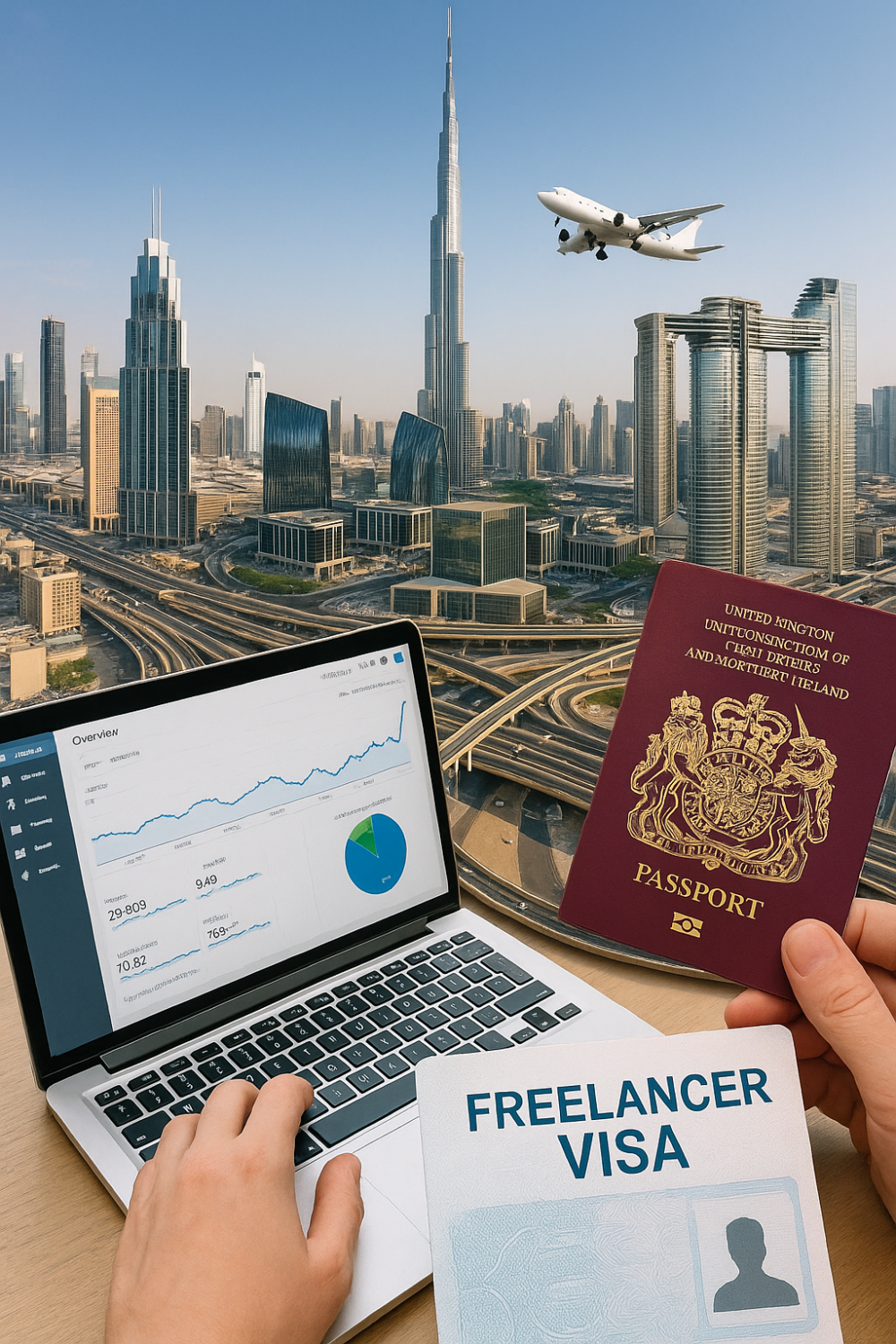
Dubai Freelancer Visa for the purpose of operating an online business
Escape the Ordinary, Embrace Dubai: Your Blueprint for UK Residents to Launch an Online Empire and Secure Residency Through the Freelancer Visa!
Feeling the squeeze of the UK economy? Tired of the same old routine? What if I told you there’s a vibrant, opportunity-rich landscape beckoning, where you can not only build a thriving online business but also secure residency? That’s the allure of Dubai’s Freelancer Visa, a golden ticket for ambitious UK residents looking to redefine their professional and personal lives in 2025! Imagine waking up to sunshine, operating your global online venture from a dynamic hub, and benefiting from a pro-business environment. Sounds enticing, right?
For savvy UK entrepreneurs and freelancers, this isn’t just a pipe dream; it’s an increasingly viable pathway. Dubai has strategically positioned itself as a global nexus for innovation and commerce, actively attracting international talent and investment.One of the key instruments in this strategy is its dedicated Freelancer Visa programme, specifically designed to empower independent professionals and online business owners. This isn’t about escaping your responsibilities; it’s about strategically positioning yourself for greater success and a higher quality of life. Think about it: a burgeoning digital economy, attractive tax policies within designated free zones, and a cosmopolitan lifestyle – all within reach.
This comprehensive guide will navigate you through the intricacies of leveraging Dubai’s Freelancer Visa to establish and scale your online business while securing residency. We’ll delve into the “why,” the “what,” the “where,” the “when,” and the “how” of this exciting opportunity. Get ready to unlock a world of possibilities and take control of your future!
Why Dubai’s Freelancer Visa is a Smart Move for UK Residents in 2025
Several compelling factors make Dubai’s Freelancer Visa an increasingly attractive option for UK residents looking to establish or grow their online businesses and gain residency:
1. Thriving Digital Economy and Business-Friendly Environment:Dubai has made significant strides in fostering a robust digital infrastructure and a pro-business ecosystem.The government actively supports innovation, technology adoption, and entrepreneurship. This creates a fertile ground for online businesses to flourish, offering access to a dynamic market and a global network of professionals. The sheer energy and ambition palpable in Dubai can be incredibly motivating for entrepreneurs seeking growth.
2. Strategic Location and Global Connectivity:Situated at the crossroads of East and West, Dubai offers unparalleled access to global markets.Its world-class transportation infrastructure, including a major international airport and efficient logistics networks, facilitates seamless international business operations. For online businesses with a global reach, this strategic positioning can be a significant advantage, allowing for easier interaction with clients and partners across different time zones.
3. Attractive Tax Policies within Free Zones: One of the most significant draws for entrepreneurs is the favourable tax environment within Dubai’s designated free zones.Many of these zones offer 0% corporate and personal income tax, which can substantially boost profitability for your online business. This financial advantage allows for greater reinvestment and faster growth compared to higher-tax jurisdictions. Imagine the impact of zero income tax on your bottom line!
4. High Quality of Life and Cosmopolitan Environment:Dubai offers a high standard of living with modern infrastructure, world-class amenities, and a diverse and vibrant social scene. The city boasts excellent healthcare, education, and recreational facilities. For UK residents seeking a change of pace and a more cosmopolitan environment, Dubai provides a compelling lifestyle proposition. Plus, the year-round sunshine is a definite bonus!
5. Opportunity for Residency and Long-Term Stability:Unlike short-term business visas, the Freelancer Visa in Dubai offers a pathway to long-term residency, providing stability and a sense of belonging. This can be particularly appealing for individuals looking to build a long-term future for themselves and their families in a dynamic and growing international hub. Securing residency opens up numerous personal and professional opportunities.
6. Access to a Diverse Talent Pool: Dubai attracts a highly skilled and diverse international talent pool. This can be a significant advantage for online businesses looking to scale and build a strong team. The multicultural environment fosters innovation and provides access to a wide range of expertise.
7. Government Support for SMEs and Startups: The Dubai government actively supports small and medium-sized enterprises (SMEs) and startups through various initiatives, funding programmes, and incubation centres.This supportive ecosystem can provide valuable resources and networking opportunities for newly established online businesses.
Eligible Online Businesses for the Dubai Freelancer Visa
The Dubai Freelancer Visa is designed to attract a wide range of skilled professionals operating online. While specific regulations may evolve, here are some common categories of online businesses and freelance professions generally eligible for this visa:
Illustration and Animation (Online Commissions/Sales): Creating and selling digital artwork and animations.
Important Note: This list is not exhaustive, and the specific eligibility criteria can be subject to change based on the free zone authority and the prevailing regulations. It is crucial to consult with the relevant free zone authority or a professional consultancy to confirm the eligibility of your specific online business activity.
Navigating Dubai’s Free Business Zones: Your Launchpad for Success
Dubai boasts several designated free zones, each with its own specific focus and regulations. These zones offer attractive incentives, including tax exemptions, full foreign ownership, and streamlined business setup processes. Here are some of the prominent free zones that are particularly relevant for online businesses and freelancers:
1. Dubai Multi Commodities Centre (DMCC):Located in the Jumeirah Lakes Towers (JLT) area, DMCC is one of Dubai’s largest and most diverse free zones. It’s home to a wide range of businesses, including those in technology, trading, and professional services. DMCC offers a dedicated “Freelancer Package” designed to provide cost-effective business setup and licensing options for individual professionals. Their online portal and efficient processes make it a popular choice.
2. Dubai Internet City (DIC):As the name suggests, DIC is a hub for technology and internet-based companies.It hosts a large ecosystem of IT, software, e-commerce, and digital media businesses. While traditionally focused on larger companies, DIC also offers options for freelancers and smaller online ventures within its broader framework. Being part of this vibrant tech community can offer significant networking and collaboration opportunities.
3. Dubai Media City (DMC):DMC is the region’s leading hub for media and creative industries.It’s home to numerous media companies, advertising agencies, production houses, and freelance professionals in content creation, journalism, and digital media. If your online business aligns with these sectors, DMC can provide a supportive and industry-focused environment.
4. Dubai Knowledge Park (DKP):DKP is dedicated to human resource management, training, and professional development. While it might seem less directly relevant to all online businesses, it can be a good option for online educators, trainers, and e-learning content creators.
5. Meydan Free Zone: Located near the Meydan Racecourse, this free zone offers a cost-effective and relatively straightforward business setup process, including options suitable for freelancers and online businesses. It’s known for its competitive pricing and efficient services.
6. IFZA (International Free Zone Authority): IFZA is another popular choice offering competitive setup costs and a wide range of business activities suitable for online operations.They have streamlined processes and cater to international entrepreneurs.
Key Considerations When Choosing a Free Zone:
Business Activity Alignment: Ensure the free zone allows your specific online business activity under its licensing regulations.
Cost of Setup and Renewal: Compare the fees associated with registration, licensing, and annual renewal across different free zones.
Facilities and Support Services: Consider the availability of co-working spaces, business centres, and other support services you might need.
Networking Opportunities:Some free zones have stronger industry-specific communities, which can be beneficial for networking and collaboration.
Visa and Immigration Procedures: Understand the specific visa and immigration processes associated with each free zone.
It is highly recommended to research the specific offerings and regulations of each free zone thoroughly and potentially consult with business setup specialists to determine the best fit for your individual needs and online business model.
Timing Your Application: When to Make the Move
Deciding when to apply for the Dubai Freelancer Visa is a crucial aspect of your planning. Several factors should influence your timeline:
1. Business Readiness: Ideally, you should have a clear business plan, a defined online service or product offering, and ideally, some existing online presence or client base. While you can start the process with a strong concept, being prepared will streamline your application and ensure you can hit the ground running in Dubai.
2. Financial Preparedness:Setting up a business and relocating involves costs. Ensure you have sufficient funds to cover visa application fees, business registration costs, initial living expenses in Dubai, and working capital for your online venture. Research the specific costs associated with your chosen free zone and desired lifestyle.
3. Visa Processing Time: The processing time for the Freelancer Visa can vary depending on the free zone and the volume of applications. It’s prudent to factor in potential delays and allow ample time before your intended relocation date. Generally, the process can take anywhere from a few weeks to a couple of months.
4. Personal Circumstances: Consider your personal commitments, such as existing employment contracts, family arrangements, and any other obligations that might impact your ability to relocate. Plan your move in a way that minimizes disruption to your life.
Can You Apply from the UK or on a Visitor Visa in Dubai?
Applying from the UK: Yes, it is generally possible to initiate the application process for a Dubai Freelancer Visa while you are still in the UK. Most free zones have online portals and allow you to complete the initial documentation and application remotely. However, you will likely need to travel to Dubai at some point to finalise the process, undergo medical examinations, and receive your residency visa.
Applying on a Visitor Visa in Dubai: Yes, it is also possible to apply for a Freelancer Visa while you are in Dubai on a visitor visa. This is a common route for individuals who want to explore the environment and meet with free zone authorities before committing. However, it’s crucial to ensure that your visitor visa allows for a change of status and that you comply with all immigration regulations. You will typically need to undergo the application process through the chosen free zone authority while in Dubai. Be aware of the validity period of your visitor visa and ensure you have enough time to complete the Freelancer Visa process. Overstaying your visitor visa can lead to penalties.
Recommendation: Regardless of whether you apply from the UK or on a visitor visa, it is highly recommended to contact the specific free zone authority you are interested in or consult with a business setup agency to get the most up-to-date information on their application procedures and requirements for non-resident applicants.
Who is Eligible to Apply for the Freelancer Visa?
While specific eligibility criteria can vary slightly between different free zones, the general requirements for a Dubai Freelancer Visa typically include:
Professional Expertise: You must possess demonstrable skills and experience in a profession or business activity that is eligible under the free zone’s regulations (as discussed earlier). You may need to provide a portfolio, client testimonials, or other evidence of your expertise.
Educational Qualifications: Some free zones may require a minimum level of educational qualification relevant to your field. Be prepared to provide copies of your degrees or certifications.
Financial Capacity: You will need to demonstrate that you have sufficient financial resources to support yourself during the initial period of your residency and to fund your business operations. This might involve providing bank statements or a business plan with financial projections.
Clean Criminal Record: You will typically need to provide a police clearance certificate from your home country (the UK in this case) to demonstrate that you have a clean criminal record.
Medical Fitness: You will be required to undergo a medical examination in Dubai to ensure you are medically fit to reside and work in the UAE.
Passport Validity: Your passport must have a sufficient validity period (usually at least six months) at the time of application.
Business License Application: You will need to apply for a freelancer or sole establishment business license within your chosen free zone, outlining your specific business activities.
Visa Application Forms and Supporting Documents: You will need to complete the required application forms and provide various supporting documents, such as passport copies, photographs, and other documents as requested by the free zone authority.
Important Note: The specific requirements and documentation can vary. It is essential to consult the official website of your chosen free zone or contact them directly for the most accurate and up-to-date eligibility criteria. They can provide a detailed list of required documents and guide you through the process.
Your Dubai Opportunity Awaits in 2025!
The Dubai Freelancer Visa presents a compelling opportunity for UK residents to not only establish and grow their online businesses in a dynamic and supportive environment but also to secure long-term residency in a thriving global hub. The combination of a business-friendly ecosystem, attractive tax policies within free zones, a high quality of life, and the potential for global connectivity makes Dubai an increasingly attractive destination for ambitious entrepreneurs and freelancers.
While the process involves careful planning, research, and adherence to specific regulations, the rewards can be significant. Imagine operating your online empire from a sun-drenched location, benefiting from a zero-tax environment, and immersing yourself in a vibrant international culture. This isn’t just about a visa; it’s about unlocking a new chapter of opportunity and growth for your business and your life.
So, if you’re a UK resident with a thriving online business or a compelling freelance offering, 2025 could be your year to take the leap. Explore the possibilities, research the free zones, prepare your application, and embrace the exciting journey of building your online empire and securing your future in Dubai! The time to escape the ordinary and embrace extraordinary opportunities is now!
Mitigating Stagflation Risk: A Guide for UK Businesses | BusinessRiskTV Business Risk Management Club
Stagflation: The UK’s 2025 Nightmare Scenario?
The UK economy is teetering on the brink. Inflation is ticking upwards, growth has stalled, and the spectre of stagflation – that dreaded combination of stagnant growth and persistent inflation – looms large. This isn’t just an academic debate; it’s a very real threat to businesses across the country. The Bank of England, with its cautious pronouncements and growing concerns, has painted a bleak picture for 2025.
What does this mean for UK business leaders? How can they navigate these choppy waters and ensure their companies not only survive but thrive? This article will explore the potential for stagflation in the UK, examine its potential impact on businesses, and offer nine actionable strategies to help leaders mitigate the risks and position their companies for success.
Understanding Stagflation: A Toxic Cocktail
Stagflation is an economic anomaly. It defies conventional economic wisdom, where typically, inflation and economic growth move in opposite directions. When growth slows, inflation usually eases as demand for goods and services weakens. But stagflation throws this rulebook out the window.
The UK’s Path to Potential Stagflation
Several factors are converging to create this perfect storm for stagflation in the UK.
Inflationary Pressures: Rising energy costs, supply chain disruptions, and the lingering impact of the pandemic continue to fuel inflation.The recent increase in Employers’ National Insurance Contributions (NICs) has added another layer of pressure, forcing businesses to either cut costs or increase prices.This cost-push inflation can be particularly stubborn, as businesses pass on these increased costs to consumers.
Waning Growth: The Bank of England has already signaled that the UK economy has stopped growing. With rising costs squeezing businesses and consumer confidence shaken, the risk of a recession is significant.
The Squeeze on Businesses: Businesses are caught in a difficult position. Rising costs are eroding profit margins, forcing them to make tough choices. Many are opting to increase prices, further fueling inflation.Others are resorting to cost-cutting measures, including job cuts, which can dampen economic activity and exacerbate the slowdown.
The Impact of Stagflation on Businesses
Stagflation can have a devastating impact on businesses.
Eroding Profit Margins: Rising costs and stagnant demand squeeze profit margins. Businesses may struggle to maintain profitability, making it difficult to invest in growth and innovation.
Reduced Consumer Spending:High inflation erodes consumer purchasing power, leading to decreased demand for goods and services. This can significantly impact businesses that rely on consumer spending.
Increased Competition: When economic growth slows, competition intensifies. Businesses may be forced to cut prices to remain competitive, further eroding profit margins.
Supply Chain Disruptions:Stagflation can exacerbate existing supply chain issues, leading to shortages and delays. This can disrupt production, increase costs, and damage customer relationships.
Increased Uncertainty: The uncertainty surrounding stagflation can make it difficult for businesses to plan and invest. This can stifle economic activity and hinder long-term growth.
Nine Strategies to Navigate Stagflation
While the threat of stagflation is significant, businesses can take proactive steps to mitigate the risks and position themselves for success.
1. Enhance Price Optimisation:
Dynamic Pricing: Implement dynamic pricing strategies that adjust prices in real-time based on demand, competition, and other market factors. This can help businesses maximise revenue while remaining competitive.
Value-Based Pricing: Focus on the value customers perceive from your products or services. This allows you to justify higher prices and maintain profitability even in a challenging economic environment.
2. Strengthen Cost Control:
Identify and Eliminate Waste: Conduct a thorough review of your operations to identify and eliminate areas of waste and inefficiency. This can include streamlining processes, reducing energy consumption, and negotiating better deals with suppliers.
Optimise Supply Chain: Review your supply chain to identify potential bottlenecks and areas for improvement. This may involve diversifying your supplier base, exploring alternative sourcing options, and improving inventory management.
3. Diversify Revenue Streams:
Explore New Markets:Expand into new markets or customer segments to reduce reliance on any single market or product line. This can help mitigate the impact of economic downturns in specific sectors.
Develop New Products and Services: Continuously innovate and develop new products and services that meet the evolving needs of your customers. This can help maintain growth and profitability even in a challenging economic environment.
4. Build Customer Loyalty:
Exceptional Customer Service: Provide exceptional customer service to build strong customer relationships and foster loyalty. Loyal customers are more likely to remain with your business even during economic downturns.
Personalised Customer Experiences: Utilise data and technology to personalise the customer experience. This can help build stronger customer relationships and increase customer engagement.
5. Invest in Technology:
Automation and AI: Invest in automation and artificial intelligence technologies to improve efficiency, reduce costs, and enhance customer service.
Data Analytics: Leverage data analytics to gain insights into customer behaviour, market trends, and competitive activity. This can help you make informed business decisions and respond effectively to changing market conditions.
6. Enhance Employee Engagement:
Invest in Employee Development: Invest in employee training and development to improve skills and enhance productivity. This can help your business remain competitive and adapt to changing market conditions.
Create a Positive Work Environment: Foster a positive and inclusive work environment that attracts and retains top talent. Engaged employees are more productive and more likely to go the extra mile for your business.
7. Improve Financial Flexibility:
Strengthen Your Balance Sheet: Improve your financial flexibility by reducing debt, increasing cash reserves, and exploring alternative financing options. This will provide you with the financial resources to weather economic downturns.
Manage Cash Flow: Monitor cash flow closely and take steps to improve cash flow management. This may include optimising payment terms with suppliers, speeding up collections from customers, and exploring alternative financing options.
8. Focus on Sustainability:
Reduce Environmental Impact: Implement sustainable business practices to reduce your environmental impact and enhance your brand reputation. This can also help you reduce costs and improve efficiency.
Embrace ESG Principles: Embrace Environmental, Social, and Governance (ESG) principles to build trust with stakeholders and attract socially conscious investors.
9. Scenario Planning and Risk Management:
Develop Contingency Plans: Develop contingency plans for various economic scenarios, including stagflation. This will help you prepare for potential challenges and respond effectively to changing market conditions.
Regularly Review and Adjust: Regularly review and adjust your business strategy based on changing economic conditions and market trends. This will ensure that your business remains agile and adaptable in a dynamic environment.
The threat of stagflation in the UK is a serious concern for businesses. However, by proactively addressing the challenges and implementing the strategies outlined in this article, businesses can navigate these choppy waters and emerge stronger.
Remember, stagflation is not inevitable. By focusing on innovation, efficiency, and customer relationships, businesses can not only survive but thrive in even the most challenging economic environments.
To help you navigate these uncertain times and effectively mitigate the risks of stagflation, we invite you to explore our cost-effective advertising solutions. For up to 12 months, we can help you reach a wider audience and boost your brand visibility. Alternatively, consider joining the BusinessRiskTV Business Risk Management Club. Our exclusive membership provides you with access to valuable resources, expert insights, and a supportive community of like-minded business leaders.
By taking advantage of these opportunities, you can gain a competitive edge, enhance your resilience, and ensure your business thrives in the face of any economic storm.
Disclaimer: This article is for informational purposes only and should not be construed as financial or investment advice.
Strategies for UK businesses to mitigate European political risk
Europe in Turmoil: A Wake-Up Call for UK Businesses
The political landscape of Europe is shifting dramatically. Germany, the economic powerhouse, is grappling with a leadership vacuum and a fragmented political scene.France, meanwhile, is facing a wave of social unrest and a growing sense of disillusionment. These twin crises threaten to destabilise the European Union and have profound implications for UK businesses operating within and beyond the bloc.
This isn’t just political theatre. The consequences are real. Supply chains are disrupted, investment dries up, and consumer confidence plummets. Uncertainty reigns supreme, making it incredibly difficult for businesses to plan and thrive.
But this isn’t just a time for despair. It’s a time for action. By understanding the risks and seizing the opportunities, UK businesses can navigate these turbulent waters and emerge stronger than ever.
This article will delve into the intricacies of the German and French political crises, analyse their potential impact on the EU, and provide actionable insights for UK businesses to mitigate risks and capitalise on emerging opportunities. We’ll explore the evolving geopolitical landscape, the implications for trade and investment, and the strategies that can help UK businesses thrive in an uncertain world.
The German Malaise: A Power Vacuum in the Heart of Europe
Germany, long the engine of European growth and stability, is facing a period of unprecedented political uncertainty. The departure of Angela Merkel, after 16 years as Chancellor, has left a void in leadership. The current coalition government (editor : now fallen apart), a fragile alliance of three disparate parties, is struggling to maintain unity and navigate complex challenges.
The war in Ukraine has exposed deep divisions within German society.Debates rage over energy policy, defense spending, and the country’s role in the world.The rise of the AfD party, fuelled by anti-immigration sentiment and economic anxieties, further exacerbates political polarisation.
This political turmoil has significant implications for the EU.Germany, as the largest economy in the bloc, plays a crucial role in shaping European policy. The country’s indecision on key issues like energy transition and defense cooperation weakens the EU’s collective response to global challenges.
France: Social Unrest and a Loss of Direction
France, too, is grappling with a deep sense of unease. President Macron, despite his reformist agenda, faces widespread public discontent.Protests against pension reforms erupted across the country, highlighting a growing sense of social and economic inequality.
The rise of populism, both on the left and the right, further complicates the political landscape. The traditional party system is crumbling, and new political forces are challenging the established order. This political instability creates an atmosphere of uncertainty that can deter investment and hinder economic growth.
The EU: A House Divided?
The simultaneous crises in Germany and France threaten to undermine the very foundations of the European Union. The EU, already grappling with the challenges of Brexit and the war in Ukraine, is facing a severe test of its unity and resilience.
The lack of political leadership at the national level is translating into a lack of decisive action at the EU level. Key decisions on issues like energy policy, defense, and migration are being delayed, hindering the bloc’s ability to respond effectively to global challenges.
Furthermore, the rise of nationalism and populism across Europe is fueling Euroscepticism and weakening support for European integration. The risk of further fragmentation and even the eventual demise of the EU cannot be ignored.
The Impact on UK Businesses
These political upheavals in Europe have significant implications for UK businesses.
Trade Disruptions: Political instability can lead to unpredictable policy shifts, impacting trade flows and creating uncertainty for businesses.
Investment Deterrence: Political turmoil can deter investment, both from within the EU and from outside.
Supply Chain Disruptions: Political instability can disrupt supply chains, leading to delays, shortages, and increased costs.
Economic Slowdown: A prolonged period of political uncertainty can lead to an economic slowdown in Europe, impacting demand for UK exports.
Geopolitical Risks: The weakening of the EU could have significant geopolitical consequences, increasing the risk of conflict and instability in Europe.
Navigating the Storm: Strategies for UK Businesses
Despite the challenges, there are steps that UK businesses can take to mitigate risks and capitalise on emerging opportunities.
Diversify Supply Chains: Reducing reliance on single suppliers and diversifying supply chains across different regions can help mitigate the impact of disruptions.
Invest in Resilience:Building resilience into business operations, such as by investing in technology and improving operational efficiency, can help businesses weather the storm.
Explore New Markets:Diversifying into new markets, both within and outside the EU, can help reduce reliance on the European market.
Engage with Policymakers: Engaging with policymakers to advocate for policies that support business growth and competitiveness is crucial.
Embrace Innovation: Investing in research and development and embracing new technologies can help businesses gain a competitive edge in a rapidly changing world.
The Road Ahead: Uncertainty and Opportunity
The future of Europe remains uncertain. The political crises in Germany and France pose significant challenges to the stability and prosperity of the continent. However, these challenges also present opportunities for those who are prepared to adapt and innovate.
UK businesses that can navigate these turbulent waters, by embracing resilience, diversification, and innovation, will be well-positioned to thrive in the years to come.
Disclaimer: This article provides general information and should not be construed as financial or legal advice.
In today’s volatile business environment, proactive risk management is more crucial than ever.
Protecting one’s own market seems to lead to calling out others for your own crimes!
China’s Overcapacity and Deflation:
Issue: China possesses significant excess production capacity in certain industries like steel, aluminum, and solar panels. This overcapacity can lead to downward pressure on prices, potentially causing “deflationary exports” if Chinese companies sell goods below cost in international markets.
Arguments:
Proponents:
Overcapacity puts excessive pressure on global prices, hurting competitors and hindering fair trade.
Deflationary exports harm other economies, especially developing nations, undermining domestic industries.
China’s government subsidies exacerbate the problem, giving Chinese companies an unfair advantage.
Opponents:
Excess capacity isn’t unique to China; other countries face similar challenges in different sectors.
Global market forces, not just China, drive price fluctuations.
Accusations of “dumping” often lack concrete evidence, and Chinese prices might reflect lower production costs.
Impact on Western Markets:
Concerns: Deflationary Chinese exports could dampen inflation in Western economies, potentially hindering recovery from economic downturns.
Policies:
Inflation Reduction Act (US): Aims to boost domestic green energy production, potentially incentivising US companies over foreign competitors.
Green Deals (Europe): Similar focus on domestic green industries, raising concerns about protectionism.
Arguments:
Proponents: These policies incentivise domestic innovation and job creation, contributing to long-term economic stability.
Opponents: Such policies could restrict fair trade and hinder global efforts towards sustainability.
Comparison with Southeast Asia:
Southeast Asian nations: Facing challenges in exporting to Western markets due to factors like infrastructure limitations, trade barriers, and differing regulatory environments.
Arguments:
Proponents: Western policies favouring domestic green industries create an uneven playing field, disadvantageing Southeast Asian producers.
Opponents: Southeast Asian nations also need to focus on internal reforms to improve competitiveness and meet Western standards.
Key Considerations:
The issue is complex, with valid arguments on both sides.
Addressing overcapacity requires multifaceted solutions, including market-based reforms, industrial restructuring, and international cooperation.
Trade policies should balance legitimate concerns about unfair competition with the need for open and fair global markets.
Collaboration between all stakeholders, including governments, businesses, and civil society, is crucial for developing sustainable and equitable trade practices.
Additional Points:
The situation is dynamic, with ongoing efforts to address overcapacity and deflationary concerns in China.
The impact of Western policies like the Inflation Reduction Act and Green Deals is yet to be fully realised.
Continuous dialogue and policy adjustments are necessary to ensure a balanced and mutually beneficial global trade environment.
The Deflationary Dance: China’s Overcapacity, Western Subsidies, and the Global Market Tug-of-War
China’s economic rise has been accompanied by a shadow: concerns about its industrial overcapacity and its potential to exacerbate global deflation through “dumping” cheap goods in international markets. This narrative often paints China as the sole culprit, ignoring similar practices and policies employed by Western nations, particularly the United States and Europe, that can also distort the global market and limit opportunities for developing economies. This article delves into the complex interplay of these factors, examining the arguments for and against China’s alleged deflationary threat and exploring the parallel policies in the West that create similar challenges for developing countries.
The Overcapacity Argument:
China’s rapid economic growth in recent decades has led to significant investment in various industries, particularly heavy industries like steel, shipbuilding, and aluminum. This investment boom resulted in substantial overcapacity, where production exceeds demand. Critics argue that excess production leads to price drops, as Chinese companies compete on price rather than quality, flooding global markets with unfairly cheap goods. This, they claim, can harm domestic industries in other countries, hindering their growth and competitiveness.
The “Dumping” Debate:
The accusation of “dumping” refers to selling goods below their cost of production in foreign markets. While China has faced anti-dumping investigations in the past, the evidence for systematic dumping is contested. Some argue that Chinese companies are simply more efficient and have lower production costs due to factors like economies of scale and government subsidies. Others point out that anti-dumping measures often protect inefficient domestic industries in developed countries, rather than promoting fair competition.
Beyond the Chinese Factor:
The narrative of China as the sole culprit conveniently overlooks similar practices and policies in the West. The United States, for example, has implemented the Inflation Reduction Act, which provides significant subsidies for domestic clean energy production. This policy, while aimed at reducing carbon emissions, also disadvantages foreign competitors, particularly those in developing countries with comparable clean energy technologies.
Similarly, the European Union’s Green Deal, which incentivises the transition to a more sustainable economy, can create barriers for developing economies that lack the resources to comply with its strict environmental regulations. These protectionist measures limit market access for developing countries, hindering their potential to export and participate in the global green economy.
The Global Market Tug-of-War:
The accusations against China’s overcapacity and “dumping” often ignore the broader context of globalised trade and competition. The global market is a complex web of interconnected economies, where each player seeks to maximise its own advantage. While China’s overcapacity may pose challenges, it is not the only factor contributing to global deflationary pressures.
Furthermore, the focus on China deflects attention from the need for global cooperation and coordinated efforts to address broader issues like overproduction, stagnant wages, and income inequality. These are systemic problems that require solutions beyond simply blaming individual countries or industries.
Moving Beyond the Blame Game:
Instead of engaging in a blame game, the international community should focus on finding constructive solutions that address the underlying issues of overproduction, market distortions, and unequal access to resources. This requires:
Transparency and accountability: All countries, including China, the United States, and the European Union, should be transparent about their trade practices and subsidies, and be held accountable for unfair trade practices.
Multilateral cooperation: International organisations like the World Trade Organisation (WTO) need to be strengthened to facilitate fair and open trade, while also addressing concerns about dumping and trade distortions.
Focus on sustainable development: Global efforts should focus on promoting sustainable development practices that create a level playing field for all countries, regardless of their stage of development. This includes investing in clean energy technologies, promoting innovation, and ensuring equitable access to resources.
Conclusion:
The issue of China’s overcapacity and its potential impact on global deflation is complex and multifaceted. While concerns about unfair trade practices are legitimate, it is crucial to avoid simplistic narratives that scapegoat individual countries. Instead, a more nuanced understanding is needed, acknowledging the role of similar policies in the West and focusing on finding cooperative solutions that benefit all players in the global market. Only through multilateral cooperation and a commitment to sustainable development can we ensure a level playing field for all and create a more prosperous and equitable future for the global economy.
Improve your business internal processes people and systems
Operational Risks in 2024: A Navigational Guide for Businesses and Risk Managers
As the world hurtles towards 2024, the operational landscape for businesses continues to evolve at a breakneck pace. Technological advancements, geopolitical shifts, and ever-changing consumer demands necessitate constant adaptation and vigilance. Amidst this dynamic environment, operational risks – the potential for loss arising from inadequate or failed internal processes, people, or systems – emerge as a critical concern for organisations of all sizes.
This article delves into the realm of operational risks in 2024, offering a comprehensive guide for businesses and risk managers alike. We’ll explore the key trends shaping the operational risk landscape, emerging threats to watch out for, and effective strategies for mitigating and managing these risks.
Navigating the 2024 Operational Risk Landscape:
1. Technological Evolution: A Double-Edged Sword:
Technology plays a pivotal role in modern business operations, streamlining processes and boosting efficiency. However, technological advancements also introduce new operational risks. The rapid adoption of cloud computing, for instance, while offering scalability and cost-effectiveness, raises concerns about data security and system vulnerabilities. Likewise, the burgeoning Internet of Things (IoT) exposes organisations to potential cyberattacks and privacy breaches through interconnected devices. Operational risk managers must stay abreast of the latest technological developments and implement robust security measures to mitigate these risks.
2. Geopolitical Turmoil: A Looming Threat:
The global political climate remains fragile, with ongoing conflicts and trade tensions adding to the uncertainty. These factors can disrupt supply chains, impact market access, and trigger financial instability. Businesses operating in high-risk regions are particularly vulnerable to geopolitical instability. Operational risk managers must carefully assess the geopolitical landscape and develop contingency plans to navigate potential disruptions.
3. Climate Change: A Pressing Reality:
Climate change is no longer a distant threat but a tangible reality impacting businesses worldwide. From extreme weather events to rising sea levels, the changing climate poses operational risks across various sectors. For example, natural disasters can damage infrastructure, disrupt operations, and lead to financial losses. Operational risk managers must incorporate climate change considerations into their risk assessments and implement measures to build resilience.
4. Human Error: A Persistent Challenge:
Despite technological advancements, human error remains a significant source of operational risk. Mistakes made by employees, from data entry errors to process lapses, can have far-reaching consequences. Effective training programmes, clear communication channels, and robust internal controls are crucial to minimize human error and mitigate associated risks.
5. Emerging Technologies: Potential for Disruption:
Emerging technologies like artificial intelligence (AI) and blockchain hold immense promise for businesses. However, their unfamiliarity and rapid development also introduce uncertainties. For example, AI algorithms can perpetuate biases, while blockchain-based systems can be vulnerable to cyberattacks. Operational risk managers must carefully evaluate the risks and opportunities associated with emerging technologies before implementation.
Once risks are identified, robust controls and measures must be implemented to mitigate their impact. This might involve developing contingency plans for disruptions, implementing security protocols to protect data, and establishing clear lines of communication to manage crises effectively.
3. Continuous Monitoring and Improvement:
The risk landscape is constantly evolving, necessitating continuous monitoring and improvement of risk management practices. Operational risk managers should regularly review and update risk assessments, test controls, and adapt their strategies as needed to ensure ongoing effectiveness.
4. Communication and Collaboration:
Effective risk management requires open communication and collaboration across all levels of the organisation. Risk managers should share risk assessments and mitigation strategies with relevant stakeholders, and encourage employees to report potential issues promptly. Fostering a culture of risk awareness is crucial for proactive risk management.
5. Embrace Technology:
Technology can be a valuable tool for managing operational risks. Utilising risk management software, data analytics tools, and artificial intelligence-powered solutions can streamline risk assessments, enhance monitoring, and predict potential issues. Operational risk managers should embrace technology to augment their risk management capabilities.
The Role of Operational Risk Managers in 2024:
In today’s dynamic and complex business environment, the role of operational risk managers is more critical than ever. They are not merely risk mitigators but strategic partners, guiding organisations towards resilience and long-term success.
Operational Risk Managers: Orchestrating Resilience in 2024
Operational risk managers in 2024 must wear several hats. They are visionaries: scanning the horizon for emerging threats and anticipating future risks. They are analysts: meticulously assessing potential impacts and crafting nuanced mitigation strategies. They are communicators: building bridges across departments and fostering a culture of risk awareness. And they are orchestrators: harmonising technology, processes, and people to build organisational resilience.
Skillset for Success:
To fulfill these multifaceted roles, operational risk managers require a unique blend of skills:
Fostering collaboration: Breaking down silos and encouraging open communication between risk managers, operational teams, and leadership.
Continuous learning and development: Investing in training programs and professional development opportunities to keep risk managers equipped with the latest knowledge and skills.
Conclusion:
The future of business hangs in the delicate balance of risk and resilience. In 2024, operational risk managers hold the key to unlocking this balance. By proactively identifying threats, implementing robust mitigation strategies, and fostering a culture of risk awareness, they can steer organisations through volatile environments and pave the way for sustainable success.
Inflation and interest rates are not guaranteed to fall in 2024!
The Shanghai Containerised Freight Index: A Stormy Sea Ahead After Red Sea Attacks
The Shanghai Containerised Freight Index (SCFI), a key gauge of global shipping costs, has once again become a stormy sea, this time roiled by the recent attacks in the Red Sea in December 2023. While the index had been on a downward trend throughout 2023, offering hope for moderating inflation and easing supply chain pressures, the Red Sea disruptions have sent it surging back up, casting a shadow of uncertainty over the global economic outlook in 2024.
Prior to the Red Sea attacks, the SCFI had been on a steady decline since its January 2022 peak, dropping from over 5100 points to around 1250 points by December. This decline reflected some easing of congestion and pressure on shipping costs, raising hopes for a more stable economic climate.
However, the attacks on oil tankers and a commercial vessel near the Yemeni port of Hodeidah in December sent shockwaves through the shipping industry. The heightened security concerns and potential disruption to vital trade routes through the Red Sea have caused a sharp spike in the SCFI, pushing it back up to around 1800 points as of December 29, 2023.
Implications for Inflation and Interest Rates:
This sudden surge in the SCFI has significant implications for inflation and interest rates in 2024. As shipping costs rise, the price of imported goods increases, potentially fueling inflationary pressures. This could lead central banks to reconsider their monetary policy stances and potentially resume interest rate hikes to curb inflation.
The extent to which the Red Sea attacks impact inflation and interest rates will depend on several factors, including the duration of the disruptions, the effectiveness of security measures implemented, and the overall resilience of global supply chains. However, the potential for renewed inflationary pressures and tighter monetary policy is a cause for concern for businesses and consumers alike.
Risk Management Strategies for Business Leaders:
In this uncertain environment, business leaders must be prepared to navigate the choppy waters of the SCFI and mitigate the potential risks associated with rising shipping costs. Here are some key strategies to consider:
Diversify Supply Chains and Shipping Routes: Reduce reliance on Red Sea routes and explore alternative shipping routes and sourcing options to minimise exposure to disruptions.
Invest in Supply Chain Visibility: Enhance your ability to track shipments and anticipate potential delays to adjust inventory levels and production schedules.
Strengthen Supplier Relationships: Foster closer partnerships with key suppliers to ensure reliable supply and negotiate flexible pricing terms that account for fluctuating shipping costs.
Optimise Inventory Management: Implement data-driven inventory management practices to minimise carrying costs and optimise stock levels based on projected demand and SCFI trends.
Consider Flexible Pricing Models: Explore pricing models that can adjust to fluctuations in shipping costs and protect your profit margins.
By adopting these strategies, businesses can build resilience in their supply chains and navigate the challenges of a volatile SCFI in 2024.
Conclusion:
The recent spike in the SCFI serves as a stark reminder of the fragility of global supply chains and the potential for unforeseen events to disrupt the delicate balance of global trade. While the long-term impact of the Red Sea attacks remains uncertain, businesses must be prepared for a more challenging economic landscape in 2024. By remaining agile, diversified, and informed, businesses can weather the storm and emerge stronger in the face of an unpredictable shipping market.
Trying to take wokeness out of key business risk management threats and opportunities
Can Economic Migrants Be the Recessionary Storm’s Lifeline? A 2024 Outlook for UK and USA
As storm clouds gather on the economic horizon, recessionary whispers turn into anxious roars in both the UK and the USA. In this tumultuous climate, a fascinating question emerges: Could economic migrants potentially act as a life raft, mitigating the damage of a potential recession in 2024?
As an expert economic analyst ( Keith Lewis ), I delve into this intricate issue, dissecting the potential role of economic migration in weathering the coming economic storm in these two major economies.
Buoying the Economy in Rough Seas:
Several arguments propose that economic migrants can serve as a buffer against recessionary forces:
Labour force resilience: With skilled and willing newcomers filling critical labour gaps, particularly in sectors facing shortages, economic migrants can bolster productivity and output. This can stabilise the economy and counteract downward trends, as evidenced by the contribution of migrant workers to sectors like UK healthcare and US agriculture.
Demand lifeline: By injecting fresh purchasing power into the economy, migrants can stimulate businesses and create jobs. This can boost aggregate demand, a crucial driver of economic recovery, as research by the OECD suggests with increased migration boosting GDP growth in several European countries.
Innovation anchor: Migrants often bring a wealth of entrepreneurial spirit and skills, driving business creation and innovation. This can foster economic growth and generate employment opportunities, potentially alleviating recessionary pressures, as demonstrated by the significant role of immigrants in US startup ecosystems.
Fiscal stability: As migrant workers contribute through income taxes and payroll deductions, they can bolster government revenue streams. This can provide crucial budgetary resources for social programs and infrastructure investments, helping governments navigate and mitigate the impact of a recession, as analyses in the UK suggest regarding the positive fiscal contribution of immigration.
However, navigating these turbulent waters necessitates caution:
Wage suppression: An influx of migrant workers can put downward pressure on wages,particularly for low-skilled jobs.This can dampen consumer spending and exacerbate inequalities, hindering overall economic growth, as studies in the US have shown in specific sectors.
Social tensions: Large-scale migration can strain social services and resources, potentially leading to public anxieties and fueling xenophobia.This can make it politically challenging to maintain open borders, even with potential economic benefits, as witnessed in the current political climates of both the UK and the USA.
Integration hurdles: Successful integration of migrants into the workforce and society is crucial for maximising their economic contribution. Language barriers, cultural differences, and lack of recognition of foreign qualifications can hinder integration, limiting the positive economic impact of migration. Robust policies promoting skill recognition and language training are essential to overcome these hurdles.
Navigating the Choppy Waters of 2024:
Assessing the evidence requires acknowledging the complexities of this issue. Studies on the direct link between economic migration and recessionary tendencies remain inconclusive, with varying results depending on factors like the skillsets of migrants, existing labour market conditions, and government policies. A tailored approach, considering specific national contexts, is crucial.
Charting the Course in 2024 and Beyond:
To leverage the potential benefits of economic migration while mitigating potential drawbacks in 2024 and beyond, both the UK and the USA can consider the following:
Skill-based migration strategies: Prioritising the entry of migrants with skills in high demand to address labour shortages and boost productivity, ensuring a win-win for both businesses and the economy.
Effective integration programs: Investing in language training, skills recognition, and cultural orientation programs can facilitate smooth integration, maximising the positive economic contribution of migrants and fostering social cohesion.
Robust social safety nets: Ensuring adequate social services and resources for both native and migrant populations can mitigate potential tensions and prevent economic hardship during a recession.
While economic migrants cannot entirely prevent a recession, they can potentially play a crucial role in minimising its impact and expediting economic recovery. However, it is essential to acknowledge the complexities and potential challenges associated with migration. Openness to talent, coupled with responsible management, integration efforts, and data-driven policymaking, can harness the potential of economic migration to navigate the choppy waters of 2024 and build resilient economies for the future. Remember, weathering economic storms requires a balanced approach, embracing the potential of diverse resources while ensuring responsible and inclusive practices.
Subscribe to more business risk management articles videos and risk reviews
Risk based approach in business management. The benefits of risk-based approach include a better understanding of what is really important for your business success. Assess and manage your business risks better.
Identify the key risks for your business to ensure you know what you need to focus your mind and money on.
Take action to maximise your ability to maintain and boost your business performance.
Monitor your progress towards your business objectives in a systematic way to minimise gaps and protect against changing risk exposure.
Make best use of your limited assets and resources to avoid wasted money and effort.
Develop a flexible business management strategy to better manage the dynamic world of business.
Think more systematically about your business development.
How do you use risk based approach in business
Find out more about free business risk management newsletters and Risk Alerts for your country and industry. Engage with like-minded business leaders to grow your business faster with less uncertainty. Develop your business risk management skills and knowledge with online risk management training courses and workshops.
Reducing the risk of supply chain disruptions with BusinessRiskTV.com
Reduce supply chain risk. Should one supplier be shutdown for whatever reason your business should be able to continue without interruption. At the very least ensure you have alternative risk control measures to react to normal supply interruptions. The proximate cause of the supply chain disruption could be wide and varied including fire political social unrest natural disaster or even something called coronavirus. Assessing the risks from your supply chain is critical to the resilience of your business. Diversifying supply chain can increase costs but need not automatically follow.
Supply Chain Risk Management Articles Discussion Live On Demand Video Streaming To Help You Manage Risks Better
Adapt quickly to changes within the supply chain to minimise the risk of disruptions to your business performance. Scan the horizon to look for future potential for disruption. Analyse the current risks and take appropriate action.
Supply Chain Risk Management BusinessRiskTV
Subscribe to BusinessRiskTV for free supply chain risk management alerts bulletins and reviews to your inbox