Bill Gates on Climate Risk: Why Poverty is the New Priority for Business Leaders

Bill Gates urges a strategic pivot from climate-only focus to integrated poverty and economic growth risk management. Discover why this redefines corporate risk and explore 6 essential business risk management strategies for leaders. Learn how to build resilience in a complex new era of global development.

Bill Gates on Climate and Poverty: 6 Business Risk Management Strategies for a New Priority

In a significant shift of perspective, Bill Gates is advocating for a “strategic pivot” in global priorities, urging leaders to balance climate goals with immediate human welfare needs like poverty and disease . He argues that a “doomsday view” of climate change is diverting resources from the most cost-effective ways to improve lives and build resilience in the world’s poorest countries . For business leaders, this evolution in the climate debate introduces a new layer of strategic risk. It signals a more complex operating environment where a singular focus on emissions reduction may need to be integrated with a renewed emphasis on economic development and poverty alleviation . Companies must now re-evaluate their risk management frameworks to navigate a potential fragmentation of global regulations and align their strategies with a growing focus on holistic human welfare to ensure long-term resilience and legitimacy.

Navigating the Shift: From Climate-Centric to Integrated Risk Management

Bill Gates’s recent comments advocating for economic growth, even with a temporary reliance on gas, as a form of adaptation and poverty risk management, signal a critical evolution in the global dialogue. He argues for a refocusing from purely climate change risk measures towards a more balanced approach that includes poverty risk management. For business leaders, this is not a call to abandon sustainability, but a imperative to adopt a more nuanced, integrated, and agile risk management framework that balances environmental, economic, and social priorities.

Why This is Crucial for Business Leaders

This shift in perspective is vital for business leaders for several key reasons:

  • Evolving Policy and Investment Landscapes: Government policies and development funding in emerging economies may increasingly prioritise energy access, job creation, and economic development. Companies aligned solely with a strict decarbonisation agenda may find themselves misaligned with the growth strategies of these key markets.
  • Reputational and Social License to Operate: In regions where poverty is the immediate crisis, a company’s social license to operate will depend increasingly on its contribution to local economic development, not just its global environmental credentials. Ignoring the “poverty risk” can become a direct business risk.
  • Supply Chain and Operational Resilience: A focus on economic growth in developing nations could alter the cost and stability of supply chains. It presents opportunities for new manufacturing hubs but also risks like inflationary pressures and increased competition for resources.
  • Strategic Agility: The “one-size-fits-all” global climate strategy becomes obsolete. Leaders must now develop region-specific strategies that can navigate a potentially fragmented regulatory world where some countries double down on climate rules while others prioritise growth with fossil fuels.

In essence, the core business risk is failing to adapt to a world where economic resilience and human welfare are increasingly seen as inseparable from—and sometimes a prerequisite for—long-term environmental sustainability.

6 Integrated Risk Management Strategies to Adopt

In light of this new paradigm, business leaders should integrate the following strategies into their risk management and strategic planning.

1. Implement Integrated Scenario Planning

Move beyond climate-only scenarios. Develop and stress-test business models against a set of integrated scenarios that simultaneously consider variables like regional economic growth, energy policy shifts, poverty rates, and geopolitical stability alongside climate projections. This will reveal how a focus on poverty reduction in certain markets could create both vulnerabilities and opportunities for your operations.

2. Diversify Energy and Supply Chain Portfolios for Resilience

Acknowledge the potential for a prolonged transition where natural gas plays a key role in economic development. Ensure your energy portfolio is resilient and can adapt to regional differences. Simultaneously, build supply chain resilience by diversifying sources and exploring “friendshoring” to mitigate the risks of a more fragmented global trade environment driven by differing national priorities.

3. Develop Data-Driven Social Impact Metrics

To authentically engage with the “poverty risk management” theme, companies must measure their impact. Develop and monitor Key Risk Indicators (KRIs) and performance metrics related to economic development. This includes tracking job creation within your supply chains, local community investment, and the affordability of your products or services in developing markets.

4. Accelerate AI Adoption for Operational Excellence

In a world of finite resources, efficiency is paramount. aggressively leverage AI and generative AI to optimise logistics, predict maintenance, reduce energy consumption, and streamline administrative tasks. The resulting cost savings and productivity gains free up capital that can be strategically reinvested into both growth initiatives and social impact programs, creating a virtuous cycle.

5. Cultivate Regulatory Agility and Adaptive Governance

The global regulatory environment will become more complex and less uniform. Establish a robust, continuous regulatory monitoring function. Empower your leadership with flexible governance structures that can quickly adapt compliance strategies, capital allocation, and market approaches to different regional realities, whether a region is easing rules for growth or tightening them for climate goals.

6. Apply a Dual Lens to Long-Term Capital Allocation

When evaluating major investments and projects, assess them through two parallel lenses: their environmental footprint and their contribution to economic development. This means weighing a project’s potential for job creation, technology transfer, and improving energy access alongside its carbon emissions. This dual lens will identify strategic opportunities that are both financially sound and socially aligned in the new context.

Putting the Strategy into Practice

Successfully implementing these strategies requires a shift in governance. Foster cross-functional ownership of risk, involving senior leadership, finance, operations, HR, and legal teams in developing these integrated plans. Most importantly, treat this as a continuous process of review and adaptation, not a one-time exercise, to stay ahead in a rapidly evolving global landscape.

By adopting this integrated approach, business leaders can effectively navigate the complex interplay between climate change and poverty, turning new risks into strategic advantages and building more resilient, adaptable, and responsible enterprises.

How is your business balancing climate and social risk management?

Get help to protect and grow your business faster with BusinessRiskTV

Find out more about growing your business faster with BusinessRiskTV 

BusinessRiskTV Business Risk Management Club Membership

Subscribe for free business risk management ideas risk reviews and cost reduction tips

Connect with us for free business risk management tips

Contact Us To Subscribe BusinessRiskTV – Reach Global Decision Makers

Read more business risk management articles and view videos for free

Connect with us for free alerts to new business risk management articles and videos 

Enterprise Risk Management Magazine BusinessRiskTV ERM Magazine

Bill Gates Climate Poverty Business Risk Management

UK OBR Forecasts: Why Business Leaders Must Rethink Risk Management Strategy

The UK Office for Budget Responsibility (OBR) has been widely criticised for its consistently inaccurate economic forecasts over the past decade, particularly its overly optimistic predictions for productivity growth. This inaccuracy is a significant business risk because UK economic policy is heavily reliant on the OBR’s projections, which can lead to abrupt and disruptive policy changes. Businesses can’t change the OBR, but they can improve their risk management by focusing on scenario planning, diversifying operations, strengthening financial controls, and investing in organisational agility to better withstand external shocks and policy shifts.

UK OBR Forecasts: A Decade of Inaccuracy and the Risk for UK Businesses

The UK Office for Budget Responsibility (OBR) has been criticised for its economic forecasts over the last 10 years, which have often been inaccurate. While it has performed better than the Treasury did before its creation, it has persistently overestimated productivity growth, a key factor in its forecasts. This inaccuracy is a significant concern because UK economic policy, particularly the government’s fiscal rules, is heavily tied to the OBR’s projections.


Accuracy of OBR Forecasts

The OBR was established in 2010 to provide independent and credible economic and fiscal forecasts, preventing the political manipulation that was common when the Treasury produced its own projections. While the OBR has been praised by institutions like the International Monetary Fund (IMF) and is considered a successful innovation, its forecasts have been far from perfect. The OBR itself acknowledges that the difference between its forecasts and actual economic outcomes can be significant, especially during periods of economic turbulence.

A major and consistent issue is the OBR’s over-optimistic forecast for productivity growth. This persistent overestimation has a cascading effect on other economic projections. Lower-than-expected productivity means slower wage growth, reduced tax revenues from income and corporation tax, and weaker household spending, which in turn reduces VAT receipts. These factors make it harder for the government to meet its fiscal targets without raising taxes or cutting spending.


The OBR’s Influence on UK Economic Policy

UK economic policy is heavily tied to OBR projections for a few key reasons:

  • Fiscal Rules: The government sets fiscal rules, such as targets for debt and borrowing, which are judged against the OBR’s forecasts. The OBR’s verdict on whether these rules are being met becomes the primary driver of the Chancellor’s Budget and fiscal decisions. This creates a system where a small change in the OBR’s forecast, often called “fiscal headroom,” can lead to significant and often rushed policy adjustments.
  • Credibility: The OBR’s independence is crucial for maintaining the UK’s financial credibility in the eyes of international investors and markets. The infamous “mini-budget” of 2022, which was not accompanied by an OBR forecast, led to a sharp drop in the pound and a rise in government borrowing costs. This event underscored the importance of the OBR’s role in providing market reassurance and preventing politically motivated “wishful thinking” from undermining economic stability.

Alternatives to the OBR’s Dominance

Ditching the OBR’s power over UK economic policy would be a high-risk move, but alternatives could include a more flexible or multi-faceted approach to fiscal policy.

  • Diverse Forecasting Sources: The government could rely on a broader range of economic forecasts from institutions like the Bank of England (BoE), the Institute for Fiscal Studies (IFS), and private sector consultancies. This would provide a more balanced view and reduce the over-reliance on a single body’s projections.
  • Reform of Fiscal Rules: A more desirable alternative might be to reform the fiscal framework itself. The current system, which focuses on a narrow “fiscal space” against a single forecast, leads to frequent and disruptive policy changes. A new framework could focus on a longer-term strategy, such as a medium-term program for fiscal consolidation, rather than a narrow-minded adherence to a specific debt target at a single point in time.

Business Risk Management Strategies

Business leaders in the UK can’t control the OBR’s forecasts, but they can adapt their risk management strategies to mitigate the impact of inaccurate projections and subsequent policy volatility.

  1. Embrace Scenario Planning: Don’t rely on a single economic forecast. Develop and analyse a range of best-case, worst-case, and most-likely scenarios for economic growth, inflation, and interest rates. This allows for a more resilient strategy that can adapt to different economic realities.
  2. Focus on Internal Data: Prioritise your own company’s data and market analysis over public economic forecasts. Monitor your customers, supply chains, and workforce closely. This provides a more accurate picture of the direct risks and opportunities facing your business.
  3. Diversify and Build Resilience: Reduce your reliance on a single market, product, or supplier. A diversified business model, a strong balance sheet, and a resilient supply chain will help you withstand external shocks, regardless of what the OBR is forecasting.
  4. Engage with Policy: Stay informed about potential government policy changes driven by the OBR’s forecasts. Engage with trade associations and professional bodies to have a voice in shaping policy and to anticipate regulatory shifts that could impact your business.
  5. Strengthen Financial Controls: Given the potential for unexpected tax increases or spending cuts, maintain a robust financial management system. This includes managing cash flow, hedging against currency fluctuations, and securing credit lines to provide a buffer against economic volatility.
  6. Invest in Agility: Foster a culture of agility and rapid response within your organisation. This allows you to quickly pivot your strategy, adjust pricing, or change operational models in response to sudden policy changes or economic shifts. This proactive approach minimises the time lag between an external shock and your company’s response.

#BusinessRisk #UKEconomy #RiskManagement #BusinessRiskTV

Get help to protect and grow your business faster with BusinessRiskTV

Find out more about protecting and growing your business 

Subscribe for free business risk management ideas risk reviews and cost reduction tips

Connect with us for free business risk management tips

The Problem with Over-Optimistic OBR Predictions

The Office for Budget Responsibility (OBR) has a track record of being overly optimistic in its economic forecasts, particularly concerning a few key metrics. This persistent overestimation isn’t a minor issue; it has a significant knock-on effect on the government’s fiscal decisions and, by extension, the entire UK economy.

The most glaring and consistent error is the overestimation of productivity growth. Productivity, defined as the output per hour worked, is the fundamental driver of long-term economic growth. When the OBR predicts that productivity will rise faster than it actually does, it creates a cascade of false expectations.

Here’s how this over-optimism creates a problem:

  • Inflated Tax Revenue Projections: Higher productivity is expected to lead to higher wages and company profits. The OBR’s models, therefore, forecast larger tax receipts from income tax, corporation tax, and National Insurance. When productivity growth falls short, these tax revenues also underperform, creating a fiscal black hole.
  • Misleading “Fiscal Headroom”: The difference between the government’s borrowing target and the OBR’s forecast for borrowing is known as “fiscal headroom.” When the OBR is overly optimistic, this headroom appears larger than it is in reality. This can tempt Chancellors to make unfunded spending pledges or tax cuts, only to discover later that the money isn’t there, forcing a difficult U-turn or a “mini-budget” style crisis.
  • Policy Instability: The OBR’s forecasts are a major input for government fiscal rules. When these forecasts prove inaccurate, it leads to a cycle of constant policy adjustments. This creates an unstable and unpredictable economic environment for businesses, making long-term planning difficult and discouraging investment.

Why UK Economic Policy is Trapped by OBR Projections

The OBR was created in 2010 to depoliticise economic forecasting and provide independent, credible analysis for the government. In many ways, it has succeeded, preventing the return to a system where the Treasury could be accused of creating politically convenient, but unrealistic, numbers. However, this success has created an almost unbreakable link between the OBR’s forecasts and the government’s fiscal policy.

This dependency is best understood through the UK’s system of fiscal rules. Governments set themselves targets for debt and borrowing, and these targets are formally judged against the OBR’s forecasts. The OBR’s assessment of whether a government is “on track” to meet its own rules becomes the single most important factor shaping fiscal policy.

Here’s why this creates a trap:

  • The “Fiscal Headroom” Squeeze: Chancellors of the Exchequer are in a constant battle to meet their fiscal targets, often by a razor-thin margin. The OBR’s forecasts for the economy—especially for productivity and growth—determine how much “fiscal headroom” (the buffer between current policy and the fiscal rules) the government has. A minor downgrade in the OBR’s forecast, often costing just a few billion pounds, can be enough to wipe out this headroom, forcing the Chancellor to scramble for new tax rises or spending cuts to stay compliant.
  • A Focus on the Short Term: The cycle of semi-annual OBR forecasts encourages a short-term, reactive approach to policymaking. Instead of developing a long-term, strategic vision for the economy, the government’s focus is on making the numbers “add up” for the next OBR report. This can lead to rushed, poorly thought-out decisions that prioritize meeting a forecast over sound long-term economic planning.
  • The Political Consequences of Defiance: The 2022 “mini-budget” provides a stark example of what happens when a government tries to sidestep the OBR. The lack of an independent forecast to accompany the radical tax-cutting agenda spooked financial markets, leading to a collapse in the pound and a sharp rise in government borrowing costs. This event cemented the OBR’s power, showing that its credibility is crucial for maintaining market confidence.

Ultimately, while the OBR provides a valuable service by preventing political manipulation, its central role in the fiscal framework makes the UK economy highly vulnerable to its forecasts. Businesses and individuals are left to navigate the consequences of a system where a single set of numbers can dictate major policy changes, from tax hikes to cuts in public services.

Alternatives to the OBR: A New Path for UK Fiscal Policy?

The UK’s reliance on the OBR’s single set of forecasts for its fiscal rules has created a system that is brittle and prone to sudden, reactive policy changes. Many economists and think tanks, including the Institute for Government and the New Economics Foundation, argue that a more robust and flexible framework is needed. This would not mean getting rid of the OBR entirely, but rather changing its role and the rules it judges the government against.

Instead of the current system, a new path could include:

  • A “Strategy-First” Approach: The government would first articulate its long-term fiscal strategy, outlining its objectives for spending, taxation, and debt over a 10- or 20-year horizon. The OBR’s role would then shift from simply validating the numbers to providing an independent assessment of whether the government’s policies are consistent with that stated strategy. This would encourage a focus on the bigger picture rather than short-term compliance.
  • Multiple Forecasts and Broader Scrutiny: The government could be required to publish its own internal forecasts alongside the OBR’s. Additionally, a new, independent body—perhaps a “Fiscal Policy Committee” similar to the Monetary Policy Committee at the Bank of England—could be introduced. This committee would review both the Treasury’s and the OBR’s forecasts, fostering a more open debate and allowing for a greater degree of professional judgment.
  • Reforming the Fiscal Rules Themselves: The rules could be made more flexible to account for economic shocks. For example, rather than a rigid target for debt to fall in a specific year, the rules could focus on a rolling, long-term trend. This would give the government more breathing room to respond to a recession or other unexpected events without being forced into immediate, and potentially damaging, tax hikes or spending cuts. Another alternative is to move beyond just targeting debt and borrowing and instead focus on a broader measure of the government’s balance sheet, including public sector assets.

These alternatives aim to replace the current system’s reliance on a single, fallible forecast with a framework that is more resilient, transparent, and focused on genuine long-term fiscal sustainability.

Read more free business risk management articles and view videos

Connect with us for free new business risk management alerts

Six Ways to OBR-Proof Your Business Risk Management

The unpredictability of UK economic policy, largely driven by the OBR’s frequently inaccurate forecasts, is a strategic risk that business leaders cannot ignore. While you can’t control the government’s fiscal decisions, you can build a more resilient and adaptable business model that is less vulnerable to these external shocks. Here are six actionable ways to OBR-proof your risk management strategy:

  1. Embrace Scenario Planning, Not Single Forecasts: Ditch the habit of basing your entire business plan on a single, optimistic economic forecast. Instead, develop a range of plausible scenarios. What happens if the OBR cuts its productivity forecast? What if inflation stays stubbornly high, forcing the Bank of England to keep interest rates elevated? Create financial models for best-case, worst-case, and most-likely scenarios, and have clear contingency plans for each. This allows you to react quickly and confidently when the economic winds shift.
  2. Focus on Your Own Data as the “Truth”: Public economic data can be noisy and subject to revision. While it provides context, the most reliable information for your business is your own data. Prioritise your internal metrics: customer buying habits, sales trends, inventory turnover, and supply chain performance. Use this real-time, granular data to make strategic decisions rather than waiting for the next OBR report. This internal focus makes your business more agile and responsive to the realities on the ground.
  3. Build Financial Buffers and Flexible Budgets: In an environment of potential fiscal instability, cash is king. Maintain healthy cash reserves and establish strong relationships with banks to secure flexible lines of credit. Move away from rigid annual budgets towards a system of rolling forecasts that are reviewed and updated on a monthly or quarterly basis. This flexibility allows you to adjust spending, investment, and hiring plans in response to the latest economic signals, rather than being locked into an outdated plan.
  4. Strengthen and Diversify Your Supply Chain: A single, fragile supply chain is a significant vulnerability. OBR-driven policy shifts can lead to unexpected tariffs, regulatory changes, or even a sudden drop in domestic demand that impacts your suppliers. Actively work to diversify your suppliers, both geographically and in terms of the companies you work with. Building multiple supplier relationships and having contingency plans in place can insulate your operations from external shocks.
  5. Invest in Agility and Cross-Training: The ability to pivot your business model is a critical form of resilience. Invest in technology and employee training that allows your workforce to be more flexible and adaptable. Cross-training employees to perform multiple roles, embracing automation for routine tasks, and having a clear communication plan for times of crisis can help your business respond effectively to sudden changes in consumer demand or government regulation.
  6. Actively Engage with Policy and External Expertise: While you can’t control policy, you can be better prepared for it. Stay informed about the government’s fiscal plans and the OBR’s commentary. Join trade associations or professional bodies that have a voice in shaping policy. Consider working with external strategic advisors who can provide an objective, expert perspective on the risks and opportunities presented by the UK’s economic and political landscape. This proactive engagement can help you anticipate regulatory changes and position your business to thrive in a volatile environment

UK OBR Forecasts: A Decade of Inaccuracy and the Risk for UK Businesses

Payment In Kind Bonds Financial Time Bomb

The PIK Debt Delusion: A crisis is hiding in plain sight. Discover why Payment in Kind Bonds and Toggles are creating a dangerous systemic risk, masking a liquidity crisis, and threatening the stability of the Western economy. Your business could be next. #FinancialRisk #PIKBonds #CorporateDebt

The PIK Debt Delusion: A Crisis Hiding in Plain Sight

A financial reckoning is coming, and it’s being masked by a subtle, sinister trend. Western businesses are increasingly reliant on exotic debt instruments known as Payment in Kind (PIK) Bonds and PIK Toggles. Don’t let the complex names fool you; these are financial time bombs ticking beneath the foundations of our economy. If you’re a business leader not paying attention, you’re willfully ignoring the red flags that signal a coming liquidity crisis.

The Financial Opium of PIK Bonds

A Payment in Kind (PIK) Bond is a type of debt security where the issuer can pay interest not with cash, but by issuing more debt. Think of it as paying your credit card bill with a brand-new credit card. The principal amount of the bond, and the debt you owe, simply grows. It’s the ultimate “kick the can down the road” strategy, allowing a company to defer immediate cash outflows and pretend to be financially healthy when it’s not.

A PIK Toggle is even more insidious. It’s a provision in a bond that gives the company a choice (“toggle”) between paying interest in cash or paying it in kind (with more debt). This allows a company to conserve cash during periods of financial stress, such as a downturn or a failed business venture, by simply choosing the PIK option. It’s a short-term fix that compounds a long-term problem.

The problem with both is the same: the interest on the deferred debt compounds, often at a higher rate than a traditional bond. The company’s debt load balloons, and what started as a manageable loan can quickly become an insurmountable mountain of obligation.

The Rising Tide of Deferral

The rising use of these instruments is a direct symptom of a global economy addicted to easy money and low interest rates. For years, companies borrowed at near-zero rates, building fragile, over-leveraged balance sheets. Now, as central banks raise rates, many of those companies can’t afford their cash interest payments.

Rather than facing the music and restructuring or declaring bankruptcy, they’re turning to PIK debt. It’s a Hail Mary pass for cash-strapped businesses, particularly in sectors like private equity and leveraged buyouts, where massive debt loads are common. The recent increase in PIK deals and the overall percentage of PIK income in private credit portfolios are alarming indicators of widespread financial stress that is being conveniently swept under the rug.

Why You Should Be Worried

Business leaders in Western economies should be gravely concerned by this trend for several reasons.

1. The Shadow Default Rate

The rising use of PIK debt is masking a hidden default rate. A company making PIK payments isn’t technically defaulting on its loan, so it’s not counted in official default statistics. But it’s a default in everything but name. The company can’t pay its interest in cash, which is a classic sign of financial distress. The real, underlying health of a company or an entire sector is being obscured, creating a dangerous mirage of stability.

2. The Illusion of Liquidity

PIK debt creates a false sense of liquidity. A company might have enough cash on its balance sheet to operate day-to-day, but that cash isn’t going toward its debt obligations. This can lead to reckless behaviour, such as over-investment or the avoidance of necessary layoffs or operational cuts. It’s a classic case of borrowing from the future to survive today, and that bill will come due.

3. The Unseen Avalanche of Debt

The compounding nature of PIK debt means that a company’s total obligation can skyrocket unexpectedly. As the principal amount grows with each deferred payment, the final repayment at maturity becomes colossal. If a business hasn’t achieved a massive increase in cash flow by then, it will be faced with a refinancing crisis or an outright default on a scale far larger than its original loan. The longer a company relies on PIK, the harder the eventual fall.

4. Systemic Risk

The widespread adoption of PIK debt creates systemic risk. If a significant number of over-leveraged companies, all using PIK, face maturity dates at the same time, it could trigger a wave of defaults that cascades through the financial system. Lenders, from private credit funds to business development companies (BDCs), could face a liquidity crunch as their promised cash returns evaporate.

In short, the rise of PIK bonds and toggles is not a sign of financial innovation; it’s a sign of financial desperation. It’s a warning shot that the post-pandemic, high-interest-rate environment is a reckoning for businesses that gorged on cheap debt. If you’re a business leader, you need to look past the rosy, short-term cash flow statements and see the mountain of deferred debt for what it is: a clear and present danger to your business and the broader economy.

Read more :

The Dangerous Allure of “Paying with More Debt”

In the corporate world, the phrase “out of sight, out of mind” has become a dangerous business strategy, and Payment in Kind (PIK) Bonds are its most potent tool. These aren’t just financial instruments; they’re the embodiment of a company’s ability to defer its day of reckoning. A traditional bond requires a company to pay interest in cash, a constant, tangible reminder of its financial obligations. This discipline forces leaders to be prudent, to manage cash flow tightly, and to make tough decisions.


PIK bonds, on the other hand, offer a seductive escape. Instead of paying with cash, a company can simply increase the principal of the loan. It’s like a credit card that, instead of a minimum payment, just adds the interest you owe to your total debt. The immediate pressure is gone. The company’s balance sheet appears flush with cash, and its leaders can continue their operations as if nothing is wrong. This is the PIK Toggle in action, a switch that allows a company to conserve cash during a downturn or a period of poor performance.


But this is a delusion. The interest doesn’t just disappear; it compounds, often at a higher rate than the original debt. What begins as a manageable loan can quickly balloon into an insurmountable mountain of debt. The company is, in effect, borrowing from its future to pay for its present, creating a precarious financial structure that is fundamentally unsustainable. This practice isn’t a sign of financial innovation; it’s a desperate measure, a symptom of a company’s inability to generate the cash required to meet its obligations.

Why This Financial Smokescreen Masks a Liquidity Crisis

The rise of PIK debt is not just a problem for over-leveraged companies; it’s a systemic risk that creates a dangerous illusion for the entire market. This financial smokescreen hides a fundamental truth: a growing number of businesses are cash-flow negative when it comes to servicing their debt. By deferring cash interest payments, they can project a picture of short-term stability that simply doesn’t exist.


This is the very essence of a liquidity crisis in the making. Liquidity is the ability to meet short-term financial obligations. A company that has to pay its interest in kind is, by definition, unable to meet that obligation with cash. Yet, because a PIK payment isn’t technically a default, it doesn’t show up in traditional default rates. The market and investors, relying on these flawed metrics, can be lulled into a false sense of security. They might see a company with a manageable cash balance and no declared defaults, unaware that this company is hemorrhaging cash from its core operations and can’t even afford to pay its creditors.


This opacity creates a domino effect. Lenders, from private credit funds to institutional investors, may be holding assets that are effectively non-performing but are still being classified as sound. When these PIK bonds finally mature, the combined principal and accrued interest will create a colossal repayment obligation. If the company still can’t generate the necessary cash, a wave of real, hard defaults could erupt, threatening the stability of the entire financial ecosystem. This is a hidden insolvency crisis, lurking just beneath the surface of what appears to be a healthy and resilient market.

The Looming Avalanche: How PIK Debt Creates Unseen Systemic Risk

The greatest danger of the PIK trend isn’t what it does to a single company, but its insidious effect on the broader financial system. It’s a classic case of systemic risk, where the failure of one institution can trigger a cascade of failures throughout the market. The widespread use of PIK debt is creating a house of cards, built on a foundation of deferred obligations and inflated valuations.


Think of the financial system as a series of interconnected pipes. In a healthy system, cash—the lifeblood of the economy—flows from one point to another in the form of interest payments. PIK debt, however, is a clog in the system. It allows a company to conserve cash, but that cash-flow problem is simply transferred to the lenders. As more and more companies rely on PIK, a significant portion of the financial system’s promised returns become nothing more than a swelling number on a spreadsheet.


This is particularly dangerous in the private credit market, which has grown exponentially in recent years. Many private credit funds, business development companies (BDCs), and institutional investors like pension funds and insurers are heavily exposed to PIK debt. These investors are often required to value their assets regularly, but with PIK debt, the value is based on the assumption that the company will one day be able to pay off a much larger, compounded debt. If a macroeconomic shock or sector-wide downturn hits, that assumption will be shattered. The resulting wave of defaults on these ballooning debts could cause a liquidity crisis for the lenders themselves, forcing them to sell other assets at a loss and spreading the financial contagion. The next financial crisis may not be triggered by a housing bubble, but by a hidden mountain of corporate debt that was quietly growing in plain sight.

A Call to Action for Business Leaders: Don’t Be a Victim of Financial Deception

The ticking clock on PIK debt isn’t just a concern for Wall Street; it’s a direct threat to your business. As a leader, you must look beyond the glossy presentations and understand the underlying risks. This isn’t a time for complacency; it’s a time for strategic vigilance.


First, demand transparency. If your business operates in a leveraged environment, or if you’re considering a merger or acquisition, scrutinize the target’s debt structure. Ask tough questions about their ability to generate cash and whether they are making interest payments with cash or with more debt. Don’t be fooled by low default rates; the true health of a company lies in its cash flow, not in its ability to defer payments.


Second, fortify your own balance sheet. In an era of increasing interest rates and economic uncertainty, holding a strong cash position is a competitive advantage. Avoid the temptation to take on excessive debt, particularly if it comes with the “easy out” of a PIK clause. Focus on operational efficiency and building a business model that can withstand shocks, rather than one that relies on financial engineering to survive.


Finally, educate your team and your board. The danger of PIK debt is its subtlety. Many may not understand the long-term consequences of compounding debt. By raising awareness, you can ensure that your organisation makes prudent decisions that prioritise long-term sustainability over short-term financial gymnastics. The storm is coming, and only those who prepare will be able to weather it.

BusinessRiskTV.com

#BusinessRiskTV

#FinancialRisk

#PIKBonds

#CorporateFinance

#BusinessStrategy

#EconomicOutlook

#DebtCrisis

#CSuite

#PrivateEquity

#WesternEconomy

Get help to protect and grow your business faster with BusinessRiskTV

Find out more about business protection and business growth

Subscribe for free business risk management tips business risk analysis and money saving ideas

Connect with us for free business risk management tips

Read more business risk management articles and view videos for free

Connect with us for new free business risk management alerts

PIK Debt : A Looming Financial Crisis

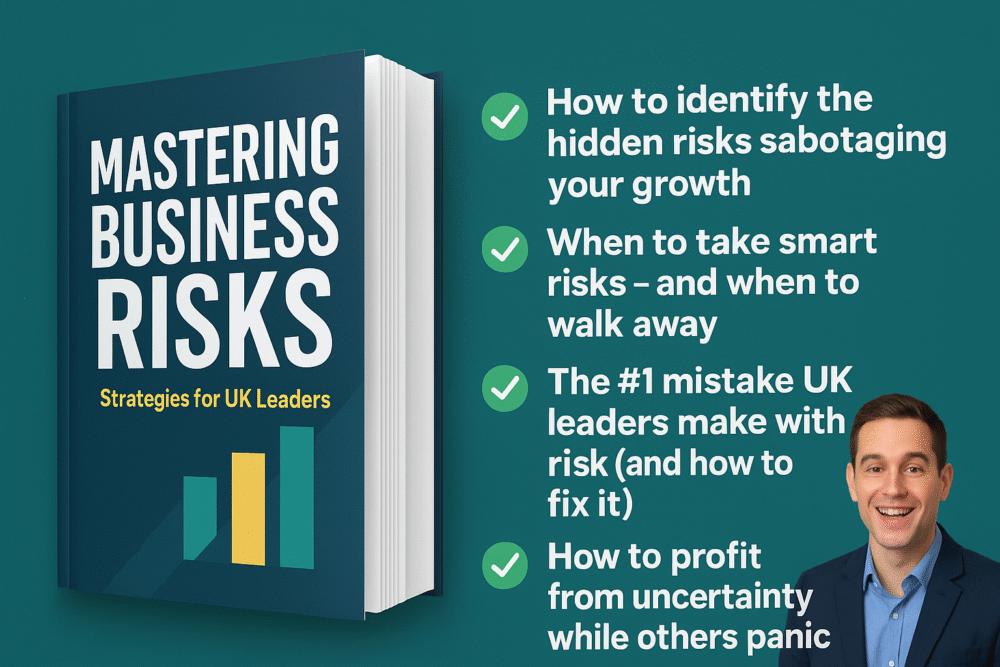
Mastering Business Risks

Best ways to grow a business faster with less risk UK

Mastering Business Risks: A Comprehensive Guide to Dominating Your Marketplace

By Keith Lewis

Published by BusinessRiskTV.com


Enterprise Risk Management Magazine articles on business growth and business protection
Right Now UK Business Leaders Are Stuck!

Table of Contents

  1. Introduction: Why Understanding Real Risks is the Key to Business Success
  2. The Problem: Why UK Business Leaders Struggle with Risk Management
  3. The Consequences of Ignoring Real Business Risks
  4. Internal vs. External Risks: What’s Really Threatening Your Business?
  5. Overcoming Fear of Failure — and Success
  6. Why Settling for the Status Quo is the Biggest Risk of All
  7. How to Identify the Real Risks to Your Business Survival and Growth
  8. Assessing Risks: Tools and Strategies for Better Decision-Making
  9. Controlling Risks: Turning Threats into Opportunities
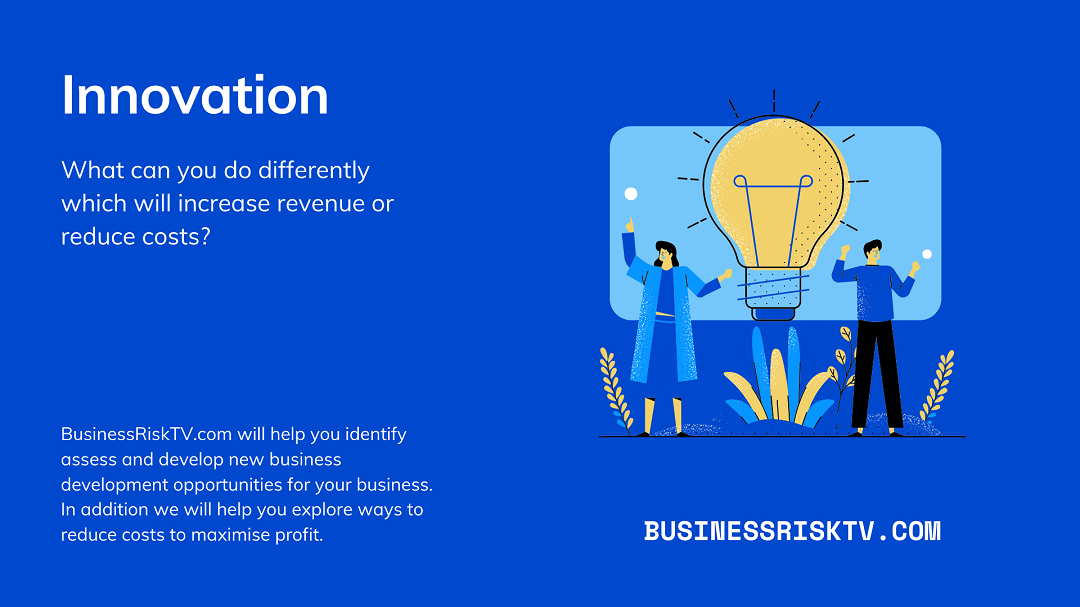
  10. The Role of Innovation in Reducing Risk and Accelerating Growth
  11. Expanding Sales More Profitably in the UK Market
  12. The Power of Networking: Leveraging BusinessRiskTV.com’s Business Experts Hub
  13. Connecting Buyers and Sellers More Effectively Online
  14. Case Studies: Businesses That Mastered Risk and Dominated Their Markets
  15. Action Plan: Stop Waiting, Start Executing
  16. Conclusion: Elevate Your Business Above Uncertainty

Introduction: Why Understanding Real Risks is the Key to Business Success

In today’s volatile business environment, only those who truly understand the real risks will manage them better. Many business leaders in the UK are operating with blind spots—unaware of the threats that could derail their growth or the opportunities they’re missing.

This book is not just about risk avoidance; it’s about risk mastery. It’s about preparing for the most valuable opportunities and dominating your marketplace. You already have what it takes to be greater than you’ve been so far — but you must overcome fear, stop waiting, and act now.

Whether you’re afraid of failure — or even success — this guide will help you break through barriers, identify the real risks, and turn them into advantages.

The Problem: Why UK Business Leaders Struggle with Risk Management

Many UK business leaders:

  • Lack deep knowledge of the risks affecting their industry.
  • Don’t know which risks to take to grow faster.
  • Don’t have the right experts to help them assess and control risks.
  • Underestimate internal risks (like leadership gaps or cash flow issues).
  • Overestimate external risks (like economic downturns or competition).

This knowledge gap leads to missed opportunities, slower growth, and unnecessary vulnerabilities.

Expanding the Problem: The Need for Innovation and Profitable Growth

Why should UK business leaders innovate? Because standing still is riskier than evolving. Companies that fail to adapt:

  • Lose market share to competitors.
  • Become irrelevant in changing industries.
  • Miss profitable expansion opportunities.

The solution? Strategic risk-taking. This book will show you how to expand sales more profitably by focusing on high-reward, low-risk strategies.

The Risk Management Solutions with BusinessRiskTV.com

You don’t have to navigate risks alone. BusinessRiskTV.com offers:
Business Experts Hub – Network with risk management professionals.
Risk Assessment Tools – Make smarter decisions.
Online Marketplace – Connect buyers and sellers more cost-effectively.

By leveraging these resources, you can gain clarity, reduce uncertainty, and seize opportunities faster.

Stop Waiting—Act Now!

Enterprise Risk Management Magazine articles on business growth and business protection
Mastering Business Risks : Strategies for UK Leaders

This ebook provides a step-by-step roadmap to:

✔ Identify and assess your biggest risks.
✔ Innovate with confidence.
✔ Grow sales profitably.
✔ Dominate your market.

The time for hesitation is over. Master your risks, elevate your business, and leave competitors behind.

Get Your Copy Today and Start Dominating Your Marketplace!
Available now on BusinessRiskTV.com

Enterprise Risk Management Magazine articles on business growth and business protection
Buy Mastering Business Risks eBook

Get help to protect and grow your business faster with BusinessRiskTV

Find out more about Business Risks Management Club Membership 

Subscribe for free Business risk management tips risk reviews and cost cutting ideas

Connect with us for free business risk management tips

Read more business risk management articles and view videos for free

Connect with us for free business risk management articles and videos 

Read and view more:

  1. “How to identify and control business risks in the UK”
  2. “Best ways to grow a business faster with less risk UK”
  3. “Business risk management experts UK advice”
  4. “How to increase sales profitably in the UK market”
  5. “Overcoming fear of business failure and success UK”
  6. “Where to find business risk management help in the UK”

#UKBusinessGrowth #RiskManagementUK #BusinessSuccessUK #EntrepreneurMindsetUK #ProfitWithLessRisk #DominateYourMarket

Mastering Business Risks

UK business risks and opportunities of nanofabrication technology

The dangers and potential benefits of nano fabrication

Hold on tight, because the future of your business – and maybe even everything else – is about to get seriously Nano-fied! Forget incremental improvements; we’re talking about a technological leap so massive it makes the internet revolution look like dial-up. I’m talking about nanofabrication, and it’s not some sci-fi pipe dream anymore. It’s knocking on the door, and if you’re not ready, traditional fabricators will be the least of your worries!

Imagine having a machine, right in your factory or even your office, that can build things atom by atom. Anything. From the strongest materials imaginable to personalised medicines designed just for you, to electronics so tiny they’re practically invisible. Sounds like magic, right? Well, that’s the potential of nanofabrication, and it’s closer than you think.

Why should you, a busy business leader, care about something that sounds like it belongs in a science fiction movie? Because this isn’t just about cool gadgets. It’s about a fundamental shift in how we make things, who can make them, and what is even possible. It’s a chance to leapfrog your competition, create entirely new markets, and solve problems we can only dream of tackling today. But it also carries risks so profound they could reshape the very fabric of our economy and society.

Think about it: what happens to traditional manufacturing when anyone can essentially “print” products with superior properties on demand? What happens to the pharmaceutical industry when personalised medicine becomes the norm, created at the nanoscale? What new security threats emerge when materials can be engineered at the atomic level?

This isn’t just a technological trend; it’s a potential industrial and societal earthquake. And you need to be ready to navigate it.

In this article, I’m going to break down what nanofabrication is, why it’s on the cusp of becoming a reality, and the mind-blowing opportunities and terrifying threats it presents. Then, I’ll give you nine concrete, actionable steps you can take right now to understand, prepare for, and even capitalise on this coming revolution in the UK. Forget incremental improvements; we’re talking about a paradigm shift! Let’s dive in before it’s too late!


Nanofabrication: Your Personal Genie’s Lamp is Almost Here!

Okay, let’s get down to brass tacks. What exactly is this “nanofabrication” I keep talking about? Simply put, it’s the science and technology of designing and creating structures, devices, and systems at the nanoscale – that’s one billionth of a metre! To give you some perspective, a nanometer is about the width of a few atoms lined up. At this scale, the properties of materials can change dramatically. Gold, which is typically yellow, can appear red or green at the nanoscale!

Now, how do we even think about building things at this scale? There are two main approaches:

  1. Top-down nanofabrication: This is like taking a block of something and carving away material to create nanoscale features. Think of a sculptor working with incredibly fine tools. Current microfabrication techniques used to make computer chips are a form of top-down processing, but we’re pushing the limits to achieve even smaller dimensions.

  2. Bottom-up nanofabrication: This is where things get really interesting. It’s like building with atomic LEGOs! We’re talking about assembling structures atom by atom or molecule by molecule. This could involve self-assembly, where molecules spontaneously arrange themselves into desired patterns, or using incredibly precise tools to place individual atoms.

While both approaches are being actively researched, bottom-up nanofabrication is often seen as the “holy grail” because it offers the potential to create materials and devices with unprecedented precision and control over their properties. Imagine designing a material with exactly the strength, conductivity, and flexibility you need, atom by atom!

Why is this “nano-magic” within touching distance of being real?

You might be thinking, “Building things atom by atom? That sounds like something out of Star Trek!” And you’re right, it does sound futuristic. But the progress in several key areas is making it increasingly likely that we’ll see practical nanofabrication technologies in the coming decades, perhaps even sooner than you think!

  • Advancements in Microscopy: We can now see and even manipulate individual atoms using powerful microscopes like Scanning Tunneling Microscopes (STMs) and Atomic Force Microscopes (AFMs). These aren’t just for looking; they can be used as incredibly fine tools to move atoms around.

  • Self-Assembly Breakthroughs: Scientists are making huge strides in understanding and controlling how molecules self-assemble. Imagine designing molecules that automatically snap together in a specific way to form nanoscale structures! This could revolutionise manufacturing by allowing us to “grow” complex devices.

  • Progress in Nanomaterials: We’re already seeing the impact of nanomaterials like graphene and carbon nanotubes, which have extraordinary properties. Nanofabrication will allow us to precisely engineer these and other nanomaterials for specific applications.

  • Convergence with Biotechnology: The ability to work at the nanoscale is crucial for advances in medicine. Nanoparticles are already being used for drug delivery, and nanofabrication could lead to revolutionary diagnostic tools and even the creation of artificial biological systems.

  • Government and Private Investment: There’s significant investment pouring into nanotechnology research and development worldwide, recognising its potential to drive economic growth and solve global challenges. This funding is accelerating the pace of innovation.

So, while we might not have a fully functional “replicator” from Star Trek just yet, the fundamental science is advancing rapidly. The ability to manipulate matter at the nanoscale is no longer a distant dream; it’s a tangible goal that researchers around the world are actively pursuing.

The Double-Edged Sword: Salvation and Existential Threat

Now, let’s talk about why this nanofabrication revolution is both an incredible opportunity and a potentially terrifying threat for your business and for society as a whole.

The Chance of Salvation: Your Business Transformed

Enterprise Risk Management Magazine article
Future Of Manufacturing UK

For your business, access to nanofabrication could be a game-changer in ways you can barely imagine:

  • Unprecedented Product Innovation: Imagine creating materials with properties that are currently impossible – stronger than steel but lighter than aluminum, self-healing surfaces, or materials that can adapt to their environment. This opens the door to entirely new product categories and functionalities.

  • Personalised and On-Demand Manufacturing: Nanofabrication could enable highly customised products tailored to individual needs, produced on demand with minimal waste. Think personalised medicines created at the point of care or bespoke materials engineered for a specific application. This could revolutionise supply chains and inventory management.

  • Miniaturisation and Efficiency: Nanoscale manufacturing allows for the creation of incredibly small and efficient devices. Imagine sensors so tiny they can be embedded virtually anywhere, or electronic components with unimaginable processing power in a minuscule space. This has huge implications for industries from electronics to healthcare.

  • New Materials and Processes: Nanofabrication could unlock the creation of entirely new materials with unique properties, leading to breakthroughs in energy storage, catalysis, and many other fields. It could also enable more sustainable and environmentally friendly manufacturing processes with reduced waste and energy consumption.

  • Competitive Advantage: Early adopters of nanofabrication technologies will gain a significant competitive edge. They will be able to offer products and services that their competitors simply cannot match, potentially disrupting entire industries and creating new market leaders.

For a UK business, being at the forefront of this technology could revitalise manufacturing, create high-skilled jobs, and position the nation as a global leader in innovation. Access to advanced nanofabrication facilities and expertise could attract investment and drive economic growth.

The Potential Existential Threat: A World Reshaped – For Better or Worse?

Enterprise Risk Management Magazine article
Factory Closed Due To Lack Of Innovation

However, the power to manipulate matter at the atomic level also comes with significant risks:

  • Disruption of Traditional Industries: As nanofabrication becomes more widespread, traditional manufacturing industries that rely on economies of scale and established processes could face existential threats. If anyone can “print” high-quality goods on demand, the need for large factories and complex supply chains could diminish.

  • Economic Inequality: Access to nanofabrication technologies could be unevenly distributed, potentially exacerbating economic inequality. Those who control these powerful tools could gain even more power, while others are left behind.

  • Security Risks: The ability to create materials and devices with unprecedented properties could also be exploited for malicious purposes. Imagine nanoscale weapons that are virtually undetectable or self-replicating nanobots that could pose a serious threat.

  • Environmental Concerns: While nanofabrication could lead to more sustainable manufacturing in the long run, the development and use of certain nanomaterials could also pose new environmental and health risks if not managed carefully.

  • Ethical Dilemmas: The ability to manipulate life at the nanoscale raises profound ethical questions. What are the limits of what we should create or modify? How do we ensure that these technologies are used responsibly and for the benefit of humanity?

  • The “Traditional Fabricator” Scenario: The initial analogy of “traditional fabricators” highlights a key concern. If competitors gain access to advanced nanofabrication capabilities before you do, they could rapidly erode your market share by producing superior, cheaper, or entirely novel products. This isn’t just about keeping up; it’s about survival.

For the UK, failing to engage with and regulate nanofabrication effectively could lead to economic disadvantage, security vulnerabilities, and missed opportunities for innovation and growth.

Nine Things Business Leaders Should Be Aware Of (Even If You Think This is Too Complicated!)

Okay, I know this might sound like a lot to take in. But trust me, as a business leader in the UK, you need to start thinking about this now. Here are nine crucial things you should be aware of about nanofabrication, even if you feel like your brain is already full:

  1. It’s Not Just Science Fiction Anymore: Stop thinking of nanotechnology as something that will happen in a distant future. The underlying science is advancing rapidly, and we’re seeing real-world applications emerge. Keep an eye on developments in materials science, advanced manufacturing, and biotechnology – these are often leading indicators.

  2. It Will Disrupt Your Industry (Eventually): No matter what business you’re in, nanofabrication has the potential to disrupt it. Think about how your products are made, what materials you use, and how you reach your customers. Could a competitor using nanofabrication create a better, cheaper, or more personalised alternative? Start asking these “what if” questions now.

  3. Ignoring It is Not a Strategy: Pretending this isn’t happening won’t make it go away. In fact, it will put you at a significant disadvantage when your competitors start leveraging these technologies. Proactive engagement, even at a basic level, is crucial.

  4. Talent is Key (Even if You Don’t Understand the Science): You don’t need to become a nanoscientist overnight, but you do need to understand the importance of talent. Start thinking about how you can attract and retain individuals with expertise in related fields like materials science, advanced manufacturing, and data science. Collaborating with universities and research institutions could be a good starting point.

  5. Intellectual Property Will Be More Critical (and More Complex): If you can create anything at the atomic level, protecting your innovations becomes paramount. Existing IP frameworks might not be sufficient to address the unique challenges of nanofabricated products and processes. Start thinking about your IP strategy in this new context.

  6. Regulation Will Be a Moving Target (But You Need to Engage): Governments around the world are grappling with how to regulate nanotechnology. This will likely evolve as the technology matures. Stay informed about potential regulations in the UK and engage in the policy debate to ensure a level playing field and responsible innovation.

  7. Collaboration is Essential (You Can’t Do This Alone): The development and adoption of nanofabrication will require collaboration across disciplines and sectors. Consider forming partnerships with research institutions, other businesses, and government agencies to stay informed and explore potential opportunities.

  8. Sustainability Could Be a Major Driver (and Benefit): Nanofabrication offers the potential for more sustainable manufacturing processes with reduced waste, energy consumption, and the use of scarce resources. Explore how these technologies could align with your sustainability goals and create new value for your business.

  9. The Pace of Change Will Be Faster Than You Think (So Start Now!): Technological advancements are accelerating. What seems like science fiction today could be a reality much sooner than you expect. Don’t wait until it’s too late to start understanding and preparing for the nanofabrication revolution.

Protecting and Growing Your Business with Nanofabrication in the UK: Actionable Steps

Enterprise Risk Management Magazine article
Nano For Business UK

So, how can you, as a business leader in the UK, not just survive but thrive in this coming era of nanofabrication? Here are some actionable steps you can take:

  1. Invest in Education and Awareness: Dedicate resources to understanding the potential of nanofabrication for your industry. This could involve attending industry conferences, subscribing to relevant publications, and even bringing in experts for internal workshops. The goal is to build a foundational understanding within your leadership team.

  2. Scan the Horizon for Emerging Applications: Actively monitor research and development in nanofabrication relevant to your sector. Identify potential applications that could create new products, improve existing ones, or streamline your processes. Look at patent filings, scientific publications, and news from innovative startups.

  3. Explore Potential Collaborations: Reach out to universities and research institutions in the UK that are leading in nanotechnology research. Explore opportunities for joint projects, sponsored research, or access to specialised facilities and expertise. Organisations like the Knowledge Transfer Network (KTN) can help facilitate these connections.

  4. Consider Strategic Investments (When the Time is Right): As nanofabrication technologies mature and become more commercially viable, consider making strategic investments in relevant equipment, processes, or startups. This requires careful due diligence and a long-term perspective. Government grants and funding initiatives for advanced manufacturing might be available.

  5. Focus on High-Value, Differentiated Products: Nanofabrication excels at creating products with unique properties and high levels of customisation. Shift your focus towards developing and marketing such products that can command premium prices and are difficult for competitors using traditional methods to replicate.

  6. Build a Future-Ready Workforce: Invest in training and upskilling your workforce to prepare for the skills needed in a nanofabrication-enabled economy. This includes expertise in materials science, data analysis, automation, and potentially even nanoscale engineering. Consider apprenticeships and partnerships with educational institutions.

  7. Strengthen Your Intellectual Property Strategy: Review your current IP strategy and consider how to protect innovations arising from nanofabrication. This might involve exploring new types of patents or developing strong trade secrets. Seek advice from IP specialists with expertise in nanotechnology.

  8. Engage with Policymakers and Regulators: Participate in discussions and consultations related to the regulation of nanotechnology in the UK. Advocate for policies that promote responsible innovation while creating a supportive environment for businesses to adopt these technologies. Industry bodies and trade associations can play a key role here.

  9. Embrace a Culture of Innovation and Experimentation: Nanofabrication opens up a world of possibilities. Foster a culture within your organisation that encourages experimentation, risk-taking, and the exploration of unconventional ideas. Create dedicated teams or initiatives to explore the potential of nanotechnology for your business.

The age of nanofabrication is dawning. It presents both unprecedented opportunities and potentially devastating threats. By understanding the fundamentals, staying informed about developments, and taking proactive steps now, UK business leaders can position themselves not just to survive, but to thrive in this revolutionary new landscape. Don’t wait for the genie to appear; start exploring the lamp today!

Protect and grow your business with BusinessRiskTV

BusinessRiskTV Business Risk Management Club Membership

Find out more about our Business Risk Management Club

Subscribe for free business risk management tips risk analysis risk reviews and money saving ideas

Connect with us for free

Read more business risk management articles and view videos for free

Connect with us for free

Enterprise Risk Management Magazine articles
Future Of Manufacturing UK

Read more business risk management articles and view videos:

  1. How will nanofabrication impact my manufacturing business in UK

  2. Preparing my UK company for the nanofabrication revolution

  3. Understanding the business implications of nanotechnology in the UK for leaders

  4. Nanofabrication strategy for business growth and protection UK

Relevant hashtags:

  1. #NanoForBusiness

  2. #UKInnovation

  3. #FutureofManufacturing

  4. #NanoRevolution

  5. #BusinessStrategy

UK business risks and opportunities of nanofabrication technology

Why high interest rates in 2025 could trigger a financial crisis

How US debt refinancing in 2025 could impact global markets

Imagine standing on the edge of a financial precipice, where the stability of the global economy teeters on the decisions made today. The United States, the world’s largest economy, faces a monumental challenge: nearly $10 trillion of its government debt is set to mature in and around 2025, all carrying an average coupon rate of 2.5%.  Refinancing this colossal sum at current interest rates exceeding 5% could lead to unprecedented interest payments, consuming a significant portion of the federal budget. This scenario not only threatens America’s fiscal health but also casts a long shadow over global economic stability.

In this intricate dance of economics and policy, some speculate whether a recession in 2025 and 2026 might be a strategic, albeit perilous, manoeuvre to push down interest rates and bond yields, making borrowing more affordable. The stakes are high, and the implications vast, affecting businesses, governments, and individuals worldwide.

The Critical Importance of U.S. Debt Management

The United States’ ability to manage its debt is not just a national concern; it’s a linchpin of global economic stability. U.S. Treasury securities are considered one of the safest investments, serving as a benchmark for global financial markets. They influence everything from mortgage rates to corporate borrowing costs worldwide.

However, with $9.2 trillion of U.S. debt maturing in and around 2025, accounting for 25.4% of the country’s total debt, the challenge is immense.  The rapid accumulation of debt, fueled by historic levels of deficit spending, has led to interest payments ballooning to over $1 trillion per year. This scenario raises concerns about the government’s ability to meet its obligations without resorting to measures that could destabilise the economy.

The Danger to Businesses in America and Worldwide

The repercussions of this debt crisis extend far beyond government balance sheets. Businesses, both in the United States and globally, could face significant challenges:

1. Increased Borrowing Costs: As the U.S. government competes for capital to refinance its debt, interest rates could rise, leading to higher borrowing costs for businesses.

2. Reduced Consumer Spending: Higher interest rates often translate to increased costs for consumers, leading to reduced disposable income and lower demand for goods and services.

3. Currency Volatility: Concerns over U.S. fiscal stability could lead to fluctuations in the value of the dollar, affecting international trade and investment.

4. Global Economic Slowdown: Given the interconnectedness of today’s economies, a U.S. debt crisis could trigger a global economic slowdown, impacting businesses worldwide.

Nine Strategies for Business Leaders to Mitigate Risk

In light of these potential challenges, business leaders must proactively implement strategies to safeguard their organisations:

1. Diversify Funding Sources: Relying solely on traditional bank loans may become costly. Exploring alternative financing options, such as issuing bonds or equity financing, can provide more stable capital sources.

2. Strengthen Balance Sheets: Reducing debt levels and increasing cash reserves can provide a buffer against economic downturns and increased borrowing costs.

3. Hedge Against Currency Risk: For businesses operating internationally, employing hedging strategies can protect against currency fluctuations that may arise from economic instability.

4. Enhance Operational Efficiency: Streamlining operations to reduce costs can improve margins and provide greater flexibility in challenging economic environments.

5. Focus on Core Competencies: Concentrating resources on core business areas can enhance resilience and reduce exposure to volatile markets.

6. Monitor Economic Indicators: Staying informed about economic trends and government fiscal policies enables timely decision-making and strategic adjustments.

7. Engage in Scenario Planning: Developing contingency plans for various economic scenarios ensures preparedness for potential downturns or financial crises.

8. Strengthen Supplier Relationships: Collaborating closely with suppliers can secure favourable terms and ensure supply chain stability during economic fluctuations.

9. Invest in Technology: Leveraging technology to improve productivity and reduce costs can provide a competitive edge in uncertain economic times.

Conclusion

The looming U.S. debt refinancing challenge is a clarion call for businesses to reassess their strategies and fortify their operations against potential economic headwinds. By understanding the gravity of the situation and proactively implementing risk mitigation measures, business leaders can navigate the complexities ahead and ensure sustained growth and stability in an unpredictable financial landscape.

Get help to protect and grow your business faster with BusinessRiskTV

Find out more about Business Risk Management Club

Subscribe for free business risk management tips risk reviews and cost reduction ideas

Connect with us for free

Read more business risk management articles and view videos

Connect with us for free

Enterprise Risk Management Magazine Article
USA Debt Crisis

Financial Risk Forum BusinessRiskTV Financial Services Forum

UK Business Magazine

USA Business Risk Management Magazine

The 2025 Insurance Crisis: Is the Sky Falling?

Read more articles and view videos for free:

1. Will the US face a recession in 2025 and 2026 due to rising debt?

2. How US debt refinancing in 2025 could impact global markets

3. Why high interest rates in 2025 could trigger a financial crisis

4. What happens if the US defaults on its debt in 2025 or 2026?

5. How business leaders can prepare for a US economic downturn in 2025

Relevant hashtags:

1. #USDebtCrisis

2. #EconomicRisk2025

3. #RecessionWarning

4. #GlobalFinance

5. #BusinessStrategy

Why high interest rates in 2025 could trigger a financial crisis

Stagflation UK 2025: Strategies for Business Leaders

Mitigating Stagflation Risk: A Guide for UK Businesses | BusinessRiskTV Business Risk Management Club

Stagflation: The UK’s 2025 Nightmare Scenario?

The UK economy is teetering on the brink. Inflation is ticking upwards, growth has stalled, and the spectre of stagflation – that dreaded combination of stagnant growth and persistent inflation – looms large. This isn’t just an academic debate; it’s a very real threat to businesses across the country. The Bank of England, with its cautious pronouncements and growing concerns, has painted a bleak picture for 2025.

What does this mean for UK business leaders? How can they navigate these choppy waters and ensure their companies not only survive but thrive? This article will explore the potential for stagflation in the UK, examine its potential impact on businesses, and offer nine actionable strategies to help leaders mitigate the risks and position their companies for success.

Understanding Stagflation: A Toxic Cocktail

Stagflation is an economic anomaly. It defies conventional economic wisdom, where typically, inflation and economic growth move in opposite directions. When growth slows, inflation usually eases as demand for goods and services weakens. But stagflation throws this rulebook out the window.

The UK’s Path to Potential Stagflation

Several factors are converging to create this perfect storm for stagflation in the UK.

  • Inflationary Pressures: Rising energy costs, supply chain disruptions, and the lingering impact of the pandemic continue to fuel inflation. The recent increase in Employers’ National Insurance Contributions (NICs) has added another layer of pressure, forcing businesses to either cut costs or increase prices. This cost-push inflation can be particularly stubborn, as businesses pass on these increased costs to consumers.
  • Waning Growth: The Bank of England has already signaled that the UK economy has stopped growing. With rising costs squeezing businesses and consumer confidence shaken, the risk of a recession is significant.
  • The Squeeze on Businesses: Businesses are caught in a difficult position. Rising costs are eroding profit margins, forcing them to make tough choices. Many are opting to increase prices, further fueling inflation. Others are resorting to cost-cutting measures, including job cuts, which can dampen economic activity and exacerbate the slowdown.

The Impact of Stagflation on Businesses

Stagflation can have a devastating impact on businesses.

  • Eroding Profit Margins: Rising costs and stagnant demand squeeze profit margins. Businesses may struggle to maintain profitability, making it difficult to invest in growth and innovation.
  • Reduced Consumer Spending: High inflation erodes consumer purchasing power, leading to decreased demand for goods and services. This can significantly impact businesses that rely on consumer spending.
  • Increased Competition: When economic growth slows, competition intensifies. Businesses may be forced to cut prices to remain competitive, further eroding profit margins.
  • Supply Chain Disruptions: Stagflation can exacerbate existing supply chain issues, leading to shortages and delays. This can disrupt production, increase costs, and damage customer relationships.
  • Increased Uncertainty: The uncertainty surrounding stagflation can make it difficult for businesses to plan and invest. This can stifle economic activity and hinder long-term growth.

Nine Strategies to Navigate Stagflation

While the threat of stagflation is significant, businesses can take proactive steps to mitigate the risks and position themselves for success.

1. Enhance Price Optimisation:

  • Dynamic Pricing: Implement dynamic pricing strategies that adjust prices in real-time based on demand, competition, and other market factors. This can help businesses maximise revenue while remaining competitive.
  • Value-Based Pricing: Focus on the value customers perceive from your products or services. This allows you to justify higher prices and maintain profitability even in a challenging economic environment.

2. Strengthen Cost Control:

  • Identify and Eliminate Waste: Conduct a thorough review of your operations to identify and eliminate areas of waste and inefficiency. This can include streamlining processes, reducing energy consumption, and negotiating better deals with suppliers.
  • Optimise Supply Chain: Review your supply chain to identify potential bottlenecks and areas for improvement. This may involve diversifying your supplier base, exploring alternative sourcing options, and improving inventory management.

3. Diversify Revenue Streams:

4. Build Customer Loyalty:

  • Exceptional Customer Service: Provide exceptional customer service to build strong customer relationships and foster loyalty. Loyal customers are more likely to remain with your business even during economic downturns.
  • Personalised Customer Experiences: Utilise data and technology to personalise the customer experience. This can help build stronger customer relationships and increase customer engagement.

5. Invest in Technology:

  • Automation and AI: Invest in automation and artificial intelligence technologies to improve efficiency, reduce costs, and enhance customer service.
  • Data Analytics: Leverage data analytics to gain insights into customer behaviour, market trends, and competitive activity. This can help you make informed business decisions and respond effectively to changing market conditions.

6. Enhance Employee Engagement:

  • Invest in Employee Development: Invest in employee training and development to improve skills and enhance productivity. This can help your business remain competitive and adapt to changing market conditions.
  • Create a Positive Work Environment: Foster a positive and inclusive work environment that attracts and retains top talent. Engaged employees are more productive and more likely to go the extra mile for your business.

7. Improve Financial Flexibility:

  • Strengthen Your Balance Sheet: Improve your financial flexibility by reducing debt, increasing cash reserves, and exploring alternative financing options. This will provide you with the financial resources to weather economic downturns.
  • Manage Cash Flow: Monitor cash flow closely and take steps to improve cash flow management. This may include optimising payment terms with suppliers, speeding up collections from customers, and exploring alternative financing options.

8. Focus on Sustainability:

  • Reduce Environmental Impact: Implement sustainable business practices to reduce your environmental impact and enhance your brand reputation. This can also help you reduce costs and improve efficiency.
  • Embrace ESG Principles: Embrace Environmental, Social, and Governance (ESG) principles to build trust with stakeholders and attract socially conscious investors.

9. Scenario Planning and Risk Management:

  • Develop Contingency Plans: Develop contingency plans for various economic scenarios, including stagflation. This will help you prepare for potential challenges and respond effectively to changing market conditions.
  • Regularly Review and Adjust: Regularly review and adjust your business strategy based on changing economic conditions and market trends. This will ensure that your business remains agile and adaptable in a dynamic environment.

The threat of stagflation in the UK is a serious concern for businesses. However, by proactively addressing the challenges and implementing the strategies outlined in this article, businesses can navigate these choppy waters and emerge stronger.

Remember, stagflation is not inevitable. By focusing on innovation, efficiency, and customer relationships, businesses can not only survive but thrive in even the most challenging economic environments.

To help you navigate these uncertain times and effectively mitigate the risks of stagflation, we invite you to explore our cost-effective advertising solutions. For up to 12 months, we can help you reach a wider audience and boost your brand visibility. Alternatively, consider joining the BusinessRiskTV Business Risk Management Club. Our exclusive membership provides you with access to valuable resources, expert insights, and a supportive community of like-minded business leaders.
By taking advantage of these opportunities, you can gain a competitive edge, enhance your resilience, and ensure your business thrives in the face of any economic storm.

Disclaimer: This article is for informational purposes only and should not be construed as financial or investment advice.

Get help to protect and grow your business

Find out more about Business Risk Management Club Corporate Membership 

Subscribe for free business risk management tips reviews and deals

Connect with us for free

Read More business risk management articles and watch videos for free

Connect with us for free

Enterprise Risk Management Magazine articles
Strategies For Business Leaders

Read more:

  1. Stagflation UK 2025: Strategies for Business Leaders
  2. Mitigating Stagflation Risk: A Guide for UK Businesses
  3. Impact of Rising Inflation on UK Businesses: 2025 Outlook
  4. How to Protect Your Business from a UK Recession
  5. Economic Uncertainty: Strategies for UK Business Growth

Relevant hashtags:

  1. #UKEconomy
  2. #Stagflation
  3. #BusinessStrategy
  4. #RiskManagement
  5. #EconomicOutlook
  6. #BusinessRiskTV

  7. #ProRiskManager
  8. #ProRiskManagement

Take the risk. Embrace the madness. Create your future with BusinessRiskTV
Mastering Business Risk in 2025

Geniuses or the Insane? Mad People Are the Ones Crazy Enough to Create a New World

The modern business landscape is more dangerous, complex, and unpredictable than ever before. Globalisation, rapid technological advancements, and socio-political instability have created a world where only those brave enough to embrace uncertainty and take risks stand a chance of thriving. It is no coincidence that the greatest breakthroughs in history were driven by individuals often considered “mad” by conventional standards. These risk-takers, innovators, and disruptors challenged the status quo and envisioned a world different from what was thought possible. In this chaotic world, it is the mad who hold the key to future progress.

As a world economic expert advising business leaders, I argue that this “madness” is not just a quirk of personality, but an essential characteristic for navigating the stormy seas of the 21st century business world. Leaders who are willing to take calculated risks, question established norms, and explore new possibilities are the ones most likely to survive and thrive in the rapidly evolving global marketplace.

In this article, I will demonstrate how the increasingly dangerous business environment calls for a radical shift in risk-taking. I’ll explore key political, economic, social, technological, legal, and organisational risks that will shape the world in 2025 and beyond. Finally, I will explain how the BusinessRiskTV Business Risk Management Club can help business leaders like you make better decisions, safeguard your enterprise, and accelerate growth through informed risk management practices.
The Dangerous World of Business Today

The business environment in 2024 is more dangerous than ever before, and these dangers are accelerating at an alarming rate. Global disruptions such as the COVID-19 pandemic, the war in Ukraine, and the rapid rise of inflation have sent shockwaves through industries worldwide. Supply chain disruptions, labour shortages, and rising costs of goods have become everyday challenges for business leaders. Moreover, the global financial system is increasingly volatile, with fears of an impending recession continuing to loom.

At the heart of these dangers is unpredictability. Traditional models of business planning and risk management are no longer sufficient to deal with the scale and pace of modern challenges. The linear, incremental risks of the past have given way to cascading, interconnected crises that require a fundamentally different approach to decision-making. Business leaders are forced to navigate through an increasingly complex web of risks, where a single miscalculation can spell disaster for an entire organisation.

The Acceleration of Risks in 2025 and Beyond

The world is evolving at a breakneck pace, and the risks are evolving with it. As we approach 2025, several key trends are accelerating, making the business environment even more dangerous and uncertain:

Technological Disruption: The rapid advancement of artificial intelligence (AI), automation, and quantum computing is transforming industries at an unprecedented rate. While these technologies offer tremendous opportunities for businesses, they also come with significant risks, such as job displacement, cybersecurity threats, and ethical dilemmas.

Geopolitical Instability: Global power shifts, trade wars, and political tensions are becoming more pronounced, leading to a fragile global order. The rising influence of authoritarian regimes, coupled with growing nationalism and protectionism, poses significant risks for businesses that rely on global markets and supply chains.

Environmental Crisis: Climate change continues to wreak havoc on ecosystems, economies, and industries. Extreme weather events, resource scarcity, and regulatory changes related to sustainability are becoming existential threats to businesses in many sectors.

Societal Shifts: Demographic changes, social justice movements, and evolving consumer expectations are reshaping industries. Businesses are under increasing pressure to adapt to changing societal norms, with reputational risk at an all-time high.

These dangers are not hypothetical; they are happening now and will only intensify in the coming years. Business leaders must recognise that the world is not becoming safer or more predictable, and they must adapt their risk management strategies accordingly.

Political, Economic, Social, Technological, Legal, and Organisational Risks in 2025

As we look toward 2025, businesses will face a host of risks that span political, economic, social, technological, legal, and organisational dimensions. Understanding these risks and their potential impact is critical for making informed business decisions.

Political Risks

Political instability is one of the most significant risks facing businesses in 2025. Governments around the world are becoming more unpredictable, with populism, nationalism, and authoritarianism on the rise. Trade tensions, such as the ongoing U.S.-China trade war, will continue to disrupt global supply chains, leading to higher costs and reduced access to key markets. Moreover, the increasing politicisation of environmental and social issues could lead to stricter regulations and greater government intervention in industries such as energy, technology, and finance.

Opportunities: Businesses that are nimble and adaptable can exploit political instability to their advantage. For example, companies that diversify their supply chains and markets can reduce their exposure to geopolitical risks and capture new opportunities in emerging markets.

Economic Risks

The global economy is facing a period of prolonged uncertainty, with rising inflation, supply chain disruptions, and labor shortages threatening to derail growth. Central banks tightened monetary policy in response to inflation, raising interest rates and reducing liquidity. This is leading to a global recession, which would have far-reaching consequences for businesses across all sectors.

Opportunities: While economic downturns are challenging, they also create opportunities for businesses that are prepared. Companies with strong balance sheets and access to capital can take advantage of lower asset prices and acquire competitors or expand into new markets at a discount.

Social Risks

Social risks are becoming more pronounced as societies around the world undergo significant demographic and cultural shifts. The ageing population in developed countries is creating labour shortages and increasing the demand for healthcare and social services. Meanwhile, social justice movements are forcing companies to reassess their diversity, equity, and inclusion (DEI) policies, with consumers and employees increasingly demanding accountability and transparency.

Opportunities: Companies that proactively address social risks can build stronger relationships with their customers and employees. By aligning their values with those of their stakeholders, businesses can enhance their reputational capital and attract talent and investment.

Technological Risks

Technological advancements are both a blessing and a curse for businesses. On one hand, technologies such as AI, blockchain, and the Internet of Things (IoT) offer immense potential for innovation and growth. On the other hand, they also introduce new risks, such as data breaches, cyberattacks, and the ethical implications of AI decision-making.

Opportunities: Businesses that embrace technological innovation while managing its risks will have a competitive advantage in 2025. By investing in cybersecurity, data privacy, and ethical AI frameworks, companies can build trust with their customers and regulators.

Legal Risks

The legal landscape is becoming more complex as governments around the world introduce new regulations in response to technological advancements, environmental concerns, and social issues. Data protection laws, such as the European Union’s General Data Protection Regulation (GDPR), are imposing significant compliance costs on businesses. Meanwhile, climate-related litigation is on the rise, with companies facing lawsuits over their environmental impact.

Opportunities: Companies that stay ahead of legal trends and invest in compliance can avoid costly fines and litigation. Moreover, businesses that adopt sustainable practices and transparent reporting can build trust with regulators and investors.

Organisational Risks

Organisational risks are internal risks that stem from a company’s structure, culture, and processes. As businesses become more complex and globalised, they face challenges related to governance, leadership, and talent management. Poor decision-making, lack of accountability, and misaligned incentives can lead to operational failures and reputational damage.

Opportunities: Companies that prioritise organisational resilience and invest in leadership development can mitigate these risks. By fostering a culture of innovation, agility, and accountability, businesses can adapt to changing circumstances and seize new opportunities.

The Benefits of Joining the BusinessRiskTV Business Risk Management Club

In this increasingly dangerous and uncertain world, business leaders cannot afford to go it alone. The challenges of 2025 and beyond are too complex and interconnected for any one organisation to navigate on its own. That is why joining the BusinessRiskTV Business Risk Management Club is essential for any business leader looking to protect and grow their enterprise.

Collective Intelligence and Shared Insights

The BusinessRiskTV Business Risk Management Club brings together a community of like-minded business leaders, risk managers, and experts from around the world. By joining this network, you gain access to a wealth of collective intelligence and shared insights. You can learn from the experiences of others, share best practices, and stay informed about the latest trends and developments in risk management.

Expert Guidance and Strategic Advice

As a member of the BusinessRiskTV Business Risk Management Club, you will receive expert guidance and strategic advice from some of the world’s leading risk management professionals. Our experts will help you identify and assess the risks facing your business, develop effective risk mitigation strategies, and make informed decisions that will safeguard your enterprise.

Access to Cutting-Edge Tools and Resources

The BusinessRiskTV Business Risk Management Club provides its members with access to cutting-edge tools and resources that can help you manage risks more effectively. From risk assessment frameworks and decision-making models to real-time data analytics and forecasting tools, our resources are designed to give you a competitive edge in an increasingly complex world.

Networking and Collaboration Opportunities

Joining the BusinessRiskTV Business Risk Management Club also gives you access to exclusive networking and collaboration opportunities. You can connect with other business leaders, risk managers, and experts from a wide range of industries and geographies. These connections can lead to valuable partnerships, collaborations, and business opportunities.

Preparing for the Future

Ultimately, the greatest benefit of joining the BusinessRiskTV Business Risk Management Club is your preparedness for the future. In an era where unprecedented risks are coupled with immense opportunities, being proactive about risk management is key to business longevity and growth. The year 2025 and beyond will usher in rapid technological shifts, evolving political landscapes, and ongoing societal changes that businesses must navigate to thrive. Companies that fail to anticipate these shifts will struggle to adapt, while those equipped with the right knowledge and strategies will seize new growth opportunities and outperform their competition.

By joining our community, you will be better equipped to anticipate disruptions, develop agile strategies, and mitigate potential risks before they become existential threats to your business. The tools, insights, and support provided by the BusinessRiskTV Business Risk Management Club will ensure that you not only survive but thrive in a world of uncertainty.

Summary: The Time to Act Is Now

The business world is fraught with accelerating risks, from political instability to technological disruption, economic volatility, and social upheaval. The complexity of these challenges means that no business leader can afford to rely on traditional, reactive approaches to risk management. Instead, visionary leaders must embrace the spirit of “madness”—the willingness to take bold risks, challenge the status quo, and prepare for an unpredictable future.

As a business leader, your greatest asset is your ability to make informed decisions in the face of uncertainty. By joining the BusinessRiskTV Business Risk Management Club, you gain access to a global network of experts, strategic advice, and cutting-edge tools designed to help you navigate the complexities of the modern business world. You will be equipped with the knowledge and resources needed to protect your business and seize the opportunities of tomorrow.

Now is the time to take action. The risks are growing, but so are the possibilities. Join the BusinessRiskTV Business Risk Management Club today and be part of a community of business leaders who are crazy enough to believe that they can create a better future—because in a mad world, it’s the mad who will lead us to new horizons.

Take the risk. Embrace the madness. Create your future with BusinessRiskTV.

Get help to protect and grow your business faster

Find out more

Subscribe for free business risk alerts and reviews

Connect with us for free

Read more business risk management articles for free

Connect with us for free

Read more:

1. Business risk management strategies 2025
2. Managing political and economic risks in business
3. Future business risks and opportunities for leaders
4. Top risk management techniques for business growth
5. Effective risk mitigation strategies for 2025
6. How to manage business risks in a volatile market
7. Importance of business risk foresight analysis
8. Global risk factors affecting businesses in 2025
9. Best business risk management club for executives
10. Preparing for technological disruption in business

Key Hashtags:

#BusinessRiskManagement
#RiskMitigation
#FutureOfBusiness
#RiskManagement2025
#BusinessGrowth
#BusinessLeaders
#RiskForesight
#BusinessStrategy
#PoliticalRisks
#EconomicRisks


Develop a strategic plan for a better future with BusinessRiskTV

Get ready for the 4th industrial revolution with BusinessRiskTV.com

Harness the full innovative power of your business. Create a better future with your existing resources. Focus your assets on the opportunities offering the greatest return.

Innovate or wither and die?

Is your business in zombie mode? Is it ticking along but with a little inspiration could be zooming along! Businesses which do not innovate could wither and die in the changes which are already in motion.

If you think the decade has been changing rapidly fasten your seat belt for the next decade! Even the best businesses growing healthily are going to be subject to existential choices.

Take banking industry for example. There is absolutely no reason you will not be banking online with Facebook Google or Amazon instead of Lloyds Barcalys or HSBC.

There are already internet only or app only banking businesses thriving in the UK. They do not have the costs of bank branch network. Fewer employees delivering what especially the younger generation want online. These apps will eventually sell car insurance house insurance mortgages credit cards et al that traditional banks offer. Why could Facebook Google or Amazon not do the same with their astronomical piles of cash. Yes I mean cash as they do not need to borrow money to lend money to you which will make them even more profitable should they start their banking arm of the business in UK.

4th Industrial Revolution Latest News Commentary and Risk Review
Fourth Industrial Revolution Latest News Commentary and Risk Review

If traditional banking industry could fail to survive in future why do you think your business is safe?

Is it not a little arrogant to think your great business is going to survive the coming changes? If the UK ever gets up to speed with 5g which clearly it eventually will then another building block will be in place that will destroy many traditional businesses.

5G is both an opportunity and existential threat to many traditional businesses. Just because what you have done works for your business model does not mean it will work well in future.

are you really getting the most out of your solid business assets?

Even if you have a great business now are you sure it is operating productively? The greatest killer of UK economic growth is poor productivity. The UK does not perform any way near as productively as its developed competitors in the global marketplace.

Could your business grow faster if it took the slack from poor productivity out?

BusinessRiskTV
Subscribe to BusinessRiskTV for free strategic risk management news opinions and reviews alerts to your email inbox

Complete and submit form below and enter code #StrategicPlanningForSuccess.

[ninja_forms id=1]
Read strategic planning articles and watch videostream trending on BusinessRiskTV
Business Innovation Business Growth
Grow Business Faster With Less Uncertainty With BusinessRiskTV. CLICK HERE or email editor@businessrisktv.com for more information

#BusinessRiskTV #StrategicPlanning #4thIndustrialRevolution #Innovation #BusinessFuturePlanning #BusinessInnovation #GrowYourBusiness #BusinessGrowthForum #GrowingBusinessFast #StrategicPlanningForSuccess #Strategicplan #FutureOfWork #ForesightConsulting 

Develop a strategic plan for a better future with BusinessRiskTV

Your guide to strategic risk management

Practical guidance on strategic risk management with BusinessRiskTV.com

Strategic Risk A Guide For Senior Managers and Executives

Strategic risk magazine guidance tips and advice. Interested in managing strategic risk better? Tips advice and practical guidance on strategic risk management. Discover how to manage strategic risks better. Inform your strategic risk management thinking.

Define your corporate risk tolerance and appetite for risk levels to inform your strategic decision making.

BusinessRiskTV

Receive free alerts bulletins and reviews on strategic risk management practices. Take a holistic approach to management of strategic risks.

Better Business Strategic Planning

Subscribe to BusinessRiskTV.com for free enter code #StrategicPlanning

Enter code #StrategicRiskManagement

Global Strategic Risks BusinessRiskTV

Global Strategic Risks: What Businesses Need to Know

In today’s increasingly interconnected world, businesses are not just affected by risks within their own industry or country, but also by global strategic risks that can have far-reaching consequences. These risks can arise from geopolitical, economic, technological, environmental, and societal factors, and can impact businesses in a multitude of ways, from supply chain disruptions to reputational damage.

In this article, we’ll explore some of the most significant global strategic risks facing businesses today, and discuss how businesses can prepare themselves to mitigate these risks and remain resilient in the face of uncertainty.

Geopolitical Risks

Geopolitical risks refer to risks that arise from political factors and can have an impact on businesses operating in a particular region or globally. These risks can arise from changes in government policies, political instability, geopolitical tensions, and trade disputes, among other factors.

One of the most significant geopolitical risks currently facing businesses is the rise of economic nationalism and protectionism. In recent years, we have seen a trend towards governments implementing policies to protect domestic industries and workers, which can lead to increased tariffs, trade barriers, and restrictions on foreign investment. These policies can have a significant impact on businesses that rely on international trade and investment, particularly those in the manufacturing and services sectors.

Another geopolitical risk is the increasing geopolitical tensions between major powers such as the US, China, and Russia. These tensions can lead to increased military spending, arms races, and regional conflicts, which can disrupt global supply chains and cause economic uncertainty.

Businesses need to be aware of geopolitical risks and prepare themselves to mitigate their impact. This can involve diversifying supply chains, developing contingency plans, and monitoring political developments in the regions in which they operate.

Economic Risks

Economic risks refer to risks that arise from changes in the global economy and can impact businesses in a variety of ways, from changes in consumer demand to fluctuations in commodity prices. These risks can arise from a variety of factors, including changes in interest rates, inflation, and exchange rates.

One of the most significant economic risks currently facing businesses is the threat of a global economic recession. While the global economy has experienced a period of sustained growth in recent years, there are concerns that this growth may be slowing, and that a recession could be on the horizon. A global recession could have significant impacts on businesses, particularly those in the retail and hospitality sectors.

Another economic risk is the increasing use of automation and artificial intelligence in the workplace. While these technologies have the potential to increase efficiency and productivity, they can also lead to job losses and a shift in the nature of work. Businesses need to be aware of these trends and prepare themselves to adapt to changing economic conditions.

To mitigate economic risks, businesses can take a range of actions, including diversifying their revenue streams, investing in innovation and technology, and maintaining a strong financial position.

Technological Risks

Technological risks refer to risks that arise from changes in technology and can impact businesses in a variety of ways, from cyber threats to disruptions caused by new technologies. These risks can arise from a variety of factors, including changes in consumer behaviour, advancements in artificial intelligence and robotics, and the increasing use of data analytics.

One of the most significant technological risks currently facing businesses is the threat of cyber attacks. Cyber attacks can have a significant impact on businesses, from the theft of sensitive data to disruptions in business operations. Businesses need to be aware of the risks posed by cyber attacks and take steps to protect themselves, such as implementing robust cybersecurity measures and regularly reviewing their security protocols.

Another technological risk is the increasing use of automation and robotics in the workplace. While these technologies can increase efficiency and productivity, they can also lead to job losses and a shift in the nature of work. Businesses need to be aware of these trends and prepare themselves to adapt to changing technological conditions.

To mitigate technological risks, businesses can invest in cybersecurity measures, regularly review their technology infrastructure, and adopt a culture of innovation and adaptation.

Environmental Risks

Environmental risks refer to risks that arise from changes in the natural environment and can impact businesses in a variety of ways, from supply chain disruptions to regulatory changes. These risks can arise from a variety of factors, including climate change, natural disasters, and resource depletion.

One of the most significant environmental risks currently facing businesses is the impact of climate change. Climate change can lead to increased frequency and severity of natural disasters, as well as changes in weather patterns that can disrupt supply chains and business operations. Businesses need to be aware of the risks posed by climate change and take steps to reduce their environmental footprint, such as investing in renewable energy and reducing waste.

Another environmental risk is the depletion of natural resources, such as water and minerals. Businesses that rely on these resources need to be aware of the risks posed by resource depletion and take steps to diversify their supply chains and reduce their reliance on finite resources.

To mitigate environmental risks, businesses can invest in sustainable practices, reduce waste, and adopt a culture of environmental responsibility.

Societal Risks

Societal risks refer to risks that arise from changes in society and can impact businesses in a variety of ways, from changes in consumer behavior to reputational damage. These risks can arise from a variety of factors, including changes in demographics, shifts in cultural values, and changes in consumer preferences.

One of the most significant societal risks currently facing businesses is the rise of social media and online activism. Social media can amplify negative feedback and criticisms of businesses, leading to reputational damage and decreased consumer trust. Businesses need to be aware of the risks posed by social media and take steps to manage their online reputation and respond to criticisms in a timely and effective manner.

Another societal risk is the increasing focus on social and environmental responsibility. Consumers are becoming increasingly aware of the impact of their purchasing decisions on society and the environment, and are demanding that businesses act responsibly. Businesses that fail to meet these expectations risk losing consumer trust and damaging their reputation.

To mitigate societal risks, businesses can invest in social and environmental responsibility practices, regularly monitor their online reputation, and respond to criticisms in a transparent and accountable manner.

Businesses today face a range of global strategic risks that can have far-reaching consequences. These risks can arise from geopolitical, economic, technological, environmental, and societal factors, and can impact businesses in a variety of ways. To remain resilient in the face of uncertainty, businesses need to be aware of these risks and take steps to mitigate their impact. This can involve diversifying supply chains, investing in innovation and technology, reducing environmental impact, and adopting a culture of social and environmental responsibility. By taking a proactive approach to risk management, businesses can position themselves for long-term success in an increasingly uncertain world.

Promote and market your business on BusinessRiskTV for 12 months

Put your products and services in front of new buyers more innovatively to sell more online.

Cheap ways to promote your business

Find out how to promote your business locally and globally CLICK HERE

Link into your existing sales process or use our eCommerce solutions to increase sales cash flow and profit.

Increase your revenue streams more sustainably. Grow your business faster.

Read articles and watch videostream on strategic risks trending on BusinessRiskTV

Strategic Planning Consultants
Marketplaces Exhibitions
Save Money Risk Magazine

Discover new ways to protect and grow your business faster with BusinessRiskTV

#BusinessRiskTV #StrategicRisk #StrategicRiskManagement #StrategicRiskGuide #GuideToStrategicRiskManagement

BusinessRiskTV Your guide to strategic risk management

Support delivery of business plan and strategic business priorities with BusinessRiskTV Strategic Business Planning

Strategic business planning tips advice and support on BusinessRiskTV

Identify assess and manage what should be your strategic priorities. Prepare your business to achieve business goals and objectives with less uncertainty. Improve business performance. No company can avoid business risk. Develop a better risk based roadmap. Set and deliver business strategy your business leaders want. Take into account risk tolerance and appetite for risk.

You might be set for massive business success but what is realistic in the short medium and long term?

BusinessRiskTV
  • What should you focus your resources on?
  • What must you do to achieve what you want with less uncertainty?
  • What will work best for your business risk culture?

Prepare a realistic SMART risk based business strategy for greater success. Maximise the return of your investment of time and money. Control strategic operational and project risks better. Seize new business development opportunities. Plan for faster business growth.

Our Strategic Business Planning Workshops to help business leaders deliver better business results. Create an effective business strategy. Focus resources on key critical priorities for faster business growth.

Enter code #StrategicRiskManagementTraining

Risk Magazine
Business Risk Management Magazine Free Subscription

Subscribe to BusinessRiskTV Strategic Business Planning Tips Advice and Support for Free

Helping business leaders grow

Finding the latest best business practices can be time consuming or unfruitful. We make business protection and growth easier and better.

Searching for what you need to inform your business decision making is free. Come back often to find the best of business online quickly. Pick up the latest business and economy news headlines opinions debate and business reviews.

CLICK HERE to discover best training workshops for your needs and receive free strategic planning tips advice and support bulletins

Do you own or manage a business?

Business leaders do not always have the marketing budget to promote their business. We provide a range of online marketing options for businesses to fit most budgets so you can promote your business products or services for longer.

Alternatively click on subscribe button below to find other ways of promoting your business more cost effectively.

AcademyMarketplaces
ExhibitionsRisk Magazine
Discover new ways to protect and grow your business with BusinessRiskTV

Support delivery of business plan and strategic business priorities with BusinessRiskTV Strategic Business Planning

Do you understand weaknesses and strengths of your business strategy

Looking at strengths and weaknesses of an organisation with BusinessRiskTV.com

Could you be wasting your business resources? Could you achieve more with the business assets you already have? Find out how to protect and grow your business faster with less uncertainty.

Will your strategy for business success fail or fail to achieve more?

Analysing your business strengths weaknesses opportunities and threats will help you understand your business better and the marketplace within which you need to succeed. By identifying where you are now within the market will facilitate any assessment of the best strategies for future business success.

  1. Decide how best to allocate your limited resources to get the best return of your invest of money and time
  2. Assess which weaknesses and threats to mitigate and which to accept
  3. Assess which strengths you need to capitalise upon
  4. Assess which new business opportunities will bring greatest reward from the same cost of capital and management time.
  5. Set a new strategy for business success with more confidence

Not only must you protect your business but you must explore the opportunity cost of not doing something that could bring greater rewards with the same cost.

By getting the most from your money and time you can maximise the profitability of your business.

For more information tips advice and support subscribe to BusinessRiskRV.com for free alerts to business news, risk analysis and business reviews

Enter code #SWOT

Analysing Your Business Strengths Weaknesses Opportunities Threats SWOT
CLICK HERE or email editor@businessrisktv.com and enter code #SWOT

Promote and market your business on BusinessRiskTV for 12 months

Cheap ways to promote your business
Find out how to promote your business locally and globally CLICK HERE or email editor@businessrisktv.com and enter code #Marketing

Put your products or services in front of new buyers more innovatively and sustainably

Link into your existing sales process direct from BusinessRiskTV more profitably. Increase your income streams. Grow your business faster with BusinessRiskTV.

Read risk analysis articles and watch videostream trending on BusinessRiskTV

Business Risk Management Professionals Magazine ERM
MarketplacesExhibitions
Save MoneyRisk Magazine
Discover new ways to protect and grow your business with BusinessRiskTV

#BusinessRiskTV #SWOT #SWOTriskanalysis #RiskAnalysis #BusinessAnalysis #BusinessSWOT #RiskManagement #BusinessStrategy #iso31010 #BusinessRiskAssessment

BusinessRiskTV Analysing Your Business Strengths Weaknesses Opportunities and Threats SWOT Risk Analysis