Private Credit Crisis: Are First Brands and Tricolor the Canary in the Coal Mine?

The collapses of First Brands and Tricolor are more than just isolated failures—they’re a stark warning for the global financial system. Are we repeating the mistakes of 2008? Our latest analysis for business leaders reveals the systemic risks lurking in the $1.5 trillion private credit market and provides 6 essential risk mitigation strategies.

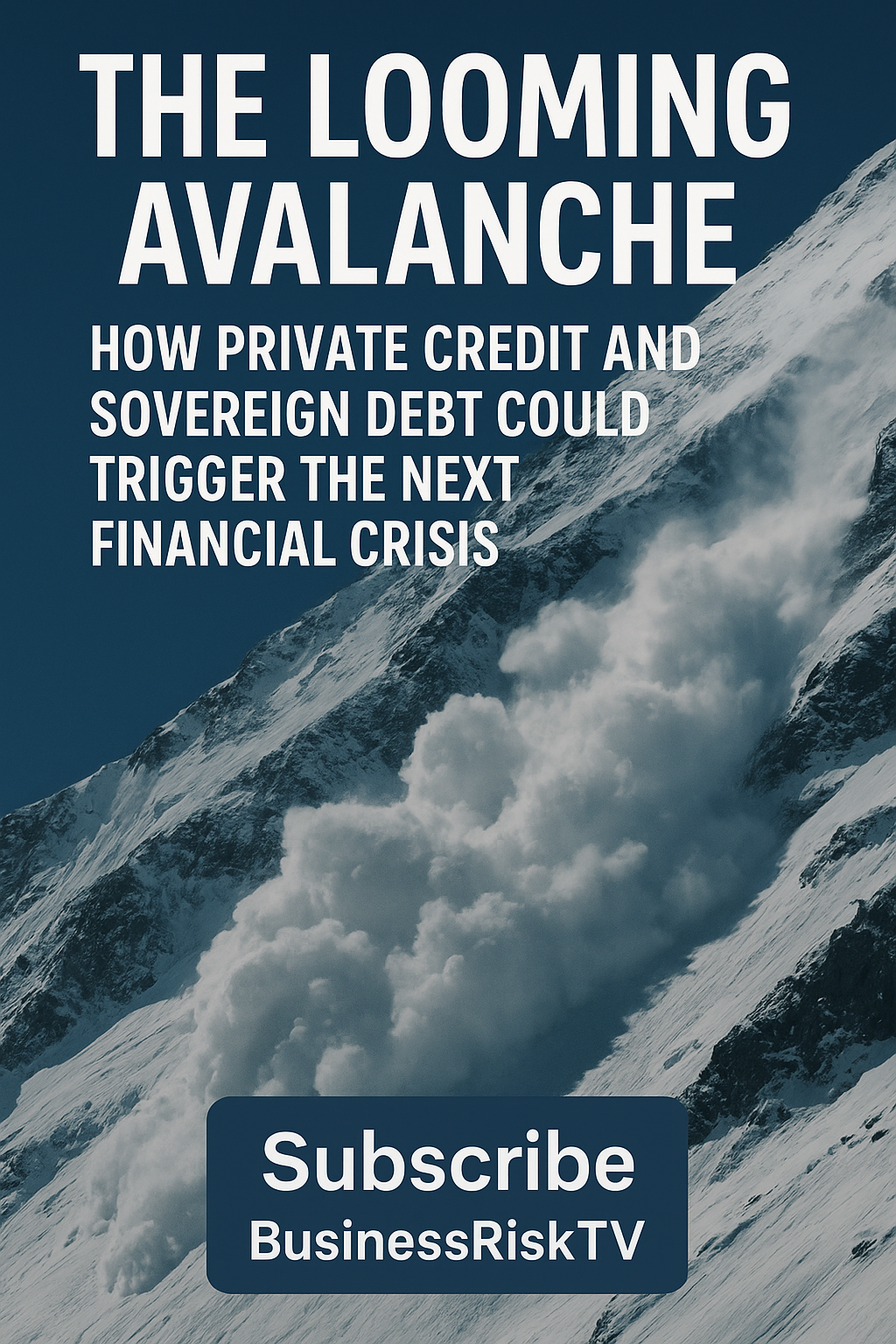
The Looming Avalanche: How Private Credit and Sovereign Debt Could Trigger the Next Financial Crisis

The collapses of First Brands and Tricolor are not mere isolated events. In the words of Jamie Dimon, they are the “cockroaches” that signal a deeper infestation of risk within the private credit market . This article for business decision-makers conducts a crucial risk analysis, building on the warning from the IMF’s Global Financial Stability Report about the close connections between private credit and mainstream banks .

We explore the fundamental vulnerabilities of high leverage, opacity, and weak underwriting, drawing parallels to the pre-2008 subprime mortgage crisis. A special focus is given to the dangerous rise of Payment-in-Kind (PIK) bonds, which allow companies to mask a liquidity crisis by paying interest with more debt, creating a hidden mountain of obligations .

The core of our analysis provides actionable business risk management tips. We outline a clear strategy for leaders to mitigate this threat, emphasising the need for unprecedented transparency, active covenant monitoring, and rigorous stress-testing against a liquidity shock. The time for vigilance is now. Proactive risk management is not just about protection; it’s a competitive advantage in a volatile world.

Beyond Idiosyncratic Failures: A Systemic View of Recent Scandals

A war-gaming exercise of the private credit market would likely reveal that the recent failures of First Brands and Tricolor are not isolated incidents, but rather symptoms of broader, systemic vulnerabilities. The parallels to the pre-2008 environment are striking: high leverage, opacity, and complex interconnections are creating a latent risk within the financial system .

The core of the problem lies in the explosive growth of the private credit market, which has ballooned to a $1.5 trillion asset class . This rapid expansion, occurring largely outside the regulated banking sector, has been fueled by a search for yield in a prolonged low-interest-rate environment. The inherent lack of transparency and regulatory oversight in private credit means that risks are often poorly understood and priced . The IMF has explicitly highlighted the “close connections between private credit markets and mainstream banks” as a primary concern, indicating that stress could rapidly transmit to the core of the financial system .

The following risk analysis and mitigation strategies are designed to help key decision-makers navigate this evolving threat.

Risk Analysis: Beyond “Idiosyncratic” Failures

The collapses of First Brands and Tricolor should be treated as critical data points. Jamie Dimon’s “cockroach” analogy suggests that where there are two public failures, more are likely lurking in the shadows . A deeper analysis points to several interconnected vulnerabilities:

  1. Excessive Leverage and Weak Underwriting: The fundamental driver of risk is the high level of debt placed on companies, often accompanied by weakening lending standards. This is reminiscent of the pre-2008 subprime mortgage frenzy, where the quality of the underlying asset was compromised.
  2. Opacity and Complexity: Unlike public markets, private credit instruments are illiquid and lack standardised reporting . This opacity is compounded by the resurgence of complex structuring, such as the “slicing and dicing” of loan structures, which obscures the true location and concentration of risk.
  3. Linkages to the Broader System: The IMF’s concern underscores that private credit is no longer a niche segment. Mainstream banks provide funding and credit lines to non-bank lenders, and a wave of defaults in private credit could trigger a liquidity crunch that spills over into the banking sector.
  4. The PIK Debt Delusion: A specific and dangerous trend is the increasing use of Payment-in-Kind (PIK) bonds and PIK toggles . These instruments allow companies to pay interest with more debt instead of cash, creating a “financial time bomb” where corporate debt loads balloon silently until they become unsustainable .

Business Risk Management Tips for Decision-Makers

To mitigate these threats, businesses must move beyond complacency and adopt a proactive, rigorous risk management stance.

  1. Demand Unprecedented Transparency in Counterparty Risk: Do not accept surface-level financials. Insist on transparent, defensible credit scores and rigorous due diligence for any entity exposed to private credit markets, whether as an investment, lender, or key partner. Use standardised scorecards that combine quantitative and qualitative factors to assess risk consistently .
  2. Implement Active, Not Passive, Portfolio Surveillance: Move beyond static annual reviews. Establish active monitoring systems that track covenant cushions in real-time and proactively identify deteriorations in credit quality. Advanced covenant monitoring is pivotal for early detection of potential breaches.
  3. War-Game Your Exposure to a Liquidity Shock: Conduct stress tests that model a scenario where the private credit market seizes up. How would a simultaneous default of several major borrowers impact your liquidity, collateral requirements, and access to capital? Map your direct and indirect exposures to banks with heavy private credit ties.
  4. Scrutinise Debt Structures for PIK and Toggle Features: Treat any exposure to PIK bonds and PIK toggle notes with extreme caution. These instruments are a major red flag for underlying cash-flow problems and significantly increase ultimate loss severity.
  5. Strengthen Focus on Operational Risk: The rapid growth and complexity of private credit can outstrip internal administrative controls. Ensure your recordkeeping, data aggregation, and portfolio administration systems are robust to avoid operational failures that can amplify financial losses.
  6. Recalibrate Risk Models for a New Reality: The assumption that private credit is a stable, low-default asset class is outdated. Recalibrate your internal risk models annually to reflect the current high-leverage, high-interest-rate environment, incorporating leading benchmarks and forward-looking climate and ESG risk factors.

Get help to protect and grow your business faster with BusinessRiskTV

Find out more about how to grow your business faster

BusinessRiskTV Business Risk Management Club Membership

Subscribe for free business risk management ideas reviews and cost cutting opportunities

Connect with us for free business risk management tips

Enterprise Risk Management Magazine BusinessRiskTV ERM Magazine

Read more business risk management articles and view videos for free

Connect with us for free alerts to new business risk management articles and view videos

Contact Us To Subscribe BusinessRiskTV – Reach Global Decision Makers

Could Your Business Survive a Credit Freeze? | Risk Warning

Risk Analysis: Liquidity Crisis in Private Equity & Shadow Banking

Apollo Redemption Crisis 2026: Private Credit Liquidity Risks & 6 Risk Management Strategies for Investors and Business Leaders
Enterprise risk management Magazine articles and videos on business growth and business protection
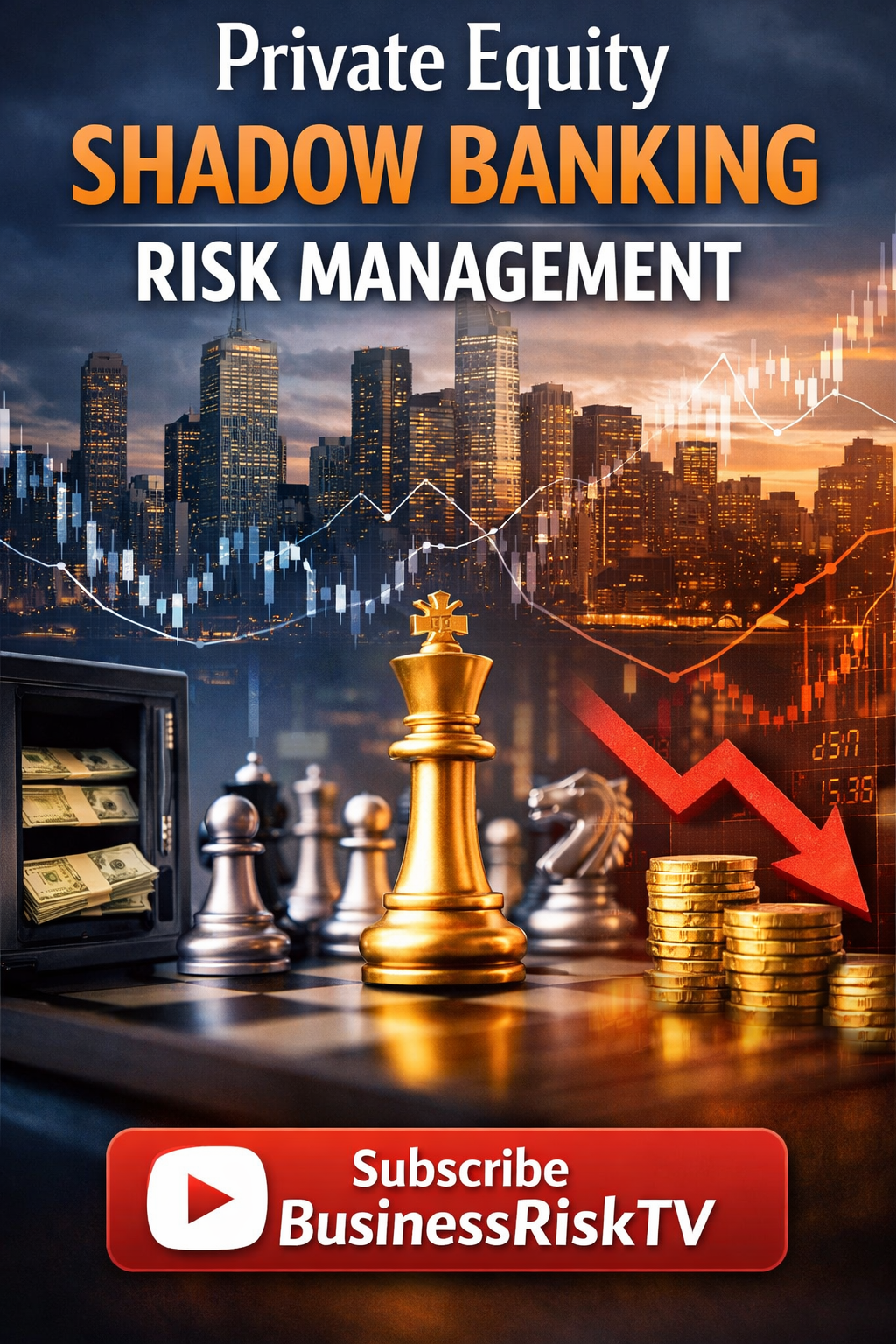
Private Equity Shadow Banking Risk Management Subscribe BusinessRiskTV

The alternative asset management sector—comprising private equity (PE) funds and shadow banks (non-bank financial intermediaries)—is experiencing a structural liquidity crunch. The recent decision by Apollo Global Management to cap redemptions in its $70 billion Apollo Diversified Credit Fund (ADCR) serves as a critical canary in the coal mine. For business leaders and private investors, this signals a shift from an era of abundant private capital to one of “liquidity illusion,” where assets perceived as liquid are becoming trapped, posing systemic solvency risks to portfolios.

1. The Nature of the Crisis

The current stress is rooted in a fundamental mismatch between asset liquidity and liability structures.

  • Asset Illiquidity: Private credit funds and shadow banks have deployed capital into assets that are not publicly traded (direct loans, real estate, infrastructure). These assets lack a clearing price and cannot be sold quickly without steep discounts (fire sales).
  • Liability “Liquidity”: To attract capital, many firms offered investors enhanced liquidity features (quarterly or monthly redemptions) typically reserved for mutual funds, but they invested in illiquid assets.
  • The Interest Rate Shock: The rapid rise in interest rates over the past 24 months has depressed the underlying value of fixed-income private assets. Simultaneously, it has increased the cost of leverage (debt) that these funds use to juice returns.

2. The Apollo Signal: Why It Matters

Apollo’s decision to gate (cap) withdrawals in its ADCR is not an isolated operational issue; it is a systemic indicator.

  • The Mechanism: Apollo invoked a “hard close,” limiting redemptions to roughly 20-30% of investor requests.
  • The Implication: It reveals that even a top-tier asset manager with a pristine balance sheet cannot match investor outflows with cash on hand. If Apollo—one of the largest and most sophisticated players—is facing a liquidity squeeze, smaller private credit firms are likely under severe, unreported stress.
  • Contagion Risk: This event validates the “first mover advantage” in redemptions. Investors who attempted to exit early may get some capital back; those who wait risk being trapped for years during the fund’s wind-down period.

3. Key Risks for Business Leaders & Private Investors

A. Capital Lock-Up & Illiquidity Risk

The most immediate risk is the inability to access capital. Businesses relying on distributions from PE investments for operational cash flow, or investors relying on these funds for retirement or reinvestment, may find their capital frozen for 2 to 5 years beyond the original term.

B. Valuation Shock (The NAV Deception)

Private funds report Net Asset Value (NAV) quarterly, often using subjective models rather than market transactions.

  • The Risk: As redemptions are capped, the actual value of the underlying assets declines due to forced selling pressure elsewhere in the sector. Investors face “stale pricing”—their statements show stable or positive returns, but the actual liquidation value is significantly lower (10–30% haircuts).
C. Margin Call & Leverage Amplification

Many shadow banks and PE funds utilise subscription lines or asset-backed leverage.

  • The Risk: If lenders (traditional banks) lose confidence in the collateral due to falling asset prices or redemption gating, they can issue margin calls. This forces funds to sell assets at distressed prices, eroding capital for all investors, including those who did not request redemptions.
D. Operational & Reputational Contagion

For business leaders acting as general partners (GPs) or corporate borrowers:

  • Risk: If your primary source of debt financing is a shadow bank facing redemption pressures, that lender may cease issuing new loans or may demand early repayment (acceleration) to preserve their own liquidity, jeopardising your business operations.

4. Six Risk Management Measures to Protect Capital Today

In response to this growing crisis, business leaders and private investors must shift from a “return-maximisation” mindset to a “capital-preservation-and-liquidity” framework.

1. Implement a “Liquidity Waterfall” Analysis

Do not rely on contractual redemption terms (e.g., quarterly liquidity) alone.

  • Action: Review the fund’s governing documents for “gating” clauses, side pockets, and suspension of redemption rights. Assume that if a fund’s liquid assets (cash/Treasuries) fall below 10-15% of AUM, gates will be triggered.
  • For Businesses: Map out your cash flow runway assuming zero distributions from PE holdings for 24 months. Adjust operating budgets to eliminate reliance on this uncertain capital.

2. Prioritise Secondary Market Sales

If you hold interests in private funds (PE, private credit, real estate), waiting for the fund to liquidate is increasingly risky.

  • Action: Engage secondary market brokers (e.g., SecondMarket, Jefferies) to sell LP interests now. While pricing may be at a discount (85-95 cents on the dollar), this secures liquidity. Waiting for a forced fund restructuring later could result in 50-70 cents on the dollar.

3. De-risk Counterparty Exposure (Shadow Banking)

For business leaders utilising private credit for corporate financing, treat shadow banks as counterparties with higher risk than traditional banks.

  • Action: Diversify lending relationships. If you have a single private credit facility, secure a backup revolving credit facility (RCF) with a traditional commercial bank. Review loan covenants to ensure that a lender’s internal liquidity crisis does not trigger a subjective acceleration clause.

4. Stress Test Leverage and Subscriptions

Many private investors use subscription lines (leverage against their uncalled capital commitments).

  • Action: Model a scenario where the fund calls 100% of remaining capital immediately (a “capital call”) while simultaneously distributions drop to zero. Ensure you have sufficient liquid reserves to meet these calls. Failure to do so could result in default and forfeiture of existing equity.

5. Demand Granular Transparency

Standard quarterly reports are insufficient in a liquidity crisis.

Action: Request a “liquidity report” from fund managers detailing:

      • Percentage of AUM held in cash and government securities.
      • Current leverage ratios (debt-to-equity).
      • Concentration of assets facing potential default.
      • If managers refuse to provide this, treat it as a red flag and accelerate exit plans.

6. Rotate to True Liquidity & Seniority

Reduce allocation to “private” structures and rotate into assets where the liquidity transformation risk is not present.

  • Action: Shift capital to publicly traded Business Development Companies (BDCs) or listed private equity vehicles rather than closed-end funds. While their share prices may be volatile, they offer daily liquidity.
  • For Business Treasury: Move excess cash from money market funds that invest in private credit (a growing trend) into Treasury-only money market funds or FDIC-insured sweep accounts. The yield may be slightly lower, but the principal security and liquidity are absolute.

Conclusion

The Apollo redemption cap is a definitive signal that the shadow banking system is reaching the limits of its liquidity transformation model. For sophisticated investors and business leaders, the next 12 to 24 months will not be defined by which assets generate the highest IRR, but by which entities survive the liquidity squeeze. Liquidity is no longer a convenience; it is the primary risk management metric. Proactive measures—exiting through secondaries, demanding transparency, and de-risking counterparty exposure—are essential to avoid being trapped in a fund structure that prioritises the manager’s stability over the investor’s access to capital.

#PrivateCreditCrisis #LiquidityRiskManagement #ApolloRedemptionCap #BusinessRiskTV #RiskManagement

Private Credit Crisis Warning

Enterprise risk management magazine articles and videos on business growth and business protection
Could Your Business Survive A Credit Freeze Subscribe BusinessRiskTV

Most businesses won’t survive the next credit freeze. Not because they lose customers… but because they run out of cash.

Three things smart CEOs are doing now:”

• Build 12-month cash buffer
• Lock in credit lines today
• Stress-test revenue shocks

If banks stopped lending tomorrow…

Would your business survive?

Follow BusinessRiskTV.

Subscribe for Business Risk Intelligence

Private Credit Crisis: Are First Brands and Tricolor the Canary in the Coal Mine?

#BusinessRisk
#FinancialCrisis
#CreditCrisis
#LiquidityRisk
#BusinessRiskTV


Private Credit Crisis Canary in Coal Mine First Brands Tricolor

Risk Profile Of A Company

BusinessRiskTV Online Business Coach Service

Understand your enterprise risk profile to make better decisions. Develop new risk management strategies to help you navigate uncertainty easier and cheaper. Understand the relationship between business risk management and insurance. Create an enterprise risk management road map to boost business resilience and improve performance. Improve your enterprise risk analysis. Sign up with business risk assessment coach to find our where you are now and work towards where you want to get to.

Biggest threat to business
What Will Threaten Your Business This Year

Enter code #RiskProfileOfCompany

Online Business Coach and Enterprise Risk Management Mentor
Business Opportunities and Threats
Business Threats and Opportunities Live

Enter code #OnlineBusinessCoach
How To Create A Risk Profile With Help From BusinessRiskTV

Better Risk Management with BusinessRiskTV
Improve Risk Management with BusinessRiskTV Toolbox Talk
Better Risk Management with BusinessRiskTV
Strategies for preventing the spread of infectious diseases
Infectious disease limiting or stopping business activity
Infectious disease risk assessment
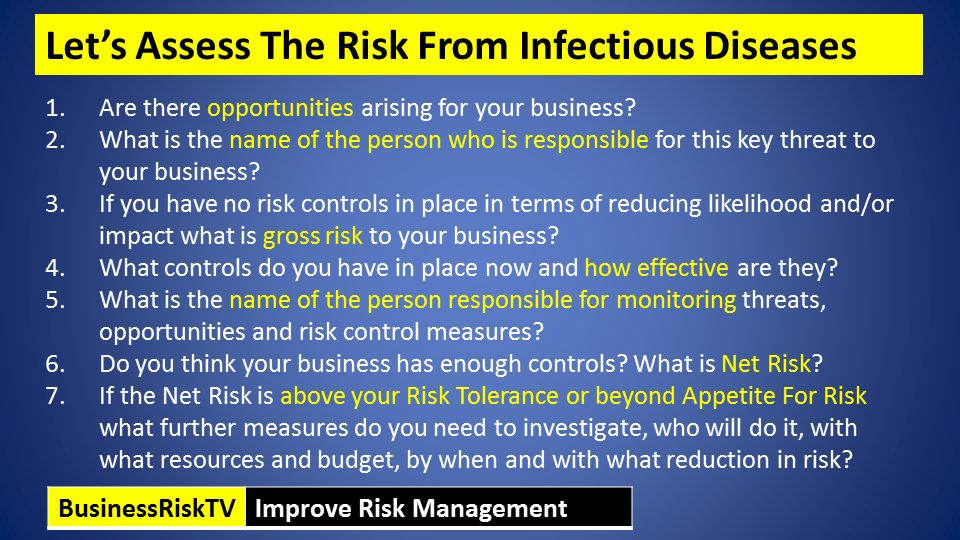
Lets Assess The Risk From Infectious Diseases
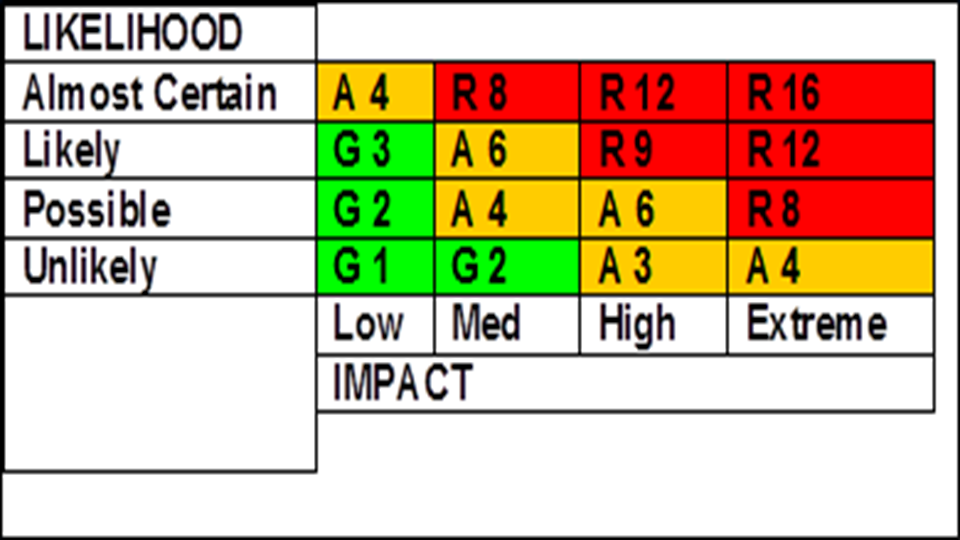
Enterprise-wide risk assessment template
Enterprise Wide Risk Assessment Matrix
Professional Risk Manager
BusinessRiskTV Professional Risk Manager
Improve Risk Management with BusinessRiskTV
MarketplacesExhibitions
Cost ReductionsRisk Magazine
Discover new ways to protect and grow your business with BusinessRiskTV
Ways To Improve Business Performance with BusinessRiskTV

#BusinessRiskTV #OnlineBusinessCoach #OnlineBusinessMentor #EnterpriseRiskManagementCoach #EnterpriseRiskManagementMentor #RiskManagementCoach #RiskManagementMentor

Risk Profile Of A Company

Risk Experts Hub BusinessRiskTV Business Experts Network

Find the best risk expert for your country or industry with BusinessRiskTV.com

Business Experts Network

ExpertsHub of risk management experts. Business experts network. Risk Experts Hub. Take more balanced risks to achieve more with risk experts to help you. Avoid taking risks blindly and letting risk events occur in the risk knowledge gap. Connect with risk management experts online.

Create greater business value with more confidence.

BusinessRiskTV

Our global experts can help you online and our local risk experts can come and visit you. Look to the future with our risk experts. Put in place the controls to mitigate threats. Seize new business development opportunities paying greatest return.

Email editor@businessrisktv.com to find help from experts around the globe or CLICK HERE. Enter code #RiskExperts

Join the discussion with our risk experts online for free

Assess your key risks and make better business decisions more often. Ask for help or share better business solutions. Connect in our business experts network to improve your business performance.

Join BusinessRiskTV for free today

Subscribe to BusinessRiskTV for free alerts bulletins and risk reviews from risk experts to your inbox

Enter code #RiskExperts

MarketplacesExhibitions
Cost ReductionBusiness Magazine
Discover better ways to protect and grow your business with BusinessRiskTV

#BusinessRiskTV #BusinessExpertsNetwork #ExpertsHub #RiskExperts #RiskExpertsHub #BusinessExperts #BusinessRiskAnalysis #BusinessExpertsNetwork

Risk Experts Hub BusinessRiskTV Business Experts Network

Corporate Risk Management Expert BusinessRiskTV

BusinessRiskTV Risk Consulting and training

Professional risk management experts

Corporate risk management expert tips advice and support. Analysing all types of corporate risk. Are you a management expert wanting to develop your business. What must you know about corporate risks today? Our corporate risk management experts help you focus your resources on corporate risks that matter. Protect and grow your business faster with less uncertainty.

Our risk management specialists are industry business leaders country risk experts or highly experienced risk managers and consultants. Their training skills and experience will help you identify key threats and opportunities which could negatively or positively impact on your business objectives.

Take a more holistic risk management approach for all types of risks facing your business to be more successful in future

BusinessRiskTV

Risk events from any type of risk on its own or in combination can be fatal to an business strategy. Corporate risk management experts can be embedded in your decision making to support and advise on developing a new risk management strategy for greater certainty and success in business.

Integrating corporate risk management into strategic operational and project decision making will help you get the most out of your investment of time and money.

Email editor@businessrisktv.com for help from risk experts

Being successful in business is about managing risks cost effectively not risk avoidance

Take controlled risks to achieve more for your business. Effective risk assessment and risk management will give you more confidence you are making the best decisions bearing in mind external and internal business risk factors.

Create more corporate value. Build stronger business resilience regardless of business environment to beat your competition with better corporate risk management.

Incorporate enterprise risk management practices into your business decision-making process

Find out more

Corporate Risk Management Expert Hub

Corporate Risk Management In The Spotlight

Corporate Risk Management In The Spotlight

10 Fundamentals Of Corporate Risk Management Guide

In today’s dynamic business landscape, organisations face numerous challenges and uncertainties that can impact their success. To navigate these complex waters, companies need to develop robust risk management strategies. Effective risk management enables businesses to identify, assess, and mitigate potential risks, protecting their assets, reputation, and bottom line. In this comprehensive guide, BusinessRiskTV provides invaluable insights into corporate risk management, highlighting key principles, methodologies, and best practices to help organisations stay resilient and thrive in the face of uncertainty.

Understanding Risk Management
To effectively manage risks, it is essential to have a clear understanding of what risk management entails. Risk management is a proactive process that involves identifying, assessing, prioritising, and mitigating potential threats and opportunities that can impact an organisation’s objectives. By embracing risk management, businesses can make informed decisions, optimise opportunities, and protect themselves from potential harm.

The Importance of Risk Culture
Risk management is not solely the responsibility of a dedicated department but should be embedded within an organisation’s culture. Establishing a risk-aware culture ensures that risk management becomes an integral part of everyday operations. By fostering a culture that encourages open communication, accountability, and continuous learning, companies can create an environment where risks are identified, discussed, and managed effectively at all levels.

The Risk Management Process
A structured risk management process is crucial for systematic and effective risk mitigation. This section outlines the key steps involved in the risk management process:

a. Risk Identification: Identify potential risks that could impact the organisation’s objectives. This involves analysing internal and external factors, conducting risk assessments, and seeking input from various stakeholders.

b. Risk Assessment: Evaluate the likelihood and potential impact of identified risks. This step involves quantifying risks, considering their interdependencies, and prioritising them based on their significance.

c. Risk Mitigation: Develop strategies and action plans to manage and mitigate identified risks. This may involve implementing preventive measures, transferring risks through insurance, or creating contingency plans to minimise the potential impact.

d. Risk Monitoring and Review: Continuously monitor and review the effectiveness of risk management strategies. Regular evaluations help identify emerging risks, reassess existing risks, and ensure the implemented measures remain relevant.

Types of Risks in Corporate Environments
Businesses face a wide range of risks across different aspects of their operations. Understanding these risks is essential for effective risk management. Here are some key types of risks commonly encountered in corporate environments:

a. Strategic Risks: Risks associated with the organisation’s strategic decisions, such as market volatility, changing consumer preferences, or technological disruptions.

b. Operational Risks: Risks arising from internal processes, systems, or human errors, including supply chain disruptions, equipment failures, or cybersecurity breaches.

c. Financial Risks: Risks related to financial management, including market fluctuations, liquidity issues, credit risks, or non-compliance with regulatory requirements.

d. Compliance Risks: Risks associated with non-compliance with laws, regulations, or industry standards, potentially leading to legal consequences, reputational damage, or financial penalties.

e. Reputational Risks: Risks that can harm an organization’s reputation, such as negative publicity, customer dissatisfaction, or unethical behaviour.

f. Environmental and Social Risks: Risks associated with environmental sustainability, social responsibility, and stakeholder expectations. These risks can include climate change impacts, community relations, or labour issues.

Risk Assessment Techniques
To effectively manage risks, organisations employ various techniques to assess and prioritise potential threats. Some commonly used risk assessment techniques include:

a. Qualitative Risk Assessment: Involves evaluating risks based on subjective criteria, such as likelihood and impact, using qualitative scales or matrices. This method provides a qualitative understanding of risks but does not involve precise numerical calculations.

b. Quantitative Risk Assessment: Utilises quantitative data and statistical analysis to assess risks. This involves assigning numerical values to likelihood and impact, calculating risk scores, and prioritising risks based on their quantitative measures. Techniques such as Monte Carlo simulations and sensitivity analysis can be employed for more accurate assessments.

c. Scenario Analysis: Involves developing hypothetical scenarios to evaluate risks and their potential impacts. By exploring different scenarios, organisations can assess the likelihood and consequences of specific events or situations and develop appropriate risk response strategies.

d. SWOT Analysis: A strategic planning tool that assesses an organisation’s strengths, weaknesses, opportunities, and threats. This analysis helps identify risks arising from internal factors (strengths and weaknesses) and external factors (opportunities and threats), allowing companies to develop targeted risk mitigation strategies.

e. Delphi Technique: A structured method that involves obtaining input from multiple experts or stakeholders anonymously. The experts provide their opinions on potential risks, and the responses are collated and analysed to identify areas of consensus and disagreement. This technique helps capture diverse perspectives and improve risk assessments.

Risk Mitigation Strategies
Once risks are identified and assessed, organisations need to develop appropriate risk mitigation strategies. Here are some common strategies employed in corporate risk management:

a. Risk Avoidance: Involves eliminating activities or situations that pose significant risks. This strategy may include discontinuing certain products or services, exiting high-risk markets, or terminating partnerships with unreliable entities.

b. Risk Reduction: Focuses on minimizing the likelihood or impact of risks. This can be achieved through implementing control measures, improving operational processes, enhancing security systems, or implementing redundancy plans.

c. Risk Transfer: Involves transferring the financial burden of risks to external parties. This can be done through insurance policies, contracts, or outsourcing certain activities to specialised service providers who assume responsibility for specific risks.

d. Risk Acceptance: Sometimes, organizations may choose to accept certain risks if the cost of mitigation outweighs the potential impact. However, even in such cases, organisations need to closely monitor and manage accepted risks to minimise adverse outcomes.

e. Risk Diversification: Spreading risks across different markets, products, or business lines can help reduce the concentration of risks. Diversification provides a buffer against the impact of specific risks and ensures that the organisation is not overly exposed to a single threat.

f. Crisis Management Planning: Developing robust crisis management plans enables organizations to respond effectively to unforeseen events. This involves outlining clear roles and responsibilities, establishing communication protocols, and conducting regular drills to test the plan’s efficacy.

The Role of Technology in Risk Management
Technology plays a vital role in modern risk management practices. Innovative tools and technologies enable organisations to enhance their risk management processes in several ways:

a. Data Analytics: Advanced data analytics techniques allow organisations to extract meaningful insights from vast amounts of data. By analyzing historical and real-time data, organizations can identify patterns, detect emerging risks, and make informed decisions.

b. Risk Monitoring and Early Warning Systems: Real-time monitoring systems powered by artificial intelligence and machine learning can identify potential risks and alert organizations to take timely action. These systems provide early warnings, enabling proactive risk management.

c. Cybersecurity Measures: With the increasing prevalence of cyber threats, robust cybersecurity measures are critical for protecting sensitive data and systems. Implementing firewalls, encryption techniques, and intrusion detection systems helps mitigate cybersecurity risks.

d. Automation and Robotics: Automation technologies streamline risk management processes, reducing human errors and improving efficiency. Robotic process automation (RPA) can handle repetitive tasks, data entry, and report generation, freeing up valuable human resources for more strategic risk management activities.

e. Cloud Computing: Cloud-based solutions provide organisations with secure storage, easy access to data, and enhanced collaboration capabilities. Cloud computing enables real-time data sharing, facilitates remote work, and improves business continuity in the event of a crisis.

f. Predictive Analytics: Predictive modeling techniques leverage historical data and algorithms to forecast future risks and trends. By analysing past patterns and behaviours, organisations can proactively identify potential risks and take preventive measures.

Integrated Risk Management
Integrated risk management (IRM) is an approach that combines all aspects of risk management into a unified framework. IRM breaks down silos and fosters collaboration among different risk management functions within an organization. By integrating various risk disciplines, such as operational risk, financial risk, and compliance risk, organisations can gain a comprehensive view of risks and their interdependencies.

IRM promotes a holistic understanding of risks, enabling organisations to make well-informed decisions that consider the broader impact on multiple areas of the business. It encourages a shared language and consistent methodologies for risk assessment, allowing for more effective communication and coordination.

Furthermore, IRM encourages the alignment of risk management with strategic objectives. By integrating risk considerations into strategic planning processes, organisations can identify and address risks that could hinder the achievement of their goals. This proactive approach ensures that risk management becomes an integral part of decision-making at all levels of the organisation.

Continuous Improvement and Adaptation
Risk management is not a one-time exercise but an ongoing process. As the business landscape evolves, new risks emerge, and existing risks change in nature. Therefore, organisations must continuously review and adapt their risk management strategies to remain effective.

Regular risk assessments and monitoring mechanisms help identify emerging risks and allow for timely adjustments to risk mitigation strategies. Additionally, organisations should foster a culture of learning and improvement, encouraging employees to report near-misses, share lessons learned, and propose enhancements to existing risk management practices.

In today’s volatile business environment, effective corporate risk management is essential for organisations to survive and thrive. By understanding the principles, methodologies, and best practices outlined in this BusinessRiskTV Guide, businesses can develop robust risk management strategies that protect their assets, reputation, and bottom line.

Remember, risk management is a proactive and integrated process that requires a risk-aware culture, structured methodologies, and the effective use of technology. By identifying and assessing risks, developing appropriate mitigation strategies, and continuously monitoring and adapting, organizations can navigate uncertainties with confidence and seize opportunities for growth.

Stay informed, stay vigilant, and make risk management a priority to ensure the long-term success of your organisation in an ever-changing business landscape.

#BusinessRiskTV #CorporateRisks #CorporateRiskManagement #CorporateRiskExperts #CorporateRiskManagementExpert #CorporateRiskNews #RiskManagement

Corporate Risk Management Expert BusinessRiskTV

Expert Network Business Experts In Their Country or Industry

Expert network helping business leaders manage business risks better on BusinessRiskTV.com

Leading experts in their industry or country come together to make business decision making easier. Discover the best business practices quicker. Exchange business risk management information. Ask how to overcome business barriers.

Governance risk and compliance expert network offering you tips help and support to manage business risks

BusinessRiskTV
Business Experts To Solve Every Business Problem

Subscribe to BusinessRiskTV.com for free enter code #BusinessExperts

Subscribe to BusinessRiskTV for free governance risk and compliance tips to your inbox from our experts network

Enter code #ExpertsNetwork

Promote and market your business on BusinessRiskTV for 12 months

Cheap ways to promote your business

Find out how to promote your business locally and globally. CLICK HERE to find out more.

MarketplacesExhibitions
Save MoneyRisk Magazine

Discover new ways to protect and grow your business with BusinessRiskTV

#BusinessRiskTV #ExpertNetwork #ExpertsNetwork #ExpertNetworks #ExpertNetworking #ExpertsNetworking #ExpertsInBusiness

BusinessRiskTV Expert Network Business Experts In Their Country or Industry

Find out from business experts

Business Expert Advice With BusinessRiskTV.com

Subscribe to BusinessRiskTV for free alerts and bulletins on upcoming webinars and risk expert panel questions and answers

Business experts share corporate risk management knowledge. Avoid procrastination and make better business decisions. Grow your business faster.

Network with our community of business experts to help protect your business and grow it faster with less uncertainty

Find risk management consultants you need for your business. Our business risk management experts can answer your questions provide advice and provide risk insight.


Our experts panel online events are designed to help your business grow faster. Access good business risk management advice on the risks in your country and industry. Develop and protect your business better. Find answers to questions about your own business risks. Ask the experts.

Enterprise Risk Management Expert Panels Online

Do you need advice from an expert?

In the world of business, making the right decisions can be the difference between success and failure. Business owners must be able to weigh the potential risks and rewards of each decision before taking action. But with so many variables to consider, making good business decisions can be a daunting task. Fortunately, BusinessRiskTV.com is here to help. In this article, we’ll explore the importance of good business decisions and how BusinessRiskTV.com can help you make them.

Why Good Business Decisions are Important

Making good business decisions is essential for the long-term success of any company. Here are a few reasons why:

Maximising profits: Good business decisions can help you maximise your profits by identifying opportunities to cut costs, increase revenue, and improve efficiency.

Mitigating risks: Every business decision involves some level of risk. Making good decisions can help you identify and mitigate potential risks, reducing the likelihood of financial losses.

Building trust: Making good decisions can help build trust with customers, employees, and investors. By demonstrating your ability to make sound decisions, you can inspire confidence in your stakeholders and build a positive reputation for your company.

Improving innovation: Good business decisions can lead to innovative ideas and solutions, helping your company stay ahead of the competition.

How BusinessRiskTV.com can Help

BusinessRiskTV.com is an online platform designed to help businesses manage risks and make informed decisions. Here are some of the ways BusinessRiskTV.com can help you make good business decisions:

Risk Management Tools: BusinessRiskTV.com provides a wide range of risk management tools to help you identify, assess, and mitigate potential risks. These tools can help you make informed decisions based on data-driven insights.

Expert Advice: BusinessRiskTV.com provides access to a network of experts in various industries. These experts can offer valuable insights and advice on how to make informed business decisions.

Industry Insights: BusinessRiskTV.com provides access to a wealth of industry insights and data. By staying up-to-date with the latest trends and developments in your industry, you can make informed decisions that give you a competitive edge.

Training and Education: BusinessRiskTV.com provides training and education resources to help you and your team improve your decision-making skills. By developing your ability to make informed decisions, you can improve the overall performance of your company.

Examples of Good Business Decisions

Let’s take a look at some real-world examples of good business decisions:

Apple’s Decision to Focus on Design: In the early 2000s, Apple made the decision to focus on design, creating products that were both aesthetically pleasing and functional. This decision helped Apple differentiate itself from competitors and build a loyal customer base.

Netflix’s Decision to Move into Original Content: In 2013, Netflix made the decision to move into original content, producing shows like House of Cards and Orange is the New Black. This decision helped Netflix reduce its reliance on licensed content and establish itself as a major player in the entertainment industry.

Amazon’s Decision to Invest in Technology: Amazon has consistently invested in technology, from its early days as an online bookseller to its current position as a leading e-commerce and cloud computing company. This decision has helped Amazon stay ahead of the competition and maintain its position as a market leader.

Coca-Cola’s Decision to Expand into New Markets: Coca-Cola has a long history of expanding into new markets, from its early days in the United States to its current position as a global brand. This decision has helped Coca-Cola maintain its position as one of the world’s most recognisable brands.

Ford’s Decision to Introduce the Model T: In 1908, Ford made the decision to introduce the Model T, a car that was affordable and easy to produce. This decision revolutionised the automobile industry, making cars accessible to the average person and transforming transportation as we know it.

These examples demonstrate the importance of making good business decisions and the impact they can have on a company’s success.

Making good business decisions is essential for the long-term success of any company. By identifying and mitigating potential risks, maximising profits, building trust, and improving innovation, good business decisions can help companies stay ahead of the competition and achieve their goals.

BusinessRiskTV.com is an online platform designed to help businesses manage risks and make informed decisions. By providing access to risk management tools, expert advice, industry insights, and training and education resources, BusinessRiskTV.com can help companies make informed decisions that drive their success.

So if you want to make good business decisions, turn to BusinessRiskTV.com. With its wealth of resources and expert guidance, you can make informed decisions that help your company achieve its goals and thrive in today’s competitive business landscape.

Enter code #BusinessExperts

Promote and market your business on BusinessRiskTV for 12 months

Cheap ways to promote your business

Find out how to promote your business locally and globally

Read risk management articles and watch videostream trending on BusinessRiskTV

Ask The Experts

Sharing Risk Knowledge and Building Risk Management Professionalism

Making Better Business Decisions

Ways To Grow Your Business Faster

Online Networking

Marketplaces Exhibitions
Deals Risk Magazine

Discover new ways to protect and grow your business with BusinessRiskTV

#BusinessRiskTV #BusinessExperts #RiskExperts #RiskManagementExperts #RiskManagement #EnterpriseRiskManagement

BusinessRiskTV Find out from business experts

Interested in speaking as a country or industry or specific type of risk expert

All types of risk management tips advice and support on BusinessRiskTV.com

Could you help business leaders and help yourself at the same time? You can with BusinessRiskTV. Join our panel of enterprise risk management experts. Network with your peers and risk management experts to boost your business performance. Pick up tips to overcome barriers to business growth.

Importance Of Risk Taking In Entrepreneurship

Importance Of Risk Taking In Business

Subscribe to BusinessRiskTV for free alerts and bulletins to upcoming panel discussions and debates

Enter code #RiskPanel

Recommended articles and videos trending on BusinessRiskTV

Enterprise Risk Management Experts On Business Protection And Business Growth
Enter code #ERMexperts

Business Risk News Videos

Citizen Journalism Videos

Business Live Streaming

Business Risk Radar

Risk Events

Managing business risk advice tips consulting and training with BusinessRiskTV

Get help support and advice from our risk management experts with BusinessRiskTV

#BusinessRiskTV #Speakers #RiskExperts #IndustryExperts #CountryExperts #ExpertPanels #BusinessTips #BusinessAdvice #RiskManagementTraining #Networking

Interested in speaking as a country or industry or specific type of risk expert

Failure Of Governance

Poor corporate governance endangers the existence and success of businesses

Learn how to improve the way you do things in business

Looking at the costs of failure of governance. Good governance can be expensive but not compare to the cost of governance failure.


The risk of enterprise failure increases with inadequate governance risk and compliance processes

There are many examples of the biggest firms in the world collapsing due to bad risk management practices. Good corporate governance risk and compliance systems build business resilience and can improve business performance.

Corporate Governance Failure
Subscribe to BusinessRiskTV for latest news headlines opinions risk analysis and reviews of success and failure in business

Subscribe to BusinessRiskTV for latest news headlines opinions risk analysis and reviews of success and failure in business


Managing Business Rules

There are several techniques that can be useful for managing business rules in an organisation. Here are some recommendations:

Documenting business rules: One of the most important techniques for managing business rules is to document them in a clear and concise manner. This can include using a variety of formats such as decision tables, flowcharts, and natural language descriptions.

Centralising business rules: To avoid inconsistencies and duplication of effort, it is advisable to centralise the management of business rules. This can be done using a dedicated software tool or a repository that stores the rules and makes them accessible to relevant stakeholders.

Version control: It is crucial to keep track of changes to business rules over time, especially when multiple stakeholders are involved. Version control techniques such as branching and merging can help in managing changes to business rules.

Testing and validation: Business rules should be tested and validated thoroughly to ensure their accuracy and effectiveness. This can be done using a variety of techniques such as unit testing, integration testing, and user acceptance testing.

Auditing and monitoring: Regular auditing and monitoring of business rules can help to identify any potential issues or areas for improvement. This can be done using automated tools or through manual reviews.

Governance and ownership: Establishing clear governance and ownership of business rules is essential to ensure that they are being managed effectively. This can include assigning ownership to specific individuals or teams and establishing processes for reviewing and approving changes to business rules.

By following these techniques, organisations can effectively manage their business rules and ensure that they are aligned with their business objectives and regulatory requirements.

#BusinessRiskTV #FailureOfGovernance

BusinessRiskTV Failure Of Governance

Online Networking Everything You Need To Know About Risk Management

Stop procrastinating and find ways to overcome barriers to your business success with BusinessRiskTV.com

What online networking groups do you have for risk management knowledge and skills development

Need to know more about benefits of risk management? Connect with local and international risk management experts. Protect your business better and grow it faster with BusinessRiskTV risk management online network and other specialist networking opportunities.

Network online with a BusinessRiskTV
Online networking groups

Connect with leaders in risk management online

Connect with people locally and globally to develop your risk management knowledge. Pick up the latest risk management news opinions and business reviews for free.

Risk Magazine
Business Risk Management Magazine Free Subscription

Join us on Risk Management Online for free networking on YouTube enterprise risk management

Corporate Business Enterprise Risk Management Online
Join us on Risk Management Online for free networking on enterprise risk management

Promote and market your business on BusinessRiskTV for 12 months

Put your products or services in front of new customers already interested in your type of business offering before your competitors do.

Cheap ways to promote your business
Find out how to promote your business locally and globally. CLICK HERE for more information.

Link into your existing sales process direct from BusinessRiskTV or use our eCommerce solutions to increase your sales cash flow and profit

Increase the sources of your revenue streams more sustainably. Grow your business faster with BusinessRiskTV.

Marketplaces Exhibitions
Save Money Risk Magazine
Discover better ways to protect and grow your business with BusinessRiskTV

#BusinessRiskTV #Networking #RiskManagementNetwork #BusinessNetwork #RiskNetwork #RiskManagement

Online Networking Everything You Need To Know About Risk Management

Corporate News Articles Video Streaming Online Opinions Reviews

Corporate Magazine Subscriptions Free On BusinessRiskTV

Subscribe BusinessRiskTV for free corporate risk news alerts and bulletins

Find out what you need to know in business today. Connect with business risk management experts around the world. Make better decisions for your business. Reduce the effect of uncertainty on your business performance.

Risk Magazine

Enterprise Risk Management Magazine Free Subscription

Keep up to date with business and economy news. React quicker to business threats and opportunities. Protect your business better and grow faster.

Our business risk management hub gathers in key business and global economy corporate news which could drive your business forward faster or knock it off course.

Subscribe for free to BusinessRiskTV

Enter code #CorporateNews

Promote and market your business by sponsoring Corporate News Post for 12 months

Effective Digital Marketing Strategy

Reach influencers key decision makers and the business leaders who will buy from your business

Latest BusinessRiskTV Business News Articles and Videos

Breaking news personal finance corporate company financial and global economic news. Risk insight and business analysis into UK and global markets.

Breaking News on BusinessRiskTV.com Online Live News Alerts

BusinessRiskTV News Opinions Reviews

What is happening in the world of business finance and the global economy? How could this impact on your business plans? How do you need to change to survive and prosper?

AcademyMarketplaces
ExhibitionsRisk Magazine

BusinessRiskTV Corporate News Articles and Video Streaming Online Live and On Demand Opinions and Industry Reviews

Risk Management Specialists

Access latest enterprise risk management insight and business intelligence

Help from country risk experts and industry risk experts. Solve your business problems faster. Boost performance. Protect business better. Grow faster.

Enter code #RiskExperts

Risk Management Experts

International Risk Specialists
Subscribe to BusinessRiskTV.com for free enter code #InternationalRiskSpecialists

Develop your risk knowledge and business intelligence

Access expert guidance to identify analyse assess and manage risks. Whatever size of business wherever you are whatever industry

  1. Learn how to manage your business risks better
  2. Identify if you have an effective risk management framework culture or process
  3. Reduce the total cost of risk
  4. Increase new business opportunities
  5. Maximise return on your investment of time and money

Identify risk improvements necessary. Develop your skills and the risk management skills of workforce. Review where you are now. Receive recommendations for corporate risk improvements. Our risk management experts can help guide your business decisions.

Manage the issues facing your business better. Gain enterprise risk insight to understand threats and opportunities.

BusinessRiskTV.com Free Subscription Online
Subscribe to BusinessRiskTV.com for free enter code #InternationalRiskExperts

BusinessRiskTV International Risk Specialists