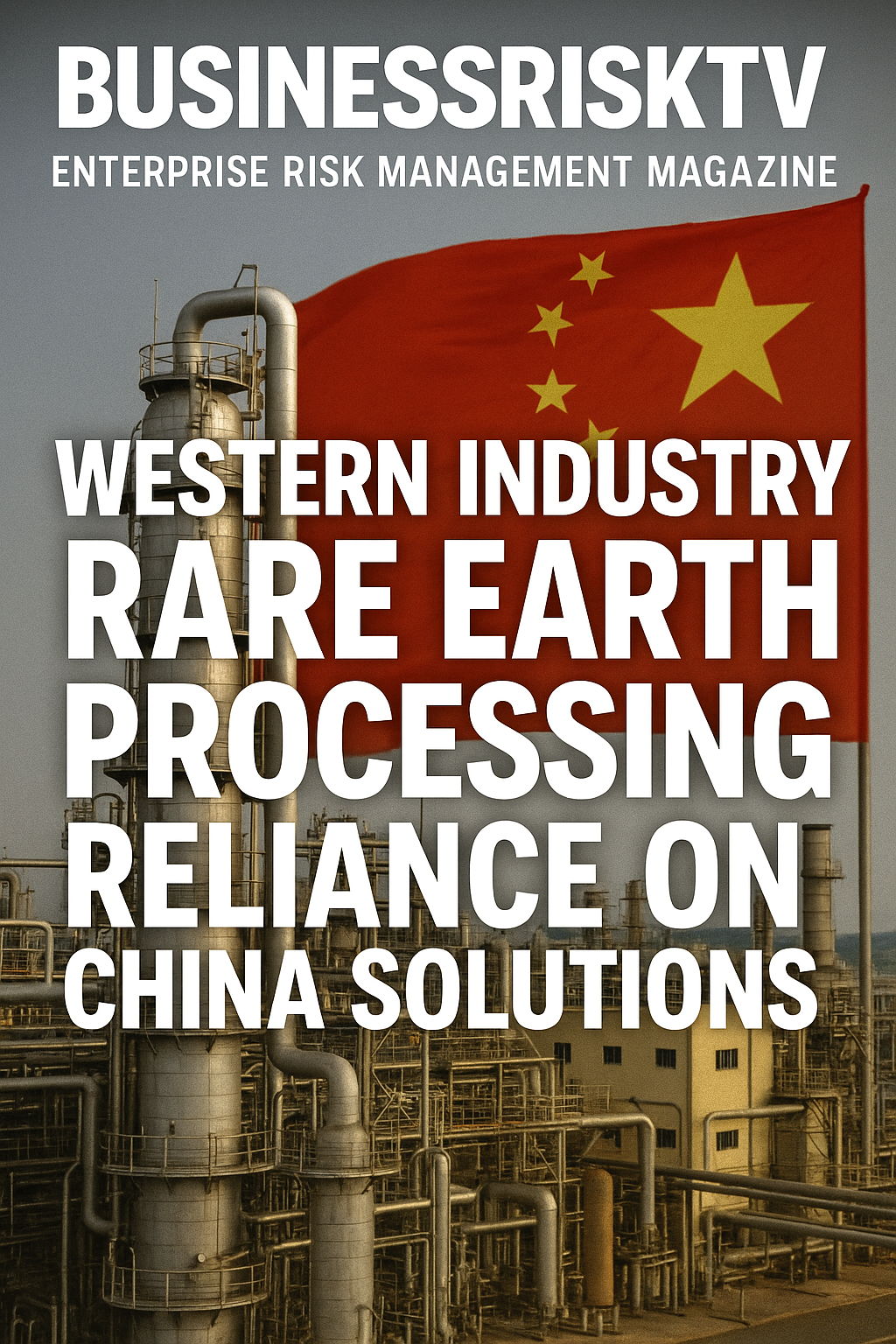
Western industry rare earth processing reliance on China solutions

How does China’s near-monopoly on rare earth processing threaten your business and wallet? Discover the hidden costs for Western manufacturing, from EVs to smartphones, and learn urgent risk management strategies for industry leaders and consumers alike.

The Raw Nerve: Why China’s Grip on Rare Earths Threatens Western Prosperity

Western industry’s 90% reliance on China for rare earth processing is a catastrophic vulnerability. This article unmasks the threat to car manufacturing, consumer goods, and our very future, offering actionable strategies for business leaders to reclaim control and protect profitability.

“If China ever decided to turn off the tap, the lights would go out in boardrooms across the West. We’re not just talking about iPhones and Tesla, we’re talking about the very bedrock of our industrial future. This isn’t a theoretical exercise; it’s a present and growing danger. And frankly, we’ve been utterly complacent.” That’s the stark reality, isn’t it? For too long, Western business leaders have operated under the illusion of an open global market, blissful in their pursuit of short-term cost efficiencies. But what if that efficiency comes at the price of existential vulnerability? The sheer scale of China’s dominance in rare earth mineral processing isn’t just a challenge; it’s an economic weapon poised at our collective throat. This isn’t some abstract geopolitical squabble. This directly impacts your company’s bottom line, your nation’s security, and every consumer’s daily life. It’s time we faced the uncomfortable truth: our industrial future, indeed our very technological sovereignty, is hanging by a thread, and that thread leads directly to Beijing. This isn’t about protectionism; it’s about survival.

The Uncomfortable Truth: China’s Rare Earth Monopoly and Its Perilous Implications

Let’s not mince words. China doesn’t just have a significant share of rare earth mineral processing; it holds a near-monopoly, a stranglehold that few outside the industry truly comprehend. Reports indicate that China controls approximately 90% of the world’s rare earth processing capacity. Let that sink in. Ninety percent. While China may account for around 69% of global rare earth production from its mines, the critical bottleneck, the true leverage point, lies in its unparalleled ability to process these raw materials into usable forms. This isn’t just about digging rocks out of the ground; it’s about the complex, environmentally intensive, and technically demanding process of separation, refining, and alloy production. For decades, Western nations, driven by lower labour costs and less stringent environmental regulations in China, offshored these vital but dirty processes. We outsourced our dirty laundry, and in doing so, we handed over the keys to our industrial kingdom.

This overwhelming dependency on China for rare earth processing presents a colossal problem for Western manufacturing, particularly for high-tech sectors and, critically, the automotive industry. Rare earth elements (REEs) are not, despite their name, inherently rare in the Earth’s crust. However, they are rarely found in concentrated, easily extractable deposits, and their extraction and processing are notoriously complex and environmentally damaging. But their unique magnetic, luminescent, and electrical properties make them indispensable.

Consider the automotive sector. The transition to electric vehicles (EVs) is predicated on the availability of powerful, efficient electric motors. Guess what powers those motors? Neodymium-iron-boron (NdFeB) permanent magnets, which contain critical rare earth elements like neodymium and praseodymium, often enhanced with dysprosium and terbium for high-temperature performance. Without these magnets, EVs become less efficient, heavier, and significantly more expensive. China produces nearly 90% of the world’s rare earth magnets. A sudden restriction or even a significant delay in the supply of processed rare earths from China could, quite literally, grind Western EV production to a halt. We’ve seen this play out in recent months: when China introduced new export restrictions in 2025, Western auto plants faced immediate bottlenecks, even production halts. The ripple effect isn’t confined to EVs; conventional vehicles still use rare earths in catalytic converters, alternators, and various sensors. Imagine the disruption: assembly lines idled, product launches delayed, and billions in revenue evaporated, all because of a single point of failure in our supply chain.

Beyond the automotive industry, the implications cascade across virtually every advanced manufacturing sector. Wind turbines, central to our renewable energy ambitions, rely heavily on rare earth magnets for their generators. Modern defense systems – from precision-guided missiles and fighter jets to radar systems and advanced sensors – are critically dependent on these materials. Consumer electronics like smartphones, laptops, and flat-screen displays incorporate multiple rare earth elements. Medical devices, industrial robotics, and even the catalysts used in petroleum refining all demand a steady, reliable supply of processed rare earths. If China decides to weaponise this dominance – as it has demonstrated a willingness to do in past trade disputes – Western industries will face unprecedented supply shocks, escalating costs, and a debilitating loss of competitive edge. This isn’t merely about higher prices; it’s about the fundamental ability to produce cutting-edge technology and maintain a viable industrial base.

The Consumer Conundrum: The Hidden Cost of Our Dependency

For Western consumers, the problem of rare earth processing dependency on China manifests in several tangible and uncomfortable ways. Firstly, and most immediately, expect higher prices. When the supply of critical components becomes constrained, manufacturers face increased costs for raw materials and processing. These costs, inevitably, are passed on to the consumer. That new electric vehicle you’ve been eyeing? Its price tag will likely climb. The latest smartphone? Expect it to be more expensive. This isn’t just a minor fluctuation; it’s a structural increase driven by geopolitical risk.

Secondly, prepare for reduced availability and choice. If manufacturing lines in the West cannot secure the necessary rare earth elements, product shortages will become commonplace. Waiting lists for popular EV models could stretch indefinitely. The newest, most innovative electronic gadgets might simply not reach store shelves in sufficient quantities. This translates into a frustrating consumer experience, where demand outstrips supply, and innovation is stifled not by a lack of ideas, but by a lack of fundamental materials.

Thirdly, and perhaps most insidiously, this dependency impacts the very pace of technological advancement and the green transition. Our ambitious climate goals, heavily reliant on renewable energy technologies like wind turbines and EVs, are vulnerable. If the materials needed to build these technologies are controlled by a single, potentially adversarial power, the transition to a sustainable future could be significantly delayed or derailed entirely. Consumers might find that access to cleaner energy and transport options is curtailed, not by a lack of desire or investment, but by a strategic bottleneck. We talk about energy independence, but what about mineral independence? Without it, our energy transition dreams remain just that: dreams.

Finally, there’s the less tangible but equally important aspect of national security and economic stability. When a nation’s core industries and defence capabilities are reliant on a foreign power for critical components, it introduces an inherent vulnerability. This can lead to compromises in design, limitations in military readiness, and a chilling effect on innovation as companies become wary of investing in products that could be suddenly cut off from their vital inputs. Consumers ultimately pay the price for this instability through higher taxes to fund strategic stockpiles, increased national debt, and a general erosion of economic resilience.

A Call to Action: Managing the Risk and Reclaiming Our Future

So, what should Western countries and their industries be doing about this precarious situation? Passivity is no longer an option; it is an act of economic self-sabotage. We need a multi-pronged, aggressive strategy that acknowledges the severity of the threat and prioritises long-term resilience over short-term cost savings. This is an enterprise risk management challenge of the highest order, and it demands decisive action from business leaders.

For Western Industries: A Blueprint for Resilience

  1. Diversify Sourcing – Immediately and Aggressively: This is non-negotiable. Companies must move beyond a “China-first” mentality. Identify and develop relationships with new mining and processing facilities in allied nations. Countries like Australia, Canada, the United States, and even parts of Africa and South America hold significant rare earth reserves. Invest in these operations! Don’t just wait for the market to deliver; actively participate in building these alternative supply chains. This means long-term purchase agreements, direct investments in promising ventures, and forming strategic alliances that span the entire value chain, from mine to magnet. Yes, it will be more expensive in the short term. But the cost of disruption, of industrial paralysis, far outweighs any perceived savings from relying solely on China. Business leaders must educate their boards and shareholders: security of supply is a competitive advantage, not an optional expense.
  2. Invest in Domestic Processing Capabilities: This is the elephant in the room. We extracted ourselves from the dirty work, and now we must embrace it again, but this time with a commitment to sustainable practices. Governments must provide incentives, certainly, but private industry cannot wait. Forge public-private partnerships. Build the refineries, the separation plants, the alloy production facilities on Western soil. Develop clean processing technologies that minimise environmental impact – this can be a new source of competitive advantage, a way to differentiate our supply chains. This won’t happen overnight; it requires significant capital expenditure and a long-term vision, but it is absolutely essential. We cannot be reliant on any single nation for the critical processing step.
  3. Drive Innovation in Substitution and Recycling: This is where engineering brilliance meets strategic imperative.
    • Substitution: Can we develop alternative materials or designs that reduce or eliminate the need for specific rare earth elements? BMW, for instance, has explored EV motor designs that use fewer or no rare earth magnets, albeit with some trade-offs in efficiency. Toyota has developed heat-resistant magnets with less neodymium and no terbium or dysprosium. This needs to become a widespread R&D priority. Fund your R&D teams to aggressively pursue rare-earth-free alternatives. Challenge them, empower them, and reward them for breakthroughs.
    • Recycling (“Urban Mining”): The vast quantities of rare earths already embedded in discarded electronics, EVs, and wind turbines represent a valuable, untapped resource. Invest in advanced recycling technologies that can efficiently and economically recover these elements from end-of-life products. Develop closed-loop systems within your manufacturing processes. This not only reduces reliance on virgin materials but also aligns with broader sustainability goals. Governments should incentivise collection and recycling infrastructure, but industries must lead the charge in developing the technical solutions.
  4. Strategic Stockpiling: While not a long-term solution, maintaining strategic reserves of critical rare earth elements and even finished magnets can provide a vital buffer against short-term supply disruptions. This is an insurance policy. It buys time for alternative supply chains to mature or for new technologies to come online. It’s a pragmatic recognition of current vulnerabilities. Work with national governments to ensure these stockpiles are sufficient and regularly rotated.
  5. Supply Chain Transparency and Visibility: You can’t manage what you can’t see. Companies must implement robust supply chain tracking systems that provide granular visibility into the origin and processing of rare earth components. Understand your exposure at every tier. Demand this information from your suppliers, and if they cannot provide it, find suppliers who can. This isn’t just about compliance; it’s about existential risk management.

For Western Consumers: Empowering Your Choices

Consumers might feel powerless in the face of such a colossal geopolitical challenge, but that’s simply not true. Your purchasing decisions and your voice carry significant weight.

  1. Demand Supply Chain Transparency: Ask brands where their materials come from. As a consumer, you have the right to know if your new EV, your smartphone, or even your home appliances are built with materials sourced from resilient, ethical, and diversified supply chains. Vote with your wallet. Support companies that are actively demonstrating a commitment to responsible sourcing and reducing their reliance on single-point-of-failure suppliers. Make it clear that you are willing to pay a fair price for products that contribute to a secure and sustainable future, not just a cheap one.
  2. Embrace Longevity and Repairability: The faster we consume and discard electronic devices, the greater the demand for new rare earth materials. Choose products designed for durability and repairability. Support the “right to repair” movement. By extending the lifespan of your devices, you are directly reducing the pressure on new rare earth mining and processing. This is a direct, actionable step you can take.
  3. Support Recycling Initiatives: Participate actively in electronic waste recycling programs. While the recycling infrastructure for rare earths is still developing, your participation helps build the critical mass needed for these systems to scale. Don’t let your old phone sit in a drawer; ensure it enters the recycling stream. Advocate for better recycling facilities in your local community.
  4. Educate Yourself and Others: Understand the issue. Talk about it. The more public awareness there is, the greater the pressure on businesses and governments to act decisively. This isn’t just an obscure industrial issue; it’s fundamental to our technological future and national security.

The era of cheap, easy access to critical materials, particularly rare earths, from a single dominant source is over. Western industries and consumers alike face a reckoning. We have outsourced our vulnerabilities, and now we must pay the price – either through proactive, strategic investment and difficult choices, or through economic stagnation and a chilling surrender of our technological future. The choice, for once, is clear. It’s time to act. It’s time to build a future where our prosperity is not dictated by the whims of a single foreign power, but by our own ingenuity, resilience, and strategic foresight.

Get help to protect and grow your business faster with BusinessRiskTV

Find out more about Business Risk Management Club here

Subscribe for free business risk management tips risk reviews and cost reduction opportunities

Connect with us for free business protection and business growth tips

Read more business risk management articles and view videos for free

Protect your company’s future: China’s rare earth processing dominance poses an unprecedented risk to Western manufacturing. This deep dive provides business leaders with vital insights and a roadmap for diversifying supply chains, investing in domestic capabilities, and securing profitability.

Connect with us for free business risk management news and risk reviews

The West’s dangerous rare earth dependency on China is a ticking time bomb for industry and consumers. This article offers blunt truths and essential strategies for business leaders to navigate this critical supply chain risk.

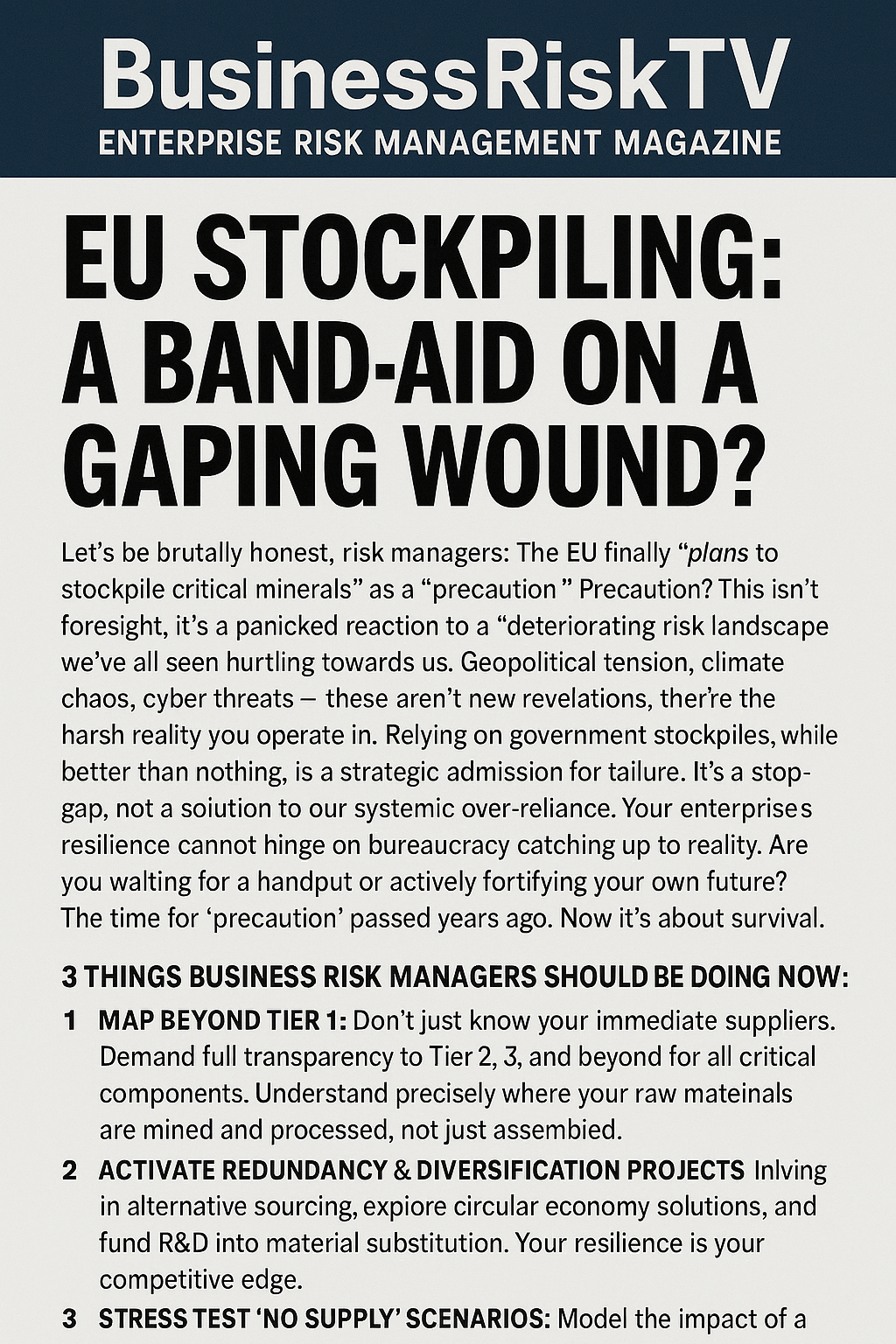
EU Stockpiling: A Band-Aid on a Gaping Wound?
Enterprise Risk Management Magazine articles and videos on business protection and business growth
EU Stockpiling: A Band-Aid on a Gaping Wound?

Read more:

  1. “Western industry rare earth processing reliance on China solutions”
  2. “Mitigating rare earth supply chain risk for EV manufacturers”
  3. “Consumer impact of China’s rare earth monopoly pricing”
  4. “Strategic investment rare earth recycling Western industrial strategy”
  5. “Diversifying critical mineral processing outside China business leaders

Relevant Hashtags:

  1. #RareEarthsCrisis
  2. #SupplyChainResilience
  3. #WesternIndustryFuture
  4. #CriticalMineralsStrategy
  5. #EVManufacturingRisk

Western industry rare earth processing reliance on China solutions

What are the business risks if Fort Knox gold audit 2025 shows shortfall

Risks of global financial system if gold reserves are less than reported in central banks

Imagine this: 2025. A meticulous government audit descends upon Fort Knox. The results? Startling. Shocking. The vault, once a symbol of American financial might, holds significantly less gold than officially recorded. Panic? You bet. This isn’t a Hollywood script; it’s a potential reality that could shake the foundations of the global financial system. We’ve seen central banks, particularly China, aggressively stockpiling gold. We’ve also witnessed the Bank of England’s gold reserves dwindling. And now, whispers of a potential Fort Knox discrepancy. What does it mean? Let’s dive in.

Fort Knox, Gold, and the Global Financial Precipice: A Ticking Time Bomb?

The truth, as Nietzsche warned, can shatter illusions. And the illusion of absolute gold security could be about to crack. This article isn’t just about gold; it’s about the very bedrock of trust in our financial systems. We’ll dissect nine critical risks stemming from global gold storage, a topic too often swept under the rug. Let me be clear: this isn’t just academic. The recent surge in physical gold shipments to New York, driven by a widening price gap between US futures and London spot prices, is a flashing red light. Bloomberg data confirms it: Comex inventories are spiking, reaching levels unseen since the pandemic. Institutional investors are voting with their feet, and they’re sending a clear message.

Furthermore, the World Gold Council reports accelerating central bank gold purchases in the final quarter of 2024. Goldman Sachs has just raised its 2025 gold price forecast to $3,100 per ounce, citing structurally higher central bank demand, particularly from China. But, here’s the kicker: in a world of escalating trade tensions and geopolitical uncertainty, that price could easily climb to $3,300. And guess what? Bank of America’s global fund manager survey predicts gold will outperform US equities in 2025, especially in a full-blown trade war. They see gold as the ultimate safe haven, beating the dollar and long-term bonds.

Now, let’s consider the digital frontier. Could a hybrid system, blending physical gold with digital tokens, create a new, globally trusted reserve currency? It’s a radical idea, but one that warrants serious consideration. If Fort Knox reveals a shortfall, the need for a transparent, verifiable gold-backed system will become paramount. This article provides actionable insights for risk managers, investors, and policymakers. We’ll explore the implications of these trends and offer strategies to navigate the turbulent waters ahead. You need to understand these dynamics. Your portfolio depends on it.

So, what are the nine risks we’re facing? Let’s break them down:

  • 1. Confidence Crisis:
    • A Fort Knox shortfall shatters trust in official reserves.
  • 2. Price Volatility:
    • Expect wild swings in gold prices, potentially destabilising markets.
  • 3. Currency Wars:
    • Nations may scramble to secure gold, exacerbating geopolitical tensions.
  • 4. Dollar Decline:
    • Reduced confidence in US gold holdings could weaken the dollar’s global dominance.
  • 5. Central Bank Re-evaluation:
    • Central banks may rethink their reserve strategies, diversifying away from traditional assets.
  • 6. Trade War Escalation:
    • As the fund managers survey indicated, gold will be a key player in trade wars, causing further economic disruption.
  • 7. Digital Gold Disruptions:
    • The introduction of digital gold, if not handled carefully, could create new vulnerabilities.
  • 8. Supply Chain Issues:
    • The elevated movement of physical gold, shows that supply chains for precious metals are becoming stressed.
  • 9. Increased speculation:
    • The increased price difference between futures and spot prices, and the increased central bank purchases, are causing a huge amount of market speculation.

The prospect of a digital gold standard offers a tantalising solution. Imagine a blockchain-based system, where each digital token represents a verifiable quantity of physical gold. This could provide the transparency and security that traditional systems lack. However, the implementation would be complex, requiring international cooperation and robust regulatory frameworks.

The key takeaway? We’re at a critical juncture. The convergence of these factors – Fort Knox, central bank activity, and market anomalies – demands our attention. Risk managers must stress-test their portfolios against these scenarios. Policymakers must prioritise transparency and international cooperation. And investors must be prepared for increased volatility.

We must face the truth, even if it shatters our illusions. Because in the world of finance, ignorance is not bliss – it’s a liability. The gold market is sending us a clear message. Are we listening?

What 6 things should business leaders consider doing now to protect their business should this risk materialise?

The potential for a significant disruption in the gold market, as outlined in the article, presents serious implications for businesses. Here are 6 key actions business leaders should consider to mitigate potential risks:

1. Diversify Reserve Assets:

  • Action:
    • Don’t rely solely on traditional currency reserves. Explore diversification into other stable assets, including potentially other commodities, or even well researched digital assets.
  • Rationale:
    • A gold market shock could destabilise traditional currencies. Diversification provides a buffer against such volatility.

2. Stress-Test Financial Models:

  • Action:
    • Conduct rigorous stress tests of financial models, simulating scenarios with high gold price volatility and currency fluctuations.
  • Rationale:

3. Strengthen Supply Chain Resilience:

  • Action:
    • For businesses reliant on global supply chains, assess and mitigate potential disruptions caused by financial instability and trade tensions.
  • Rationale:
    • Financial shocks can ripple through supply chains, causing delays and increased costs.

4. Enhance Currency Risk Management:

  • Action:
    • Implement robust currency risk management strategies, including hedging and diversification of currency holdings.
  • Rationale:
    • Increased currency volatility is a likely outcome of a gold market disruption.

5. Monitor Geopolitical Developments:

  • Action:
  • Rationale:
    • Geopolitical factors play a significant role in gold price movements.

6. Explore Digital Asset Strategies:

  • Action:
    • Investigate the potential of digital assets, including those linked to commodities, as a hedge against traditional financial risks.
  • Rationale:
    • The rise of digital assets could offer new avenues for risk management and diversification.

By taking these proactive steps, business leaders can better prepare their organisations for the potential financial turbulence that may arise.

Get help to protect and grow your business

Find out more about Business Risk Management Club

Subscribe for free business risk management tips risk reviews and cost cutting ideas

Connect with us for free

Read more business risk management articles and view videos for free

Connect with us for free

Enterprise Risk Management Magazine
Safe As Fort Knox?

Read and view more :

  1. What are the financial risks if fort knox gold audit 2025 shows shortfall
  2. Impact of central bank gold buying on 2025 gold price forecast Goldman Sachs :  influence of central bank actions and the specific Goldman Sachs prediction.
  3. How digital gold combined with physical reserves could create global currency standard : interested in the innovative concept of a hybrid gold-backed system?
  4. Why is there a large price difference between Comex gold futures and london spot price 2024 : understand the current market anomolies.
  5. Risks of global financial system if gold reserves are less than reported in central banks : looking for the larger picture of the global financial system?

Relevant hashtags :

  • #GoldMarket
  • #FinancialRisk
  • #CentralBanks
  • #FortKnoxAudit
  • #DigitalGold

What are the business risks if Fort Knox gold audit 2025 shows shortfall

UK Economy January 2025

Impact of rising UK gilt yields on small business investment, SMEs and UK consumers at start of new year

The UK Debt : A Tightrope Walk for Businesses and Consumers

UK Government Debt and Impact Of UK Economy

The UK government is facing a daunting challenge: a soaring debt, a consequence of years of fiscal expansion and the lingering effects of the pandemic. This, coupled with rising interest rates, is creating a perfect storm for businesses and consumers. The yield on 30-year gilts, the UK’s equivalent of Treasury bonds, has recently climbed to 5.22%, the highest level since 1998. This surge in borrowing costs has far-reaching implications, impacting everything from mortgage rates to the viability of major infrastructure projects.

The government’s ambitious plans to issue a near-record amount of bonds in 2025 are adding fuel to the fire. With demand for these bonds plummeting to its lowest level since December 2023, the government may be forced to offer even higher yields to entice investors, further exacerbating the problem. This scenario paints a bleak picture for the UK economy, with potential consequences for businesses and consumers alike.

The Mortgage Crunch

One of the most immediate and impactful consequences of rising borrowing costs is the surge in mortgage rates. The average two-year fixed mortgage rate in the UK has now reached 5.47%, significantly higher than the historically low rates seen in recent years. This has put a severe strain on household budgets, reducing disposable income and dampening consumer spending.

For businesses, the impact is multifaceted. Rising borrowing costs increase the cost of capital, making it more expensive to invest in new equipment, expand operations, and hire new employees. This can stifle growth and hinder innovation. Furthermore, a slowdown in consumer spending, driven by higher mortgage payments, can negatively impact businesses across various sectors, from retail to hospitality.

The Construction Conundrum

The construction sector is particularly vulnerable to rising interest rates. The recent decline in the UK construction purchasing managers’ index (PMI) for three consecutive months is a clear indication of the challenges facing this industry. Higher borrowing costs make it more expensive for developers to finance new projects, leading to a slowdown in housing construction and a potential rise in unemployment within the sector.

The Human Cost

The impact of rising borrowing costs extends beyond financial metrics. Large companies across the UK are already implementing cost-cutting measures, including redundancy, in response to increased employer National Insurance contributions introduced in 2024. These job losses add to the economic uncertainty and create anxiety among workers.

Navigating the Storm: Strategies for Businesses

In this challenging environment, businesses must adopt proactive strategies to mitigate the risks associated with rising borrowing costs.

  • Cost Optimisation: Implementing rigorous cost-cutting measures is crucial. This may involve streamlining operations, negotiating better deals with suppliers, and exploring alternative financing options.
  • Diversification: Diversifying revenue streams and exploring new markets can help to reduce reliance on debt financing and improve overall resilience.
  • Innovation: Investing in research and development can lead to the development of new products and services, creating new revenue streams and improving competitiveness.
  • Risk Management: Implementing robust risk management strategies is essential to identify and mitigate potential threats. This includes conducting regular stress tests and scenario planning to assess the impact of various economic shocks.

The Road Ahead

The UK government faces a critical juncture. Addressing the burgeoning debt requires a delicate balancing act between supporting economic growth and ensuring fiscal sustainability.

  • Fiscal Consolidation: Implementing measures to reduce government spending and increase revenue is crucial to stabilise public finances. This may involve tax increases, spending cuts, or a combination of both.
  • Economic Growth: Fostering economic growth is essential to generate the revenue needed to reduce the debt burden. This requires implementing policies that support business investment, innovation, and job creation.
  • Financial Stability: Maintaining financial stability is paramount. This requires close monitoring of the financial system and taking proactive steps to address potential risks.

The path ahead is fraught with challenges, but it is not without hope. By adopting a proactive and pragmatic approach, the UK can navigate these turbulent waters and ensure a more prosperous future for businesses and consumers alike.

Disclaimer: This article is for informational purposes only and should not be construed as financial or investment advice. This article provides an overview of the latest challenges facing the UK economy due to rising borrowing costs. It offers valuable insights for businesses and policymakers on how to navigate these turbulent times and ensure a more prosperous future for the UK.

Get help to protect and grow your business faster

Find out more about Business Risk Management Club Corporate Membership 

Subscribe for free business risk management tips reviews and cost reduction ideas

Connect with us for free

Read more business risk management articles and watch videos for free

Connect with us for free

Enterprise Risk Management Magazine
Latest UK Economy January 2025

Relevant hashtags :

  1. #UKEconomy
  2. #UKDebt
  3. #InterestRates
  4. #MortgageRates
  5. #BusinessImpact
  6. #BusinessRiskTV
  7. #ProRiskManager
  8. #RiskManagement

Read more :

  1. Impact of rising UK gilt yields on small business investment
  2. How high mortgage rates affect consumer spending in the UK
  3. Construction industry slowdown in the UK due to increased borrowing costs
  4. Government debt ceiling and its impact on UK job market
  5. Strategies for businesses to mitigate the effects of rising interest rates in the UK

UK Economy January 2025

The Global Threat of Government Censorship and Its Impact on Business Leaders: A Critical Analysis

The importance of freedom of speech to critical business risk analysis

Freedom of Speech and Business Risk: A Vital Connection

Freedom of speech is the cornerstone of democracy, enabling the free exchange of ideas, information, and opinions. For business leaders, this freedom is essential in evaluating risks, assessing markets, and making informed decisions. The ability to speak openly, criticise policies, and question norms allows leaders to gather diverse perspectives, facilitating the identification of true business risks and the mitigation of potential threats.

Risk Management Magazine
Freedom Of Speech

However, when governments impose censorship, the free flow of information is compromised. George Orwell’s observation, “Journalism is printing what someone else does not want printed; everything else is public relations,” rings true, especially in the corporate world. Suppression of information prevents leaders from accessing accurate risk assessments, leaving them vulnerable to false perceptions that can hinder strategic planning. Without freedom of speech, business leaders are unable to gauge real threats, creating a facade of stability while underlying risks go unnoticed.

In business, risk management relies heavily on access to honest, unfiltered information. Without it, companies face decisions based on distorted realities, making them susceptible to unforeseen disasters. For instance, a company might enter a seemingly stable market, only to discover later that political unrest was censored, thus misjudging the risk. Understanding genuine business risks requires a transparent and open environment where information flows freely, enabling businesses to act preemptively and avoid potential crises.

Enterprise Risk Management Magazine articles
Freedom Of Speech Risks

19 Reasons Why Censorship is Detrimental to Business Risk Management

1. Distorted Market Perception: Censorship leads to the suppression of unfavourable market trends or political instability, creating a misleading view of the business environment.

2. Restricted Access to Critical Data: Business leaders are deprived of key information, such as economic data or political developments, that could impact their decisions.

3. Inability to Assess Political Risks: Governments that censor political dissent make it difficult to understand the underlying political risks that could destabilise markets or sectors.

4. Misinformation Proliferation: When free speech is stifled, misinformation and propaganda take its place, leading to poor business decisions based on false narratives.

5. Poor Investment Decisions: Without access to the truth, businesses may invest in unstable regions or industries without recognising the risks.

6. Undermined Trust: Censorship creates an environment of uncertainty and mistrust, as business leaders are unable to trust the information they receive from censored sources.

7. Innovation Suppression: In markets where free expression is limited, innovation is stifled, reducing opportunities for businesses to develop new products or services.

8. Erosion of Corporate Transparency: Companies in countries with strict censorship may be forced to comply with opaque government policies, reducing their own transparency and ethical standards.

9. Ethical Dilemmas: Businesses operating in censored environments may face ethical conflicts, especially if they are required to comply with censorship laws that conflict with their values.

10. Lack of Early Warning Signs: In censored regimes, the lack of open discourse prevents businesses from recognising early signs of social or political unrest, which could affect market stability.

11. Barriers to Global Collaboration: Censorship in one region can prevent companies from collaborating effectively with global partners who have access to more accurate information.

12. Limited Crisis Management: In crisis situations, real-time information is critical. Censorship delays or blocks access to vital information, hampering effective crisis management.

13. Regulatory Ambiguities: Censorship often comes with ambiguous regulations that are inconsistently enforced, creating legal risks for businesses operating in those regions.

14. Increased Corruption: Censorship often goes hand in hand with corruption, which increases operational risks for businesses in censored markets.

15. Poor Reputation Management: Censorship limits a business’s ability to manage its reputation, especially if false information about the company cannot be challenged in the public domain.

16. Workforce Demoralisation: Employees working under censorship may feel powerless to voice concerns or report wrongdoing, leading to poor morale and reduced productivity.

17. Unreliable Supply Chain Management: Businesses rely on accurate information to manage supply chains, especially in times of disruption. Censorship hides supply chain risks, leading to operational inefficiencies.

18. Consumer Misinformation: Censorship can distort consumer opinions and preferences, leading businesses to make misguided marketing decisions.

19. Overreliance on Government Data: In censored environments, business leaders may be forced to rely solely on government-provided data, which could be manipulated to conceal economic or political instability.

How Business Leaders Can Access Real Risk Analysis in Censored Environments

While government censorship presents a significant challenge to business risk management, there are several strategies that business leaders can adopt to access real risk analysis and make informed decisions.

1. Leverage Independent Media: Independent media outlets often provide uncensored news and insights. By diversifying news sources and focusing on independent journalism, businesses can gain a clearer understanding of political, economic, and social risks.

2. Collaborate with International Experts: Engaging with international analysts, consultants, and academic institutions can provide a more global perspective on local risks. These experts often have access to uncensored data and can provide insights that local sources might not.

3. Invest in Private Risk Assessments: Businesses can commission private risk assessments from independent firms that specialise in market analysis, political risks, and economic trends. These firms often have access to unfiltered information through their global networks.

4. Monitor Social Media and Online Communities: In many censored environments, dissenting voices find alternative channels of expression through social media, encrypted communication platforms, or online forums. Monitoring these platforms can provide early warning signals of unrest or instability.

5. Use Open-Source Intelligence (OSINT): OSINT involves collecting and analysing publicly available information from a variety of sources, including social media, public forums, satellite imagery, and international news outlets. OSINT can provide invaluable insights into emerging risks.

6. Engage Local Partners with Caution: Local partners with insider knowledge of censored regions can provide on-the-ground intelligence. However, it’s crucial to assess the reliability and motivations of these partners to ensure unbiased reporting.

7. Consult Think Tanks: Many think tanks operate independently and provide valuable research on political, social, and economic risks in censored regions. Their reports can offer a more transparent view of the business landscape.

8. Adopt Corporate Diplomacy: Building strong relationships with local governments, regulatory bodies, and international organisations can help businesses navigate censored environments more effectively. Corporate diplomacy enables leaders to gain insider knowledge and negotiate better terms for their operations.

9. Encourage Internal Whistleblowing: Within organisations, encouraging internal whistleblowing mechanisms can help businesses identify risks that might otherwise be concealed by external censorship. Ensuring employees feel safe to report concerns is essential for maintaining transparency.

10. Participate in Global Business Networks: Engaging with global business networks such as chambers of commerce, trade associations, and multinational corporations can offer a broader perspective on the risks associated with censored regions. These networks often share critical insights based on their own experiences.

11. Utilise Blockchain for Transparency: In environments where censorship affects financial and transactional transparency, blockchain technology can provide a decentralised, tamper-proof record of transactions, ensuring that businesses maintain clear oversight of their operations.

The Benefits of Independent Business Risk Analysis via BusinessRiskTV and the Business Risk Management Club

Given the limitations imposed by government censorship, accessing independent and reliable business risk analysis is more important than ever. This is where platforms like BusinessRiskTV and the Business Risk Management Club play a crucial role.

At BusinessRiskTV, we specialise in providing independent business risk insights that are free from the influence of government censorship. Our team of global risk experts offers real-time analysis, helping businesses to navigate complex markets and make informed decisions based on transparent and unbiased data. By joining the Business Risk Management Club, business leaders can access a wealth of knowledge, tools, and resources to better manage the risks associated with censored environments.

Here are some of the key benefits of independent business risk analysis via BusinessRiskTV and the Business Risk Management Club:

1. Access to Unfiltered Information: We provide insights into global markets that are not influenced by government propaganda or censorship, ensuring that business leaders receive accurate information.

2. Real-Time Risk Analysis: Our team monitors global trends in real-time, providing businesses with timely and relevant updates on political, economic, and social risks.

3. Expert Insights: Our network of analysts, consultants, and industry experts ensures that members receive comprehensive and diverse perspectives on potential risks.

4. Early Warning Systems: We identify early warning signs of instability in censored regions, allowing businesses to act proactively and mitigate potential risks.

5. Tailored Risk Assessments: BusinessRiskTV offers personalised risk assessments based on your specific industry, market, and business goals, ensuring that your business strategy is aligned with real-world risks.

6. Collaborative Risk Management: As a member of the Business Risk Management Club, you’ll have the opportunity to collaborate with other business leaders, share insights, and develop strategies for managing risks in challenging environments.

7. Ethical Business Practices: Our platform encourages ethical business practices and transparency, helping you to navigate the legal and moral challenges that come with operating in censored markets.

8. Educational Resources: BusinessRiskTV provides a wide range of educational resources, including webinars, reports, and case studies, to help business leaders stay informed about the latest trends in risk management.

By utilising independent business risk analysis through BusinessRiskTV, business leaders can gain a competitive edge, reduce uncertainty, and make more informed decisions. In an increasingly complex global landscape, the ability to access independent, uncensored information is not just a competitive advantage – it is essential for survival. In today’s interconnected world, the risks facing businesses are multifaceted and often hidden behind a veil of censorship, propaganda, and misinformation. Accessing real, accurate data allows companies to make decisions that are not only profitable but also sustainable in the long term.

Why Independent Business Risk Analysis Matters

For business leaders operating in a world of increasing censorship, having access to independent risk analysis is critical. The risks of relying solely on censored or biased information are too great. With false perceptions of stability, businesses may make poor investments, overlook political risks, and expose themselves to significant financial and operational hazards.

Moreover, independent risk analysis fosters transparency and trust—two pillars that are foundational to long-term business success. It helps companies operate ethically, making decisions that align with their values and ensuring that they are prepared for whatever challenges may arise.

Independent platforms like BusinessRiskTV not only provide an essential service for businesses seeking to navigate censored environments, but they also ensure that decision-making is based on objective, fact-driven insights. When businesses are equipped with accurate risk data, they can move confidently in their markets, mitigate potential crises before they escalate, and maintain their reputation even in the face of external pressures.

Joining BusinessRiskTV’s Business Risk Management Club: A Strategic Move for Business Leaders

For business leaders seeking to navigate the complex, and often opaque, global business environment, joining BusinessRiskTV’s Business Risk Management Club provides access to independent, reliable, and actionable risk insights. The club is designed to equip its members with the tools, knowledge, and networks needed to not only survive but thrive in the face of growing censorship and misinformation.

Through BusinessRiskTV’s global network of risk experts and partners, members can stay ahead of potential threats, identify emerging risks, and develop proactive strategies for managing uncertainty. The collaborative nature of the club also enables business leaders to share their experiences, learn from one another, and build a community of informed and empowered decision-makers.

Conclusion: The Power of Independent Business Risk Analysis

Censorship is a growing challenge for businesses worldwide, distorting the perception of risk and complicating decision-making processes. In an era where governments increasingly control the flow of information, the importance of independent business risk analysis cannot be overstated. Business leaders need reliable, uncensored data to accurately assess risks and avoid making decisions based on manipulated or incomplete information.

BusinessRiskTV’s Business Risk Management Club offers a solution to this challenge, providing business leaders with access to real-time, unbiased risk assessments that allow them to make informed, ethical, and strategic decisions. By leveraging independent analysis, businesses can protect their interests, build resilience, and ensure long-term success even in the face of global censorship.

Ultimately, the ability to navigate censorship, misinformation, and political risks will define the success of businesses in the future. By embracing independent risk analysis, business leaders can ensure they are prepared for the challenges ahead and are in a position to seize opportunities in an ever-changing world. Join BusinessRiskTV’s Business Risk Management Club today and equip your business with the insights it needs to succeed in a complex, censored world.

Join our Business Risk Management Club

Collaborate with BusinessRiskTV to grow your business faster with less uncertainty
Click On Button To Join Today

Subscribe for free business risk alerts and risk reviews

Connect with us for free

Read more business risk management articles for free

Connect with us for free

Read more:

1. Impact of government censorship on business leaders
2. Freedom of speech and business risk management
3. How censorship affects global businesses
4. Independent business risk analysis platforms
5. Censorship risks for corporate decision-makers
6. George Orwell quote on journalism and censorship
7. Business challenges in censored environments
8. Why censorship is bad for business risk management
9. Real-time business risk analysis without censorship
10. BusinessRiskTV independent risk management analysis

Key Hashtags :

1. #BusinessRiskManagement
2. #FreedomOfSpeech
3. #CensorshipImpact
4. #CorporateRisk
5. #IndependentAnalysis
6. #GlobalBusinessRisk
7. #UncensoredBusiness
8. #TransparentLeadership
9. #BusinessRiskSolutions
10. #BusinessRiskTV

Deflation : The Silent Killer For Your Business

Don’t be caught off guard by deflation. Learn how rising unemployment is a precursor to economic downturn and protect your business with expert risk management strategies. Join the Pro Risk Manager Club today.

Deflation: The Canary in the Coal Mine for Stagflation

Nobel economist Paul Krugman has consistently warned of the perils of deflation (See New York Times article and Business Insider article 17 July 2024), arguing that it could lead to a downward spiral of economic activity and rising unemployment. While this perspective has garnered significant attention, a counterargument emerges: it’s not deflation that causes unemployment; it’s unemployment that heralds deflation. This article will delve into five key reasons why rising unemployment is a more accurate predictor of deflationary pressures and why deflation itself should be viewed as a harbinger of stagflation.

Don’t Let Deflation Destroy Your Business: Become a Pro Risk Manager

Deflation Danger: Join the Pro Risk Manager Club Today: Don’t let deflation catch you off guard. Protect your business with expert risk management strategies. Join the Pro Risk Manager Club and gain access to valuable insights and resources.

The Myth of Deflationary Unemployment

Krugman’s thesis posits a deflationary spiral: falling prices lead to reduced consumer spending, businesses cut back on production, and unemployment rises. While this logic seems plausible, it overlooks a crucial dynamic: the relationship between employment and price levels is bidirectional.

  1. Wage-Price Spiral in Reverse: In inflationary environments, wage increases often precede price hikes, creating a wage-price spiral. Conversely, when unemployment rises, wage growth tends to decelerate. As labour costs constitute a significant portion of production expenses, declining wage pressures can contribute to lower prices, setting the stage for deflation.

  2. Decreased Consumer Demand: A surge in unemployment translates to reduced consumer income. With less disposable income, consumers tend to cut back on discretionary spending. This decline in demand can put downward pressure on prices as businesses compete for fewer dollars.

  3. Asset Value Decline: Unemployment often coincides with economic downturns. During these periods, asset values, including real estate and stocks, tend to depreciate. As consumers’ wealth diminishes, spending habits contract, further exacerbating deflationary tendencies.

  4. Debt Burden Intensification: Rising unemployment can lead to increased loan defaults and bankruptcies. This, in turn, can constrain credit availability, making it more difficult for businesses and consumers to borrow. Reduced borrowing can stifle economic activity and contribute to deflationary pressures.

  5. Global Economic Impact: A significant increase in unemployment within a major economy like the United States can have ripple effects worldwide. Reduced demand for imports can lead to deflationary pressures in other countries, further reinforcing the global deflationary trend.

Deflation: A Precursor to Stagflation

While deflation might initially seem beneficial due to increased purchasing power, it’s essential to recognise the broader economic implications.

Don’t Let Deflation Destroy Your Business: Become a Pro Risk Manager: Deflation can be devastating for businesses. Learn how to build resilience and protect your bottom line. Join the Business Risk Management Club and become a Pro Risk Manager.

Read more : Deflationary Risks: How to Safeguard Your Business from Economic Storm

Stagflation, a combination of stagnant economic growth and rising inflation, is a particularly challenging economic environment. Deflation can be a precursor to stagflation if not addressed effectively.

  1. Supply Shocks: Deflationary pressures often stem from supply-side shocks, such as disruptions in global supply chains or rising input costs. These shocks can lead to reduced output and higher prices for essential goods, creating a stagflationary scenario.

  2. Economic Stagnation: Deflation can erode consumer and business confidence, leading to reduced investment and spending. As economic activity slows, unemployment rates tend to rise, further exacerbating the deflationary cycle and increasing the risk of stagflation.

  3. Central Bank Dilemma: Central banks face a challenging dilemma when confronted with deflation. Lowering interest rates, a typical response to deflation, might prove ineffective if the root cause is a supply-side shock. This can lead to a policy trap where monetary policy is unable to stimulate the economy without fueling inflation.

Policy Implications

Recognising the relationship between unemployment and deflation is crucial for policymakers. Instead of solely focusing on combating deflationary pressures, policymakers should prioritise measures to support employment and economic growth.

  • Fiscal Stimulus: Government spending can help boost aggregate demand, create jobs, and counterbalance deflationary forces.
  • Structural Reforms: Implementing policies to enhance labour  market flexibility, improve education and training, and foster entrepreneurship can contribute to a more resilient economy and reduce the risk of unemployment-induced deflation.
  • Supply-Side Measures: Addressing supply-side constraints, such as infrastructure bottlenecks and trade barriers, can help mitigate inflationary pressures and support economic growth.

Deflation Danger: Join the Pro Risk Manager Club Today

Conclusion

The conventional wisdom that deflation leads to unemployment oversimplifies a complex economic relationship. A more accurate perspective suggests that rising unemployment is a more potent predictor of deflationary pressures. Moreover, deflation itself should be viewed as a potential precursor to stagflation if not addressed proactively.

Don’t Let Deflation Destroy Your Business: Become a Pro Risk Manager: Deflation can be devastating for businesses. Learn how to build resilience and protect your bottom line. Join the Business Risk Management Club and become a Pro Risk Manager.

By understanding these dynamics, policymakers can develop more effective strategies to prevent economic downturns and protect the welfare of citizens.

Note: This article provides a general overview and does not constitute financial advice. It is essential to consider various economic factors and consult with experts for specific guidance.

Read more … Would you like to focus on a specific aspect of this topic, such as potential policy implications or historical examples? Join Business Risk Management Club on future and past business management articles.

Get help to protect and grow your business faster with less uncertainty impacting on your business objectives

Find out more

Subscribe for free business risk alerts and reviews

Connect with us 

Read more business risk management articles for free

Connect with us

Deflation: The Silent Killer for Your Business. Don’t be caught off guard by deflation. Learn how rising unemployment is a precursor to economic downturn and protect your business with expert risk management strategies. Join the Pro Risk Manager Club today.

  • Deflation: The Silent Killer for Your Business: Don’t be caught off guard by deflation. Learn how rising unemployment is a precursor to economic downturn and protect your business with expert risk management strategies. Join the Pro Risk Manager Club today.
  • Unemployment is the Real Threat: Prepare for Deflation: Discover how unemployment is a leading indicator of deflation. Protect your business from economic storm by understanding the risks and implementing effective risk management strategies. Join our community of risk professionals.
  • Stagflation Looming? Deflation is Your First Warning: Deflation might seem harmless, but it’s a red flag for stagflation. Learn how to identify the signs and protect your business. Join the Business Risk Management Club for expert guidance.
  • Deflation, Unemployment, and Stagflation: A Business Leader’s Guide: Navigate the complex economic landscape. Understand the link between deflation, unemployment, and stagflation. Learn how to safeguard your business with proven risk management strategies. Join the Pro Risk Manager Club.
  • Avoid the Deflation Trap: Protect Your Business from Economic Downturn: Discover how to identify the early warning signs of deflation and mitigate its impact on your business. Join our community of risk professionals for expert insights and support.
  • Deflationary Risks: How to Safeguard Your Business from Economic Storm: Deflation is a serious threat to business stability. Learn how to assess and manage deflationary risks. Join the Business Risk Management Club for expert guidance and support.

What will the business world be like in 2023

What are the things business leaders need to know in 2023?

Pro Risk Managers exploring world of business risks and risk management solutions to survive 2023 and boost own business performance through and out of recession

Discover what you should really be worrying about in your business if you want to be really successful in business.

Explore new better ways of doing things in your business

Discover better ways to manage your business. Find out what you don’t yet know about your key business risks that threaten your business success in future or are obscuring new business opportunities for your business.

Get to know about what really matters for your increased business success, or even survival

Find out what you do not know about your business performance key risk indicators and key control indicators. Overcome poor business performance.

Reflect on past experiences of good and bad business risk management. Accept responsibility corporately and individually for business risk management performance.

360 feedback is critical to learning from your business mistakes and identifying business improvement actions. Involve key people inside and outside of your business to engage your whole workforce in the development of a new business risk management strategy to improve your business success in future. Work better together to take in-house the responsibility of improving your business. We can help mentor your new business risk management strategy, but ultimately success or failure is in your hands.

Learn from your mistakes and the mistakes of other business leaders

We learn from our mistakes. We learn more from failure than from our successes. They don’t always have to be our own mistakes. Sure, learn from your own mistakes but also learn from other business leader mistakes. To boost your business success also learn from the successes, skills and experiences of other business leaders.

  • How are decisions made in your business?
  • Do you involve everyone in the decision-making process to ensure you use every last drop of good and bad experiences to improve your business?
  • How do you leave no stone unturned in the pursuit of your business survival and prosperity?

Develop real life business knowledge and business intelligence to improve your business performance. Solve your real life problems in your business now with business solutions that will work better for your business.

  • You can do it!
  • You can afford it!
  • You can’t afford not to!

Discover why you can afford the changes you need to make to your business. Identify how you can afford business changes. Understand better why you need to change to improve your business.

Join us online to collaborate on mutual business growth through perhaps the most difficult time since the last world war.

  • Want free risk management news reviews and deals click here; or email editor@businessrisktv.com to subscribe for free risk management newsletter

What should you be worried about as business leader in 2023?

The things business leaders should be worried about if you want to really be successful in business

Here are some things business leaders should have in mind when deciding where to deploy finite money time and energy:

  1. Market trends and competition: Keeping an eye on market trends and understanding the competitive landscape can help business leaders make informed decisions about the direction of their company.
  2. Customer needs and satisfaction: Understanding and meeting the needs of customers is critical for any business. This can involve gathering feedback, analysing customer data, and continuously improving products and services to meet changing customer needs.
  3. Financial performance and sustainability: Business leaders should be mindful of the financial health of their company and strive to achieve profitability and financial stability. This may involve setting financial goals, monitoring financial metrics, and making strategic financial decisions.
  4. Employee satisfaction and retention: Happy and engaged employees can drive business success, so it is important for business leaders to prioritise employee well-being and create a positive work culture. This can involve offering competitive benefits, promoting professional development, and fostering a positive engaging work environment.
  5. Legal and regulatory compliance: Businesses must operate within the bounds of the law and adhere to any relevant regulations. This can involve ensuring that business practices and processes are compliant with laws and regulations, and staying up to date on any changes to legal or regulatory requirements.
  6. Innovation and growth: Business leaders should be proactive in seeking out opportunities for growth and innovation. This can involve developing new products or services, entering new markets, and finding ways to differentiate the business from competitors.

More ways to protect and grow your business faster

What will be business world be like in 2023