
Hormuz Blockade & The Bond Market Sell-off: 2026 Business Risk Analysis

Explore how the Iran-Israel war and the Strait of Hormuz blockade are impacting U.S. Treasuries, UK Gilt yields, and global business lending rates in 2026.

The Great Bond Re-Pricing: Will U.S. Energy Exports Save the Treasury?

The global financial landscape in April 2026 is defined by a paradoxical “Energy-Debt Loop.” As Asian nations continue to reduce their holdings of U.S. Treasury bonds, the escalating conflict between Iran and Israel—and the subsequent blockade of the Strait of Hormuz—has introduced a controversial new mechanic into global risk management: the potential for U.S. energy dominance to forcibly re-finance its own debt.


Is the Dumping of U.S. Treasuries by Asian Nations a Permanent Shift?

The dumping of U.S. Treasury bonds by major Asian economies represents a strategic diversification away from dollar-denominated debt that is structurally raising global interest rates. As of early 2026, China’s holdings have hit a 15-year low, dipping toward $640 billion, while Japan has selectively sold off reserves to defend the Yen. This lack of “price-insensitive” buyers means Treasury prices must fall to attract new investors, which automatically pushes yields higher.

For businesses, this “bond tantrum” means the floor for all global lending has moved. High street banks, seeing the risk-free rate of return rise, are forced to increase margins on business loans, equipment financing, and commercial mortgages to remain profitable.


Does the Strait of Hormuz Blockade Secretly Increase Demand for U.S. Treasuries?

The blocking of the Strait of Hormuz oil and gas routes may actually increase demand for U.S. Treasuries because Europe and Asia must now pivot to U.S.-sourced energy, paid for in Dollars which are then recycled into U.S. debt.With 20% of global oil and LNG currently trapped behind the blockade, nations like Germany, Japan, and South Korea are forced to sign massive supply contracts with U.S. energy firms.

This creates a “Petrodollar 2.0” effect:

  • Forced Dollar Demand: Foreign nations must acquire USD to pay for U.S. shale oil and gas.

  • Debt Financing: The U.S. government can leverage this surge in dollar demand to sell more Treasuries, effectively financing the $38.6 trillion “debt mountain” at the expense of global consumers.

  • Consumer Impact: While this supports the U.S. Treasury market, it creates a “Double Tax” for global businesses—high energy prices at the pump and high interest rates at the bank.


Why Have UK Gilt Yields Surpassed 5.0% and How Does it Affect Your Lending?

UK Gilt yields have surged past 5.0% for the first time in nearly two decades, signalling that the era of “cheap money” is officially over for the foreseeable future. In March 2026, the 10-year Gilt yield hit 5.11%, driven by the Middle East energy shock and a “material about-turn” in Bank of England policy.

“When government bond yields break the 5% barrier, the ripple effect through high street bank lending is instantaneous and unforgiving,” notes a lead strategist at the Business Risk Management Club.

For business leaders, this means:

  • Refinancing Risk: Debt maturing in 2026 is being rolled over at rates 300-400 basis points higher than three years ago.

  • Margin Compression: Higher interest expenses are eating into net profits faster than most businesses can raise prices.

  • Currency Risk: The volatility in bond yields is causing 2-3% daily swings in major currency pairs, making international trade a gamble.


12 Risk Management Actions to Protect Your Business Today

In a world of 5% yields and $140 oil, business as usual is a recipe for failure. Implement these actions now:

  1. Hedge Energy Costs: Lock in fuel and power surcharges with suppliers or use energy derivatives to cap your exposure.

  2. Fix Debt Immediately: If you have variable-rate loans, convert them to fixed-rate products before the next central bank hike.

  3. Optimise Working Capital: Tighten credit terms for customers (e.g., move from Net-30 to Net-15) to reduce your reliance on expensive bank credit.

  4. Audit “Hormuz Vulnerability”: Map your supply chain to identify any tier-2 or tier-3 suppliers reliant on Persian Gulf transit.

  5. Diversify Into Gold: With Gold testing $4,800/oz, use it as a non-correlated hedge against a potential “Debt Mountain” collapse.

  6. Implement Currency Buffers: Maintain “Natural Hedges” by matching the currency of your revenue with the currency of your expenses where possible.

  7. Stress Test for 6% Yields: Model your business’s debt-service coverage ratio (DSCR) if Gilt or Treasury yields rise another 1%.

  8. Switch to “Just-in-Case” Inventory: The cost of holding stock is high, but the cost of a stock-out due to maritime blockades is terminal.

  9. Leverage Tokenised Payments: Explore blockchain-based cross-border settlements to avoid the 3-5 day “float” taken by traditional banks.

  10. Negotiate “Energy Clauses”: Update client contracts to include automated price adjustments based on Brent Crude benchmarks.

  11. Onshore Manufacturing: Reduce the “Geopolitical Distance” of your products to insulate against shipping volatility.

  12. Join a Risk Intelligence Network: Actively participate in the Business Risk Management Club to access real-time data.


Join the Business Risk Management Club at BusinessRiskTV

BusinessRiskTV is the global leader in providing proactive intelligence for an unpredictable world. The Business Risk Management Club offers the tools to turn these global threats into a competitive advantage.

  • 15% Loss Reduction: Members report significantly lower operational losses by using our peer-verified risk mitigation blueprints.

  • Real-Time Alerts: Get notified of bond yield breakouts and geopolitical “choke point” shifts 48 hours before the mainstream media.

  • Zero-Cost Entry: Basic membership is FREE, providing instant access to a global network of risk professionals.

#BusinessRisk #BondMarket2026 #EnergySecurity #BusinessRiskTV #RiskManagement

Get help to protect and grow your business faster with BusinessRiskTV

Find out more about how to grow your business faster with BusinessRiskTV 

Subscribe for free business risk management ideas risk reviews and cost reduction tips

Connect with BusinessRiskTV for free business risk management tips

Read more business risk management articles and view videos for free

Connect with BusinessRiskTV for free alerts to new business risk management articles and videos

The U.S. is financing its debt with YOUR energy bill. ⛽️💳

Think the Strait of Hormuz blockade is just about “expensive gas”? Think bigger.

The global bond market is undergoing a “Great Re-Pricing,” and the logic is brutal. As Asian countries dump U.S. Treasuries, the U.S. is finding a new way to keep its “Debt Mountain” standing—at your expense.

The 2026 Power Play:
By blocking Middle Eastern oil, the world is forced to buy U.S. energy. That demand for U.S. Dollars allows the U.S. to finance its own debt while UK Gilt yields soar past 5.0% for the first time in a generation.

What this means for your business today:

The Bank Squeeze: High street lending rates are tethered to these yields. Your next loan renewal will be the most expensive in your company’s history.

The Imported Inflation: Even if you don’t trade in the U.S., the “Safety Strength” of the Dollar is crushing local currencies and driving up the cost of everything.

The Refinancing Wall: Millions of businesses are about to hit a wall of high-interest debt they simply can’t afford.

Don’t be a statistic. We’ve just released the definitive risk analysis on BusinessRiskTV with 12 immediate actions you can take to insulate your margins from the 5% yield reality.

Stop reacting. Start managing.

#BusinessRisk #BondMarket2026 #EnergySecurity #BusinessRiskTV #RiskManagement
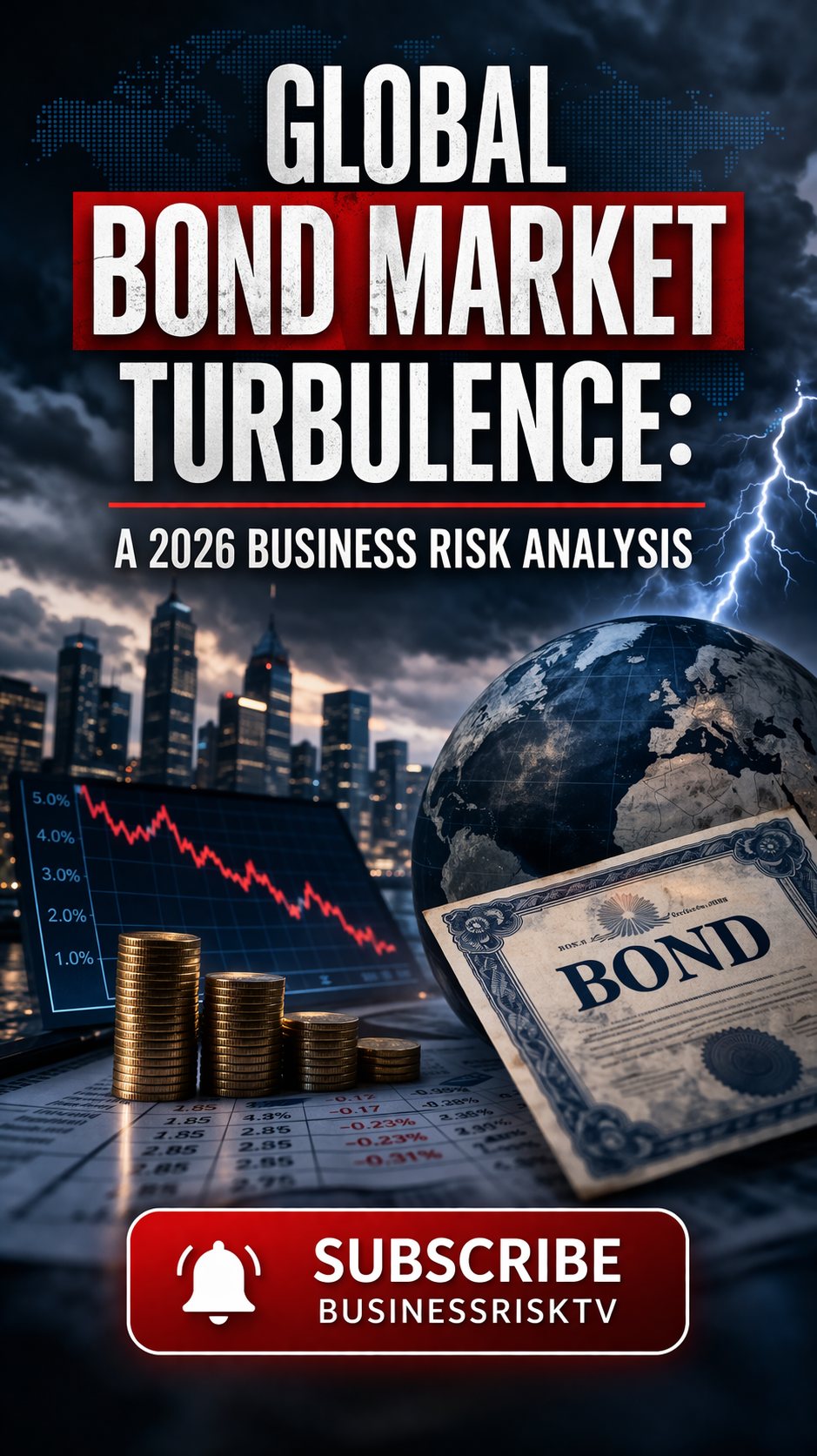
Enterprise risk management magazine and videos on business growth and business protection
Global Bond Market Turbulence: A 2026 Business Risk Analysis Subscribe BusinessRiskTV

Hormuz Blockade & The Bond Market Sell-off: 2026 Business Risk Analysis

What are the business risks if Fort Knox gold audit 2025 shows shortfall

Risks of global financial system if gold reserves are less than reported in central banks

Imagine this: 2025. A meticulous government audit descends upon Fort Knox. The results? Startling. Shocking. The vault, once a symbol of American financial might, holds significantly less gold than officially recorded. Panic? You bet. This isn’t a Hollywood script; it’s a potential reality that could shake the foundations of the global financial system. We’ve seen central banks, particularly China, aggressively stockpiling gold. We’ve also witnessed the Bank of England’s gold reserves dwindling. And now, whispers of a potential Fort Knox discrepancy. What does it mean? Let’s dive in.

Fort Knox, Gold, and the Global Financial Precipice: A Ticking Time Bomb?

The truth, as Nietzsche warned, can shatter illusions. And the illusion of absolute gold security could be about to crack. This article isn’t just about gold; it’s about the very bedrock of trust in our financial systems. We’ll dissect nine critical risks stemming from global gold storage, a topic too often swept under the rug. Let me be clear: this isn’t just academic. The recent surge in physical gold shipments to New York, driven by a widening price gap between US futures and London spot prices, is a flashing red light. Bloomberg data confirms it: Comex inventories are spiking, reaching levels unseen since the pandemic. Institutional investors are voting with their feet, and they’re sending a clear message.

Furthermore, the World Gold Council reports accelerating central bank gold purchases in the final quarter of 2024. Goldman Sachs has just raised its 2025 gold price forecast to $3,100 per ounce, citing structurally higher central bank demand, particularly from China. But, here’s the kicker: in a world of escalating trade tensions and geopolitical uncertainty, that price could easily climb to $3,300. And guess what? Bank of America’s global fund manager survey predicts gold will outperform US equities in 2025, especially in a full-blown trade war. They see gold as the ultimate safe haven, beating the dollar and long-term bonds.

Now, let’s consider the digital frontier. Could a hybrid system, blending physical gold with digital tokens, create a new, globally trusted reserve currency? It’s a radical idea, but one that warrants serious consideration. If Fort Knox reveals a shortfall, the need for a transparent, verifiable gold-backed system will become paramount. This article provides actionable insights for risk managers, investors, and policymakers. We’ll explore the implications of these trends and offer strategies to navigate the turbulent waters ahead. You need to understand these dynamics. Your portfolio depends on it.

So, what are the nine risks we’re facing? Let’s break them down:

  • 1. Confidence Crisis:
    • A Fort Knox shortfall shatters trust in official reserves.
  • 2. Price Volatility:
    • Expect wild swings in gold prices, potentially destabilising markets.
  • 3. Currency Wars:
    • Nations may scramble to secure gold, exacerbating geopolitical tensions.
  • 4. Dollar Decline:
    • Reduced confidence in US gold holdings could weaken the dollar’s global dominance.
  • 5. Central Bank Re-evaluation:
    • Central banks may rethink their reserve strategies, diversifying away from traditional assets.
  • 6. Trade War Escalation:
    • As the fund managers survey indicated, gold will be a key player in trade wars, causing further economic disruption.
  • 7. Digital Gold Disruptions:
    • The introduction of digital gold, if not handled carefully, could create new vulnerabilities.
  • 8. Supply Chain Issues:
    • The elevated movement of physical gold, shows that supply chains for precious metals are becoming stressed.
  • 9. Increased speculation:
    • The increased price difference between futures and spot prices, and the increased central bank purchases, are causing a huge amount of market speculation.

The prospect of a digital gold standard offers a tantalising solution. Imagine a blockchain-based system, where each digital token represents a verifiable quantity of physical gold. This could provide the transparency and security that traditional systems lack. However, the implementation would be complex, requiring international cooperation and robust regulatory frameworks.

The key takeaway? We’re at a critical juncture. The convergence of these factors – Fort Knox, central bank activity, and market anomalies – demands our attention. Risk managers must stress-test their portfolios against these scenarios. Policymakers must prioritise transparency and international cooperation. And investors must be prepared for increased volatility.

We must face the truth, even if it shatters our illusions. Because in the world of finance, ignorance is not bliss – it’s a liability. The gold market is sending us a clear message. Are we listening?

What 6 things should business leaders consider doing now to protect their business should this risk materialise?

The potential for a significant disruption in the gold market, as outlined in the article, presents serious implications for businesses. Here are 6 key actions business leaders should consider to mitigate potential risks:

1. Diversify Reserve Assets:

  • Action:
    • Don’t rely solely on traditional currency reserves. Explore diversification into other stable assets, including potentially other commodities, or even well researched digital assets.
  • Rationale:
    • A gold market shock could destabilise traditional currencies. Diversification provides a buffer against such volatility.

2. Stress-Test Financial Models:

  • Action:
    • Conduct rigorous stress tests of financial models, simulating scenarios with high gold price volatility and currency fluctuations.
  • Rationale:

3. Strengthen Supply Chain Resilience:

  • Action:
    • For businesses reliant on global supply chains, assess and mitigate potential disruptions caused by financial instability and trade tensions.
  • Rationale:
    • Financial shocks can ripple through supply chains, causing delays and increased costs.

4. Enhance Currency Risk Management:

  • Action:
    • Implement robust currency risk management strategies, including hedging and diversification of currency holdings.
  • Rationale:
    • Increased currency volatility is a likely outcome of a gold market disruption.

5. Monitor Geopolitical Developments:

  • Action:
  • Rationale:
    • Geopolitical factors play a significant role in gold price movements.

6. Explore Digital Asset Strategies:

  • Action:
    • Investigate the potential of digital assets, including those linked to commodities, as a hedge against traditional financial risks.
  • Rationale:
    • The rise of digital assets could offer new avenues for risk management and diversification.

By taking these proactive steps, business leaders can better prepare their organisations for the potential financial turbulence that may arise.

Get help to protect and grow your business

Find out more about Business Risk Management Club

Subscribe for free business risk management tips risk reviews and cost cutting ideas

Connect with us for free

Read more business risk management articles and view videos for free

Connect with us for free

Enterprise Risk Management Magazine
Safe As Fort Knox?

Read and view more :

  1. What are the financial risks if fort knox gold audit 2025 shows shortfall
  2. Impact of central bank gold buying on 2025 gold price forecast Goldman Sachs :  influence of central bank actions and the specific Goldman Sachs prediction.
  3. How digital gold combined with physical reserves could create global currency standard : interested in the innovative concept of a hybrid gold-backed system?
  4. Why is there a large price difference between Comex gold futures and london spot price 2024 : understand the current market anomolies.
  5. Risks of global financial system if gold reserves are less than reported in central banks : looking for the larger picture of the global financial system?

Relevant hashtags :

  • #GoldMarket
  • #FinancialRisk
  • #CentralBanks
  • #FortKnoxAudit
  • #DigitalGold

What are the business risks if Fort Knox gold audit 2025 shows shortfall