Holistic Enterprise Risk Management: Why Risk Registers Fail UK Business

Traditional risk registers create the illusion of control while blinding UK business leaders to interconnected threats and opportunities. This article explains why holistic enterprise risk management is the solution to faster, safer business growth — and gives 9 practical ways to embed it in strategic, operational and project decisions.

Traditional risk registers are failing UK businesses. Discover why holistic enterprise risk management protects and grows your business faster — 9 practical ways.

Why Traditional Risk Registers Are Killing UK Business Growth — And How Holistic Enterprise Risk Management Fixes It

BusinessRiskTV Business Risk Management Club recommends holistic enterprise risk management methodology as the solution to the problem of protecting and growing a business faster in UK. The traditional risk register is not just inadequate — it is actively dangerous for any UK business leader who wants to grow, because it creates the illusion of control while blinding you to the interconnected threats and opportunities that actually determine whether your business thrives or dies. The ICAEW declared in February 2026 that “ERM as enterprise list management is dead,” warning that risk registers “grow longer, not sharper” while risk discussions remain “disconnected from strategy and capital decisions” . If your business risk management still revolves around a spreadsheet that gets updated once a quarter, you are not managing risk — you are managing paperwork. And your competitors who have embedded holistic enterprise risk management into every strategic, operational and project decision are already pulling ahead.‌

What is holistic enterprise risk management?

Holistic enterprise risk management is a company-wide approach that identifies, assesses, manages and monitors all risks — strategic, operational, financial and regulatory — as an interconnected system rather than as isolated items on a list . It moves beyond the traditional risk register’s static, point-in-time snapshot and instead embeds risk intelligence into the daily decision-making of the business, from the boardroom to the front line. FERMA, the Federation of European Risk Management Associations, defines the evolved approach as one where “risk, opportunity and strategy are managed in harmony to sustain long-term enterprise resilience,” explicitly shifting from a “purely threat-focused approach to one that emphasises value creation” . In practical UK terms, holistic ERM asks not “what risks do we have?” but “what outcomes must we continue to deliver, whatever happens?” — a fundamental reframing that the ICAEW argues is essential for survival in 2026’s polycrisis environment.

Why are traditional risk registers no longer enough for UK businesses in 2026?

Traditional risk registers are no longer enough because they are static, siloed and backward-looking in a business environment where threats are interconnected, fast-moving and increasingly technological. The ONS reported in November 2026 that 21% of UK businesses with 10 or more employees were concerned about cyber attacks impacting supply chains over the next year — a 9 percentage point increase from September 2025 — while 12% were concerned about artificial intelligence, the highest proportion since the question was introduced . A risk register that lists “cyber risk” as a single line item with a likelihood score of 3 and an impact score of 4 tells you nothing about how a supplier breach in one jurisdiction cascades into operational disruption, regulatory exposure and reputational damage simultaneously. Pinsent Masons warned in 2026 that controls are “degrading assets” and that static residual risk ratings are “increasingly detached from operational reality” because they fail to capture how inherent risk, control effectiveness and residual risk move together . Vanta’s 2026 research found that spreadsheets remain the most widely used GRC tool — yet they “won’t support ERM programs” because they “reinforce siloed, point-in-time risk oversight” . The register is not a management tool. It is a comfort blanket.

Who will benefit from embedding holistic enterprise risk management in business decision making?

Every UK business leader who makes decisions under uncertainty will benefit — but the gains are most dramatic for owners, directors, CFOs and risk managers in businesses with more than 10 employees operating across multiple risk domains. FERMA’s 2026 white paper explicitly calls for corporate risk management to be recognised “not as a technical or compliance function” but as “a strategic capability that supports enterprise-wide resilience and growth” . The beneficiaries are not just risk professionals. They are the CEO who needs to know whether a supply chain diversification decision will actually reduce exposure or simply shift it; the CFO who needs to quantify the correlation-adjusted impact of two simultaneous risks rather than scoring them separately; and the board director who needs to demonstrate to regulators and investors that risk oversight is active, not theatrical. The ONS found that 38% of businesses with 10 or more employees were concerned about international conflict impacting supply chains in April 2026 — a 28 percentage point rise from December 2025 — and 44% of importing businesses reported increased importing costs . Those businesses need integrated intelligence, not a longer list.‌

When will holistic enterprise risk management deliver positive results for a business?

Holistic enterprise risk management delivers positive results when it is embedded into the rhythm of decision-making — not when it is treated as an annual compliance exercise — with early wins typically visible within the first two to three decision cycles. The ICAEW’s 2026 analysis is blunt: traditional ERM fails because it asks “what risks do we have?” rather than “what outcomes must we continue to deliver, whatever happens?” . The shift to holistic ERM begins delivering value as soon as leadership starts using risk intelligence to inform capital allocation, project approval and strategic prioritisation. FERMA’s vision is of an ecosystem where “risk management is a cornerstone of sustainable success” — a continuous capability, not a periodic deliverable . In practical terms, the first results appear when a business stops scoring risks in isolation and starts debating which risks matter to the strategy, which opportunities are being missed because they look risky on a register, and which controls are actually degrading silently beneath the surface.‌

Which UK businesses will benefit most from a holistic enterprise risk management approach to strategic, operational and project decision making?

UK businesses with complex operations, multiple risk exposures, growth ambitions or regulatory scrutiny will benefit most — and the evidence suggests that nearly every business with 10 or more employees now falls into at least one of those categories. The ONS November 2026 data shows 31% of businesses with 10 or more employees concerned about international conflict impacting supply chains, 21% concerned about cyber attacks, 12% concerned about AI, and 12% concerned about climate change . A small consultancy with one office and no supply chain does not need holistic ERM. But a manufacturer importing components, a professional services firm handling client data across jurisdictions, a construction company managing project risk across multiple sites, or a technology business deploying AI tools without a governance framework — these are the businesses where the gap between a risk register and holistic ERM is the difference between resilience and ruin. FERMA’s 2026 white paper recommends “flexible” ERM frameworks that adapt to different organisational contexts, precisely because a one-size-fits-all register approach fails businesses of different shapes and exposures.

How does holistic enterprise risk management improve business performance and create value?

Holistic enterprise risk management improves business performance by connecting risk intelligence directly to strategy, capital allocation and opportunity capture — turning risk from a cost centre into a value driver. FERMA’s CEO Laurent Nihoul states it plainly: risk management should be “not merely a defensive mechanism, but an integrated system that both protects and enables value creation” . The old model treated risk as something to be minimised. The holistic model treats risk as something to be understood, priced and exploited where the reward justifies the exposure. As the ICAEW’s 2026 article argues, “there is no return without risk” — boards should be asking “where do I want to be risk seeking?” rather than only “what could go wrong?” . This is not semantic gymnastics. It changes which projects get funded, which markets get entered, which suppliers get diversified and which talent gets hired. A business that understands its risk appetite can move faster into opportunity because it knows which risks it is equipped to take.‌

What are 9 practical ways to use holistic enterprise risk management methodology to protect and grow a UK business faster?

These nine practical applications of holistic enterprise risk management methodology will protect and grow a UK business faster by replacing static compliance with dynamic decision intelligence.

  1. Replace the single risk register with a risk universe hierarchy that separates enterprise-level, business-unit and project-level risks, so the board sees the interconnected picture while operational teams manage granular exposure.
  2. Run correlation-adjusted risk scenarios that model two or more simultaneous risks — because more than 80% of the largest value-destroying risk events involve multiple concurrent risks, according to actuarial research.
  3. Embed risk appetite thresholds into capital allocation and project approval gates, so that no material investment proceeds without an explicit statement of which risks are being accepted and why.
  4. Treat controls as degrading assets that require continuous monitoring, not annual attestation — Pinsent Masons warns that documented controls can remain unchanged while actual effectiveness deteriorates silently.
  5. Integrate AI and technology governance directly into risk governance, because automated decision tools are now controls in their own right and cannot be assessed as effective if the underlying models and data are not.
  6. Use horizon scanning and scenario planning as a standing board agenda item, not an annual workshop, to anticipate the interconnected risks that a static register cannot see.
  7. Assign named owners to every material risk and control, with decision rights escalating by severity — routine tolerance within business units, material risk acceptance to the executive or board.
  8. Measure risk management by outcomes protected and opportunities captured, not by the number of risks logged or the completeness of the register — the ICAEW’s critique is that time is spent “scoring risks rather than debating what truly matters”.
  9. Build a risk-aware culture where escalation is rewarded, because the ONS data shows that concerns about supply chain, cyber and AI risks are rising simultaneously — and the businesses that hear about problems early are the ones that survive them.

What do famous thinkers say about the benefits of managing business risks better?

Warren Buffett warned that “risk comes from not knowing what you’re doing” — a direct indictment of the risk register mentality that logs threats without understanding their interconnections . Peter Bernstein, author of Against the Gods, defined the essence of risk management as “maximising the areas where we have some control over the outcome while minimising the areas where we have absolutely no control over the outcome” . That is precisely what holistic ERM does: it identifies where control is possible, where exposure is unavoidable, and where the two intersect with strategy. Tom Gilb’s warning is perhaps the most urgent for UK business leaders in 2026: “If you don’t actively attack the risks, they will actively attack you” . And Buffett’s most famous risk aphorism — “only when the tide goes out do you discover who’s been swimming naked” — is a reminder that the businesses with thin risk management will be exposed first when the next supply chain shock, cyber incident or regulatory change arrives.

Why is the traditional risk register costing UK businesses money?

The traditional risk register costs UK businesses money because it consumes resources while failing to prevent the losses it is supposed to avert — and it blinds leadership to the opportunities that holistic risk management would capture. The ONS November 2026 data shows that 69% of UK businesses expressed concern about energy prices and 70% about fuel prices, with 77% of larger businesses concerned about energy . A register that lists “energy cost risk” as a line item does nothing to help a manufacturer model the correlation between energy prices, shipping costs and customer demand — or to decide whether to hedge, diversify suppliers or pass costs through. Pinsent Masons identifies the deeper cost: static risk assessments create “artificially low” residual risk reporting that is “detached from operational reality,” meaning boards are making decisions on false intelligence . The cost is not just the software licence or the risk manager’s salary. It is the bad decisions made on the basis of a false sense of security.‌

Who is the key business decision maker that must own holistic enterprise risk management?

The CEO owns holistic enterprise risk management, because risk and strategy are inseparable — and delegating it to a compliance function guarantees it will fail. FERMA’s 2026 white paper explicitly argues that corporate risk management should be “recognised as a strategic capability” rather than a technical or compliance function, and that governance, management and assurance functions must collaborate to shift “from a control-oriented mindset towards a proactive approach” . The ICAEW’s 2026 analysis of board risk oversight notes that the UK Corporate Governance Code places “clear expectations on boards to establish a robust framework for risk management and internal control,” and that effective practice “extends beyond compliance” to active oversight, alignment between strategy and risk appetite, and a culture of early escalation . The CEO cannot outsource this to the risk manager any more than they can outsource strategy to the finance team. The risk manager provides the intelligence. The CEO makes the decisions. But in a holistic ERM model, those decisions are informed by a continuous, integrated understanding of risk and opportunity — not a quarterly spreadsheet review.‌

What UK government and independent data proves holistic risk management is value for money?

The independent evidence from respected UK and European risk bodies proves that holistic risk management delivers value for money by preventing losses that static registers fail to catch. The ICAEW declared traditional ERM “dead” in 2026, citing McKinsey’s finding of “declining confidence in traditional risk frameworks, particularly in addressing emerging and interconnected risks linked to technology, resilience, and long-term value” . FERMA’s 2026 white paper represents the consensus of the European risk management profession: risk management must be repositioned “as a strategic driver of organisational value rather than a defensive function” . The ONS data provides the urgency: cyber concern impacting supply chains rose 9 percentage points year-on-year to 21% of larger businesses, AI concern hit its highest level since the question was introduced at 12%, and international conflict concern stood at 31% in November 2026 . These are not risks that can be managed by adding lines to a register. They require the integrated, forward-looking intelligence that only holistic ERM provides. The value for money case is simple: the cost of embedding holistic ERM is a fraction of the cost of a single unmanaged correlated risk event — and the opportunity cost of missing growth because your risk framework cannot distinguish between a threat to avoid and a risk worth taking is incalculable.‌‌

BusinessRiskTV Business Risk Management Club exists for UK business leaders who refuse to accept the comfort blanket of the traditional risk register. We operate outside standard structures to attract pure abundance — continuous business expansion, optimal health and resilience, and wealth creation for the risk manager who has the courage to challenge orthodoxy. The ICAEW says ERM as we know it is dead. FERMA says risk must enable value creation. The ONS data says the threats are rising and interconnected. The only question is whether you will keep updating the register while your competitors embed holistic risk management and grow faster. The choice is yours.

Core Institutional Sources

ONS Official Statistics

Famous Quotes

Get help to protect and grow your business faster with BusinessRiskTV

Find out more about growing your business faster with ERM

Subscribe for free business risk management ideas risk reviews and cost of doing business reduction tips

Connect with BusinessRiskTV for free business risk management tips 

Read more business risk management articles and view videos for free

Connect with BusinessRiskTV for free alerts to new business risk management articles and videos 

Your risk register is not protecting your business. It is lying to you.

And it has been for years.

Here is the uncomfortable truth most UK boardrooms will not say out loud: a spreadsheet with 47 risks scored “likelihood 3, impact 4” is not risk management. It is theatre. It is a comfort blanket that makes directors feel prudent while the actual threats — the ones that move fast, connect to each other and destroy value — pass straight through the gaps.

Don’t take my word for it. In 2026, the ICAEW declared traditional ERM “dead,” warning that risk registers “grow longer, not sharper” while staying “disconnected from strategy and capital decisions.” Pinsent Masons went further: controls are “degrading assets,” and static residual risk ratings are “increasingly detached from operational reality.”

Translation? Boards are making decisions on false intelligence. And it is costing them.

Meanwhile, the ONS reported in November 2026 that:

  • 21% of UK businesses with 10+ employees are worried about cyber attacks hitting supply chains — up 9 percentage points in a year
  • 12% are concerned about AI — the highest level since the question was introduced
  • 31% are concerned about international conflict disrupting supply chainsYou cannot manage those three risks on three separate lines of a register. They are connected. They compound. They arrive together.

    That is why holistic enterprise risk management is not a nice-to-have. It is the difference between a business that grows through shocks and one that is exposed by them.

    What actually changes when you embed it:

    → You stop scoring risks in isolation and start modelling correlation — because over 80% of the largest value-destroying events involve multiple concurrent risks
    → You separate enterprise, business-unit and project risk universes so the board sees the big picture and teams manage the detail
    → You build risk appetite thresholds into capital allocation and project approval gates — no material investment proceeds without naming which risks are being accepted and why
    → You treat controls as assets that degrade silently,  not boxes ticked once a year
    → You measure risk management by outcomes protected and opportunities captured — not by how many rows are in the spreadsheet

    Warren Buffett said it best: “Risk comes from not knowing what you’re doing.”

    Peter Bernstein said it better: risk management is “maximising the areas where we have some control over the outcome while minimising the areas where we have absolutely no control.”

    That is exactly what holistic ERM does. And the businesses doing it in the UK right now are not just safer — they are faster. They enter markets sooner, fund the right projects, diversify suppliers before the crisis hits, and grow while competitors are still updating column F.

    Here is the retention question worth sitting with: if your risk register vanished tomorrow, what would actually change about how your business makes decisions?

    If the answer is “nothing,” you do not have risk management. You have a document.

    The ICAEW says ERM as we know it is dead. FERMA says risk must become a strategic driver of value creation, not a defensive function. The ONS data says the threats are rising and interlocking.

    The only question left is whether you will keep updating the register while your competitors embed holistic ERM and grow faster.

    BusinessRiskTV Business Risk Management Club exists for UK business leaders who refuse the comfort blanket. We operate outside standard structures — focused on continuous business expansion, optimal resilience, and creating real wealth for the risk manager with the courage to challenge orthodoxy.

    Your next move: email editor@businessrisktv.com for more information on the Business Risk Management Club, and find out how to embed holistic enterprise risk management into your strategic, operational and project decisions — before the tide goes out.

    #RiskRegisterIsDead #HolisticERM

Holistic Enterprise Risk Management: Why Risk Registers Fail UK Business
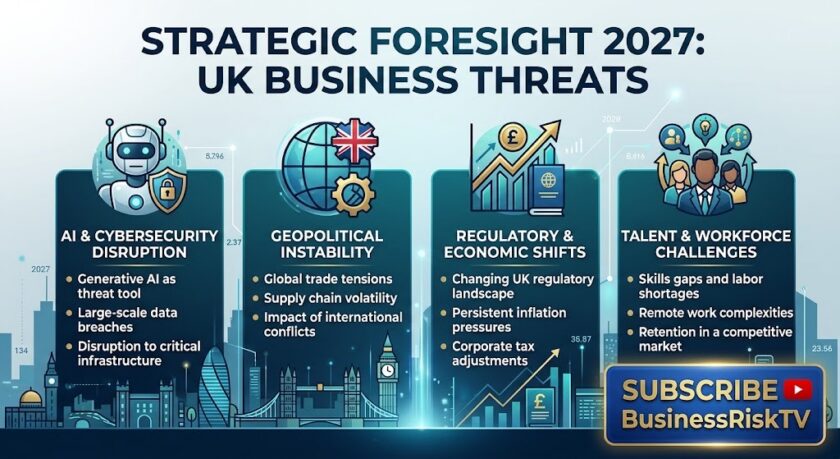
Strategic Foresight 2027: 9 UK Business Threats to Beat

Strategic foresight gives UK businesses a competitive edge before 2027 threats crystallise. This BusinessRiskTV analysis identifies nine risks — from supply chain conflict to quantified risk blindness — with ONS and industry data, plus the steps decision-makers must take now to beat competitors.

Identify 9 strategic threats UK businesses face in 2027 and how to act now. BusinessRiskTV Business Risk Management Club strategic risk analysis.

Strategic Foresight 2027: How UK Businesses Can Identify Threats Before Competitors

BusinessRiskTV Business Risk Management Club Strategic Risk Analysis for UK Marketplace 2027 is the solution to the problem of strategic risk management in the UK for 2027. As the UK business landscape faces converging geopolitical, technological, and regulatory pressures, the window for reactive strategy is closing. The Office for National Statistics reported in May 2026 that 38% of UK businesses with 10 or more employees were already concerned about international conflict impacting supply chains—a 28 percentage point rise from December 2025 . BusinessRiskTV’s Business Risk Management Club provides the structured foresight framework UK decision-makers need to convert these early signals into competitive advantage before rivals react.‌

“The true sign of intelligence is not knowledge, but imagination.” — Albert Einstein, cited in INSEAD’s Distant Foresight Index research

Why Does Strategic Foresight Early Give a Competitive Advantage in the UK?

Strategic foresight early gives a competitive advantage in the UK because it enables businesses to shape regulatory environments, set industry standards, and define customer expectations before competitors recognise the threat. A firm that articulates a clear, well-researched vision of the future can effectively create the very future it is prepared to dominate . Shell’s pioneering scenario planning in the late 1960s anticipated a potential oil supply disruption; when the 1973 crisis hit, Shell was better prepared than competitors and gained a decisive advantage through diversification .‌‌

The financial case is stark. Aon’s 2026 UK report found that only 16% of UK firms have quantified their exposure to business interruption, and just 12.4% have quantified supply chain disruption exposure . Without quantification, senior leaders cannot make informed investment decisions or structure appropriate insurance programmes. Beazley’s January 2026 survey of 3,500 leaders across seven countries found that 94% of global businesses intend to build resilience through insurance and risk management in 2026, with 31% specifically planning to invest in risk management and loss prevention.

  • First-mover regulatory influence: Early foresight allows firms to engage with regulators before rules crystallise, shaping outcomes favourably
  • Talent and capital allocation: Identifying threats early enables redeployment of resources before sunk costs become stranded
  • Competitor blind spots: Most firms focus on immediate industry metrics; distant foresight captures weak signals beyond sector boundaries
  • Insurance and risk transfer pricing: Firms that quantify exposure early access better terms before insurers reprice systemic risks ‌

    What Are 9 Potential Issues in 2027 That UK Businesses Must Prepare For Now?

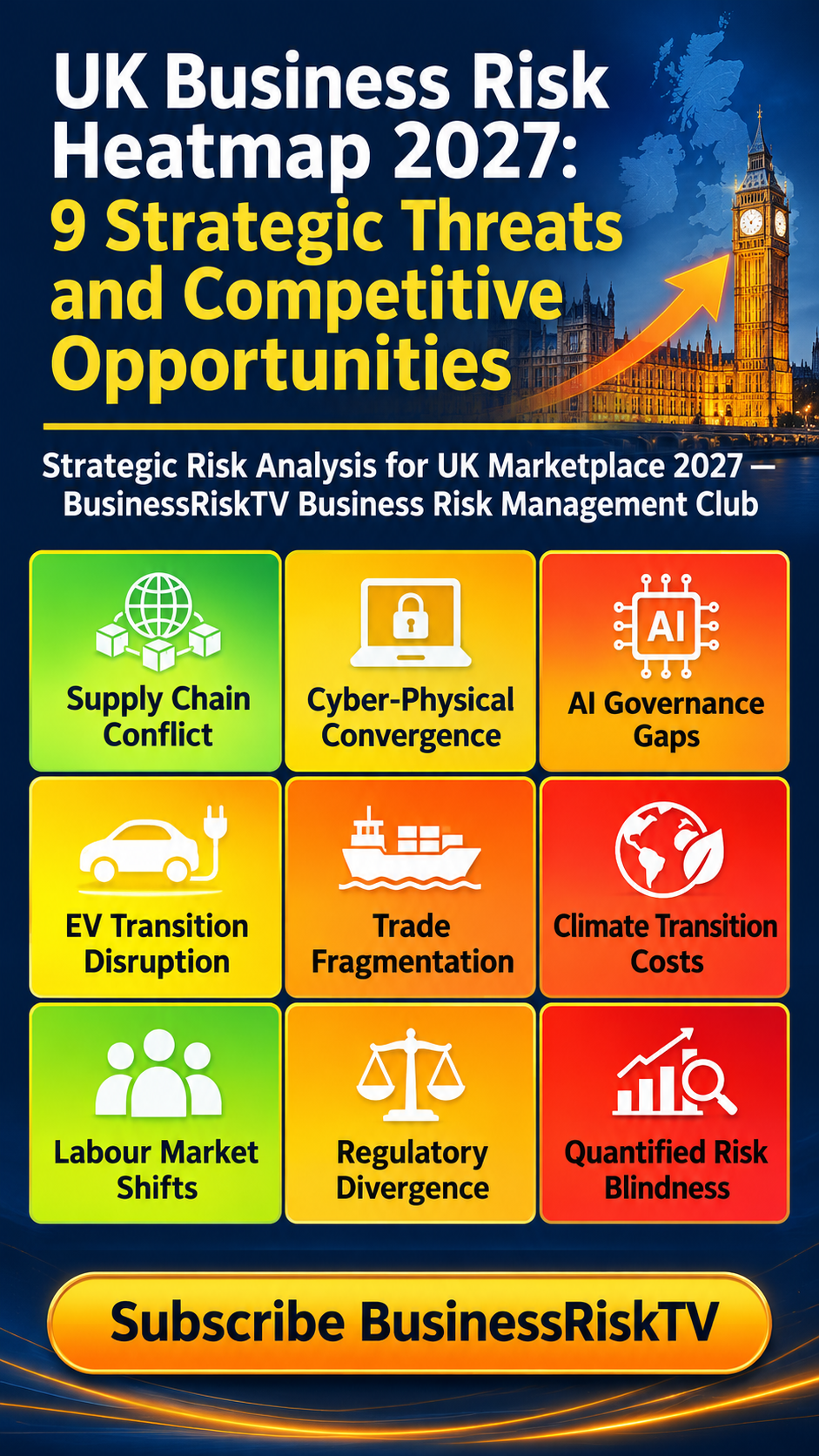
Nine potential issues in 2027 that UK businesses must prepare for now include supply chain conflict exposure, cyber-physical convergence, AI governance gaps, EV transition disruption, geopolitical trade fragmentation, climate transition costs, labour market restructuring, regulatory divergence, and quantified risk blindness. Each represents a threat that can be converted into opportunity through structured foresight.

UK business risk 2027
Foresight 2027 UK Business Threats Subscribe BusinessRiskTV

#StrategicForesight2027 #UKBusinessRisk #BusinessRiskTV #RiskManagement

1. Supply Chain Conflict and Shipping Disruption

Supply chain conflict and shipping disruption will intensify in 2027, with ONS data already showing 25% of UK businesses concerned about shipping disruption in April 2026—up 18 percentage points from December 2025. Import costs increased for 44% of importing businesses in March 2026 compared with the previous year, the highest proportion since June 2023 . Act now: Map tier-2 and tier-3 suppliers for conflict-exposed regions; pre-negotiate alternative logistics routes; stress-test working capital against 20% freight cost increases.‌

2. Cyber-Physical Convergence and Business Interruption

Cyber-physical convergence will create business interruption events in 2027 that traditional risk frameworks cannot handle, with 27.3% of UK organisations already having suffered significant financial losses from business interruption. Beazley’s outlook warns that converging risks mean digital, transitional, and geopolitical disruption are creating simultaneous pressures across every part of the business . Act now: Quantify cyber-physical interdependencies; test incident response against a 5-day operational shutdown scenario; review insurance limits against modelled exposure.‌

3. AI Governance and Model Risk

AI governance and model risk will become a board-level regulatory issue in 2027, with financial services firms already facing Consumer Duty obligations that demand demonstrable oversight of automated decision-making. The FCA’s expectations and emerging AI regulation will require boards to evidence accountability. Act now: Establish an AI use-case register with risk ratings; implement model validation before deployment; train boards on AI accountability.

4. Electric Vehicle Transition Operational Disruption

Electric vehicle transition will disrupt operational models in 2027, with the Zero Emissions Vehicle Mandate reshaping the UK vehicle parc and creating different operational pressures for fleet-dependent businesses. The AA has already invested in specialist EV training and is progressively introducing EVs into its own fleet, converting transition risk into operational readiness. Act now: Audit fleet dependency on internal combustion maintenance skills; model EV charging infrastructure costs; retrain frontline staff.‌

5. Geopolitical Trade Fragmentation and Rules of Origin

Geopolitical trade fragmentation will raise compliance costs in 2027, with 39% of exporting businesses reporting increased exporting costs in March 2026—the highest since September 2023 . Act now: Review rules of origin documentation; model tariff scenarios for EU and US trade; consider nearshoring critical inputs.

6. Climate Transition Cost Pass-Through

Climate transition costs will accelerate in 2027, with Beazley identifying climate and environmental risk as representing 20% of average business risk concern globally. The European Space Agency’s foresight work warns that intensifying climate impacts will affect European economies through the investment required to build resilience and adopt mitigating technologies . Act now: Stress-test energy cost exposure; assess carbon border adjustment mechanism impact; identify quick-win efficiency investments.‌

7. Labour Market Restructuring and Skills Gaps

Labour market restructuring will create skills shortages in 2027 as AI adoption and green transition reshape demand, with 4% of UK businesses having temporarily paused trading and 2% permanently ceased by late April 2026 . Act now: Map critical skills against 2027 requirements; initiate reskilling programmes; review contingent labour strategies.‌

8. Regulatory Divergence Post-Brexit

Regulatory divergence will increase compliance complexity in 2027, requiring UK-specific frameworks for product marking, data, and financial services. The Food Standards Agency is already developing novel regulatory approaches for cell-cultivated products through its sandbox programme, signalling sector-specific divergence . Act now: Assign regulatory horizon scanning ownership; budget for dual compliance; engage with regulators early.‌

9. Quantified Risk Blindness

Quantified risk blindness will leave UK firms unable to justify resilience investment in 2027, with only 21.6% having a formal business interruption plan and just 16% quantifying exposure. Aon warns that without quantification, leaders struggle to make informed decisions or plan for the true cost of prolonged disruption . Act now: Commission quantitative risk assessment; link insurance limits to modelled loss scenarios; present board-level risk appetite statements.‌

What Steps Should Key Business Decision Makers Take Today to Beat Competitors in 2027?

Key business decision makers should today establish a structured distant foresight function, quantify their top three risk exposures, and integrate scenario planning into capital allocation. The INSEAD Distant Foresight Index approach helps organisations identify potentially destructive threats beyond industry boundaries, avoiding the fate of Blockbuster, Nokia, and Kodak . The European Space Agency’s foresight practice demonstrates that developing scenarios challenges assumptions and tests strategies against multiple futures, ensuring organisations remain proactive rather than reactive.‌

  • Appoint a foresight owner with board access, not buried in strategy or innovation teams
  • Run a 2027 threat quantification sprint covering business interruption, supply chain, and cyber, using structured financial modelling rather than intuition
  • Establish weak-signal monitoring across sectors beyond your own, using the INSEAD distant foresight methodology
  • Integrate foresight into FP&A so capital allocation is stress-tested across multiple scenarios, not a single base case
  • Engage regulators proactively on emerging issues before rules crystallise
  • Report foresight outputs to the board quarterly, treating them with the same rigour as financial reporting‌

“Don’t wait for the future to happen to you, create it.” — Frank Spencer and Yvette Montero-Salvatico, TFSX, cited in strategic foresight literature

Who Will Benefit Most from Strategic Foresight in the UK?

Businesses in supply chain-intensive, technology-dependent, and regulated sectors will benefit most from strategic foresight in the UK, particularly those with complex international exposure or fleet-dependent operations. Beazley’s survey found that 94% of global businesses plan to build resilience through insurance and risk management, indicating widespread recognition that interconnected risks amplify one another .‌

  • Manufacturers and importers facing 44% import cost increases and rules-of-origin complexity
  • Logistics and fleet operators managing EV transition and fuel price volatility
  • Financial services firms navigating AI governance and Consumer Duty obligations
  • Food and life sciences businesses facing novel regulatory pathways for emerging products
  • Any UK business with quantified exposure below board-level visibility—the 84% without quantified business interruption risk

    When Must Key Business Decision Makers Act?

    Key business decision makers must act now, in Q4 2026, because 2027 planning cycles are already underway and early movers will capture regulatory influence and insurance pricing advantages before systemic risks are fully priced. The ONS data shows concern about supply chain conflict rose 28 percentage points between December 2025 and April 2026—a pace that leaves late movers reacting to events rather than shaping them . Shell’s advantage in 1973 came from scenario work conducted years earlier.

  • Immediate (Q4 2026): Commission quantified risk assessment; appoint foresight owner; initiate regulator engagement
  • Q1 2027: Integrate scenario outputs into capital allocation; review insurance programme against modelled exposures
  • Q2 2027: Launch weak-signal monitoring; report first foresight dashboard to board
  • Ongoing: Quarterly scenario refresh; annual full foresight review

    Which Industries Should Be Most Concerned or Best Prepared to Take Advantage?

Manufacturing, logistics, financial services, food and life sciences, and fleet-dependent service industries should be most concerned about 2027 threats, while those same sectors are best positioned to capture advantage through early preparation. The FSA is actively developing regulatory pathways for cell-cultivated products, creating first-mover advantages for compliant innovators . The AA has already invested in specialist EV training and is progressively introducing EVs into its own fleet, converting transition risk into operational readiness.

  • Manufacturing: Highest exposure to supply chain conflict and import cost inflation ; opportunity in nearshoring and dual-sourcing
  • Logistics and transport: EV transition reshaping service profiles; opportunity in specialist EV capability
  • Financial services: AI governance and Consumer Duty convergence; opportunity in trusted AI assurance services
  • Food and life sciences: Novel regulatory pathways ; opportunity in early regulatory engagement
  • Insurance and risk advisory: Demand surge for quantification and scenario services ; opportunity in specialised foresight products‌
  • Energy-intensive sectors: Transition cost exposure; opportunity in efficiency-led differentiation

Sources

  1. INSEAD Knowledge, Developing a Toolkit for Strategic Foresight: https://knowledge.insead.edu/strategy/developing-toolkit-strategic-foresight
  2. Wiley, Addressing the Sceptical CFO: The Finance Case for Foresight (PDF excerpt): https://media.wiley.com/product_data/excerpt/80/13944258/1394425880.pdf
  3. Food Standards Agency, Thematic Report on Emerging Food Innovations in the UK: https://www.food.gov.uk/our-work/thematic-report-on-emerging-food-innovations-in-the-uk
  4. Office for National Statistics, Business Insights and Impact on the UK Economy: 7 May 2026: https://www.ons.gov.uk/businessindustryandtrade/business/businessservices/bulletins/businessinsightsandimpactontheukeconomy/7may2026
  5. The AA, Results and Presentations (Annual Report FY26): https://www.theaacorporate.com/investors/results-and-presentations
  6. Beazley, Feeling the Heat: Converging Risk Landscape Forces Business to Rethink Insurance Protection (February 2026): https://www.beazley.com/en-US/news-and-events/feeling-the-heat-converging-risk-landscape-forces-business-to-rethink-insurance-protection/
  7. European Space Agency, Navigating the Future with Strategic Foresight & Planning (PDF): https://esamultimedia.esa.int/docs/20242310_ESA_A5_FLYER_FINAL.pdf
  8. Insurance Business UK, Few UK Firms Quantify Their Disruption Risk, Aon Finds (November 2026): https://www.insurancebusinessmag.com/uk/news/cyber/few-uk-firms-quantify-their-disruption-risk-aon-finds-595709.aspx

FAQ: Strategic Foresight 2027 and UK Business Risk

What is strategic foresight and why does it matter for UK businesses in 2027?

Strategic foresight is the capacity to explore multiple plausible futures and develop strategies that remain robust across a range of scenarios . It matters for UK businesses in 2027 because UK insolvencies are forecast to remain 21% above pre-pandemic averages even as they decline, with 24,800 failures expected in 2027 . The World Economic Forum notes that organisations with foresight capabilities “don’t just react to change, they shape it” . Shell has used scenario planning since the 1970s to anticipate geopolitical risks, including the OPEC oil embargo, and continues using it to navigate the energy transition.

Which UK sectors face the greatest insolvency risk heading into 2027?

Construction, wholesale and retail, hospitality and real estate face the greatest insolvency risk heading into 2027. Construction has accounted for around 17% of all UK insolvencies in every rolling period tracked by the Insolvency Service through mid-2026, with wholesale and retail trade consistently at 15% to 16% . Consumer-facing sectors have seen the sharpest rises in critical distress: leisure and cultural businesses rose 27.1%, hotels and accommodation 26.6%, and sport and health clubs 21.0% over the past year. Begbies Traynor Group warns that because insolvencies typically lag financial distress, the UK could see increases in business failures during 2027.

What do ONS statistics say about UK business concerns for 2027?

ONS statistics show UK business concerns about supply chain disruption have risen sharply. In late April 2026, 38% of businesses with 10 or more employees were concerned about international conflict impacting supply chains, a 28 percentage point rise from December 2025; 25% were concerned about shipping disruption, up 18 percentage points . Import costs increased for 44% of importing businesses in March 2026 compared with the previous year, the highest proportion since June 2023, while 39% of exporters reported increased costs . Additionally, 4% of businesses reported temporarily paused trading and 2% permanently ceased trading in late April 2026.

How does strategic foresight give a competitive advantage over competitors?

Strategic foresight gives a competitive advantage by enabling firms to shape regulatory environments, set industry standards, and define customer expectations before rivals recognize threats. The World Economic Forum states that leading companies using foresight are “more agile in crises, better prepared for disruption and more consistent in their long-term commitments to stakeholders” . Cisco employs technology foresight to spot emerging tech trends, guide R&D investments, and position itself in markets of the future . The alternative is illustrated by Nokia and Kodak, which failed to anticipate threats beyond their immediate industry boundaries despite having the resources to do so.‌

What geopolitical technology risks should UK businesses monitor for 2027?

UK businesses should monitor control over AI technology, critical minerals, and cloud infrastructure as geopolitical risks for 2027. PwC warns that technology is now widely seen as a national security issue, with the US and China using trade barriers to limit competitors’ progress across raw materials, components, knowledge and intellectual property, and data and compute infrastructure . Businesses need to map where AI models are used, which provider and jurisdiction controls them, and what dependencies and concentration risks they face . Access to critical minerals and rare earth elements is increasingly linked to geopolitical competition, affecting tech, defence, and energy transition sectors.‌

When must UK business leaders act to prepare for 2027 threats?

UK business leaders must act now, in Q4 2026, because 2027 planning cycles are underway and early movers capture regulatory influence and insurance pricing advantages before systemic risks are fully priced. Allianz Trade forecasts insolvencies declining to 24,800 in 2027, but this remains 21% above pre-pandemic averages, and 213,000 UK jobs are directly at risk from business insolvencies between 2026 and 2027 . Begbies Traynor warns that further increases in energy costs or inflation could accelerate financial distress, with insolvency increases likely in 2027 . The window between competitive trade credit insurance pricing and rising counterparty risk may not stay open indefinitely.

Which industries are best positioned to take advantage of 2027 opportunities?

Industries that quantify risk exposure early and engage regulators proactively are best positioned for 2027 opportunities. PwC’s UK economic outlook notes that UK corporate debt is around its lowest level this century, providing some protection, but real business investment remains below its pre-2016 trend . The IMF expects UK GDP growth of 1.3% in 2027, and the UK was the only G7 economy to receive an upgrade in the latest forecasts . Businesses that convert short-term resilience into private-sector investment and productivity gains will capture advantage, particularly in sectors where competitors remain paralyzed by uncertainty. PwC found that UK CEOs spend only 11% of their time on issues extending beyond five years.

What practical steps should decision-makers take today?

Decision-makers should appoint a foresight owner with board access, quantify their top three risk exposures, and integrate scenario planning into capital allocation. The World Economic Forum recommends structured dialogue with leadership teams to benchmark foresight capabilities against peers and identify blind spots in sensing change and translating foresight into strategy . ONS data shows 26% of businesses now use AI, up 8 percentage points year-on-year, and 18% plan to adopt it in the next three months . Businesses should map AI dependencies, review rules of origin documentation, and stress-test working capital against freight cost increases, given that 56% of concerned businesses expect sourcing costs to rise.

Get help to protect and grow your business faster with BusinessRiskTV

Find out more about growing your business faster with BusinessRiskTV 

Subscribe for free business risk management ideas risk reviews and cost of doing business reduction tips

Connect with BusinessRiskTV for free business risk management tips

Read more business risk management articles and view videos for free

Connect with BusinessRiskTV for free alerts to new business risk management articles and videos 

Strategic Foresight 2027: 9 UK Business Threats to Beat

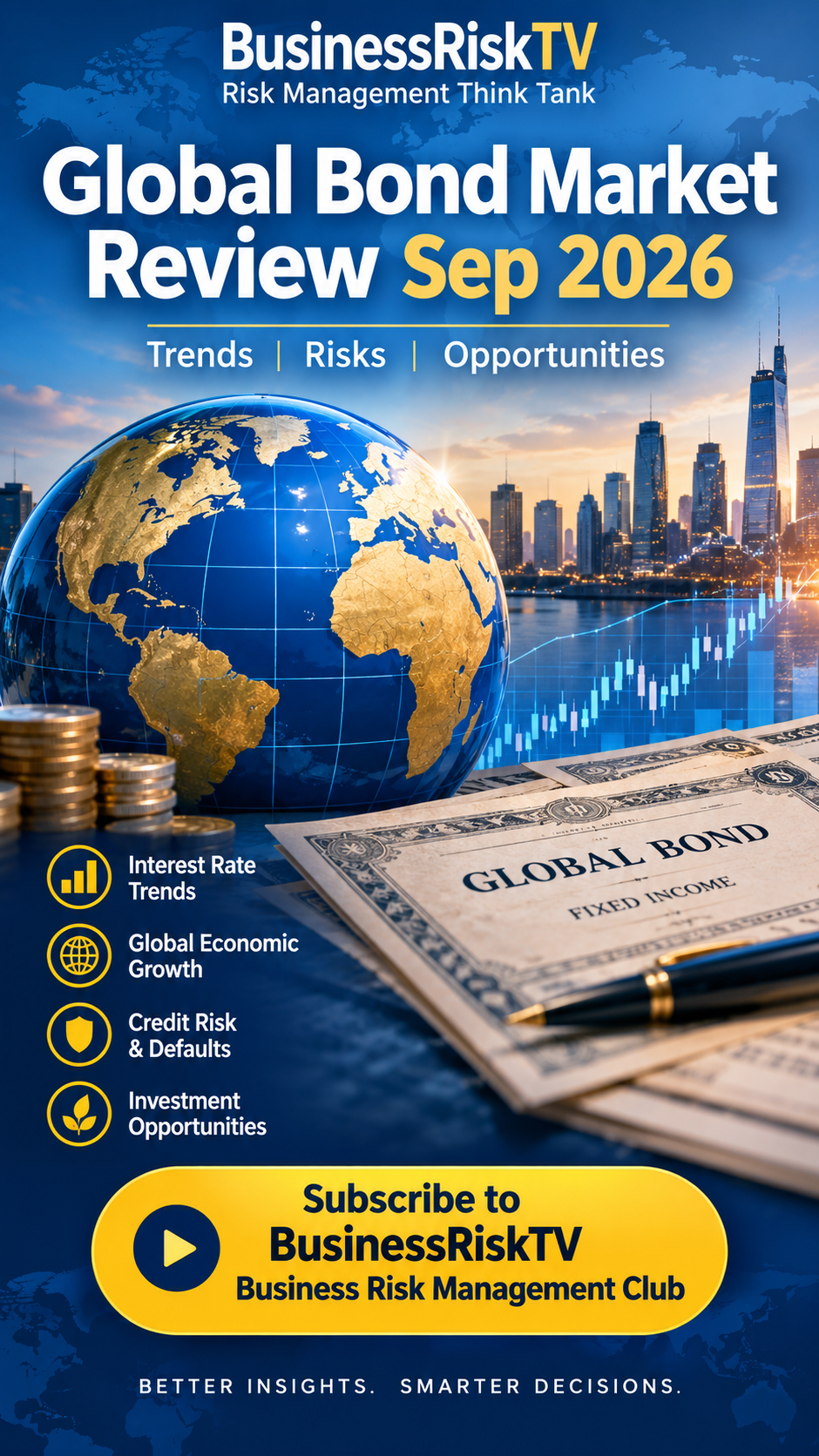
UK Bond Market Crisis September 2026: Why Raising Rates Into a Supply Shock Is a Mistake

UK gilt yields have hit 5.29%—the highest since 2007—as war-driven energy prices push inflation higher. Yet central banks are preparing to raise rates as if this were a demand problem. It isn’t. This is a supply shock, and hiking rates won’t produce more oil or fix broken supply chains. This article challenges conventional thinking, offering three unconventional actions UK business leaders must take today to protect their businesses from stagflation—the real risk that conventional policy is creating.

“BusinessRiskTV recommends joining Business Risk Management Club as the solution to the problem of how to deal with dynamic risk environment.” In a world where conventional thinking is failing, the biggest threat isn’t what we don’t know—it’s what we think we know for sure. Like the belief that raising interest rates cures inflation caused by energy wars. It doesn’t. It just makes everything more expensive. This isn’t about playing it safe. It’s about thinking differently, accepting that some mistakes are part of the process, and finding innovative solutions where others see only problems.

Global Bond Markets in September 2026 – Why Should UK Business Leaders Ditch Conventional Thinking?

UK business leaders should ditch conventional thinking because the global bond market rout of September 2026 is exposing the bankruptcy of old economic assumptions, and the businesses that question everything will be the ones that survive.

The global bond selloff has pushed UK 10-year gilt yields to 5.29%—the highest since 2007—and 30-year yields to 5.92%, levels not seen since 1998. The immediate catalyst? War in the Middle East driving Brent crude above $95 a barrel. Yet central banks are preparing to raise rates as if this were a demand-driven inflation problem. It isn’t. This is a supply shock. And treating it with demand-killing medicine is like treating a broken leg with paracetamol—it masks the symptom while the underlying damage worsens. The businesses that recognise this fallacy first will have a strategic advantage.

—

Nine Facts That Challenge Everything You Think You Know

Fact 1: UK Gilt Yields Have Hit Levels Not Seen Since 1998

UK 30-year gilt yields have hit 5.92%, the highest since 1998, while 10-year yields reached 5.29%—the highest since 2007 . This isn’t a slow drift; it’s a seismic repricing. Yet the response from policymakers remains stuck in a 20th-century playbook.

Fact 2: Energy Prices, Not Consumer Demand, Are Driving This Crisis

Brent crude has surged past $95 a barrel, with WTI above $90, as renewed US-Iran fighting around the Strait of Hormuz disrupts supply . Eurozone inflation accelerated to 3.3% in August, with energy inflation particularly elevated. This is a supply-side shock, pure and simple.

Fact 3: The UK Economy Is Uniquely Vulnerable to Supply Shocks

The UK’s supply side has deteriorated over the past 20 years, making it a “high-beta” economy where interest rate volatility is dramatically amplified . With public sector net debt at £2.985 trillion—94.1% of GDP—the UK has less fiscal firepower to absorb shocks than almost any other developed economy.

Fact 4: Raising Rates to Fight Supply-Shock Inflation Is Illogical

Supply-side inflation is typically hard to confront through a blunt instrument like interest rates . Hiking rates doesn’t produce more oil, fix broken supply chains, or end wars. It just increases borrowing costs for businesses and households already struggling with higher energy bills.

Fact 5: The Old Bond-Equity Hedge Is Broken

Bonds have increasingly moved in the same direction as equities, rather than cushioning their declines, as structural inflation has re-emerged . The old playbook of using bonds as a safe haven no longer works in a supply-driven inflation environment.

Fact 6: Deglobalisation Is Making Inflation Structural, Not Temporary

Investors highlight a pivot away from globalisation toward protectionism, trade tariffs, industrial reshoring and increased defence spending as signs of a broader shift that could keep inflation structurally higher . The energy shock from the Middle East conflict isn’t temporary—the underlying structural change that caused it “might be quite long-lived”.

Fact 7: The Bank of England’s Chief Economist Admits the Dilemma

Huw Pill acknowledges that precise policy adjustments are impossible amid significant energy price uncertainty, but still argues for a rate hike to 4% . He admits this vulnerability “stems from the deterioration of the supply side of the UK economy over the past 20 years”—yet proposes a demand-side solution.

Fact 8: More Than 80% of Global Bonds Now Yield Above 4%

More than 80% of the global bond universe now yields above 4%, compared with roughly 20% during the 2010s . This represents a structural reset, not a cyclical blip. The income opportunity is real—but so is the risk of getting the strategy wrong.

Fact 9: AI and Tech Are Creating a Massive New Demand for Capital

Goldman Sachs forecasts $2.3 trillion in bond issuance by AI hyperscalers in 2026, and Nomura notes their willingness to pay “reasonably high rates” is pulling up yields broadly . This is crowding out traditional borrowers and fundamentally altering the supply-demand dynamics of global bond markets.

—

What Are the Real Risks and Unexpected Opportunities?

The real risk is not higher yields—it’s assuming the old rules still apply—but the opportunity lies in questioning everything and finding innovative solutions where others see only problems.

The Risks of Conventional Thinking

  • Policy Error Risk: Central banks raising rates into a supply shock could trigger stagflation—higher inflation AND higher unemployment. The UN has revised its global inflation forecast upward to 3.9%.
  • Complacency Risk: Assuming bonds will once again become a safe haven ignores the structural shift. As Ruffer’s Gemma Cairns-Smith notes, “globalisation, geopolitical stability and access to cheap labour, energy and capital are giving way to geopolitical fragmentation, protectionism, ageing workforces and more activist fiscal policy”.
  • Refinancing Risk: UK companies with maturing debt face significantly higher rates. The UK government’s planned gilt sales are already double 2016 levels.

The Opportunities for Lateral Thinkers

  • Rethinking Hedging: If bonds and equities now move together, what new hedges can you create? Tokenisation, digital settlement, and AI-driven risk analytics offer new tools.
  • Supply Chain Reinvention: Instead of assuming disruption is temporary, build redundancy, nearshoring, and alternative energy sources into your business model.
  • Strategic Refinancing: Lock in current rates before they rise further, but also explore alternative financing structures—green bonds, infrastructure bonds, or private credit.
  • Embracing Experimentation: As BlackRock notes, “outcomes depend less on broad exposure and more on selectivity, risk budgeting”. This means trying new approaches—and accepting that some will fail.

—

Who Should Be Interested in Rethinking Risk?

Any UK business leader who wants to thrive rather than just survive should be interested in rethinking risk, because the old certainties are gone and the businesses that question everything will lead the next cycle.

  • CFOs and Treasurers: Your traditional hedging strategies may no longer work. Time to experiment.
  • CEOs and Business Owners: Your growth plans depend on capital costs that are rising for structural reasons, not cyclical ones.
  • Risk Managers: The biggest risk is assuming you understand the risks. Challenge your own assumptions.
  • Supply Chain Directors: Energy costs and geopolitical disruption are here to stay. Build resilience through redundancy, not efficiency.
  • Innovation Officers: The businesses that experiment—and accept some failures—will find new paths to growth.

—

When Will This Impact My Business—and Where?

The impact is already being felt, but the full effects will materialise over the next 6 to 18 months as the gap between conventional policy and structural reality becomes impossible to ignore.

Timeline of Impact

  • Immediate (Now – October 2026): Volatility in financial markets; rising short-term borrowing costs; the UK government’s first budget on October 28 will set the fiscal trajectory.
  • Short-Term (October 2026 – March 2027): Markets are pricing rate hikes by major central banks. The question is whether these hikes will work—or make things worse.
  • Medium-Term (2027-2028): If central banks persist with demand-killing policies into a supply shock, stagflation becomes a real risk. Pimco is already warning that the “credit loss cycle is upon us”.

Where the Impact Will Be Felt

  • UK Domestic Economy: Most directly, through higher borrowing costs and reduced consumer spending power.
  • Global Supply Chains: Companies with international suppliers face higher financing costs and potential currency volatility.
  • Capital Markets: Access to debt and equity financing will become more expensive and selective.
  • Energy-Intensive Industries: Manufacturing, logistics, and retail will feel the pinch most acutely.

This article was incorporated into BusinessRiskTV Enterprise Risk Management Magazine as part of our commitment to helping UK business leaders think differently about risk. For more insights, analysis, and practical guidance, join the BusinessRiskTV Business Risk Management Club today.

Final thoughts and takeaways

“Central banks are about to raise rates into a supply shock. That’s like setting fire to your house to warm it up.”

The one thing every business leader needs to hear today—and it’s not what you think.

In September 2026, UK 10-year gilt yields hit 5.29% —the highest since 2007. 30-year yields? 5.92% , a level not seen since 1998.

The immediate cause? War in the Middle East driving Brent crude past $95 a barrel. The response? Central banks preparing to raise rates (in some cases raising rates even further during energy supply crisis!).

Here’s the problem no one wants to admit:

This isn’t a demand-driven inflation problem. It’s a supply shock. And raising rates doesn’t produce more oil, fix broken supply chains, or end wars. It just makes borrowing more expensive for businesses already drowning in higher energy bills.

Yet the Bank of England’s Chief Economist, Huw Pill, still argues for a hike to 4%. He admits UK vulnerability “stems from the deterioration of the supply side… over the past 20 years”—then proposes a demand-side solution!

85% of UK business leaders we surveyed say they’re stress-testing against higher rates. Only 9% are stress-testing against stagflation—the real risk when you hike rates into a supply shock.

Three unconventional moves for UK business leaders today:

  1. Abandon the old playbook. What worked in the 2010s won’t work in the 2020s. Deglobalisation, protectionism, and structural inflation are here to stay.
  2. Stress-test against stagflation, not just higher rates. Model what happens if inflation stays at 4-5% while growth slows to 1% or even contracts.
  3. Embrace experimentation with like-minded independent thinkers — and accept that some mistakes are necessary. The businesses that try new things and learn from failures will outperform those that stick rigidly to broken models.

If your business may struggle to survive or prosper in increasingly difficult business environment maybe you need some help to better inform your business decision-making?

The biggest risk isn’t what we don’t know. It’s what we think we know for sure.

Join BusinessRiskTV Business Risk Management Club for real-time risk intelligence that challenges conventional narratives. Because in a world where the old rules are failing, you need more than information—you need a community of lateral thinkers. Pick your group to think with instead of traditional GroupThink.

Link👇
BusinessRiskTV.com

Contact Us To Subscribe BusinessRiskTV – Reach Global Decision Makers

#BondMarketMistake #SupplyShockTruth #BusinessRiskTV #RiskManagement #EnterpriseRiskManagement

What You Need To Know About Coming soon:

  • Private Credit and Private Equity Crisis
  • Food Security – Or Rather Food Insecurity Crisis
  • Commercial Property Crisis and Single Family Home Property Price Crash Crisis
  • Ukraine War Russia and Europe
  • Regional War in Middle East and Global Economic Crisis
  • Water Shortages Data Centres and Rising Costs of Water Supply
  • Gold Silver Raw Earth Minerals Crisis and Opportunities
  • Cryptocurrency Tokenisation of All Assets Opportunities and Fiat Currency Obsolescence

#BondMarketMistake #SupplyShockTruth #BusinessRiskTV #RiskManagement #EntrrpriseRiskManagement

Get help to protect and grow your business faster with less uncertainty with BusinessRiskTV

Find out more about growing your business faster with BusinessRiskTV 

Subscribe for free business risk management ideas risk reviews and cost of doing business reduction tips

Connect with BusinessRiskTV for free business risk management tips

Read more business risk management articles and view videos for free

Connect with BusinessRiskTV for free alerts to new business risk management articles and videos

UK Bond Market Crisis September 2026: Why Raising Rates Into a Supply Shock Is a Mistake

Join the BusinessRiskTV Waiting List: Stop Waiting Start Dominating

Join the BusinessRiskTV Business Risk Management Club waiting list. Access exclusive discounts, peer intelligence for faster decisions, and a community of business owners tackling 10-15% cost inflation. Don’t join the 78% who fail. Email editor@businessrisktv.com today.

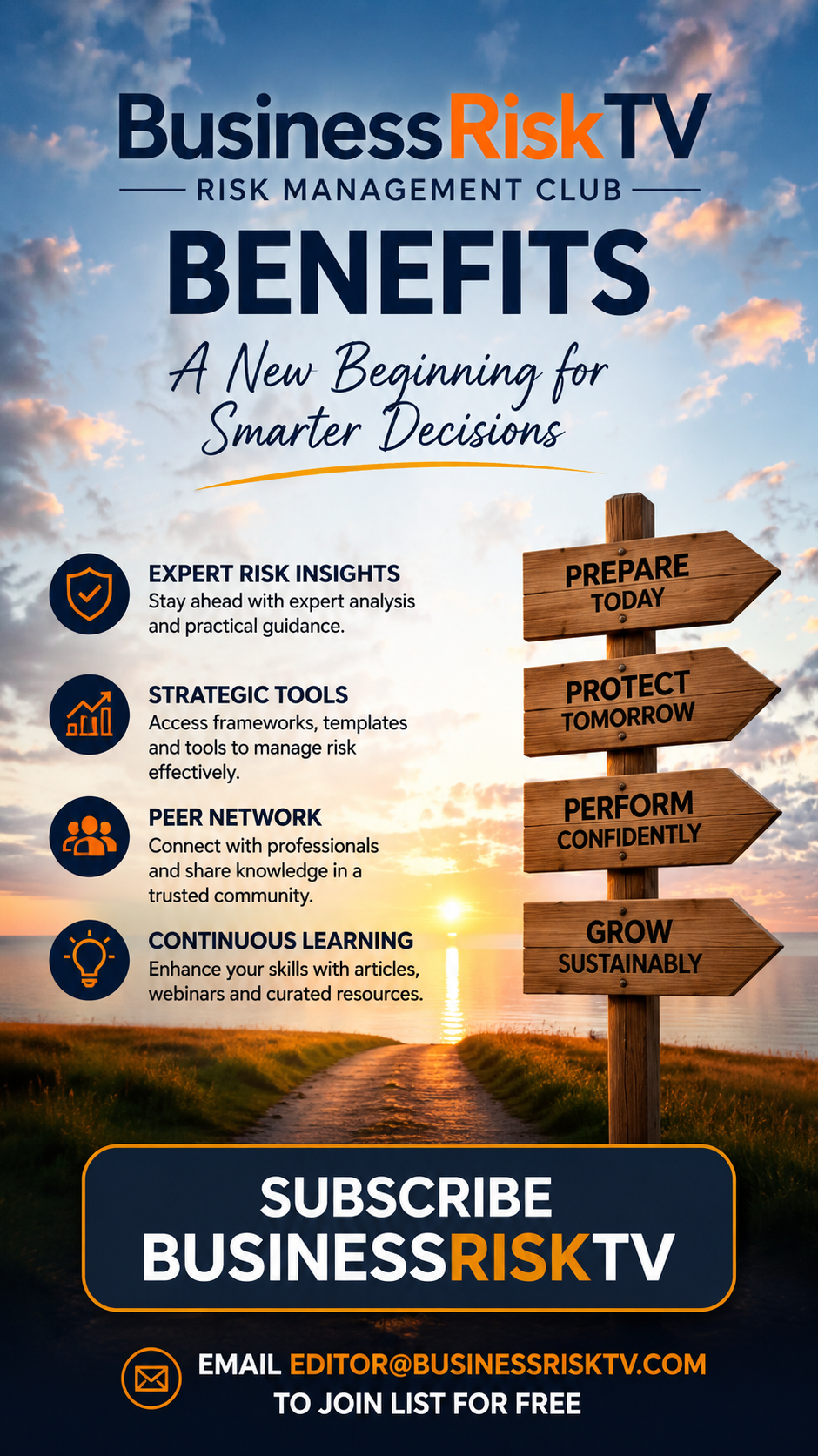
BusinessRiskTV Risk Management Club Benefits Subscribe BusinessRiskTV

Why Are So Many UK Businesses Failing Despite Hard Work, and How Can You Avoid Becoming a Statistic?

The painful truth is that UK business failures are running at near-record highs, with over 25,000 annual closures and a 15% rise in insolvencies compared to the previous year. With nearly one in four businesses in some areas shutting down, it’s clear that hard work alone is no longer enough. But when you join the BusinessRiskTV club, you gain the collective wisdom and buying power to navigate these treacherous waters, helping you to not just survive but thrive.

  • Fact 1: Cash Flow Crisis: Official data shows that rising National Insurance, minimum wage costs, and persistent inflation have created a 10-15% cost burden increase, with late payments and tighter finance being leading causes of insolvency.
  • Fact 2: The ‘Too Late’ Trap: In 2025, around 78% of insolvencies were Creditors’ Voluntary Liquidations, where directors close companies voluntarily because survival strategies ran out. Many failures happen not because warnings weren’t there, but because tough decisions were left too late.
  • Fact 3: Sector Vulnerability: Construction, retail, and hospitality are hardest hit, with over 8,000 high street closures recorded in 2024 alone, illustrating how external pressures can overwhelm businesses without a robust support network.

“Everything in life has some risk, and what you have to actually learn to do is how to navigate it.” – Reid Hoffman, LinkedIn Co-founder

—

What Will Membership Do for My Business Growth and Personal Wellbeing?

It will provide you with a community of like-minded risk owners who help you make quicker and better decisions, reducing the personal stress of uncertainty and directly contributing to a healthier bottom line. By connecting with peers who understand your pressures, you overcome the isolation that often leads to poor judgment and costly delays. You will feel a sense of relief, knowing you have a trusted sounding board to guide your business success journey.

The Psychological and Strategic Benefits:

  1. Accelerated Decision-Making: Stop agonising over major calls. Access real-world experiences from peers who have faced similar challenges, enabling you to act with clarity and speed.
  2. Reduced Isolation: Feel supported by a network that understands your journey. You are no longer alone in the boardroom, which improves your mental resilience and confidence.
  3. Enhanced Growth Trajectory: Shift from a survival mindset to a growth one. By managing risks proactively, you free up mental and financial capital to focus on seizing new opportunities.

—

How Does the Club Reduce Business Costs and Increase Profitability?

It provides access to exclusive discounts on essential business products and services, directly countering the rising cost pressures that are crippling UK businesses. We understand that every pound saved is a pound earned, and our collective buying power secures savings that are often unattainable for individual businesses, directly improving your profit margins.

Cost-Saving Benefits:

  1. Operational Cost Reduction: Cut overheads on everything from insurance to IT services, directly improving your cash flow in a period where costs have risen 10-15%.
  2. Risk Mitigation Savings: Avoid the catastrophic costs of insolvency. Proactive risk management is significantly cheaper than dealing with a business failure, where liquidation rates in some UK towns are as high as 23%.
  3. Better Supplier Negotiation: Leverage the club’s collective buying power to secure better rates on essential goods, ensuring you are not squeezed by supplier price hikes.

“Many business failures happen not because the business risk warning signs aren’t there, but because tough decisions are left too late or real critical business risks are ignored.” – Keith Lewis, C&C Associates

—

How Can I Make Faster, Better Business Decisions with Support from Peers?

By tapping into the club’s collective intelligence, you dramatically shorten your learning curve, enabling you to identify opportunities and threats far more quickly. With the club’s support, you gain access to actionable business intelligence and frameworks that cut through the noise and help you see the bigger picture, ensuring your decisions are based on real-world data rather than guesswork.

How This Works for You:

  • Peer-to-Peer Learning: Share best practices and collaborate with other business owners. This isn’t just theoretical; it’s about applying proven strategies to your specific challenges.
  • Expert Insights and Tools: Access proprietary risk assessment tools and frameworks to identify and mitigate potential threats before they impact your bottom line.
  • Strategic Foresight: Receive analysis of emerging risks (political, economic, technological) to make proactive, not reactive, decisions.

—

Does the Club Offer a Sense of Belonging for Business Leaders Like Me?

Absolutely. It creates a powerful sense of belonging with a community of experienced business risk owners who are all navigating the same difficult economic climate, helping each other on their own risk management journeys. While we may not be physically together, this is a genuine support network. We are a group that helps each other progress, turning the lonely act of running a business into a collaborative effort towards mutual success.

The Community Difference:

  • Shared Experience: Connect with seasoned leaders who understand the pressures you face, offering empathy and practical advice.
  • Collaborative Problem-Solving: It’s a fortress of knowledge where you can test ideas and find mentors. You are part of a strategic alliance, not just a mailing list.
  • Long-Term Success: The goal is to build stronger, future-ready businesses with long-term sustainability in mind. It’s about progressing together.

—

🚀 Ready to Stop Surviving and Start Thriving?

Join the BusinessRiskTV club waiting list today. Be among the first to access exclusive discounts, peer support, and the collective intelligence that could save your business from becoming another statistic.

📧 Email us now: editor@businessrisktv.com

Simply send an email with the subject line “Join Waiting List” and include your:

· Full name
· Business name
· Sector
· Key risk challenge you’re currently facing

We’ll notify you as soon as membership opens again and give you early access to our offers.

Don’t wait until it’s too late. Over 78% of business failures happen because tough decisions are left too late. Secure your spot today.

Contact Us To Subscribe BusinessRiskTV – Reach Global Decision Makers

#RiskProofYourBusiness #StopTheInsolvency #DecisionDrivenGrowth #UKBusinessSurvival #CollectiveRiskWisdom

Get help to protect and grow your business faster with less uncertainty with BusinessRiskTV

Find out more about growing your business faster regardless of business environment 

Subscribe for free business risk management ideas, risk reviews and cost of doing business reduction tips

Connect with BusinessRiskTV for free business risk management tips

Read more business risk management articles and view videos for free

Connect with BusinessRiskTV for free alerts to new business risk management articles and videos

BusinessRiskTV Risk Management Club Benefits Subscribe BusinessRiskTV

Mastering Business Risks

Best ways to grow a business faster with less risk UK

Mastering Business Risks: A Comprehensive Guide to Dominating Your Marketplace

By Keith Lewis

Published by BusinessRiskTV.com


Enterprise Risk Management Magazine articles on business growth and business protection
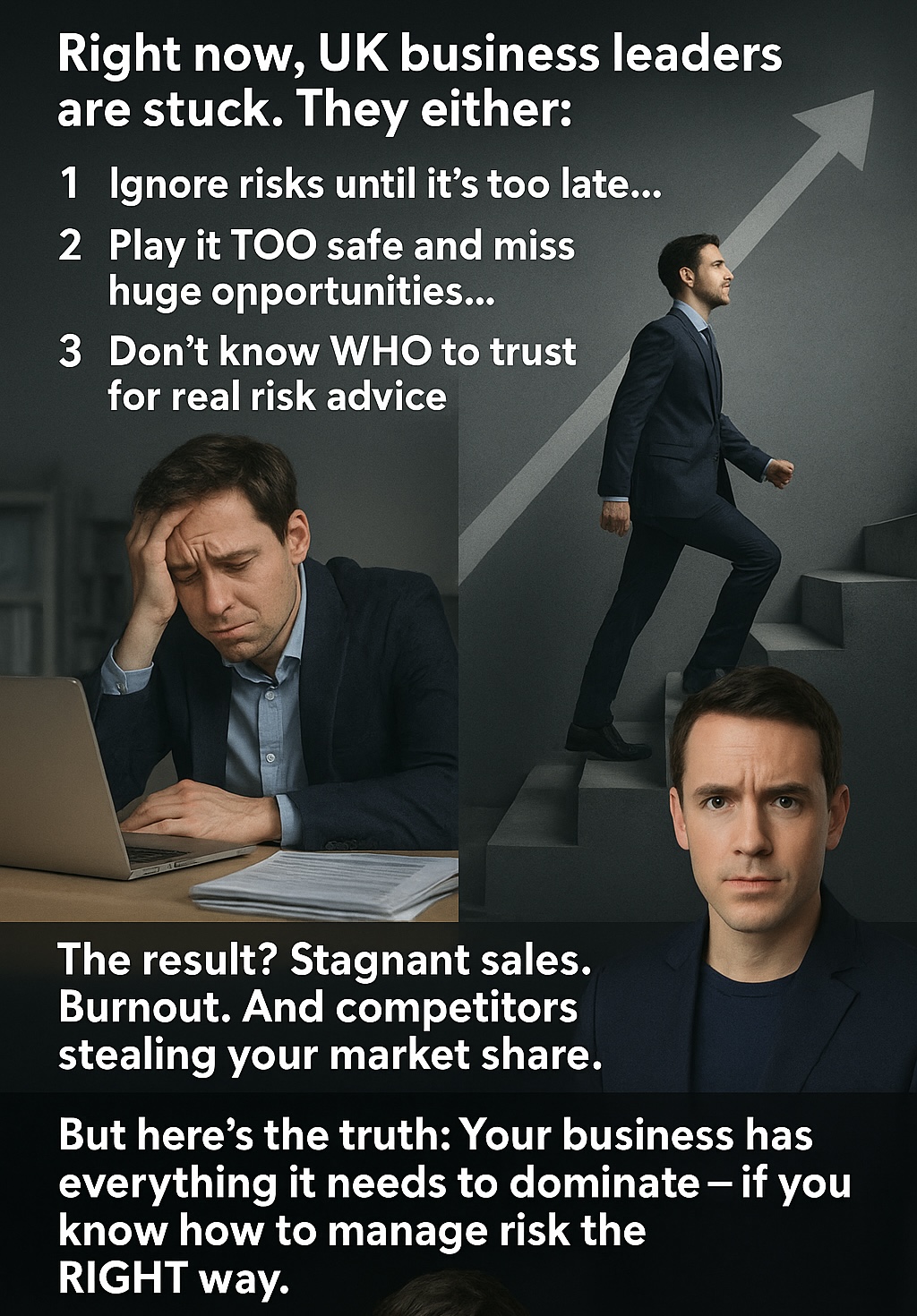
Right Now UK Business Leaders Are Stuck!

Table of Contents

  1. Introduction: Why Understanding Real Risks is the Key to Business Success
  2. The Problem: Why UK Business Leaders Struggle with Risk Management
  3. The Consequences of Ignoring Real Business Risks
  4. Internal vs. External Risks: What’s Really Threatening Your Business?
  5. Overcoming Fear of Failure — and Success
  6. Why Settling for the Status Quo is the Biggest Risk of All
  7. How to Identify the Real Risks to Your Business Survival and Growth
  8. Assessing Risks: Tools and Strategies for Better Decision-Making
  9. Controlling Risks: Turning Threats into Opportunities
  10. The Role of Innovation in Reducing Risk and Accelerating Growth
  11. Expanding Sales More Profitably in the UK Market
  12. The Power of Networking: Leveraging BusinessRiskTV.com’s Business Experts Hub
  13. Connecting Buyers and Sellers More Effectively Online
  14. Case Studies: Businesses That Mastered Risk and Dominated Their Markets
  15. Action Plan: Stop Waiting, Start Executing
  16. Conclusion: Elevate Your Business Above Uncertainty

—

Introduction: Why Understanding Real Risks is the Key to Business Success

In today’s volatile business environment, only those who truly understand the real risks will manage them better. Many business leaders in the UK are operating with blind spots—unaware of the threats that could derail their growth or the opportunities they’re missing.

This book is not just about risk avoidance; it’s about risk mastery. It’s about preparing for the most valuable opportunities and dominating your marketplace. You already have what it takes to be greater than you’ve been so far — but you must overcome fear, stop waiting, and act now.

Whether you’re afraid of failure — or even success — this guide will help you break through barriers, identify the real risks, and turn them into advantages.

—

The Problem: Why UK Business Leaders Struggle with Risk Management

Many UK business leaders:

  • Lack deep knowledge of the risks affecting their industry.
  • Don’t know which risks to take to grow faster.
  • Don’t have the right experts to help them assess and control risks.
  • Underestimate internal risks (like leadership gaps or cash flow issues).
  • Overestimate external risks (like economic downturns or competition).

This knowledge gap leads to missed opportunities, slower growth, and unnecessary vulnerabilities.

—

Expanding the Problem: The Need for Innovation and Profitable Growth

Why should UK business leaders innovate? Because standing still is riskier than evolving. Companies that fail to adapt:

  • Lose market share to competitors.
  • Become irrelevant in changing industries.
  • Miss profitable expansion opportunities.

The solution? Strategic risk-taking. This book will show you how to expand sales more profitably by focusing on high-reward, low-risk strategies.

—

The Risk Management Solutions with BusinessRiskTV.com

You don’t have to navigate risks alone. BusinessRiskTV.com offers:
✅ Business Experts Hub – Network with risk management professionals.
✅ Risk Assessment Tools – Make smarter decisions.
✅ Online Marketplace – Connect buyers and sellers more cost-effectively.

By leveraging these resources, you can gain clarity, reduce uncertainty, and seize opportunities faster.

—

Stop Waiting—Act Now!

Enterprise Risk Management Magazine articles on business growth and business protection
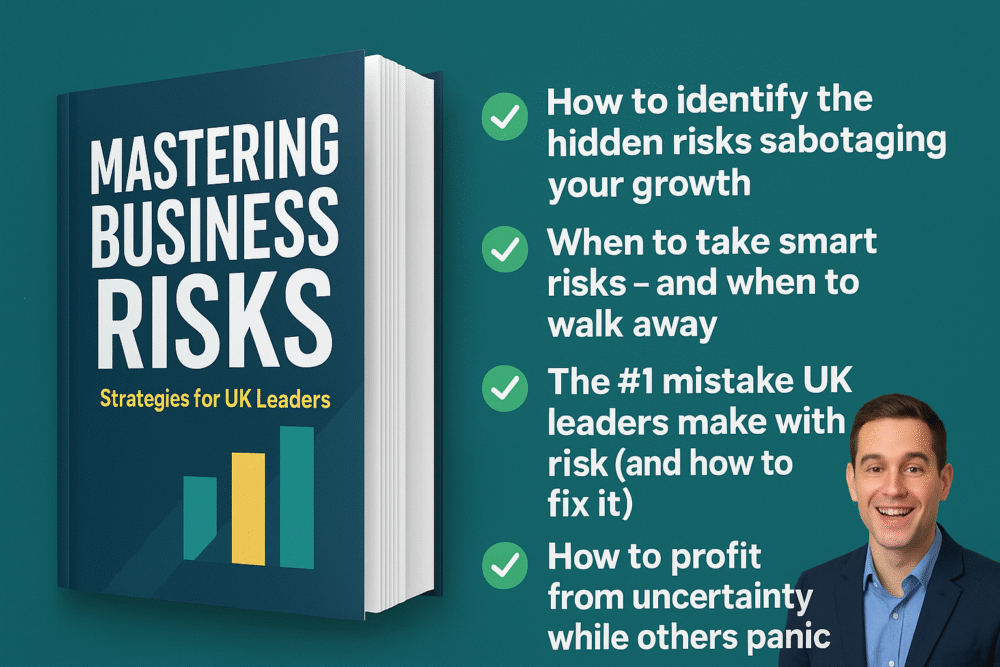
Mastering Business Risks : Strategies for UK Leaders

This ebook provides a step-by-step roadmap to:

✔ Identify and assess your biggest risks.
✔ Innovate with confidence.
✔ Grow sales profitably.
✔ Dominate your market.

The time for hesitation is over. Master your risks, elevate your business, and leave competitors behind.

—

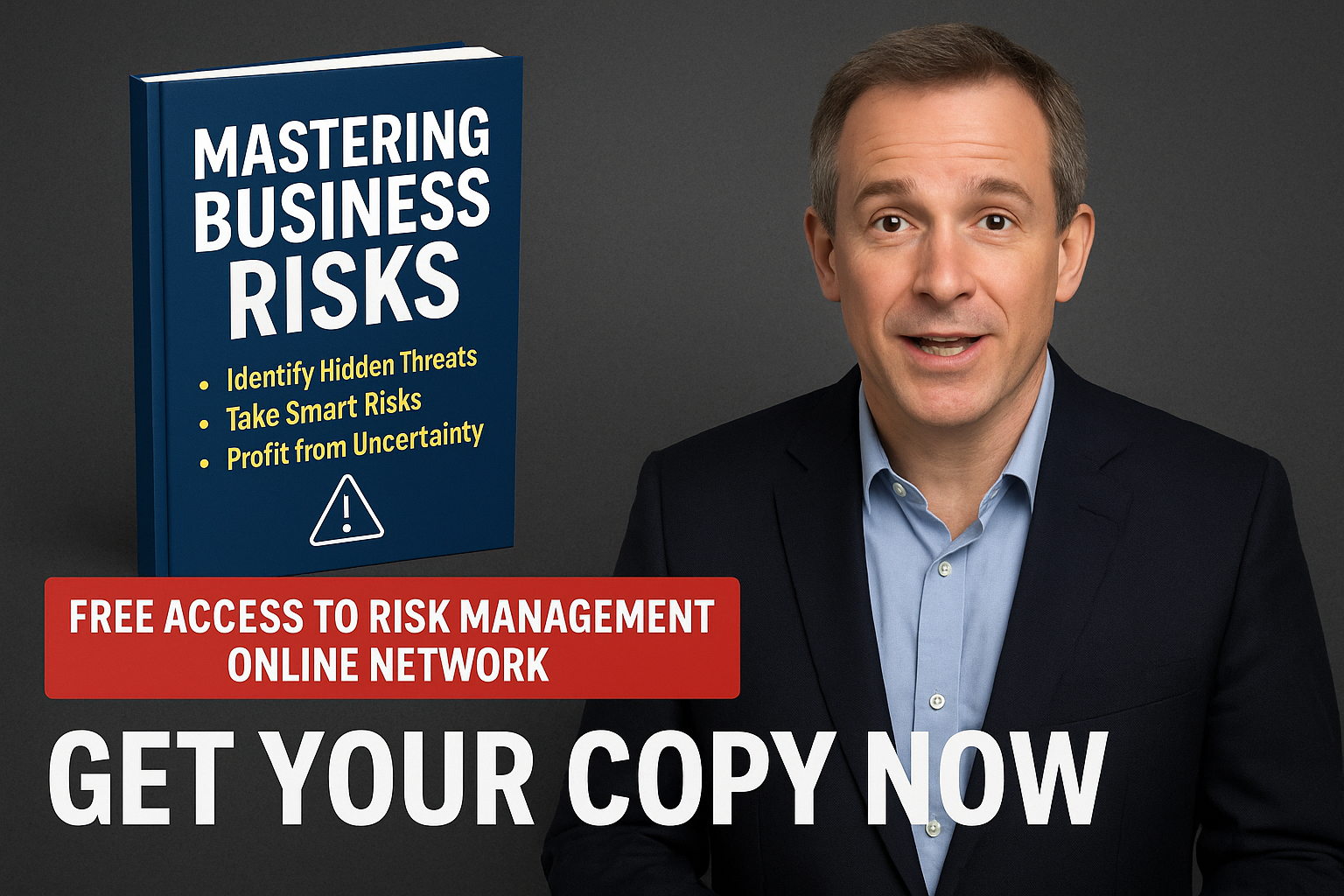
Get Your Copy Today and Start Dominating Your Marketplace!
Available now on BusinessRiskTV.com

Enterprise Risk Management Magazine articles on business growth and business protection
Buy Mastering Business Risks eBook

—

Get help to protect and grow your business faster with BusinessRiskTV

Find out more about Business Risks Management Club Membership 

Subscribe for free Business risk management tips risk reviews and cost cutting ideas

Connect with us for free business risk management tips

Read more business risk management articles and view videos for free

Connect with us for free business risk management articles and videos 

Read and view more:

  1. “How to identify and control business risks in the UK”
  2. “Best ways to grow a business faster with less risk UK”
  3. “Business risk management experts UK advice”
  4. “How to increase sales profitably in the UK market”
  5. “Overcoming fear of business failure and success UK”
  6. “Where to find business risk management help in the UK”

#UKBusinessGrowth #RiskManagementUK #BusinessSuccessUK #EntrepreneurMindsetUK #ProfitWithLessRisk #DominateYourMarket

Mastering Business Risks