BusinessRiskTV Analysis: The End of Dollar Dominance? A Strategic Risk Guide for Leaders
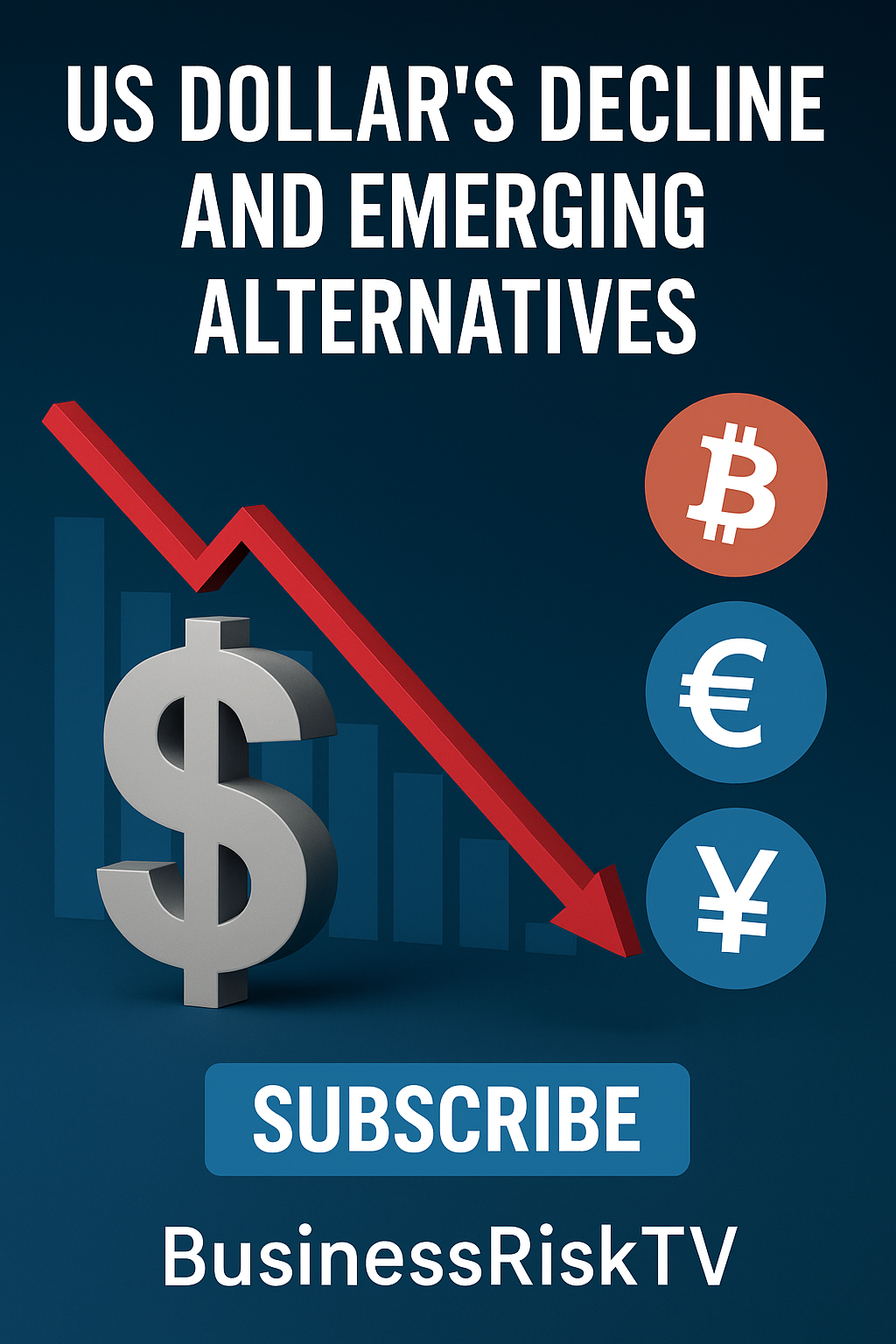
The global monetary order is undergoing its most significant shift in decades. This analysis cuts through the headlines to reveal the converging threats of U.S. debt dependency, active de-dollarization by the Global South, and disruptive financial technology like Project mBridge. Business leaders must understand these structural changes to navigate imminent risks of higher capital costs, complex currency fragmentation, and a fundamental re-drawing of global financial power away from New York and SWIFT. Reading this full analysis is essential for strategic planning in a new era of economic uncertainty.

The End of Dollar Dominance? A Business Leader’s Risk Management Guide

The Looming $10 Trillion Debt Refinance: A Ticking Time Clock?

The immediate pressure point for the U.S. financial system is staggering. Analysis indicates that approximately $10 trillion of U.S. Treasury debt—about one-third of the marketable total—needs to be refinanced in the near term.

While the act of rolling over maturing bonds is routine, the context has changed dangerously. The Federal Reserve is no longer the backstop buyer it was post-2008, and traditional foreign demand is waning. The U.S. now competes for capital in a world where its creditors are actively seeking alternatives. The real cost is already clear: over $11 billion per week is spent just servicing the existing national debt. For business leaders, this signals a future of persistently higher real interest rates, directly impacting corporate borrowing costs, valuations, and investment plans.

Stealthy De-Dollarization: How the Global South is Quietly Escaping

Nations are not selling U.S. bonds en masse but are engaging in a “managed strategic liquidation.” The strategy is to let bonds mature and not reinvest the proceeds, gradually reducing exposure without crashing the market.

The evidence is in the reserves:

  • The foreign share of U.S. Treasury ownership has plummeted from over 50% post-2008 to around 30%.
  • Central banks, led by China, have become net buyers of gold for 18 consecutive months, directly swapping paper dollar claims for tangible assets they control.
  • The dollar’s share of global foreign exchange reserves has steadily declined from ~72% in 2001 to approximately 57%.

This is a deliberate hedge against geopolitical risk and a loss of trust, accelerated by the freezing of Russian assets. For businesses, this means preparing for a multi-currency invoicing and settlement reality, where the dollar is first among equals, not the sole master.

Beyond the Petrodollar: The Rise of the Petro-Yuan and BRICS Unit

The “death of the petrodollar” is not an event but a process. Major oil producers like Saudi Arabia, the UAE, and Russia within the expanded BRICS+ bloc are openly transacting in non-dollar currencies.

However, creating a true rival reserve currency is fraught with difficulty. The Chinese Renminbi (RMB) faces hurdles as a global store of value due to capital controls. The practical challenge for BRICS is creating deep, liquid financial markets to recycle trade surpluses. The trend, however, is irreversible. Business supply chains and trade finance operations must now build flexibility for bilateral currency settlements (e.g., RMB-Riyal, Rupee-Dirham), moving away from exclusive dollar dependence.

Project mBridge: The Technological Knockout Punch to SWIFT

This is where systemic risk accelerates. Project mBridge is not a theory; it is a live multi-Central Bank Digital Currency (CBDC) platform involving the central banks of China, Saudi Arabia, the UAE, Thailand, and Hong Kong, with observers including India, Brazil, and even the Federal Reserve Bank of New York.

Its threat is existential to the current system:

  • It Bypasses Scrutiny: It enables instant, peer-to-peer cross-border payments that completely avoid the SWIFT network and U.S. oversight.
  • It Erodes Network Effects: It provides a sanctioned, efficient channel for trading energy and goods, directly challenging the dollar’s transactional hegemony.
  • It Redefines Control: New York can no longer control the movement of money that flows through this independent ledger. For compliance officers, this creates a nightmare of sanctions evasion and conflicting legal jurisdictions.

Why the Old Economic Cycle is Breaking—And What Comes Next

Traditional predictors like the inverted yield curve and the Sahm Rule have flashed red, yet a classic recession has not materialized. This signals a cycle under profound stress, not a clean break. The system is being prolonged by unusual labor dynamics and fiscal stimulus, but its foundations—dollar dominance and cohesive global finance—are fracturing.

We are moving from a single-cycle world economy to a fragmented, multi-bloc system. This fragmentation introduces volatile new risks alongside opportunity.

Actionable Implications for Business Leaders & Decision-Makers

  1. Hedge Your Treasury & Finance Operations: Model scenarios of sustained higher interest rates (5-7% range). Diversify cash holdings and explore currency-hedged financing options. Treat dollar dependency as a strategic vulnerability.
  2. Build Multi-Currency Agility: Work with your trade finance and treasury teams to test invoicing and settlement in alternative currencies. Develop relationships with banks that can support RMB, Euro, and direct bilateral settlement corridors.
  3. Conduct a Geopolitical Finance Stress Test: Map your exposure to payments infrastructure. What would happen if SWIFT access were complicated for key partners? How would you pay or be paid? Understand the legal risks of engaging with platforms like a future mBridge.
  4. Re-evaluate “Safe” Assets: The definition of a safe-haven asset is broadening beyond U.S. Treasuries. Consider the role of strategic commodity reserves, holdings in key partner currencies, and even corporate gold hedging in extreme scenarios.

#BusinessRiskManagement #GlobalEconomy #DeDollarization #StrategicRisk #FinancialRisk #GeopoliticalRisk #Leadership #BRICS #ProjectmBridge #CBDC #SWIFT #USDebt #Petrodollar

Get help to protect and grow your business faster with BusinessRiskTV

Find out more about growing your business faster with BusinessRiskTV 

Subscribe for free business risk management ideas risk reviews and cost reduction tips

Connect with us for free business risk management tips

Read more business risk management articles and view videos for free

Connect with us for free alerts to new business risk management articles and videos 

Venezuela Gambit: A Strategic Pillar for Dollar Defense

The geopolitical moves in Venezuela are not merely about regional politics or human rights. Viewed through the lens of the global currency war, they represent a high-stakes defensive action for the U.S. dollar system.

Venezuela as a Contradiction and an Opportunity

Venezuela presents a unique paradox in the de-dollarization narrative. While nations like Russia and China are actively building non-dollar systems, Venezuela has undergone a profound, bottom-up de facto dollarization. Due to catastrophic hyperinflation that rendered the Bolívar virtually worthless, over half of all transactions in the country are now conducted in U.S. dollars, with the figure reaching 80-90% in some urban and border areas. This was not a policy choice by the socialist government but a survival mechanism adopted by its citizens and businesses. For the U.S., this creates a critical beachhead.

The Real Reason: Securing the Dollar’s “Network Effect”

The core strength of the U.S. dollar is its unparalleled network effect. Every new country or transaction that uses the dollar makes the entire system more valuable, liquid, and entrenched. Venezuela’s informal adoption of the dollar, despite its government’s anti-American stance, is a powerful testament to this network’s resilience.

Why Americans See Venezuela as Part of the Solution

  • A Case Study in Dollar Inevitability: For U.S. strategists, Venezuela is the ultimate demonstration that when a local currency utterly fails, economic actors will choose the dollar. It proves the greenback’s role as the only viable global safe haven, a powerful narrative against de-dollarization efforts.
  • From Informal to Formal Dollarization: There is a significant push, including from high-profile economists, for Venezuela to move from de facto to official dollarization—adopting the U.S. dollar as its legal tender. This would permanently lock a major Latin American economy and a founding OPEC member into the dollar orbit, stripping a potential rival like China or Russia of a strategic foothold in America’s backyard.
  • Countering Petro-Yuan Ambitions: Venezuela possesses the world’s largest proven oil reserves. A dollarized, U.S.-aligned Venezuela would ensure these reserves are traded in dollars, acting as a bulwark against the expansion of petro-yuan contracts. It neutralizes a key energy resource from being weaponized in the currency war.

The Strategic Calculus for Washington
Therefore, U.S. actions in Venezuela—from sanctions to diplomatic pressure—can be interpreted as an effort to steer this dollarization process toward a permanent, formal outcome under a friendly government. The goal is to flip a liability (an adversarial, unstable state) into a strategic asset (a formally dollarized economy that reinforces the currency’s dominance). Successfully anchoring Venezuela in the dollar bloc would deliver a dual victory: weakening the momentum for regional alternatives like a BRICS unit and providing a compelling counter-narrative to the de-dollarization trend by showing the dollar’s irresistible pull even in hostile environments.

Crypto Magazine

BusinessRiskTV Analysis: The End of Dollar Dominance? A Strategic Risk Guide for Leaders

Create Safe Harbour at Work to Identify Failures and Boost Business Performance

Learn how to create a safe harbour at work to empower employees to identify business failures and poor practices. Our guide reveals how psychological safety and anonymous reporting boost productivity and drive business improvement.

How to Create Safe Harbour at Work to Identify Business Failures and Improve Performance

Introduction: The Power of Psychological Safety in Business

In today’s competitive business environment, organisational resilience and continuous improvement separate thriving companies from those struggling to adapt. Yet many businesses overlook their most valuable resource for identifying problems and opportunities: their employees. Creating a safe harbour at work where staff can freely report failures, mistakes, and poor practices without fear of reprisal represents a critical competitive advantage. Research consistently shows that organisations with strong psychological safety and transparent reporting mechanisms significantly outperform their peers in risk management and strategic decision-making.

When employees feel safe to speak up, organisations gain access to early warning systems for potential risks, identify inefficiencies that impact productivity, and unlock innovative solutions to persistent problems. This article provides a comprehensive roadmap for building a culture and infrastructure that encourages transparent reporting of organisational failures for remedial action, ultimately driving business performance and productivity to new heights.

Understanding Psychological Safety: The Foundation of Safe Harbour

Psychological safety describes a shared belief that team members will not face punishment or humiliation for speaking up with ideas, questions, concerns, or mistakes. This environment creates the foundation for effective safe harbour protections where employees feel secure in identifying organisational failures.

The Business Case for Psychological Safety

  • Enhanced risk identification: Employees in psychologically safe environments are more likely to report potential risks, compliance issues, and operational failures early, allowing for proactive intervention before problems escalate.
  • Improved innovation and problem-solving: When team members feel safe expressing unconventional ideas or questioning existing processes, organisations benefit from diverse perspectives and creative solutions to business challenges.
  • Reduced operational costs: Early identification of failures and inefficiencies prevents minor issues from developing into costly crises. Companies with mature reporting capabilities experience fewer operational disruptions and compliance failures.
  • Stronger employee engagement: Organisations that demonstrate respect for employee input through actionable response systems experience higher retention rates and increased productivity.

Establishing Anonymous Reporting Mechanisms

Anonymous reporting channels provide a critical safe harbour mechanism that enables employees to report concerns without fear of identification or retaliation. These systems are particularly important for members of marginalised groups who may historically be less likely to report issues through standard channels.

Choosing Effective Anonymous Reporting Channels

  • Third-party hotlines: External hotlines managed by specialised providers offer maximum anonymity and are available 24/7, encouraging reporting without concerns about internal tracking or identification.
  • Secure digital platforms: Web-based reporting systems with encryption and secure data storage allow employees to submit detailed reports, documents, and even multimedia evidence while maintaining confidentiality.
  • Multi-channel approach: Offering various reporting options (phone, web, mobile app, physical drop box) ensures all employees have access to a comfortable reporting method, increasing participation across different roles and technological comfort levels.

Implementing Anonymous Reporting Systems

  • Clear scope communication: Explicitly define what types of issues employees can report through these channels—including fraud, safety violations, discrimination, ethical concerns, and process failures.
  • Robust response protocols: Establish systematic procedures for acknowledging, investigating, and acting on reports, with clear timelines and communication mechanisms to keep reporters informed of progress.
  • Legal compliance alignment: Work with legal and compliance teams to ensure reporting systems meet regulatory requirements such as the EU Whistleblower Directive and other regional legislation.

Leadership’s Critical Role in Fostering Safe Harbour

Tone from the top represents one of the most significant factors in establishing effective safe harbour protections. Organisations where senior leadership actively champions transparent reporting and risk awareness report significantly higher maturity in identifying and addressing business failures.

Demonstrating Genuine Commitment

  • Executive vulnerability: Leaders who openly acknowledge their own mistakes and what they’ve learned from them model the behaviour they want to see throughout the organisation, making it safer for others to admit failures.
  • Resource allocation: Dedicate appropriate staffing and budget to risk and compliance functions. Companies that properly fund these areas report significantly higher capabilities in addressing identified issues.
  • Direct reporting lines: Ensure heads of risk and compliance have direct access to the board and CEO, rather than being buried multiple levels down in the organisation.

Structural Support for Safe Harbour

  • Board oversight: Active board engagement in risk oversight and compliance functions signals the importance of identifying and addressing organisational failures at the highest levels.
  • C-level representation: Organisations with dedicated chief risk officers or chief compliance officers report more mature capabilities in addressing identified issues and improving business processes.

Frameworks for Analysing and Addressing Reported Issues

Creating safe harbour mechanisms represents only half the equation. Organisations must also implement structured processes for analysing reported issues and implementing corrective actions.

Failure Mode and Effects Analysis (FMEA)

Originally developed by the U.S. military, FMEA provides a systematic approach for identifying and mitigating potential points of failure in business processes. The methodology involves forming cross-functional teams to map processes, identify potential failure points, analyse their effects, determine root causes, and plan mitigations. This structured approach ensures that reported issues receive comprehensive analysis rather than superficial fixes.

Continuous Improvement Methodologies

  • PDCA Cycle (Plan-Do-Check-Act): This iterative four-stage model provides a framework for testing improvements on a small scale before full implementation, reducing the risk of large-scale failures when addressing identified issues.
  • DMAIC Process (Define, Measure, Analyse, Improve, Control): Part of the Six Sigma methodology, this structured approach helps organisations systematically define problems, measure current performance, analyse root causes, improve processes, and control future performance.
  • 5 Whys Analysis: A simple but powerful technique for drilling down to the root cause of a problem by repeatedly asking “why” until the fundamental underlying issue is revealed.

Recognising and Rewarding Transparency

To sustain a culture of psychological safety, organisations must acknowledge and value employees who identify failures and poor practices.

Effective Recognition Approaches

  • Non-punitive response to failure: Separate performance management from well-intentioned mistakes or identified process failures, focusing instead on learning and improvement.
  • Incentive structures: Incorporate ethical behaviour and contributions to process improvement into performance evaluations and compensation decisions.
  • Success storytelling: Publicly celebrate examples where identified failures led to significant improvements, highlighting the employee’s role in the positive outcome while maintaining confidentiality when needed.

Building Your Safe Harbour: Implementation Roadmap

Creating an effective safe harbour system requires a structured, phased approach that integrates culture, processes, and technology.

Phase 1: Foundation (Months 1-3)

  • Leadership alignment: Secure executive commitment and define the business case for safe harbour mechanisms.
  • Initial assessment: Evaluate current state of psychological safety and reporting mechanisms through employee surveys and process analysis.
  • Channel selection: Choose appropriate anonymous reporting channels based on organisational size, structure, and employee preferences.

Phase 2: Implementation (Months 4-6)

  • System rollout: Deploy anonymous reporting channels with clear guidelines and protocols.
  • Policy development: Establish formal non-retaliation policies and investigation procedures.
  • Training launch: Educate managers and HR personnel on receiving reports and responding appropriately.

Phase 3: Integration (Months 7-12)

  • Process integration: Connect reporting systems with improvement methodologies.
  • Cross-functional teams: Establish dedicated groups to analyse reports and implement solutions.
  • Measurement system: Define and track metrics for system effectiveness and cultural impact.

Phase 4: Optimisation (Ongoing)

  • Continuous feedback: Regularly solicit employee input on safe harbour effectiveness.
  • System refinement: Enhance processes based on performance data and changing organisational needs.
  • Cultural reinforcement: Maintain leadership emphasis and recognise success stories.

Conclusion: Transforming Failures into Opportunities

Building effective safe harbour protections represents more than a compliance exercise—it’s a strategic imperative that transforms how organisations identify and address weaknesses. By creating multiple channels for transparent reporting, implementing structured methodologies for analysing failures, and fostering leadership commitment to psychological safety, companies can convert potential threats into powerful opportunities for improvement.

Organisations that excel in this area don’t just avoid problems; they build lasting competitive advantage through enhanced innovation, stronger employee engagement, and systematic continuous improvement. The journey requires sustained commitment, but as leading companies demonstrate, the rewards in business performance, productivity, and resilience make it an investment that pays continuous dividends.

#SafeHarbour #BusinessImprovement #BusinessPerformance #BusinessProductivity #BusinessRiskTV

Get help to protect and grow your business faster with BusinessRiskTV

Find out more about growing your business faster with BusinessRiskTV 

BusinessRiskTV Business Risk Management Club Membership

Subscribe for free business risk management ideas risk reviews and cost reduction ideas

Connect with us for free business risk management tips

Contact Us To Subscribe BusinessRiskTV – Reach Global Decision Makers

Read more business risk management articles and view videos for free

Connect with us for free alerts to new business risk management articles and videos 

Enterprise Risk Management Magazine BusinessRiskTV ERM Magazine

Safe Harbour Employee Protection Business Improvement

Why Do Businesses Need Leaders

Develop your business leadership skills with BusinessRiskTV

The importance of leadership in business is either underestimated or played down. Your team or business functions will operate in line with the inspiration you create or fail to create. Zombie businesses can survive in most business climates, but few will thrive in the business marketplace without good leadership, either from the top, or from middle managers who pick up the baton where the actual leaders have dropped it.

Risk Management Hub

Innovative Leadership In Business

Leaders In Business Innovation

Leaders are needed at all levels of the business

Views Opinions Reviews BusinessRiskTV Risk Perspective Risk Insight

However a great business needs a great visionary. Most visionary’s are made not born. That’s the good news! The bad news is that few business leaders seek to create a vision for their business that everyone else can buy into.

Whats worse is that few businesses invest sufficiently in developing future business leaders

There are many reasons for this. For some businesses, existing business leaders fear training those below them in case they walk away from the business to competitors or to become a new competitor business.

One way to overcome this fear is to share the rewards developing leaders bring to the business and not be too  greedy over short term spoils of new business generated and instead look to the long term benefit of fairly rewarding key business team members.

All hugely successful organisations and businesses need effective leaders

To become a great business leader requires much more than technical business skills that say accountants and lawyers may have. Great business leaders have bundles of emotional intelligence to bring in everybody into improve business performance not just the Board.

Top business leaders are not always brilliant business managers. You can be an amazing business manager, but may never be a business leader. Often great business leaders are not in management positions. Their talent is wasted cause they never get into a position to fully express themselves for the benefit of the business as a whole and themselves.

How do you find the business leaders in your business and bring business leaders together to focus on sustainable business growth?

Enterprise risk management methodology will help in this regard. Many SMEs and large businesses can benefit from developing the leaders who will guide us to a better future.

A look at the business news headlines in most week’s will reveal examples of bad business leadership. W need to help educate business leaders better to reduce frequency of bad business events and increase the occurrence and size of business successes. How we get there does not matter too much, but too often we don’t.

Is your business a zombie business, or worse a business that’s about to hit the rocks?

Better Business Decision Making Faster Business Growth More Corporate Enterprise Success

Find ways to grow faster and protect your business better

Small Business Leaders Developing Leadership Skills

Make better decisions today. Overcome tough decision-making issues faster.   Make your team follow you. Lead by example but make sure everyone in your team is engaged you yours and their future.

BusinessRiskTV Why Do Businesses Need Leaders