UK Critical Minerals Strategy: A Business Leader’s Guide to the Multi-Billion Pound Processing Gap

The UK’s Critical Minerals Blind Spot: Why Digging Isn’t Enough

The UK government’s new Critical Minerals Strategy aims to break dependency on China, but a massive risk threatens its success: the lack of domestic processing plants. This BusinessRiskTV.com analysis reveals the timeline, financial, and geopolitical vulnerabilities hidden within the plan. Learn why the UK’s ability to mine raw materials is almost irrelevant without midstream capacity and discover the 4 essential risk mitigation strategies your business must implement now to secure its supply chain and ensure resilience.

Strategic Analysis: Navigating the UK’s Critical Minerals Ambition and the Midstream Processing Gap

A Risk Outlook for UK Business Leaders

Executive Summary: Acknowledged Ambition, Operational Risk

The UK government has launched its new Critical Minerals Strategy, “Vision 2035,” setting a clear ambition to reduce dependency on China and bolster economic resilience . For UK business leaders, this strategy is a double-edged sword: it outlines a crucial path to securing the minerals foundational to modern industry but carries significant execution risks. The most substantial of these is the critical gap in domestic midstream processing capacity—the ability to transform raw earth materials into usable industrial-grade minerals . While the strategy acknowledges this challenge, the timeline for building such complex infrastructure represents a major vulnerability, potentially leaving UK industries exposed to supply chain disruptions for years to come.

The Core Vulnerability: The UK’s Midstream Processing Deficit

The Strategic Bottleneck

The government’s plan aims to source at least 10% of the UK’s annual demand for critical minerals from domestic production by 2035 . However, possessing raw mineral deposits is only the first link in a long chain. The most critical and value-additive step is midstream processing—the complex, capital-intensive work of separating and refining mined or recycled materials into high-purity chemical forms suitable for manufacturing . The UK currently lacks large-scale industrial facilities for this essential activity for many key minerals, creating a strategic bottleneck.

The German Precedent: A Timeline Reality Check

The scale of this challenge is underscored by a European benchmark. Europe’s only lithium hydroxide refinery, located in Germany, required five years to build and an investment of £150 million . This project serves as a critical reference point, suggesting that the UK faces a multi-year journey even after projects are fully funded and permitted. Given the UK’s stated ambition to produce over 50,000 tonnes of lithium domestically by 2035 , the clock is ticking to bridge this processing gap.

Risk Breakdown: Strategic, Operational, and Geopolitical Exposures

Strategic and Geopolitical Risks

  • Persistent Supply Chain Fragility: The strategy aims to ensure that no more than 60% of any single critical mineral is sourced from one country by 2035 . However, without robust domestic midstream capacity, the UK may merely shift its dependency from Chinese processors to intermediary nations with their own political and trade risks, failing to achieve true supply chain sovereignty.
  • Economic Coercion Vulnerability: China has previously demonstrated a willingness to restrict mineral exports for political leverage . A reliance on externally processed materials leaves UK defence, automotive, and clean tech sectors exposed to potential future trade disruptions.

Operational and Financial Risks

  • Project Execution Timelines: As the German example shows, building processing plants is a multi-year endeavour. The UK’s goal for 2035 is ambitious, and any delays in planning, permitting, or construction will directly impact the availability of materials for UK manufacturers.
  • Capital Intensity and Funding Gaps: The government has launched a £50 million fund to boost critical minerals projects . While a positive step, this amount is modest compared to the scale of required investment. For context, the German refinery alone cost three times this amount. The UK is the only G7 country without a dedicated critical minerals fund, potentially putting it at a competitive disadvantage in the global race for resources .

Market and Competitive Risks

  • Competition for Global Resources: The UK is not alone in this pursuit. The US and EU are aggressively onshoring supply chains through policies like the EU’s Critical Raw Materials Act . This intense global competition will strain the availability of international engineering expertise, construction capacity, and investment capital, potentially driving up costs and further delaying UK projects.

The Government’s Mitigation Strategy: A Business Leader’s Assessment

The “Vision 2035” strategy outlines several levers to de-risk the initiative, which business leaders should monitor closely.

  • Financial Leverage: Beyond the £50 million fund, the government will leverage the National Wealth Fund and UK Export Finance . The NWF has already committed £31 million to Cornish Lithium, signaling a focus on domestic extraction .
  • Regulatory and Skills Support: The strategy promises to streamline permitting for innovative projects and work with Skills England to develop the necessary specialised workforce . The speed and effectiveness of these supports will be a critical success factor.
  • International Partnerships: The UK is actively pursuing bilateral agreements with resource-rich countries like Canada, Australia, and Saudi Arabia to diversify supply sources . The effectiveness of these diplomatic channels in securing reliable offtake agreements will be crucial.

Strategic Recommendations for UK Business Leaders

To navigate this period of strategic transition, business leaders should adopt a proactive and risk-aware approach.

#1: Conduct a Granular Supply Chain Audit

Go beyond tier-one suppliers. Map your entire critical mineral footprint to identify specific dependencies on single-source or geopolitically concentrated materials. This will allow you to quantify your specific exposure to the midstream processing gap.

#2: Develop a Multi-Tiered Sourcing Strategy

Do not assume domestic supply will be available at scale this decade. Diversify your supplier base now by building relationships with partners in allied jurisdictions like Canada and Australia, which are also scaling up their capacities.

#3: Engage with Public-Private Partnerships

Actively explore opportunities presented by government mechanisms. Engage with the proposed demand aggregation platform to help shape the government’s understanding of industrial needs and position your company to benefit from targeted support and de-risking initiatives .

#4: Invest in the Circular Economy

The strategy targets meeting 20% of demand through recycling by 2035 . The UK has emerging strengths in this area, such as Hypromag Ltd’s facility that recycles end-of-life products into new rare earth magnets. Investing in or partnering with recycling technology firms can provide a more resilient, shorter-term source of processed materials.

Conclusion: A High-Stakes Strategic Imperative

The UK’s Critical Minerals Strategy is a necessary and ambitious response to a clear economic and national security threat. For business leaders, the overarching risk is not the strategy’s intent, but its execution speed and scale. The midstream processing gap is the central vulnerability, with a realistic build-out timeline likely extending through the end of this decade. Success hinges on the government’s ability to mobilise capital at a competitive scale, accelerate permitting beyond German efficiency, and foster a compelling environment for private investment. Business leaders must advocate for this urgency while simultaneously building resilient, multi-sourced supply chains to protect their operations during this critical transitionary period.

#UKCriticalMinerals #SupplyChainResilience #UKManufacturing

Get help to protect and grow your business faster with less uncertainty with BusinessRiskTV

Find out more about growing your business faster with BusinessRiskTV

Subscribe for free business risk management ideas risk reviews and cost reduction ideas

Connect with us for free business risk management tips

Read more business risk management articles and view videos for free

Connect with us for free alerts to new business risk management articles and view videos

UK Critical Minerals Strategy: A Business Leader’s Guide to the Multi-Billion Pound Processing Gap

Ukraine War Risk Analysis: The Monroe Doctrine in Europe and the Path to WW3

This risk analysis decodes the Ukraine conflict through the lens of the Monroe Doctrine, arguing Russia views NATO expansion and “defensive” missiles in Eastern Europe as an existential threat akin to the Cuban Missile Crisis. We assess the tangible pathways for escalation to a wider war and the critical need for strategic de-escalation to manage this global business risk.

Business Risk Management Analysis: The Ukrainian Conflict and Escalation to a Wider War

This analysis assesses the high-level strategic risks in the Ukraine conflict, framing them through historical parallels, core security doctrines, and the potential for catastrophic escalation. The central thesis is that the deployment of advanced Western missile systems near Russia’s borders is perceived by Moscow as a direct, existential threat akin to the 1962 Cuban Missile Crisis, creating a volatile environment where miscalculation could lead to a third world war.

1. The Core Threat: “Decapitating” Missiles and the Russian Perception

From a risk management perspective, the primary threat driver is not the conventional war in Ukraine itself, but the strategic weapons systems being deployed around Russia’s periphery.

  • The Nature of the Threat: Systems like the Aegis Ashore sites in Poland and Romania, while officially labelled as defencive “missile shields,” are perceived by Russia as possessing offensive potential. The launchers used for SM-3 interceptor missiles are functionally similar to those used for land-attack cruise missiles. This ambiguity allows Russia to frame them as a “decapitating” strike threat—a first-strike weapon capable of neutralising Russia’s nuclear command-and-control and retaliatory capabilities, thereby crippling its ultimate deterrent.
  • The Historical Parallel: The Cuban Missile Crisis: This is not a superficial comparison in Moscow’s view. In 1962, the United States considered the deployment of Soviet nuclear missiles in Cuba—a small, neighbouring country—an intolerable, existential threat and was prepared to go to war to have them removed. Russia applies the same logic in reverse. It views NATO’s eastward expansion and the placement of advanced missile systems in its former sphere of influence as a modern-day equivalent of the Cuban Missile Crisis. The potential future deployment of such systems to a country like Venezuela would only reinforce this narrative and mirror the 1962 scenario exactly.

2. The Doctrinal Framework: The “Monroe Principle” Applied to Ukraine

The driving geopolitical principle behind Russia’s actions is a mirror of the American Monroe Doctrine.

  • The Original Doctrine: The U.S. Monroe Doctrine (1823) declared the Western Hemisphere its sphere of influence, deeming it off-limits to further European colonisation or political interference.
  • The Russian Interpretation: Russia has effectively declared a similar doctrine for its “near abroad,” particularly Ukraine. From the Kremlin’s perspective, a neutral or buffer Ukraine is a fundamental security requirement. A Ukraine integrated into NATO—a military alliance historically opposed to Russia—is as unacceptable to Moscow as a Mexico or Canada in a military alliance with China or Russia would be to Washington. This principle explains the intensity of Russia’s response; it is fighting what it sees as a defensive war to prevent a hostile power from consolidating on its doorstep.

3. The Ultimate Risk: Escalation to a Third World War

The convergence of the missile threat and the Monroe-style doctrine creates a high-probability, high-impact risk scenario for a wider conflict. The pathways to escalation are multiple:

  • Direct Engagement: An accidental or intentional strike on NATO territory (e.g., in Poland or Romania) by a Russian missile, or vice-versa, could trigger NATO’s Article 5 collective defense clause, leading directly to a Russia-NATO war.
  • Hybrid Warfare Blowback: Acts of sabotage attributed to Russia (e.g., against undersea infrastructure) or provocative actions like the repeated violations of NATO airspace could spiral out of control. A single miscalculation in this “gray zone” could be misread as an act of war, demanding a conventional military response.
  • Inadvertent Escalation: The fog of war creates immense risk. An errant missile, the misidentification of an aircraft, or a miscommunication during a high-alert period could trigger a cycle of retaliation that neither side initially intended.

4. Analysis of the “Forever War” Driver Claim

The assertion that intelligence services like MI6 (UK), BND (Germany), and DGSE (France) are deliberately driving a “forever war” is a significant claim. A risk analysis must distinguish between stated policy and verifiable evidence.

  • The Official Policy Stance: The publicly stated goal of the UK, France, and Germany is to support Ukraine’s sovereignty and prevent a Russian victory that would undermine European security and the international order. Their actions—providing weapons, intelligence, and training—are consistent with this stated goal of enabling Ukraine to defend itself.
  • The “Forever War” Narrative: The claim that these agencies are actively sabotaging peace to prolong the conflict is primarily propagated by the Russian government and commentators who align with that viewpoint. While individual politicians or analysts in the West may argue that prolonged conflict serves to weaken Russia strategically, there is a lack of publicly available, verified intelligence or official documentation proving a coordinated policy by MI6, BND, and the DGSE to deliberately instigate a “forever war.” From a risk management standpoint, this narrative remains an unverified, high-severity contingent liability rather than a confirmed fact upon which to base a strategic assessment. The driving objective of Western powers appears to be achieving a favorable outcome for Ukraine, not perpetuating a war for its own sake, though the effect of their support is indeed a prolonged conflict.

Conclusion and Risk Mitigation

The highest-priority risk is the potential for direct conflict between Russia and NATO. To defuse the situation, risk mitigation must address the core perceived threats:

  1. Strategic Arms Control: A renewed and urgent dialogue on strategic stability and missile defense is critical. Clarifying the capabilities and intent of systems in Eastern Europe, potentially with verification measures, could reduce the “decapitation strike” fear that drives Russian escalation.
  2. Addressing the Sphere of Influence: While morally problematic, any durable settlement will likely need to implicitly acknowledge Russia’s Monroe-style security concerns regarding Ukraine’s alliance status, finding a formula for Ukrainian security that does not involve NATO membership.
  3. De-escalation Channels: Maintaining and strengthening direct military-to-military communication lines between Russia and NATO is essential to manage incidents and prevent inadvertent escalation.

Failure to manage these core risks creates a business environment for the world where the threat of a great power conflict remains unacceptably high.

Here are 6 actionable risk management steps business leaders should take today to protect their operations from the geopolitical risks outlined in the analysis.

Global Business Risk Network: Connect, Learn, and Lead in Risk Management

6 Risk Management Steps for Business Leaders

1. Formalise Geopolitical Risk Monitoring

  • Action: Move beyond ad-hoc news reading. Establish a formal process, assigning a team or using a dedicated service to monitor geopolitical intelligence with a specific focus on:
    • NATO-Russia rhetoric and military posturing.
    • Incidents in border regions of Poland, Romania, and the Baltic states.
    • Developments in potential flashpoints like Kaliningrad or the Black Sea.
  • Rationale: Early warning of escalating tensions provides crucial lead time to activate contingency plans before markets or supply chains are paralysed.

2. Stress-Test Supply Chains for “Choke Point” Failure

  • Action: Identify single points of failure, especially those dependent on routes or regions exposed to the conflict zone (e.g., air corridors over Eastern Europe, key ports on the Black Sea, rail lines through Poland). Model scenarios involving the closure of these channels and pre-qualify alternative suppliers and logistics routes.
  • Rationale: A direct NATO-Russia incident would immediately disrupt transport and logistics across Eastern Europe, severing critical arteries for business.

3. Develop a Tiered “Escalation” Response Plan

  • Action: Create a dynamic response plan with clear triggers for different levels of escalation, not just a binary “crisis/no-crisis” switch. For example:
    • Level 1 (Heightened Tension): Review and communicate travel security protocols.
    • Level 2 (Direct Incident): Activate remote work mandates for staff in affected regions, freeze new investments.
    • Level 3 (Open Conflict): Execute evacuation plans, implement full business continuity protocols.
  • Rationale: A phased approach prevents panic and ensures a measured, appropriate response as a situation deteriorates.

4. Fortify Cybersecurity Posture Immediately

  • Action: Assume that a wider geopolitical conflict will involve significant cyber warfare. Mandate multi-factor authentication across all systems, ensure backups are air-gapped and immutable, and conduct fresh table-top exercises for scenarios like ransomware attacks on critical infrastructure or wiper malware targeting corporate networks.
  • Rationale: Businesses are considered legitimate targets in state-level cyber conflicts. Proactive defence is no longer optional.

5. Model Financial Shock Scenarios

  • Action: Work with finance to model the impact of a sudden energy price spike, a freeze in capital markets, rapid currency devaluation, or the collapse of trade with a broader set of countries. Stress-test liquidity and credit lines under these conditions.
  • Rationale: The financial contagion from a great-power conflict would be immediate and severe, potentially locking companies out of vital capital.

6. Conduct a Critical Talent and Operations Review

  • Action: Audit your workforce and key operations to identify critical dependencies on personnel, facilities, or partners located in NATO member states bordering Russia and Ukraine. Develop plans for remote work, relocation, or knowledge transfer to mitigate the risk of these assets becoming inaccessible or unsafe.
  • Rationale: Protecting human capital is the first priority. Furthermore, the loss of a key team or facility in a frontline state could cripple business units.

Get help to protect and grow your business faster with less uncertainty impacting on your business objectives

Find out more about growing your business faster with less uncertainty via better risk management information 

Subscribe for free business risk management ideas risk reviews and cost reduction ideas

Connect with us for free business risk management tips

Contact Us To Subscribe BusinessRiskTV – Reach Global Decision Makers

Read more business risk management articles and view videos

Connect with us for free new business risk management articles and videos alerts

The West’s Ukraine Strategy: A Catastrophic Policy Failure & The Business Cost

Ukraine War Risk Analysis: The Monroe Doctrine in Europe and the Path to WW3

Rare Earth Supply Crisis: How US-China Trade War Threatens Global Tech Supply Chains

China’s near-monopoly on rare earth processing is the new battleground in the US-China trade war, threatening global supply chains for EVs, wind turbines, and high-tech defense. Learn why this chokepoint is critical and the 6 essential business risk management steps to protect your enterprise from crippling mineral shortages and price volatility.

Rare Earth Minerals: The Critical Chokepoint Fuelling the US-China Trade War

The global supply chain for Rare Earth Elements (REEs) is a major point of economic and geopolitical vulnerability, now intensifying the trade war between the US and China. These 17 elements are not actually rare in the Earth’s crust, but finding them in economically viable, concentrated deposits is unusual, and the processing expertise is highly consolidated. The world’s dependency on a single source for these materials—vital for high-tech industries and national security—has made them a powerful geopolitical leverage tool.

China’s Dominance: The Supply Chain Chokepoint

Rare earth minerals are indispensable in modern technology. They form the basis of powerful permanent magnets used in Electric Vehicles (EVs), wind turbines, smartphones, advanced military equipment (like missiles and fighter jets), and numerous other high-tech consumer electronics.

Predominant Sources and Control

The problem isn’t the physical mining of the minerals, but the complex and often environmentally taxing separation and processing into usable elements and magnets.

Stage of Supply Chain China’s Estimated Global Control

China Mining ∼70%
China Separation & Processing ∼90%
China Magnet Manufacturing ∼93%

China has held indisputable dominance over the rare earth supply chain since the 1990s, making it the primary global source of refined REEs. The US, which was once the leading global producer, now imports a significant portion of its rare earth oxides, much of it directly or indirectly sourced from China. This dominance provides Beijing with a potent economic leverage tool.

Rare Earths as a Weapon in the Trade War

The US-China trade war, initially focused on tariffs and intellectual property, has now fundamentally shifted to control over critical raw materials.

Geopolitical Leverage

China has weaponised its dominance by implementing export controls on rare earths and related processing technology. These actions directly target the US industrial and defense base, which relies on these materials.

Export Restrictions: China has expanded restrictions to include magnets containing even trace amounts of Chinese-sourced REEs, or products manufactured using Chinese refining technology. These new controls effectively grant China veto power over key global supply chains, including advanced semiconductors and EVs.

National Security Focus: Beijing justifies the moves by citing the need to “protect its national security and interests” and prevent the “misuse of rare earth materials in military and other sensitive sectors.” These controls force foreign companies, including those in India’s auto industry, to provide end-use certifications to ensure the materials aren’t re-exported to the US for military applications.

US Response: The US has retaliated with threats of steep tariffs on Chinese goods and is aggressively pursuing domestic production and ‘friend-shoring’ initiatives with allies like Australia, Canada, and Vietnam to diversify its supply chain away from China. This intense back-and-forth confirms that rare earths are not just a trade issue but a core strategic and national security concern.

6 Business Risk Management Tips for Supply Chain Resilience

Businesses reliant on products that use rare earths (like EV manufacturers, electronics firms, and defense contractors) must take proactive steps to mitigate this escalating supply chain crisis.

  1. Supply Diversification: Actively seek and activate alternative sources of REE ores, refining capacity, and finished components from politically stable regions (e.g., Australia, US domestic production, or other allied nations).
  2. Multi-Tier Risk Assessment: Go beyond direct suppliers (Tier 1) to map and assess risks across all tiers of your supply chain (Tiers 2 and 3) to identify where reliance on China’s REE processing truly lies.
  3. Strategic Stockpiling: Maintain a buffer stock of critical rare earth materials or high-value components to hedge against short-term disruptions, price spikes, and abrupt export license changes.
  4. Invest in Recycling/Circular Economy: Prioritise R&D and investment in RE-free substitutes and urban mining (recycling of rare earths from end-of-life products like batteries and magnets) to create a sustainable, non-China-dependent source.
  5. Conduct Scenario Planning: Run ‘what-if’ exercises based on geopolitical events (e.g., complete Chinese export ban, 100% US tariffs) to understand potential financial and operational implications and prepare rapid response plans.
  6. Continuous Monitoring & Traceability: Implement a robust supply chain risk management system to continuously monitor geopolitical, regulatory, and financial risks for all key suppliers and raw material sources.

Get help to protect and grow your business faster with BusinessRiskTV

Find out more about growing your business with BusinessRiskTV 

Subscribe for free business risk management news reviews and cost reduction ideas

Connect with us for free business risk management tips

Read more business risk management articles and view videos for free

Connect with us for free alerts to new business risk management articles and views

Rare Earth Supply Crisis: How US-China Trade War Threatens Global Tech Supply Chains

Western industry rare earth processing reliance on China solutions

How does China’s near-monopoly on rare earth processing threaten your business and wallet? Discover the hidden costs for Western manufacturing, from EVs to smartphones, and learn urgent risk management strategies for industry leaders and consumers alike.

The Raw Nerve: Why China’s Grip on Rare Earths Threatens Western Prosperity

Western industry’s 90% reliance on China for rare earth processing is a catastrophic vulnerability. This article unmasks the threat to car manufacturing, consumer goods, and our very future, offering actionable strategies for business leaders to reclaim control and protect profitability.

“If China ever decided to turn off the tap, the lights would go out in boardrooms across the West. We’re not just talking about iPhones and Tesla, we’re talking about the very bedrock of our industrial future. This isn’t a theoretical exercise; it’s a present and growing danger. And frankly, we’ve been utterly complacent.” That’s the stark reality, isn’t it? For too long, Western business leaders have operated under the illusion of an open global market, blissful in their pursuit of short-term cost efficiencies. But what if that efficiency comes at the price of existential vulnerability? The sheer scale of China’s dominance in rare earth mineral processing isn’t just a challenge; it’s an economic weapon poised at our collective throat. This isn’t some abstract geopolitical squabble. This directly impacts your company’s bottom line, your nation’s security, and every consumer’s daily life. It’s time we faced the uncomfortable truth: our industrial future, indeed our very technological sovereignty, is hanging by a thread, and that thread leads directly to Beijing. This isn’t about protectionism; it’s about survival.

The Uncomfortable Truth: China’s Rare Earth Monopoly and Its Perilous Implications

Let’s not mince words. China doesn’t just have a significant share of rare earth mineral processing; it holds a near-monopoly, a stranglehold that few outside the industry truly comprehend. Reports indicate that China controls approximately 90% of the world’s rare earth processing capacity. Let that sink in. Ninety percent. While China may account for around 69% of global rare earth production from its mines, the critical bottleneck, the true leverage point, lies in its unparalleled ability to process these raw materials into usable forms. This isn’t just about digging rocks out of the ground; it’s about the complex, environmentally intensive, and technically demanding process of separation, refining, and alloy production. For decades, Western nations, driven by lower labour costs and less stringent environmental regulations in China, offshored these vital but dirty processes. We outsourced our dirty laundry, and in doing so, we handed over the keys to our industrial kingdom.

This overwhelming dependency on China for rare earth processing presents a colossal problem for Western manufacturing, particularly for high-tech sectors and, critically, the automotive industry. Rare earth elements (REEs) are not, despite their name, inherently rare in the Earth’s crust. However, they are rarely found in concentrated, easily extractable deposits, and their extraction and processing are notoriously complex and environmentally damaging. But their unique magnetic, luminescent, and electrical properties make them indispensable.

Consider the automotive sector. The transition to electric vehicles (EVs) is predicated on the availability of powerful, efficient electric motors. Guess what powers those motors? Neodymium-iron-boron (NdFeB) permanent magnets, which contain critical rare earth elements like neodymium and praseodymium, often enhanced with dysprosium and terbium for high-temperature performance. Without these magnets, EVs become less efficient, heavier, and significantly more expensive. China produces nearly 90% of the world’s rare earth magnets. A sudden restriction or even a significant delay in the supply of processed rare earths from China could, quite literally, grind Western EV production to a halt. We’ve seen this play out in recent months: when China introduced new export restrictions in 2025, Western auto plants faced immediate bottlenecks, even production halts. The ripple effect isn’t confined to EVs; conventional vehicles still use rare earths in catalytic converters, alternators, and various sensors. Imagine the disruption: assembly lines idled, product launches delayed, and billions in revenue evaporated, all because of a single point of failure in our supply chain.

Beyond the automotive industry, the implications cascade across virtually every advanced manufacturing sector. Wind turbines, central to our renewable energy ambitions, rely heavily on rare earth magnets for their generators. Modern defense systems – from precision-guided missiles and fighter jets to radar systems and advanced sensors – are critically dependent on these materials. Consumer electronics like smartphones, laptops, and flat-screen displays incorporate multiple rare earth elements. Medical devices, industrial robotics, and even the catalysts used in petroleum refining all demand a steady, reliable supply of processed rare earths. If China decides to weaponise this dominance – as it has demonstrated a willingness to do in past trade disputes – Western industries will face unprecedented supply shocks, escalating costs, and a debilitating loss of competitive edge. This isn’t merely about higher prices; it’s about the fundamental ability to produce cutting-edge technology and maintain a viable industrial base.

The Consumer Conundrum: The Hidden Cost of Our Dependency

For Western consumers, the problem of rare earth processing dependency on China manifests in several tangible and uncomfortable ways. Firstly, and most immediately, expect higher prices. When the supply of critical components becomes constrained, manufacturers face increased costs for raw materials and processing. These costs, inevitably, are passed on to the consumer. That new electric vehicle you’ve been eyeing? Its price tag will likely climb. The latest smartphone? Expect it to be more expensive. This isn’t just a minor fluctuation; it’s a structural increase driven by geopolitical risk.

Secondly, prepare for reduced availability and choice. If manufacturing lines in the West cannot secure the necessary rare earth elements, product shortages will become commonplace. Waiting lists for popular EV models could stretch indefinitely. The newest, most innovative electronic gadgets might simply not reach store shelves in sufficient quantities. This translates into a frustrating consumer experience, where demand outstrips supply, and innovation is stifled not by a lack of ideas, but by a lack of fundamental materials.

Thirdly, and perhaps most insidiously, this dependency impacts the very pace of technological advancement and the green transition. Our ambitious climate goals, heavily reliant on renewable energy technologies like wind turbines and EVs, are vulnerable. If the materials needed to build these technologies are controlled by a single, potentially adversarial power, the transition to a sustainable future could be significantly delayed or derailed entirely. Consumers might find that access to cleaner energy and transport options is curtailed, not by a lack of desire or investment, but by a strategic bottleneck. We talk about energy independence, but what about mineral independence? Without it, our energy transition dreams remain just that: dreams.

Finally, there’s the less tangible but equally important aspect of national security and economic stability. When a nation’s core industries and defence capabilities are reliant on a foreign power for critical components, it introduces an inherent vulnerability. This can lead to compromises in design, limitations in military readiness, and a chilling effect on innovation as companies become wary of investing in products that could be suddenly cut off from their vital inputs. Consumers ultimately pay the price for this instability through higher taxes to fund strategic stockpiles, increased national debt, and a general erosion of economic resilience.

A Call to Action: Managing the Risk and Reclaiming Our Future

So, what should Western countries and their industries be doing about this precarious situation? Passivity is no longer an option; it is an act of economic self-sabotage. We need a multi-pronged, aggressive strategy that acknowledges the severity of the threat and prioritises long-term resilience over short-term cost savings. This is an enterprise risk management challenge of the highest order, and it demands decisive action from business leaders.

For Western Industries: A Blueprint for Resilience

  1. Diversify Sourcing – Immediately and Aggressively: This is non-negotiable. Companies must move beyond a “China-first” mentality. Identify and develop relationships with new mining and processing facilities in allied nations. Countries like Australia, Canada, the United States, and even parts of Africa and South America hold significant rare earth reserves. Invest in these operations! Don’t just wait for the market to deliver; actively participate in building these alternative supply chains. This means long-term purchase agreements, direct investments in promising ventures, and forming strategic alliances that span the entire value chain, from mine to magnet. Yes, it will be more expensive in the short term. But the cost of disruption, of industrial paralysis, far outweighs any perceived savings from relying solely on China. Business leaders must educate their boards and shareholders: security of supply is a competitive advantage, not an optional expense.
  2. Invest in Domestic Processing Capabilities: This is the elephant in the room. We extracted ourselves from the dirty work, and now we must embrace it again, but this time with a commitment to sustainable practices. Governments must provide incentives, certainly, but private industry cannot wait. Forge public-private partnerships. Build the refineries, the separation plants, the alloy production facilities on Western soil. Develop clean processing technologies that minimise environmental impact – this can be a new source of competitive advantage, a way to differentiate our supply chains. This won’t happen overnight; it requires significant capital expenditure and a long-term vision, but it is absolutely essential. We cannot be reliant on any single nation for the critical processing step.
  3. Drive Innovation in Substitution and Recycling: This is where engineering brilliance meets strategic imperative.
    • Substitution: Can we develop alternative materials or designs that reduce or eliminate the need for specific rare earth elements? BMW, for instance, has explored EV motor designs that use fewer or no rare earth magnets, albeit with some trade-offs in efficiency. Toyota has developed heat-resistant magnets with less neodymium and no terbium or dysprosium. This needs to become a widespread R&D priority. Fund your R&D teams to aggressively pursue rare-earth-free alternatives. Challenge them, empower them, and reward them for breakthroughs.
    • Recycling (“Urban Mining”): The vast quantities of rare earths already embedded in discarded electronics, EVs, and wind turbines represent a valuable, untapped resource. Invest in advanced recycling technologies that can efficiently and economically recover these elements from end-of-life products. Develop closed-loop systems within your manufacturing processes. This not only reduces reliance on virgin materials but also aligns with broader sustainability goals. Governments should incentivise collection and recycling infrastructure, but industries must lead the charge in developing the technical solutions.
  4. Strategic Stockpiling: While not a long-term solution, maintaining strategic reserves of critical rare earth elements and even finished magnets can provide a vital buffer against short-term supply disruptions. This is an insurance policy. It buys time for alternative supply chains to mature or for new technologies to come online. It’s a pragmatic recognition of current vulnerabilities. Work with national governments to ensure these stockpiles are sufficient and regularly rotated.
  5. Supply Chain Transparency and Visibility: You can’t manage what you can’t see. Companies must implement robust supply chain tracking systems that provide granular visibility into the origin and processing of rare earth components. Understand your exposure at every tier. Demand this information from your suppliers, and if they cannot provide it, find suppliers who can. This isn’t just about compliance; it’s about existential risk management.

For Western Consumers: Empowering Your Choices

Consumers might feel powerless in the face of such a colossal geopolitical challenge, but that’s simply not true. Your purchasing decisions and your voice carry significant weight.

  1. Demand Supply Chain Transparency: Ask brands where their materials come from. As a consumer, you have the right to know if your new EV, your smartphone, or even your home appliances are built with materials sourced from resilient, ethical, and diversified supply chains. Vote with your wallet. Support companies that are actively demonstrating a commitment to responsible sourcing and reducing their reliance on single-point-of-failure suppliers. Make it clear that you are willing to pay a fair price for products that contribute to a secure and sustainable future, not just a cheap one.
  2. Embrace Longevity and Repairability: The faster we consume and discard electronic devices, the greater the demand for new rare earth materials. Choose products designed for durability and repairability. Support the “right to repair” movement. By extending the lifespan of your devices, you are directly reducing the pressure on new rare earth mining and processing. This is a direct, actionable step you can take.
  3. Support Recycling Initiatives: Participate actively in electronic waste recycling programs. While the recycling infrastructure for rare earths is still developing, your participation helps build the critical mass needed for these systems to scale. Don’t let your old phone sit in a drawer; ensure it enters the recycling stream. Advocate for better recycling facilities in your local community.
  4. Educate Yourself and Others: Understand the issue. Talk about it. The more public awareness there is, the greater the pressure on businesses and governments to act decisively. This isn’t just an obscure industrial issue; it’s fundamental to our technological future and national security.

The era of cheap, easy access to critical materials, particularly rare earths, from a single dominant source is over. Western industries and consumers alike face a reckoning. We have outsourced our vulnerabilities, and now we must pay the price – either through proactive, strategic investment and difficult choices, or through economic stagnation and a chilling surrender of our technological future. The choice, for once, is clear. It’s time to act. It’s time to build a future where our prosperity is not dictated by the whims of a single foreign power, but by our own ingenuity, resilience, and strategic foresight.

Get help to protect and grow your business faster with BusinessRiskTV

Find out more about Business Risk Management Club here

Subscribe for free business risk management tips risk reviews and cost reduction opportunities

Connect with us for free business protection and business growth tips

Read more business risk management articles and view videos for free

Protect your company’s future: China’s rare earth processing dominance poses an unprecedented risk to Western manufacturing. This deep dive provides business leaders with vital insights and a roadmap for diversifying supply chains, investing in domestic capabilities, and securing profitability.

Connect with us for free business risk management news and risk reviews

The West’s dangerous rare earth dependency on China is a ticking time bomb for industry and consumers. This article offers blunt truths and essential strategies for business leaders to navigate this critical supply chain risk.

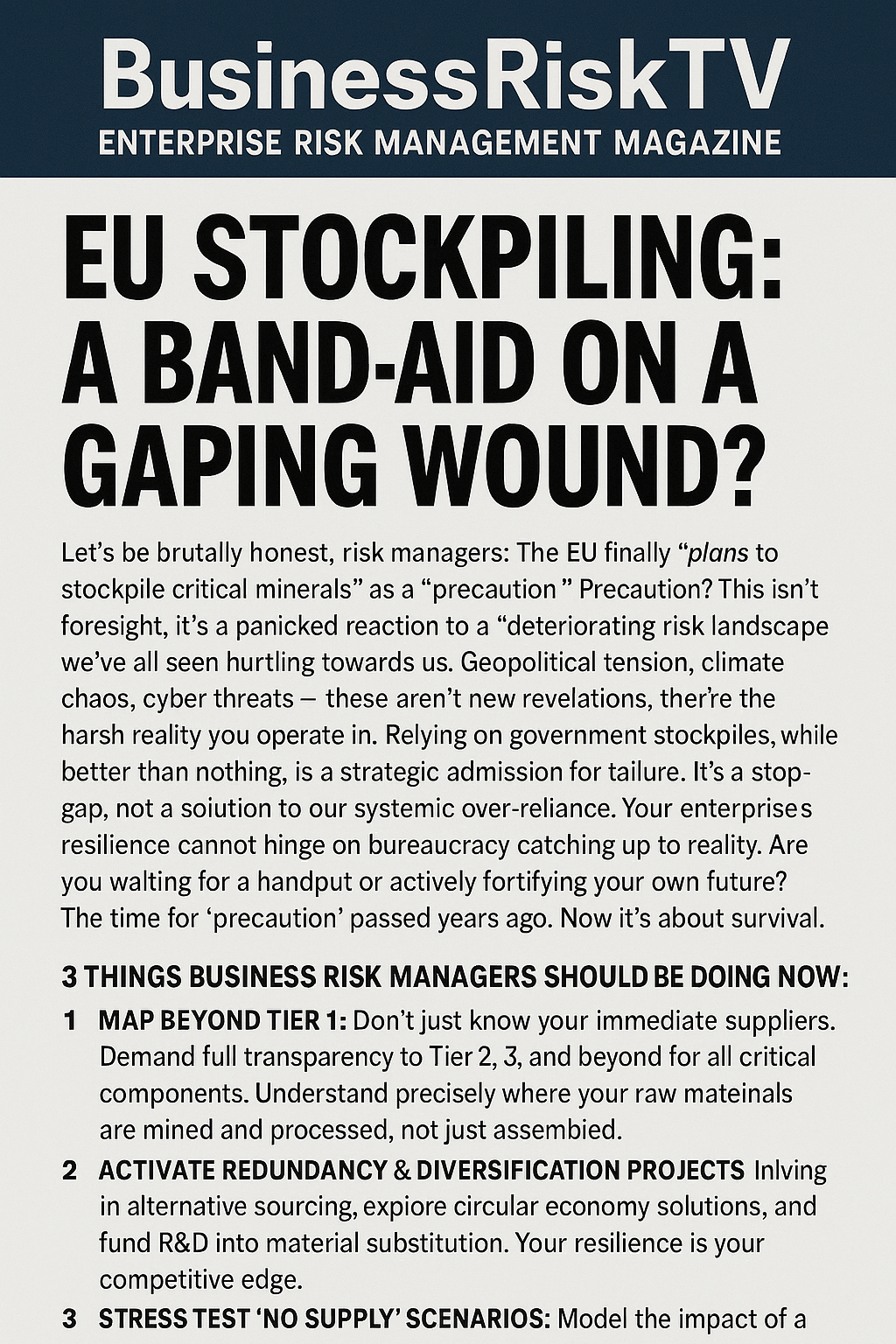
EU Stockpiling: A Band-Aid on a Gaping Wound?

Enterprise Risk Management Magazine articles and videos on business protection and business growth
EU Stockpiling: A Band-Aid on a Gaping Wound?

Read more:

  1. “Western industry rare earth processing reliance on China solutions”
  2. “Mitigating rare earth supply chain risk for EV manufacturers”
  3. “Consumer impact of China’s rare earth monopoly pricing”
  4. “Strategic investment rare earth recycling Western industrial strategy”
  5. “Diversifying critical mineral processing outside China business leaders

Relevant Hashtags:

  1. #RareEarthsCrisis
  2. #SupplyChainResilience
  3. #WesternIndustryFuture
  4. #CriticalMineralsStrategy
  5. #EVManufacturingRisk

Western industry rare earth processing reliance on China solutions

Take the risk. Embrace the madness. Create your future with BusinessRiskTV

Mastering Business Risk in 2025

Geniuses or the Insane? Mad People Are the Ones Crazy Enough to Create a New World

The modern business landscape is more dangerous, complex, and unpredictable than ever before. Globalisation, rapid technological advancements, and socio-political instability have created a world where only those brave enough to embrace uncertainty and take risks stand a chance of thriving. It is no coincidence that the greatest breakthroughs in history were driven by individuals often considered “mad” by conventional standards. These risk-takers, innovators, and disruptors challenged the status quo and envisioned a world different from what was thought possible. In this chaotic world, it is the mad who hold the key to future progress.

As a world economic expert advising business leaders, I argue that this “madness” is not just a quirk of personality, but an essential characteristic for navigating the stormy seas of the 21st century business world. Leaders who are willing to take calculated risks, question established norms, and explore new possibilities are the ones most likely to survive and thrive in the rapidly evolving global marketplace.

In this article, I will demonstrate how the increasingly dangerous business environment calls for a radical shift in risk-taking. I’ll explore key political, economic, social, technological, legal, and organisational risks that will shape the world in 2025 and beyond. Finally, I will explain how the BusinessRiskTV Business Risk Management Club can help business leaders like you make better decisions, safeguard your enterprise, and accelerate growth through informed risk management practices.

The Dangerous World of Business Today

The business environment in 2024 is more dangerous than ever before, and these dangers are accelerating at an alarming rate. Global disruptions such as the COVID-19 pandemic, the war in Ukraine, and the rapid rise of inflation have sent shockwaves through industries worldwide. Supply chain disruptions, labour shortages, and rising costs of goods have become everyday challenges for business leaders. Moreover, the global financial system is increasingly volatile, with fears of an impending recession continuing to loom.

At the heart of these dangers is unpredictability. Traditional models of business planning and risk management are no longer sufficient to deal with the scale and pace of modern challenges. The linear, incremental risks of the past have given way to cascading, interconnected crises that require a fundamentally different approach to decision-making. Business leaders are forced to navigate through an increasingly complex web of risks, where a single miscalculation can spell disaster for an entire organisation.

The Acceleration of Risks in 2025 and Beyond

The world is evolving at a breakneck pace, and the risks are evolving with it. As we approach 2025, several key trends are accelerating, making the business environment even more dangerous and uncertain:

Technological Disruption: The rapid advancement of artificial intelligence (AI), automation, and quantum computing is transforming industries at an unprecedented rate. While these technologies offer tremendous opportunities for businesses, they also come with significant risks, such as job displacement, cybersecurity threats, and ethical dilemmas.

Geopolitical Instability: Global power shifts, trade wars, and political tensions are becoming more pronounced, leading to a fragile global order. The rising influence of authoritarian regimes, coupled with growing nationalism and protectionism, poses significant risks for businesses that rely on global markets and supply chains.

Environmental Crisis: Climate change continues to wreak havoc on ecosystems, economies, and industries. Extreme weather events, resource scarcity, and regulatory changes related to sustainability are becoming existential threats to businesses in many sectors.

Societal Shifts: Demographic changes, social justice movements, and evolving consumer expectations are reshaping industries. Businesses are under increasing pressure to adapt to changing societal norms, with reputational risk at an all-time high.

These dangers are not hypothetical; they are happening now and will only intensify in the coming years. Business leaders must recognise that the world is not becoming safer or more predictable, and they must adapt their risk management strategies accordingly.

Political, Economic, Social, Technological, Legal, and Organisational Risks in 2025

As we look toward 2025, businesses will face a host of risks that span political, economic, social, technological, legal, and organisational dimensions. Understanding these risks and their potential impact is critical for making informed business decisions.

Political Risks

Political instability is one of the most significant risks facing businesses in 2025. Governments around the world are becoming more unpredictable, with populism, nationalism, and authoritarianism on the rise. Trade tensions, such as the ongoing U.S.-China trade war, will continue to disrupt global supply chains, leading to higher costs and reduced access to key markets. Moreover, the increasing politicisation of environmental and social issues could lead to stricter regulations and greater government intervention in industries such as energy, technology, and finance.

Opportunities: Businesses that are nimble and adaptable can exploit political instability to their advantage. For example, companies that diversify their supply chains and markets can reduce their exposure to geopolitical risks and capture new opportunities in emerging markets.

Economic Risks

The global economy is facing a period of prolonged uncertainty, with rising inflation, supply chain disruptions, and labor shortages threatening to derail growth. Central banks tightened monetary policy in response to inflation, raising interest rates and reducing liquidity. This is leading to a global recession, which would have far-reaching consequences for businesses across all sectors.

Opportunities: While economic downturns are challenging, they also create opportunities for businesses that are prepared. Companies with strong balance sheets and access to capital can take advantage of lower asset prices and acquire competitors or expand into new markets at a discount.

Social Risks

Social risks are becoming more pronounced as societies around the world undergo significant demographic and cultural shifts. The ageing population in developed countries is creating labour shortages and increasing the demand for healthcare and social services. Meanwhile, social justice movements are forcing companies to reassess their diversity, equity, and inclusion (DEI) policies, with consumers and employees increasingly demanding accountability and transparency.

Opportunities: Companies that proactively address social risks can build stronger relationships with their customers and employees. By aligning their values with those of their stakeholders, businesses can enhance their reputational capital and attract talent and investment.

Technological Risks

Technological advancements are both a blessing and a curse for businesses. On one hand, technologies such as AI, blockchain, and the Internet of Things (IoT) offer immense potential for innovation and growth. On the other hand, they also introduce new risks, such as data breaches, cyberattacks, and the ethical implications of AI decision-making.

Opportunities: Businesses that embrace technological innovation while managing its risks will have a competitive advantage in 2025. By investing in cybersecurity, data privacy, and ethical AI frameworks, companies can build trust with their customers and regulators.

Legal Risks

The legal landscape is becoming more complex as governments around the world introduce new regulations in response to technological advancements, environmental concerns, and social issues. Data protection laws, such as the European Union’s General Data Protection Regulation (GDPR), are imposing significant compliance costs on businesses. Meanwhile, climate-related litigation is on the rise, with companies facing lawsuits over their environmental impact.

Opportunities: Companies that stay ahead of legal trends and invest in compliance can avoid costly fines and litigation. Moreover, businesses that adopt sustainable practices and transparent reporting can build trust with regulators and investors.

Organisational Risks

Organisational risks are internal risks that stem from a company’s structure, culture, and processes. As businesses become more complex and globalised, they face challenges related to governance, leadership, and talent management. Poor decision-making, lack of accountability, and misaligned incentives can lead to operational failures and reputational damage.

Opportunities: Companies that prioritise organisational resilience and invest in leadership development can mitigate these risks. By fostering a culture of innovation, agility, and accountability, businesses can adapt to changing circumstances and seize new opportunities.

The Benefits of Joining the BusinessRiskTV Business Risk Management Club

In this increasingly dangerous and uncertain world, business leaders cannot afford to go it alone. The challenges of 2025 and beyond are too complex and interconnected for any one organisation to navigate on its own. That is why joining the BusinessRiskTV Business Risk Management Club is essential for any business leader looking to protect and grow their enterprise.

Collective Intelligence and Shared Insights

The BusinessRiskTV Business Risk Management Club brings together a community of like-minded business leaders, risk managers, and experts from around the world. By joining this network, you gain access to a wealth of collective intelligence and shared insights. You can learn from the experiences of others, share best practices, and stay informed about the latest trends and developments in risk management.

Expert Guidance and Strategic Advice

As a member of the BusinessRiskTV Business Risk Management Club, you will receive expert guidance and strategic advice from some of the world’s leading risk management professionals. Our experts will help you identify and assess the risks facing your business, develop effective risk mitigation strategies, and make informed decisions that will safeguard your enterprise.

Access to Cutting-Edge Tools and Resources

The BusinessRiskTV Business Risk Management Club provides its members with access to cutting-edge tools and resources that can help you manage risks more effectively. From risk assessment frameworks and decision-making models to real-time data analytics and forecasting tools, our resources are designed to give you a competitive edge in an increasingly complex world.

Networking and Collaboration Opportunities

Joining the BusinessRiskTV Business Risk Management Club also gives you access to exclusive networking and collaboration opportunities. You can connect with other business leaders, risk managers, and experts from a wide range of industries and geographies. These connections can lead to valuable partnerships, collaborations, and business opportunities.

Preparing for the Future

Ultimately, the greatest benefit of joining the BusinessRiskTV Business Risk Management Club is your preparedness for the future. In an era where unprecedented risks are coupled with immense opportunities, being proactive about risk management is key to business longevity and growth. The year 2025 and beyond will usher in rapid technological shifts, evolving political landscapes, and ongoing societal changes that businesses must navigate to thrive. Companies that fail to anticipate these shifts will struggle to adapt, while those equipped with the right knowledge and strategies will seize new growth opportunities and outperform their competition.

By joining our community, you will be better equipped to anticipate disruptions, develop agile strategies, and mitigate potential risks before they become existential threats to your business. The tools, insights, and support provided by the BusinessRiskTV Business Risk Management Club will ensure that you not only survive but thrive in a world of uncertainty.

Summary: The Time to Act Is Now

The business world is fraught with accelerating risks, from political instability to technological disruption, economic volatility, and social upheaval. The complexity of these challenges means that no business leader can afford to rely on traditional, reactive approaches to risk management. Instead, visionary leaders must embrace the spirit of “madness”—the willingness to take bold risks, challenge the status quo, and prepare for an unpredictable future.

As a business leader, your greatest asset is your ability to make informed decisions in the face of uncertainty. By joining the BusinessRiskTV Business Risk Management Club, you gain access to a global network of experts, strategic advice, and cutting-edge tools designed to help you navigate the complexities of the modern business world. You will be equipped with the knowledge and resources needed to protect your business and seize the opportunities of tomorrow.

Now is the time to take action. The risks are growing, but so are the possibilities. Join the BusinessRiskTV Business Risk Management Club today and be part of a community of business leaders who are crazy enough to believe that they can create a better future—because in a mad world, it’s the mad who will lead us to new horizons.

Take the risk. Embrace the madness. Create your future with BusinessRiskTV.

Get help to protect and grow your business faster

Find out more

Subscribe for free business risk alerts and reviews

Connect with us for free

Read more business risk management articles for free

Connect with us for free

Read more:

1. Business risk management strategies 2025
2. Managing political and economic risks in business
3. Future business risks and opportunities for leaders
4. Top risk management techniques for business growth
5. Effective risk mitigation strategies for 2025
6. How to manage business risks in a volatile market
7. Importance of business risk foresight analysis
8. Global risk factors affecting businesses in 2025
9. Best business risk management club for executives
10. Preparing for technological disruption in business

Key Hashtags:

#BusinessRiskManagement
#RiskMitigation
#FutureOfBusiness
#RiskManagement2025
#BusinessGrowth
#BusinessLeaders
#RiskForesight
#BusinessStrategy
#PoliticalRisks
#EconomicRisks


Risks Business Leaders Fear Most : Geopolitical Risks 2024

Make sure you know who could damage your business or present new opportunities for growth

2024: Navigating the Political Storm – A Business Leader’s Guide to Risk Management

As we gaze into the crystal ball of 2024, the political landscape shimmers with both opportunity and peril. For business leaders, navigating this terrain requires not just a keen eye for the market, but an astute understanding of the political forces that can shape – or shatter – their best-laid plans. Let’s look at political risk insights and risk management strategies needed to mitigate the biggest political risks of the year ahead.

The Looming Giants: Four Major Political Risks of 2024

  1. The US Presidential Election: Buckle up, folks, it’s a wild ride. With the incumbent facing a resurgent opposition and a potential third-party candidate throwing a wrench in the gears, the 2024 US election promises to be a nail-biter. The volatility will spill over into global markets, impacting trade, investment, and even travel.

Quote: “Politics are almost as exciting as war, and quite as unpredictable.” – Winston Churchill

  1. Geopolitical Tensions: The simmering tensions between major powers, fuelled by ideological clashes and resource competition, threaten to boil over in 2024. From the South China Sea to the Ukraine conflict, businesses with footprints in these volatile regions must prepare for disruptions and potential sanctions.

Quote: “In times of conflict, the law falls silent.” – Marcus Tullius Cicero

  1. The Rise of Populism: The siren song of populism continues to enchant disillusioned voters, potentially ushering in leaders with unpredictable agendas and protectionist policies. Businesses reliant on open markets and global supply chains must adapt to navigate these shifting sands.

Quote: “A nation cannot exist half slave and half free.” – Abraham Lincoln

  1. Climate Change and Social Unrest: As the existential threat of climate change intensifies, so too does the potential for social unrest and political instability. Businesses operating in vulnerable regions must factor in the possibility of protests, civil disobedience, and even government clampdowns.

Quote: “The Earth has provided for life for billions of years… it will do so for billions more without us.” – Carl Sagan

Risk Management Toolbox: Strategies for Weathering the Storm

While the future is inherently uncertain, proactive risk management can turn challenges into opportunities. Here are some key strategies to consider:

  1. Scenario Planning: Develop multiple scenarios based on different political outcomes, allowing you to adapt and pivot quickly. Think of it as playing chess ahead of time, considering all your opponent’s possible moves.

  2. Diversification: Don’t put all your eggs in one basket. Spread your investments and operations across diverse regions and markets, diluting your exposure to any single political risk.

  3. Lobbying and Engagement: Build relationships with policymakers and key stakeholders. Proactive engagement can ensure your voice is heard and your interests are considered as policies are formulated.

  4. Crisis Communication: Have a clear communication plan in place for navigating potential crises. Transparency and timely updates can mitigate reputational damage and build trust with stakeholders.

  5. Seek Expert Guidance: Don’t go it alone. Leverage the expertise of political risk consultants who can provide tailored insights and strategies for navigating complex political landscapes.

Remember, the key to successful risk management is not predicting the future, but being prepared for whatever it throws your way. By understanding the biggest political risks of 2024 and implementing these proactive strategies, you can turn uncertainty into a competitive advantage and steer your business toward continued success. And as Sun Tzu wisely advised, “Know the enemy and know yourself; in every battle, you will then be victorious.”

Get help to protect and grow your business

Find Out More

Subscribe for free risk alerts and risk reviews

Contact Us

Read more free business risk management articles

Contact Us

Lions Led By Donkeys

We get the politicians we deserve!

The A Political Quagmire: Navigating Uncertain Seas in the US and UK

The year 2023 has painted a stark picture of political dysfunction in both the United States and the United Kingdom. In the US, a gridlocked Congress produced a meager 23 bills, a far cry from the legislative productivity expected from the world’s leading democracy. Across the Atlantic, the echoes of Brexit continue to reverberate, with the UK Parliament bogged down in endless debates instead of tackling the pressing economic challenges facing the nation. This grim reality poses a significant challenge for individuals and businesses in both countries, leaving them adrift in a sea of uncertainty.

The American Stalemate: A Congress in Paralysis

The 2023 legislative output of the US Congress stands as a testament to the deep partisan divide currently gripping American politics. Republicans and Democrats seem locked in a perpetual tug-of-war, more interested in scoring political points than finding common ground. This has resulted in a legislative drought, leaving crucial issues like healthcare reform, infrastructure development, and climate change unaddressed.

For individuals, this political paralysis translates into a sense of disillusionment and a feeling of being forgotten by their elected representatives. The lack of progress on key issues like healthcare affordability and student loan debt directly impacts their lives, while the inaction on climate change raises anxieties about the future. Meanwhile, businesses face an unpredictable regulatory environment, hindering investment and economic growth.

Navigating the Labyrinth: What Americans Can Do

In the face of this legislative inertia, individuals and businesses must become the architects of their own destinies. Here are some strategies to navigate the American political quagmire:

  • Stay informed: Stay abreast of current events and political developments. Follow reputable news sources from both sides of the spectrum to understand the nuances of the issues and hold your elected officials accountable.
  • Engage constructively: Reach out to your representatives and express your concerns and priorities. Support organizations that advocate for issues you care about and participate in peaceful protests and demonstrations.
  • Vote strategically: Research the candidates in your local and national elections and vote based on their track record and policy positions. Consider candidates who demonstrate a willingness to compromise and work across the aisle.
  • Focus on local politics: Engage with your local community and participate in local elections. Local governments often have a significant impact on daily life, and your involvement can make a real difference.
  • Support civic engagement initiatives: Encourage and educate others about the importance of political participation. Promote initiatives that foster civil discourse and bridge the partisan divide.

Brexit’s Bitter Aftermath: UK’s Economy Lost in the Fog

While the US suffers from congressional gridlock, the UK grapples with the fallout of Brexit. The 2016 referendum, which saw a narrow vote to leave the European Union, has plunged the nation into a protracted political and economic crisis. Parliament remains embroiled in endless debates about the terms of the withdrawal agreement, with little progress made on addressing the concerns of businesses and citizens regarding trade, immigration, and the future of the National Health Service.

For individuals, Brexit has brought uncertainty about jobs, wages, and access to essential goods and services. Businesses face complex bureaucratic hurdles and the potential for reduced market access. The ongoing political turmoil erodes confidence in the economy and dampens investment, further hindering growth.

Charting a Course Forward: How the UK Can Steer Out of Troubled Waters

To emerge from this quagmire, the UK needs a renewed focus on pragmatism and national unity. Here are some potential pathways forward:

  • Prioritise the economy: Parliament must shift its focus from Brexit minutiae to addressing the immediate concerns of businesses and citizens. Policies that stimulate economic growth, create jobs, and support vulnerable communities are essential.
  • Seek common ground: Political parties must find ways to cooperate and compromise on key issues.Collaborative leadership that transcends partisan divides is crucial for navigating the challenges ahead.
  • Foster open dialogue: The government must engage in transparent communication with the public, clearly explaining the implications of various Brexit scenarios and seeking feedback on potential solutions.
  • Invest in education and skills training: Equipping the workforce with the necessary skills to thrive in the post-Brexit landscape is crucial for long-term economic success.
  • Promote international cooperation: Building strong relationships with other countries, both within and outside of the EU, will be essential for securing trade deals and fostering economic opportunity.

A Common Challenge, Different Solutions

While the political landscapes of the US and UK differ significantly, the challenges they face share a common thread: a lack of effective governance and a disconnect between elected officials and the people they represent. To overcome these hurdles, both nations must rediscover the spirit of compromise, prioritise the needs of their citizens and businesses, and embrace pragmatism over ideology.

The road ahead will undoubtedly be challenging, but by staying informed, engaging constructively, and holding their leaders accountable, individuals and businesses can play a vital role.

Get help to protect and grow your business

Find Out More

Subscribe for free business risk management news and risk reviews

Contact Us

Read more free business risk management articles

Contact Us

Pros and Cons Of Economic Migration into UK and USA

Trying to take wokeness out of key business risk management threats and opportunities

Can Economic Migrants Be the Recessionary Storm’s Lifeline? A 2024 Outlook for UK and USA

As storm clouds gather on the economic horizon, recessionary whispers turn into anxious roars in both the UK and the USA. In this tumultuous climate, a fascinating question emerges: Could economic migrants potentially act as a life raft, mitigating the damage of a potential recession in 2024?

As an expert economic analyst ( Keith Lewis ), I delve into this intricate issue, dissecting the potential role of economic migration in weathering the coming economic storm in these two major economies.

Buoying the Economy in Rough Seas:

Several arguments propose that economic migrants can serve as a buffer against recessionary forces:

  • Labour force resilience: With skilled and willing newcomers filling critical labour gaps, particularly in sectors facing shortages, economic migrants can bolster productivity and output. This can stabilise the economy and counteract downward trends, as evidenced by the contribution of migrant workers to sectors like UK healthcare and US agriculture.
  • Demand lifeline: By injecting fresh purchasing power into the economy, migrants can stimulate businesses and create jobs. This can boost aggregate demand, a crucial driver of economic recovery, as research by the OECD suggests with increased migration boosting GDP growth in several European countries.
  • Innovation anchor: Migrants often bring a wealth of entrepreneurial spirit and skills, driving business creation and innovation. This can foster economic growth and generate employment opportunities, potentially alleviating recessionary pressures, as demonstrated by the significant role of immigrants in US startup ecosystems.
  • Fiscal stability: As migrant workers contribute through income taxes and payroll deductions, they can bolster government revenue streams. This can provide crucial budgetary resources for social programs and infrastructure investments, helping governments navigate and mitigate the impact of a recession, as analyses in the UK suggest regarding the positive fiscal contribution of immigration.

However, navigating these turbulent waters necessitates caution:

  • Wage suppression: An influx of migrant workers can put downward pressure on wages,particularly for low-skilled jobs.This can dampen consumer spending and exacerbate inequalities, hindering overall economic growth, as studies in the US have shown in specific sectors.
  • Social tensions: Large-scale migration can strain social services and resources, potentially leading to public anxieties and fueling xenophobia.This can make it politically challenging to maintain open borders, even with potential economic benefits, as witnessed in the current political climates of both the UK and the USA.
  • Integration hurdles: Successful integration of migrants into the workforce and society is crucial for maximising their economic contribution. Language barriers, cultural differences, and lack of recognition of foreign qualifications can hinder integration, limiting the positive economic impact of migration. Robust policies promoting skill recognition and language training are essential to overcome these hurdles.

Navigating the Choppy Waters of 2024:

Assessing the evidence requires acknowledging the complexities of this issue. Studies on the direct link between economic migration and recessionary tendencies remain inconclusive, with varying results depending on factors like the skillsets of migrants, existing labour market conditions, and government policies. A tailored approach, considering specific national contexts, is crucial.

Charting the Course in 2024 and Beyond:

To leverage the potential benefits of economic migration while mitigating potential drawbacks in 2024 and beyond, both the UK and the USA can consider the following:

  • Skill-based migration strategies: Prioritising the entry of migrants with skills in high demand to address labour shortages and boost productivity, ensuring a win-win for both businesses and the economy.
  • Effective integration programs: Investing in language training, skills recognition, and cultural orientation programs can facilitate smooth integration, maximising the positive economic contribution of migrants and fostering social cohesion.
  • Robust social safety nets: Ensuring adequate social services and resources for both native and migrant populations can mitigate potential tensions and prevent economic hardship during a recession.
  • Data-driven policymaking: Continuously monitoring and analysing the impacts of migration policies on both the economy and social fabric is crucial for evidence-based policy adjustments and ensuring responsible management of migration in the face of economic challenges.

Conclusion:

While economic migrants cannot entirely prevent a recession, they can potentially play a crucial role in minimising its impact and expediting economic recovery. However, it is essential to acknowledge the complexities and potential challenges associated with migration. Openness to talent, coupled with responsible management, integration efforts, and data-driven policymaking, can harness the potential of economic migration to navigate the choppy waters of 2024 and build resilient economies for the future. Remember, weathering economic storms requires a balanced approach, embracing the potential of diverse resources while ensuring responsible and inclusive practices.

Subscribe to more business risk management articles videos and risk reviews

Contact Us

Grow your business faster and protect it from economic recession

Contact Us

Develop your career or fill painful skills gaps faster and cheaper

Contact Us

 .

Greatest Geopolitical Risks 2024

Managing political risks better with BusinessRiskTV

The Looming Shadow: Navigating the Labyrinth of Geopolitical Risks in 2024

The world in 2023 stands at a crossroads. As the shadow of a global pandemic recedes, new anxieties grip the international landscape. Tensions simmer in familiar hotspots, while emerging threats whisper on the horizon. In this labyrinth of uncertainties, one question burns bright: what will be the greatest geopolitical risk in 2024?

Predicting the future is a fool’s errand, but anticipating and preparing for potential storms is the essence of responsible leadership. While pinpointing a singular “greatest” risk might be an oversimplification, we can examine four contenders each capable of casting a long, disruptive shadow in 2024:

1. The Dragon and the Tiger: Escalating Tensions in the Taiwan Strait:

The Taiwan Strait, a narrow waterway separating mainland China and the self-governing island of Taiwan, has long been a tinderbox of geopolitical tension. China, viewing Taiwan as a breakaway province, refuses to renounce the use of force in achieving reunification. Taiwan, on the other hand, maintains robust democratic institutions and enjoys strong international support, particularly from the United States.

In 2024, several factors could elevate the risk of confrontation in the Taiwan Strait:

  • Increased Chinese military assertiveness: Beijing’s recent actions, like frequent incursions into Taiwanese airspace and military drills simulating island invasion, signal a growing determination to assert its dominance.
  • Taiwan’s presidential elections: Scheduled for January 2024, the elections could see the victory of a pro-independence candidate, further inflaming Chinese grievances.
  • Miscalculations and accidents: Unforeseen incidents, either military mishaps or deliberate provocations, could spiral into an unintended conflict with devastating consequences.

The potential ramifications of a Taiwan Strait conflict are immense. A full-scale war could trigger a massive humanitarian crisis, disrupt global supply chains, and plunge the world into a new era of Cold War-esque tensions.

2. The Ukrainian Quagmire: War’s Long Shadow and Spillover Risks:

The ongoing war in Ukraine continues to cast a long, dark shadow over Europe and the global order. Even if a resolution were reached in 2024, the war’s legacy will extend far beyond the battlefield. Here are some potential avenues for risk:

  • Protracted conflict and instability: Even a ceasefire wouldn’t guarantee lasting peace. A simmering conflict in Ukraine could destabilise the region, create a humanitarian crisis, and strain international relations.
  • Spillover effects into neighbouring countries: The war could trigger unrest or refugee crises in bordering nations like Moldova, Belarus, and the Baltic states.
  • Weapons proliferation and escalation: The possibility of Russia or Ukraine resorting to unconventional weapons or dragging other powers into the conflict cannot be entirely discounted.

The war in Ukraine has already disrupted the global food and energy markets, impacting economies worldwide. A further escalation could exacerbate these vulnerabilities, leading to economic hardship and political instability in vulnerable regions.

3. Iran’s Nuclear Tightrope: Unveiling the Bomb or Stepping Back from the Brink?

Iran’s nuclear programme remains a contentious issue, raising concerns about its potential for weapons development and regional instability. In 2024, the trajectory of Iran’s nuclear ambitions could significantly impact the geopolitical landscape:

  • Collapse of the JCPOA: The 2015 Joint Comprehensive Plan of Action, which aimed to curb Iran’s nuclear programme in exchange for sanctions relief, currently hangs by a thread. Its collapse could pave the way for Iran to accelerate its nuclear activities,raising the specter of a military strike from Israel or the United States.
  • Internal political dynamics: The political climate in Iran could influence its approach to the nuclear issue. Hardliners gaining ascendancy could increase the risk of confrontation, while moderates gaining ground could offer an opportunity for renewed diplomacy.
  • Regional proxy conflicts: Iran’s support for Shia militias across the Middle East could exacerbate existing tensions and potentially trigger wider regional conflicts.

A nuclear-armed Iran could reshape the Middle East power dynamics, posing a significant threat to Israel and its allies. It could also trigger a nuclear arms race in the region, further destabilising an already volatile part of the world.

4. Climate Change and the Looming Resource Wars:

While traditionally considered a non-traditional security threat, climate change is increasingly recognised as a potential driver of geopolitical instability. In 2024, its impact could become more pronounced through:

  • Resource scarcity and competition: Water scarcity, food insecurity, and energy shortages driven by climate change could exacerbate existing resource competition, potentially leading to conflicts over crucial resources.
  • Mass migration and displacement: Climate-induced migration could strain social and political systems in receiving countries, potentially triggering unrest and xenophobia.

More Business Risk Management Articles Videos and Risk Reviews

Contact us

Promote and Market Your Business

Business Risk Management Club