Private Credit Crisis: Are First Brands and Tricolor the Canary in the Coal Mine?

The collapses of First Brands and Tricolor are more than just isolated failures—they’re a stark warning for the global financial system. Are we repeating the mistakes of 2008? Our latest analysis for business leaders reveals the systemic risks lurking in the $1.5 trillion private credit market and provides 6 essential risk mitigation strategies.

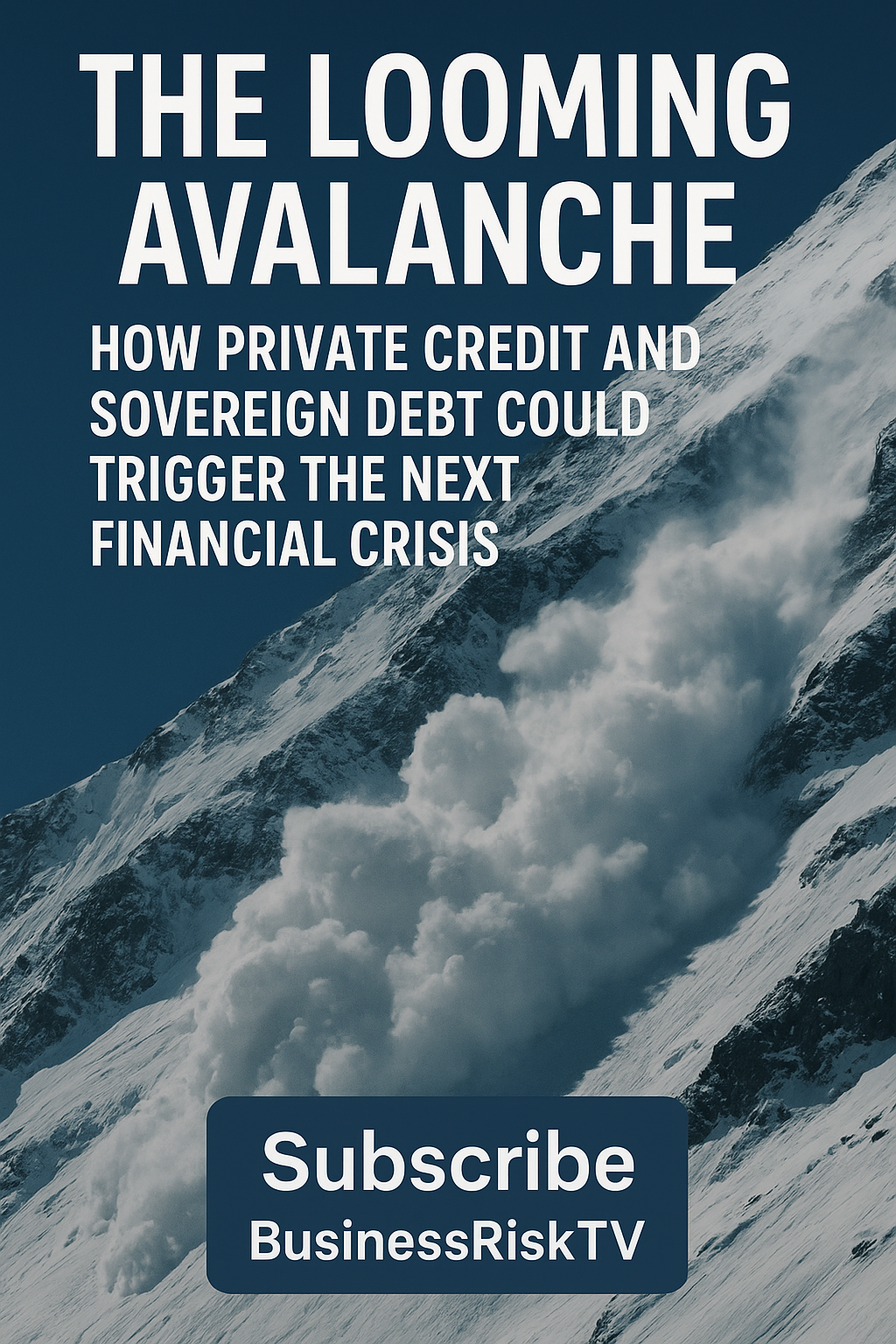
The Looming Avalanche: How Private Credit and Sovereign Debt Could Trigger the Next Financial Crisis

The collapses of First Brands and Tricolor are not mere isolated events. In the words of Jamie Dimon, they are the “cockroaches” that signal a deeper infestation of risk within the private credit market . This article for business decision-makers conducts a crucial risk analysis, building on the warning from the IMF’s Global Financial Stability Report about the close connections between private credit and mainstream banks .

We explore the fundamental vulnerabilities of high leverage, opacity, and weak underwriting, drawing parallels to the pre-2008 subprime mortgage crisis. A special focus is given to the dangerous rise of Payment-in-Kind (PIK) bonds, which allow companies to mask a liquidity crisis by paying interest with more debt, creating a hidden mountain of obligations .

The core of our analysis provides actionable business risk management tips. We outline a clear strategy for leaders to mitigate this threat, emphasising the need for unprecedented transparency, active covenant monitoring, and rigorous stress-testing against a liquidity shock. The time for vigilance is now. Proactive risk management is not just about protection; it’s a competitive advantage in a volatile world.

Beyond Idiosyncratic Failures: A Systemic View of Recent Scandals

A war-gaming exercise of the private credit market would likely reveal that the recent failures of First Brands and Tricolor are not isolated incidents, but rather symptoms of broader, systemic vulnerabilities. The parallels to the pre-2008 environment are striking: high leverage, opacity, and complex interconnections are creating a latent risk within the financial system .

The core of the problem lies in the explosive growth of the private credit market, which has ballooned to a $1.5 trillion asset class . This rapid expansion, occurring largely outside the regulated banking sector, has been fueled by a search for yield in a prolonged low-interest-rate environment. The inherent lack of transparency and regulatory oversight in private credit means that risks are often poorly understood and priced . The IMF has explicitly highlighted the “close connections between private credit markets and mainstream banks” as a primary concern, indicating that stress could rapidly transmit to the core of the financial system .

The following risk analysis and mitigation strategies are designed to help key decision-makers navigate this evolving threat.

Risk Analysis: Beyond “Idiosyncratic” Failures

The collapses of First Brands and Tricolor should be treated as critical data points. Jamie Dimon’s “cockroach” analogy suggests that where there are two public failures, more are likely lurking in the shadows . A deeper analysis points to several interconnected vulnerabilities:

  1. Excessive Leverage and Weak Underwriting: The fundamental driver of risk is the high level of debt placed on companies, often accompanied by weakening lending standards. This is reminiscent of the pre-2008 subprime mortgage frenzy, where the quality of the underlying asset was compromised.
  2. Opacity and Complexity: Unlike public markets, private credit instruments are illiquid and lack standardised reporting . This opacity is compounded by the resurgence of complex structuring, such as the “slicing and dicing” of loan structures, which obscures the true location and concentration of risk.
  3. Linkages to the Broader System: The IMF’s concern underscores that private credit is no longer a niche segment. Mainstream banks provide funding and credit lines to non-bank lenders, and a wave of defaults in private credit could trigger a liquidity crunch that spills over into the banking sector.
  4. The PIK Debt Delusion: A specific and dangerous trend is the increasing use of Payment-in-Kind (PIK) bonds and PIK toggles . These instruments allow companies to pay interest with more debt instead of cash, creating a “financial time bomb” where corporate debt loads balloon silently until they become unsustainable .

Business Risk Management Tips for Decision-Makers

To mitigate these threats, businesses must move beyond complacency and adopt a proactive, rigorous risk management stance.

  1. Demand Unprecedented Transparency in Counterparty Risk: Do not accept surface-level financials. Insist on transparent, defensible credit scores and rigorous due diligence for any entity exposed to private credit markets, whether as an investment, lender, or key partner. Use standardised scorecards that combine quantitative and qualitative factors to assess risk consistently .
  2. Implement Active, Not Passive, Portfolio Surveillance: Move beyond static annual reviews. Establish active monitoring systems that track covenant cushions in real-time and proactively identify deteriorations in credit quality. Advanced covenant monitoring is pivotal for early detection of potential breaches.
  3. War-Game Your Exposure to a Liquidity Shock: Conduct stress tests that model a scenario where the private credit market seizes up. How would a simultaneous default of several major borrowers impact your liquidity, collateral requirements, and access to capital? Map your direct and indirect exposures to banks with heavy private credit ties.
  4. Scrutinise Debt Structures for PIK and Toggle Features: Treat any exposure to PIK bonds and PIK toggle notes with extreme caution. These instruments are a major red flag for underlying cash-flow problems and significantly increase ultimate loss severity.
  5. Strengthen Focus on Operational Risk: The rapid growth and complexity of private credit can outstrip internal administrative controls. Ensure your recordkeeping, data aggregation, and portfolio administration systems are robust to avoid operational failures that can amplify financial losses.
  6. Recalibrate Risk Models for a New Reality: The assumption that private credit is a stable, low-default asset class is outdated. Recalibrate your internal risk models annually to reflect the current high-leverage, high-interest-rate environment, incorporating leading benchmarks and forward-looking climate and ESG risk factors.

Get help to protect and grow your business faster with BusinessRiskTV

Find out more about how to grow your business faster

BusinessRiskTV Business Risk Management Club Membership

Subscribe for free business risk management ideas reviews and cost cutting opportunities

Connect with us for free business risk management tips

Enterprise Risk Management Magazine BusinessRiskTV ERM Magazine

Read more business risk management articles and view videos for free

Connect with us for free alerts to new business risk management articles and view videos

Contact Us To Subscribe BusinessRiskTV – Reach Global Decision Makers

Could Your Business Survive a Credit Freeze? | Risk Warning

Risk Analysis: Liquidity Crisis in Private Equity & Shadow Banking

Apollo Redemption Crisis 2026: Private Credit Liquidity Risks & 6 Risk Management Strategies for Investors and Business Leaders

Enterprise risk management Magazine articles and videos on business growth and business protection
Private Equity Shadow Banking Risk Management Subscribe BusinessRiskTV

The alternative asset management sector—comprising private equity (PE) funds and shadow banks (non-bank financial intermediaries)—is experiencing a structural liquidity crunch. The recent decision by Apollo Global Management to cap redemptions in its $70 billion Apollo Diversified Credit Fund (ADCR) serves as a critical canary in the coal mine. For business leaders and private investors, this signals a shift from an era of abundant private capital to one of “liquidity illusion,” where assets perceived as liquid are becoming trapped, posing systemic solvency risks to portfolios.

1. The Nature of the Crisis

The current stress is rooted in a fundamental mismatch between asset liquidity and liability structures.

  • Asset Illiquidity: Private credit funds and shadow banks have deployed capital into assets that are not publicly traded (direct loans, real estate, infrastructure). These assets lack a clearing price and cannot be sold quickly without steep discounts (fire sales).
  • Liability “Liquidity”: To attract capital, many firms offered investors enhanced liquidity features (quarterly or monthly redemptions) typically reserved for mutual funds, but they invested in illiquid assets.
  • The Interest Rate Shock: The rapid rise in interest rates over the past 24 months has depressed the underlying value of fixed-income private assets. Simultaneously, it has increased the cost of leverage (debt) that these funds use to juice returns.

2. The Apollo Signal: Why It Matters

Apollo’s decision to gate (cap) withdrawals in its ADCR is not an isolated operational issue; it is a systemic indicator.

  • The Mechanism: Apollo invoked a “hard close,” limiting redemptions to roughly 20-30% of investor requests.
  • The Implication: It reveals that even a top-tier asset manager with a pristine balance sheet cannot match investor outflows with cash on hand. If Apollo—one of the largest and most sophisticated players—is facing a liquidity squeeze, smaller private credit firms are likely under severe, unreported stress.
  • Contagion Risk: This event validates the “first mover advantage” in redemptions. Investors who attempted to exit early may get some capital back; those who wait risk being trapped for years during the fund’s wind-down period.

3. Key Risks for Business Leaders & Private Investors

A. Capital Lock-Up & Illiquidity Risk

The most immediate risk is the inability to access capital. Businesses relying on distributions from PE investments for operational cash flow, or investors relying on these funds for retirement or reinvestment, may find their capital frozen for 2 to 5 years beyond the original term.

B. Valuation Shock (The NAV Deception)

Private funds report Net Asset Value (NAV) quarterly, often using subjective models rather than market transactions.

  • The Risk: As redemptions are capped, the actual value of the underlying assets declines due to forced selling pressure elsewhere in the sector. Investors face “stale pricing”—their statements show stable or positive returns, but the actual liquidation value is significantly lower (10–30% haircuts).
C. Margin Call & Leverage Amplification

Many shadow banks and PE funds utilise subscription lines or asset-backed leverage.

  • The Risk: If lenders (traditional banks) lose confidence in the collateral due to falling asset prices or redemption gating, they can issue margin calls. This forces funds to sell assets at distressed prices, eroding capital for all investors, including those who did not request redemptions.
D. Operational & Reputational Contagion

For business leaders acting as general partners (GPs) or corporate borrowers:

  • Risk: If your primary source of debt financing is a shadow bank facing redemption pressures, that lender may cease issuing new loans or may demand early repayment (acceleration) to preserve their own liquidity, jeopardising your business operations.

4. Six Risk Management Measures to Protect Capital Today

In response to this growing crisis, business leaders and private investors must shift from a “return-maximisation” mindset to a “capital-preservation-and-liquidity” framework.

1. Implement a “Liquidity Waterfall” Analysis

Do not rely on contractual redemption terms (e.g., quarterly liquidity) alone.

  • Action: Review the fund’s governing documents for “gating” clauses, side pockets, and suspension of redemption rights. Assume that if a fund’s liquid assets (cash/Treasuries) fall below 10-15% of AUM, gates will be triggered.
  • For Businesses: Map out your cash flow runway assuming zero distributions from PE holdings for 24 months. Adjust operating budgets to eliminate reliance on this uncertain capital.

2. Prioritise Secondary Market Sales

If you hold interests in private funds (PE, private credit, real estate), waiting for the fund to liquidate is increasingly risky.

  • Action: Engage secondary market brokers (e.g., SecondMarket, Jefferies) to sell LP interests now. While pricing may be at a discount (85-95 cents on the dollar), this secures liquidity. Waiting for a forced fund restructuring later could result in 50-70 cents on the dollar.

3. De-risk Counterparty Exposure (Shadow Banking)

For business leaders utilising private credit for corporate financing, treat shadow banks as counterparties with higher risk than traditional banks.

  • Action: Diversify lending relationships. If you have a single private credit facility, secure a backup revolving credit facility (RCF) with a traditional commercial bank. Review loan covenants to ensure that a lender’s internal liquidity crisis does not trigger a subjective acceleration clause.

4. Stress Test Leverage and Subscriptions

Many private investors use subscription lines (leverage against their uncalled capital commitments).

  • Action: Model a scenario where the fund calls 100% of remaining capital immediately (a “capital call”) while simultaneously distributions drop to zero. Ensure you have sufficient liquid reserves to meet these calls. Failure to do so could result in default and forfeiture of existing equity.

5. Demand Granular Transparency

Standard quarterly reports are insufficient in a liquidity crisis.

Action: Request a “liquidity report” from fund managers detailing:

      • Percentage of AUM held in cash and government securities.
      • Current leverage ratios (debt-to-equity).
      • Concentration of assets facing potential default.
      • If managers refuse to provide this, treat it as a red flag and accelerate exit plans.

6. Rotate to True Liquidity & Seniority

Reduce allocation to “private” structures and rotate into assets where the liquidity transformation risk is not present.

  • Action: Shift capital to publicly traded Business Development Companies (BDCs) or listed private equity vehicles rather than closed-end funds. While their share prices may be volatile, they offer daily liquidity.
  • For Business Treasury: Move excess cash from money market funds that invest in private credit (a growing trend) into Treasury-only money market funds or FDIC-insured sweep accounts. The yield may be slightly lower, but the principal security and liquidity are absolute.

Conclusion

The Apollo redemption cap is a definitive signal that the shadow banking system is reaching the limits of its liquidity transformation model. For sophisticated investors and business leaders, the next 12 to 24 months will not be defined by which assets generate the highest IRR, but by which entities survive the liquidity squeeze. Liquidity is no longer a convenience; it is the primary risk management metric. Proactive measures—exiting through secondaries, demanding transparency, and de-risking counterparty exposure—are essential to avoid being trapped in a fund structure that prioritises the manager’s stability over the investor’s access to capital.

#PrivateCreditCrisis #LiquidityRiskManagement #ApolloRedemptionCap #BusinessRiskTV #RiskManagement

Private Credit Crisis Warning

Enterprise risk management magazine articles and videos on business growth and business protection
Could Your Business Survive A Credit Freeze Subscribe BusinessRiskTV

Most businesses won’t survive the next credit freeze. Not because they lose customers… but because they run out of cash.

Three things smart CEOs are doing now:”

• Build 12-month cash buffer
• Lock in credit lines today
• Stress-test revenue shocks

If banks stopped lending tomorrow…

Would your business survive?

Follow BusinessRiskTV.

Subscribe for Business Risk Intelligence

Private Credit Crisis: Are First Brands and Tricolor the Canary in the Coal Mine?

#BusinessRisk
#FinancialCrisis
#CreditCrisis
#LiquidityRisk
#BusinessRiskTV


Private Credit Crisis Canary in Coal Mine First Brands Tricolor

Global Markets News : China US and Europe Pot Kettle Black

Protecting one’s own market seems to lead to calling out others for your own crimes!

China’s Overcapacity and Deflation:

  • Issue: China possesses significant excess production capacity in certain industries like steel, aluminum, and solar panels. This overcapacity can lead to downward pressure on prices, potentially causing “deflationary exports” if Chinese companies sell goods below cost in international markets.
  • Arguments:
    • Proponents:
      • Overcapacity puts excessive pressure on global prices, hurting competitors and hindering fair trade.
      • Deflationary exports harm other economies, especially developing nations, undermining domestic industries.
      • China’s government subsidies exacerbate the problem, giving Chinese companies an unfair advantage.
    • Opponents:
      • Excess capacity isn’t unique to China; other countries face similar challenges in different sectors.
      • Global market forces, not just China, drive price fluctuations.
      • Accusations of “dumping” often lack concrete evidence, and Chinese prices might reflect lower production costs.

Impact on Western Markets:

  • Concerns: Deflationary Chinese exports could dampen inflation in Western economies, potentially hindering recovery from economic downturns.
  • Policies:
    • Inflation Reduction Act (US): Aims to boost domestic green energy production, potentially incentivising US companies over foreign competitors.
    • Green Deals (Europe): Similar focus on domestic green industries, raising concerns about protectionism.
  • Arguments:
    • Proponents: These policies incentivise domestic innovation and job creation, contributing to long-term economic stability.
    • Opponents: Such policies could restrict fair trade and hinder global efforts towards sustainability.

Comparison with Southeast Asia:

  • Southeast Asian nations: Facing challenges in exporting to Western markets due to factors like infrastructure limitations, trade barriers, and differing regulatory environments.
  • Arguments:
    • Proponents: Western policies favouring domestic green industries create an uneven playing field, disadvantageing Southeast Asian producers.
    • Opponents: Southeast Asian nations also need to focus on internal reforms to improve competitiveness and meet Western standards.

Key Considerations:

  • The issue is complex, with valid arguments on both sides.
  • Addressing overcapacity requires multifaceted solutions, including market-based reforms, industrial restructuring, and international cooperation.
  • Trade policies should balance legitimate concerns about unfair competition with the need for open and fair global markets.
  • Collaboration between all stakeholders, including governments, businesses, and civil society, is crucial for developing sustainable and equitable trade practices.

Additional Points:

  • The situation is dynamic, with ongoing efforts to address overcapacity and deflationary concerns in China.
  • The impact of Western policies like the Inflation Reduction Act and Green Deals is yet to be fully realised.
  • Continuous dialogue and policy adjustments are necessary to ensure a balanced and mutually beneficial global trade environment.

Get help to protect and grow your business

Find out more

Subscribe for free business risk alerts and risk reviews

Connect with us

Read more business risk management articles

Connect with us

The Deflationary Dance: China’s Overcapacity, Western Subsidies, and the Global Market Tug-of-War

China’s economic rise has been accompanied by a shadow: concerns about its industrial overcapacity and its potential to exacerbate global deflation through “dumping” cheap goods in international markets. This narrative often paints China as the sole culprit, ignoring similar practices and policies employed by Western nations, particularly the United States and Europe, that can also distort the global market and limit opportunities for developing economies. This article delves into the complex interplay of these factors, examining the arguments for and against China’s alleged deflationary threat and exploring the parallel policies in the West that create similar challenges for developing countries.

The Overcapacity Argument:

China’s rapid economic growth in recent decades has led to significant investment in various industries, particularly heavy industries like steel, shipbuilding, and aluminum. This investment boom resulted in substantial overcapacity, where production exceeds demand. Critics argue that excess production leads to price drops, as Chinese companies compete on price rather than quality, flooding global markets with unfairly cheap goods. This, they claim, can harm domestic industries in other countries, hindering their growth and competitiveness.

The “Dumping” Debate:

The accusation of “dumping” refers to selling goods below their cost of production in foreign markets. While China has faced anti-dumping investigations in the past, the evidence for systematic dumping is contested. Some argue that Chinese companies are simply more efficient and have lower production costs due to factors like economies of scale and government subsidies. Others point out that anti-dumping measures often protect inefficient domestic industries in developed countries, rather than promoting fair competition.

Beyond the Chinese Factor:

The narrative of China as the sole culprit conveniently overlooks similar practices and policies in the West. The United States, for example, has implemented the Inflation Reduction Act, which provides significant subsidies for domestic clean energy production. This policy, while aimed at reducing carbon emissions, also disadvantages foreign competitors, particularly those in developing countries with comparable clean energy technologies.

Similarly, the European Union’s Green Deal, which incentivises the transition to a more sustainable economy, can create barriers for developing economies that lack the resources to comply with its strict environmental regulations. These protectionist measures limit market access for developing countries, hindering their potential to export and participate in the global green economy.

The Global Market Tug-of-War:

The accusations against China’s overcapacity and “dumping” often ignore the broader context of globalised trade and competition. The global market is a complex web of interconnected economies, where each player seeks to maximise its own advantage. While China’s overcapacity may pose challenges, it is not the only factor contributing to global deflationary pressures.

Furthermore, the focus on China deflects attention from the need for global cooperation and coordinated efforts to address broader issues like overproduction, stagnant wages, and income inequality. These are systemic problems that require solutions beyond simply blaming individual countries or industries.

Moving Beyond the Blame Game:

Instead of engaging in a blame game, the international community should focus on finding constructive solutions that address the underlying issues of overproduction, market distortions, and unequal access to resources. This requires:

  • Transparency and accountability: All countries, including China, the United States, and the European Union, should be transparent about their trade practices and subsidies, and be held accountable for unfair trade practices.
  • Multilateral cooperation: International organisations like the World Trade Organisation (WTO) need to be strengthened to facilitate fair and open trade, while also addressing concerns about dumping and trade distortions.
  • Focus on sustainable development: Global efforts should focus on promoting sustainable development practices that create a level playing field for all countries, regardless of their stage of development. This includes investing in clean energy technologies, promoting innovation, and ensuring equitable access to resources.

Conclusion:

The issue of China’s overcapacity and its potential impact on global deflation is complex and multifaceted. While concerns about unfair trade practices are legitimate, it is crucial to avoid simplistic narratives that scapegoat individual countries. Instead, a more nuanced understanding is needed, acknowledging the role of similar policies in the West and focusing on finding cooperative solutions that benefit all players in the global market. Only through multilateral cooperation and a commitment to sustainable development can we ensure a level playing field for all and create a more prosperous and equitable future for the global economy.

Operational Risks In 2024

Improve your business internal processes people and systems

Operational Risks in 2024: A Navigational Guide for Businesses and Risk Managers

As the world hurtles towards 2024, the operational landscape for businesses continues to evolve at a breakneck pace. Technological advancements, geopolitical shifts, and ever-changing consumer demands necessitate constant adaptation and vigilance. Amidst this dynamic environment, operational risks – the potential for loss arising from inadequate or failed internal processes, people, or systems – emerge as a critical concern for organisations of all sizes.

This article delves into the realm of operational risks in 2024, offering a comprehensive guide for businesses and risk managers alike. We’ll explore the key trends shaping the operational risk landscape, emerging threats to watch out for, and effective strategies for mitigating and managing these risks.

Navigating the 2024 Operational Risk Landscape:

1. Technological Evolution: A Double-Edged Sword:

Technology plays a pivotal role in modern business operations, streamlining processes and boosting efficiency. However, technological advancements also introduce new operational risks. The rapid adoption of cloud computing, for instance, while offering scalability and cost-effectiveness, raises concerns about data security and system vulnerabilities. Likewise, the burgeoning Internet of Things (IoT) exposes organisations to potential cyberattacks and privacy breaches through interconnected devices. Operational risk managers must stay abreast of the latest technological developments and implement robust security measures to mitigate these risks.

2. Geopolitical Turmoil: A Looming Threat:

The global political climate remains fragile, with ongoing conflicts and trade tensions adding to the uncertainty. These factors can disrupt supply chains, impact market access, and trigger financial instability. Businesses operating in high-risk regions are particularly vulnerable to geopolitical instability. Operational risk managers must carefully assess the geopolitical landscape and develop contingency plans to navigate potential disruptions.

3. Climate Change: A Pressing Reality:

Climate change is no longer a distant threat but a tangible reality impacting businesses worldwide. From extreme weather events to rising sea levels, the changing climate poses operational risks across various sectors. For example, natural disasters can damage infrastructure, disrupt operations, and lead to financial losses. Operational risk managers must incorporate climate change considerations into their risk assessments and implement measures to build resilience.

4. Human Error: A Persistent Challenge:

Despite technological advancements, human error remains a significant source of operational risk. Mistakes made by employees, from data entry errors to process lapses, can have far-reaching consequences. Effective training programmes, clear communication channels, and robust internal controls are crucial to minimize human error and mitigate associated risks.

5. Emerging Technologies: Potential for Disruption:

Emerging technologies like artificial intelligence (AI) and blockchain hold immense promise for businesses. However, their unfamiliarity and rapid development also introduce uncertainties. For example, AI algorithms can perpetuate biases, while blockchain-based systems can be vulnerable to cyberattacks. Operational risk managers must carefully evaluate the risks and opportunities associated with emerging technologies before implementation.

Operational Risk Management Strategies for 2024:

1. Proactive Risk Identification:

Effective risk management begins with proactive identification. Operational risk managers should employ comprehensive risk assessment methodologies to identify potential threats across all business functions. This includes regularly reviewing processes, systems, and external factors to anticipate and prioritise emerging risks.

2. Robust Controls and Measures:

Once risks are identified, robust controls and measures must be implemented to mitigate their impact. This might involve developing contingency plans for disruptions, implementing security protocols to protect data, and establishing clear lines of communication to manage crises effectively.

3. Continuous Monitoring and Improvement:

The risk landscape is constantly evolving, necessitating continuous monitoring and improvement of risk management practices. Operational risk managers should regularly review and update risk assessments, test controls, and adapt their strategies as needed to ensure ongoing effectiveness.

4. Communication and Collaboration:

Effective risk management requires open communication and collaboration across all levels of the organisation. Risk managers should share risk assessments and mitigation strategies with relevant stakeholders, and encourage employees to report potential issues promptly. Fostering a culture of risk awareness is crucial for proactive risk management.

5. Embrace Technology:

Technology can be a valuable tool for managing operational risks. Utilising risk management software, data analytics tools, and artificial intelligence-powered solutions can streamline risk assessments, enhance monitoring, and predict potential issues. Operational risk managers should embrace technology to augment their risk management capabilities.

The Role of Operational Risk Managers in 2024:

In today’s dynamic and complex business environment, the role of operational risk managers is more critical than ever. They are not merely risk mitigators but strategic partners, guiding organisations towards resilience and long-term success.

Operational Risk Managers: Orchestrating Resilience in 2024

Operational risk managers in 2024 must wear several hats. They are visionaries: scanning the horizon for emerging threats and anticipating future risks. They are analysts: meticulously assessing potential impacts and crafting nuanced mitigation strategies. They are communicators: building bridges across departments and fostering a culture of risk awareness. And they are orchestrators: harmonising technology, processes, and people to build organisational resilience.

Skillset for Success:

To fulfill these multifaceted roles, operational risk managers require a unique blend of skills:

  • Technical expertise: Understanding core operational processes,technology vulnerabilities, and risk management methodologies.
  • Analytical prowess: Deep diving into data, identifying patterns, and predicting potential risk scenarios.
  • Communication mastery: Clearly conveying risks to stakeholders,tailoring messages to different audiences, and engaging in persuasive advocacy.
  • Leadership talent: Fostering a collaborative risk culture, inspiring ownership, and empowering teams to embrace risk management practices.
  • Adaptability and agility: Navigating the ever-changing risk landscape,learning from challenges, and pivoting strategies as needed.

Empowering Operational Risk Managers:

Organisations must recognise the vital role of operational risk managers and empower them to succeed. This includes:

Conclusion:

The future of business hangs in the delicate balance of risk and resilience. In 2024, operational risk managers hold the key to unlocking this balance. By proactively identifying threats, implementing robust mitigation strategies, and fostering a culture of risk awareness, they can steer organisations through volatile environments and pave the way for sustainable success.

Get help to protect and grow your business

Find Out More

Subscribe for free business risk alerts, reports and reviews

Contact Us

Read more business risk management articles

Contact Us

Pros and Cons Of Economic Migration into UK and USA

Trying to take wokeness out of key business risk management threats and opportunities

Can Economic Migrants Be the Recessionary Storm’s Lifeline? A 2024 Outlook for UK and USA

As storm clouds gather on the economic horizon, recessionary whispers turn into anxious roars in both the UK and the USA. In this tumultuous climate, a fascinating question emerges: Could economic migrants potentially act as a life raft, mitigating the damage of a potential recession in 2024?

As an expert economic analyst ( Keith Lewis ), I delve into this intricate issue, dissecting the potential role of economic migration in weathering the coming economic storm in these two major economies.

Buoying the Economy in Rough Seas:

Several arguments propose that economic migrants can serve as a buffer against recessionary forces:

  • Labour force resilience: With skilled and willing newcomers filling critical labour gaps, particularly in sectors facing shortages, economic migrants can bolster productivity and output. This can stabilise the economy and counteract downward trends, as evidenced by the contribution of migrant workers to sectors like UK healthcare and US agriculture.
  • Demand lifeline: By injecting fresh purchasing power into the economy, migrants can stimulate businesses and create jobs. This can boost aggregate demand, a crucial driver of economic recovery, as research by the OECD suggests with increased migration boosting GDP growth in several European countries.
  • Innovation anchor: Migrants often bring a wealth of entrepreneurial spirit and skills, driving business creation and innovation. This can foster economic growth and generate employment opportunities, potentially alleviating recessionary pressures, as demonstrated by the significant role of immigrants in US startup ecosystems.
  • Fiscal stability: As migrant workers contribute through income taxes and payroll deductions, they can bolster government revenue streams. This can provide crucial budgetary resources for social programs and infrastructure investments, helping governments navigate and mitigate the impact of a recession, as analyses in the UK suggest regarding the positive fiscal contribution of immigration.

However, navigating these turbulent waters necessitates caution:

  • Wage suppression: An influx of migrant workers can put downward pressure on wages,particularly for low-skilled jobs.This can dampen consumer spending and exacerbate inequalities, hindering overall economic growth, as studies in the US have shown in specific sectors.
  • Social tensions: Large-scale migration can strain social services and resources, potentially leading to public anxieties and fueling xenophobia.This can make it politically challenging to maintain open borders, even with potential economic benefits, as witnessed in the current political climates of both the UK and the USA.
  • Integration hurdles: Successful integration of migrants into the workforce and society is crucial for maximising their economic contribution. Language barriers, cultural differences, and lack of recognition of foreign qualifications can hinder integration, limiting the positive economic impact of migration. Robust policies promoting skill recognition and language training are essential to overcome these hurdles.

Navigating the Choppy Waters of 2024:

Assessing the evidence requires acknowledging the complexities of this issue. Studies on the direct link between economic migration and recessionary tendencies remain inconclusive, with varying results depending on factors like the skillsets of migrants, existing labour market conditions, and government policies. A tailored approach, considering specific national contexts, is crucial.

Charting the Course in 2024 and Beyond:

To leverage the potential benefits of economic migration while mitigating potential drawbacks in 2024 and beyond, both the UK and the USA can consider the following:

  • Skill-based migration strategies: Prioritising the entry of migrants with skills in high demand to address labour shortages and boost productivity, ensuring a win-win for both businesses and the economy.
  • Effective integration programs: Investing in language training, skills recognition, and cultural orientation programs can facilitate smooth integration, maximising the positive economic contribution of migrants and fostering social cohesion.
  • Robust social safety nets: Ensuring adequate social services and resources for both native and migrant populations can mitigate potential tensions and prevent economic hardship during a recession.
  • Data-driven policymaking: Continuously monitoring and analysing the impacts of migration policies on both the economy and social fabric is crucial for evidence-based policy adjustments and ensuring responsible management of migration in the face of economic challenges.

Conclusion:

While economic migrants cannot entirely prevent a recession, they can potentially play a crucial role in minimising its impact and expediting economic recovery. However, it is essential to acknowledge the complexities and potential challenges associated with migration. Openness to talent, coupled with responsible management, integration efforts, and data-driven policymaking, can harness the potential of economic migration to navigate the choppy waters of 2024 and build resilient economies for the future. Remember, weathering economic storms requires a balanced approach, embracing the potential of diverse resources while ensuring responsible and inclusive practices.

Subscribe to more business risk management articles videos and risk reviews

Contact Us

Grow your business faster and protect it from economic recession

Contact Us

Develop your career or fill painful skills gaps faster and cheaper

Contact Us

 .