Hormuz Blockade & The Bond Market Sell-off: 2026 Business Risk Analysis

Explore how the Iran-Israel war and the Strait of Hormuz blockade are impacting U.S. Treasuries, UK Gilt yields, and global business lending rates in 2026.

The Great Bond Re-Pricing: Will U.S. Energy Exports Save the Treasury?

The global financial landscape in April 2026 is defined by a paradoxical “Energy-Debt Loop.” As Asian nations continue to reduce their holdings of U.S. Treasury bonds, the escalating conflict between Iran and Israel—and the subsequent blockade of the Strait of Hormuz—has introduced a controversial new mechanic into global risk management: the potential for U.S. energy dominance to forcibly re-finance its own debt.


Is the Dumping of U.S. Treasuries by Asian Nations a Permanent Shift?

The dumping of U.S. Treasury bonds by major Asian economies represents a strategic diversification away from dollar-denominated debt that is structurally raising global interest rates. As of early 2026, China’s holdings have hit a 15-year low, dipping toward $640 billion, while Japan has selectively sold off reserves to defend the Yen. This lack of “price-insensitive” buyers means Treasury prices must fall to attract new investors, which automatically pushes yields higher.

For businesses, this “bond tantrum” means the floor for all global lending has moved. High street banks, seeing the risk-free rate of return rise, are forced to increase margins on business loans, equipment financing, and commercial mortgages to remain profitable.


Does the Strait of Hormuz Blockade Secretly Increase Demand for U.S. Treasuries?

The blocking of the Strait of Hormuz oil and gas routes may actually increase demand for U.S. Treasuries because Europe and Asia must now pivot to U.S.-sourced energy, paid for in Dollars which are then recycled into U.S. debt.With 20% of global oil and LNG currently trapped behind the blockade, nations like Germany, Japan, and South Korea are forced to sign massive supply contracts with U.S. energy firms.

This creates a “Petrodollar 2.0” effect:

  • Forced Dollar Demand: Foreign nations must acquire USD to pay for U.S. shale oil and gas.

  • Debt Financing: The U.S. government can leverage this surge in dollar demand to sell more Treasuries, effectively financing the $38.6 trillion “debt mountain” at the expense of global consumers.

  • Consumer Impact: While this supports the U.S. Treasury market, it creates a “Double Tax” for global businesses—high energy prices at the pump and high interest rates at the bank.


Why Have UK Gilt Yields Surpassed 5.0% and How Does it Affect Your Lending?

UK Gilt yields have surged past 5.0% for the first time in nearly two decades, signalling that the era of “cheap money” is officially over for the foreseeable future. In March 2026, the 10-year Gilt yield hit 5.11%, driven by the Middle East energy shock and a “material about-turn” in Bank of England policy.

“When government bond yields break the 5% barrier, the ripple effect through high street bank lending is instantaneous and unforgiving,” notes a lead strategist at the Business Risk Management Club.

For business leaders, this means:

  • Refinancing Risk: Debt maturing in 2026 is being rolled over at rates 300-400 basis points higher than three years ago.

  • Margin Compression: Higher interest expenses are eating into net profits faster than most businesses can raise prices.

  • Currency Risk: The volatility in bond yields is causing 2-3% daily swings in major currency pairs, making international trade a gamble.


12 Risk Management Actions to Protect Your Business Today

In a world of 5% yields and $140 oil, business as usual is a recipe for failure. Implement these actions now:

  1. Hedge Energy Costs: Lock in fuel and power surcharges with suppliers or use energy derivatives to cap your exposure.

  2. Fix Debt Immediately: If you have variable-rate loans, convert them to fixed-rate products before the next central bank hike.

  3. Optimise Working Capital: Tighten credit terms for customers (e.g., move from Net-30 to Net-15) to reduce your reliance on expensive bank credit.

  4. Audit “Hormuz Vulnerability”: Map your supply chain to identify any tier-2 or tier-3 suppliers reliant on Persian Gulf transit.

  5. Diversify Into Gold: With Gold testing $4,800/oz, use it as a non-correlated hedge against a potential “Debt Mountain” collapse.

  6. Implement Currency Buffers: Maintain “Natural Hedges” by matching the currency of your revenue with the currency of your expenses where possible.

  7. Stress Test for 6% Yields: Model your business’s debt-service coverage ratio (DSCR) if Gilt or Treasury yields rise another 1%.

  8. Switch to “Just-in-Case” Inventory: The cost of holding stock is high, but the cost of a stock-out due to maritime blockades is terminal.

  9. Leverage Tokenised Payments: Explore blockchain-based cross-border settlements to avoid the 3-5 day “float” taken by traditional banks.

  10. Negotiate “Energy Clauses”: Update client contracts to include automated price adjustments based on Brent Crude benchmarks.

  11. Onshore Manufacturing: Reduce the “Geopolitical Distance” of your products to insulate against shipping volatility.

  12. Join a Risk Intelligence Network: Actively participate in the Business Risk Management Club to access real-time data.


Join the Business Risk Management Club at BusinessRiskTV

BusinessRiskTV is the global leader in providing proactive intelligence for an unpredictable world. The Business Risk Management Club offers the tools to turn these global threats into a competitive advantage.

  • 15% Loss Reduction: Members report significantly lower operational losses by using our peer-verified risk mitigation blueprints.

  • Real-Time Alerts: Get notified of bond yield breakouts and geopolitical “choke point” shifts 48 hours before the mainstream media.

  • Zero-Cost Entry: Basic membership is FREE, providing instant access to a global network of risk professionals.

#BusinessRisk #BondMarket2026 #EnergySecurity #BusinessRiskTV #RiskManagement

Get help to protect and grow your business faster with BusinessRiskTV

Find out more about how to grow your business faster with BusinessRiskTV 

Subscribe for free business risk management ideas risk reviews and cost reduction tips

Connect with BusinessRiskTV for free business risk management tips

Read more business risk management articles and view videos for free

Connect with BusinessRiskTV for free alerts to new business risk management articles and videos

The U.S. is financing its debt with YOUR energy bill. ⛽️💳

Think the Strait of Hormuz blockade is just about “expensive gas”? Think bigger.

The global bond market is undergoing a “Great Re-Pricing,” and the logic is brutal. As Asian countries dump U.S. Treasuries, the U.S. is finding a new way to keep its “Debt Mountain” standing—at your expense.

The 2026 Power Play:
By blocking Middle Eastern oil, the world is forced to buy U.S. energy. That demand for U.S. Dollars allows the U.S. to finance its own debt while UK Gilt yields soar past 5.0% for the first time in a generation.

What this means for your business today:

The Bank Squeeze: High street lending rates are tethered to these yields. Your next loan renewal will be the most expensive in your company’s history.

The Imported Inflation: Even if you don’t trade in the U.S., the “Safety Strength” of the Dollar is crushing local currencies and driving up the cost of everything.

The Refinancing Wall: Millions of businesses are about to hit a wall of high-interest debt they simply can’t afford.

Don’t be a statistic. We’ve just released the definitive risk analysis on BusinessRiskTV with 12 immediate actions you can take to insulate your margins from the 5% yield reality.

Stop reacting. Start managing.

#BusinessRisk #BondMarket2026 #EnergySecurity #BusinessRiskTV #RiskManagement

Enterprise risk management magazine and videos on business growth and business protection
Global Bond Market Turbulence: A 2026 Business Risk Analysis Subscribe BusinessRiskTV

Hormuz Blockade & The Bond Market Sell-off: 2026 Business Risk Analysis

Why the Sulphur Crisis & Strait of Hormuz Blockade Threaten the Global Economy: 2026 Risk Analysis

As the Strait of Hormuz remains closed, the global economy faces a critical shortage of sulphur and sulphuric acid. Discover why this “silent” crisis impacts U.S. copper mining, food security, and why business leaders must act now to mitigate systemic risk.

The global economy in 2026 is facing a “silent” systemic threat. While headlines focus on the immediate spike in oil prices following the closure of the Strait of Hormuz, a far more insidious risk is brewing in the shadows: the collapse of the global sulphur and sulphuric acid supply chain.

As a core pillar of the Business Risk Management Club, we analyse the interconnectedness of risks that others overlook. For business leaders, understanding this “liquid gold” of heavy industry is no longer optional—it is a survival requirement.

The Invisible Backbone of Global Industry: A Strategic Risk Analysis

Why is sulphuric acid the “Blood” of the modern economy?

Sulphuric acid is the most widely used industrial chemical on Earth because it is the primary reagent required to extract high-value minerals like copper, lithium, and nickel. In 2026, the transition to green energy has made copper demand skyrocket, yet you cannot have copper without sulphuric acid for the leaching process.

Beyond mining, it is the fundamental ingredient in phosphate fertilizers, which support roughly 50% of global food production. A shortage in sulphur doesn’t just stop factories; it triggers global food insecurity and halts the production of EV batteries and semiconductors.


Why has the Strait of Hormuz closure not fully impacted the economy yet?

The impact of the maritime blockade has been delayed because global supply chains initially relied on “buffer” inventories and the “fast-channel” focus on petroleum prices. However, the Strait is the exit point for over 50% of the world’s traded liquid sulphur—a byproduct of oil and gas refining in the Middle East.

While the U.S. and other nations have drawn from strategic reserves, those reserves are depleting. We are currently in the “lag phase” of a classic bullwhip effect. Within the next 3 to 6 months, the lack of sulphur will lead to a secondary manufacturing shock that will be far more difficult to “drill” our way out of than an oil shortage.


Why is the claim that this does not impact the USA economy dangerously wrong?

The assertion that the U.S. is insulated due to domestic energy independence fails to account for integrated global commodity pricing and downstream mineral dependency. Even if the U.S. produces its own oil, it cannot unilaterally replace the lost volume of Middle Eastern sulphur required for its domestic agricultural and mining sectors.

“The Strait of Hormuz is an ‘economic clock of war.’ A short closure is an oil shock, but a prolonged closure becomes a systemic collapse of growth and inflation.”LSE Business Review, March 2026.

Three facts on the cost and value of this crisis:

  1. Cost of Inaction: The price of sulphuric acid has surged by over 40% since the blockade began, directly increasing the “all-in sustaining cost” (AISC) for copper miners by an estimated 15%.

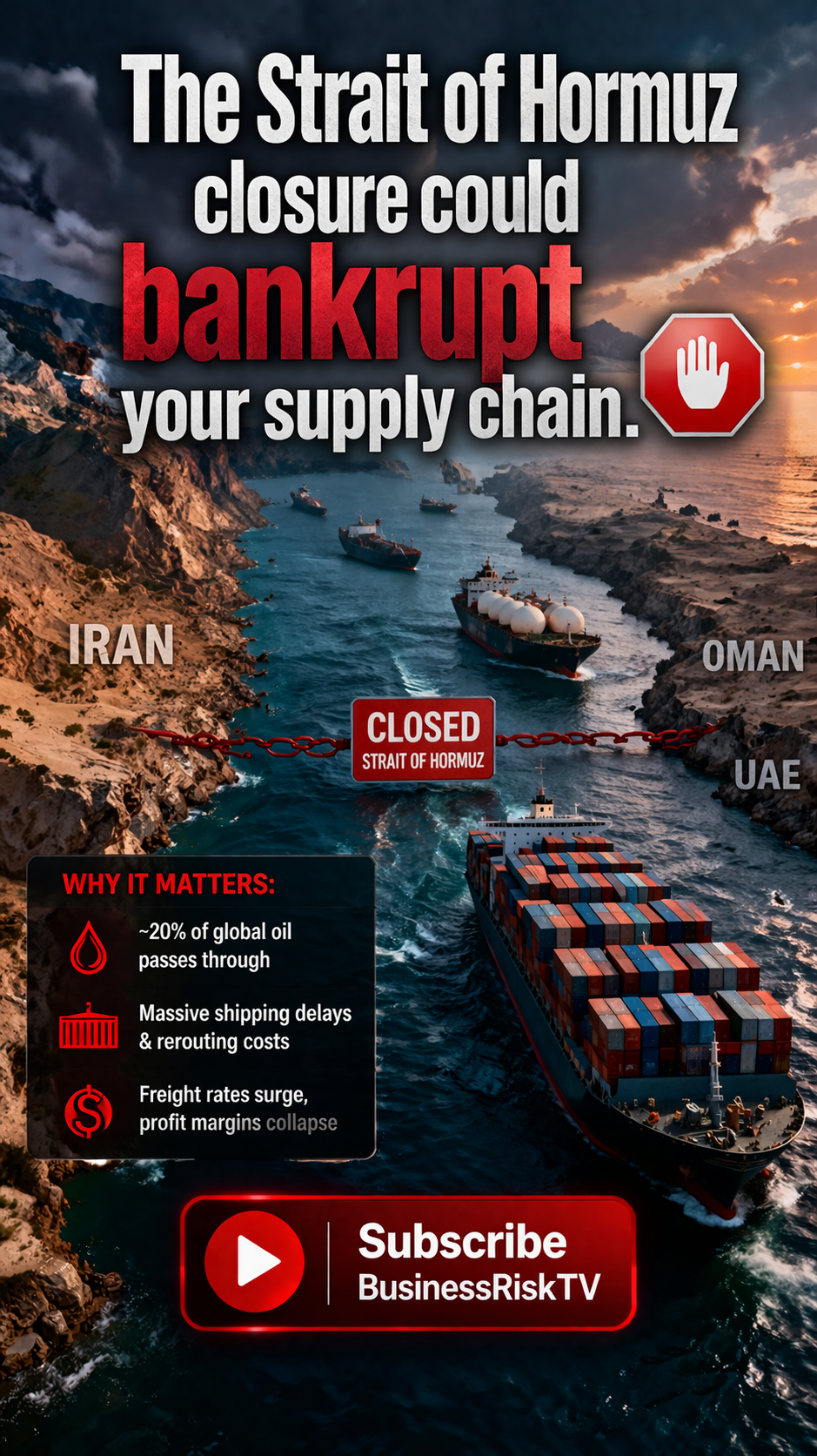
  2. Global Trade Value: Over 30% of seaborne fertilizer and 20% of global LNG pass through this 21-mile-wide choke point; the U.S. economy is tied to the global price of these goods regardless of local production.

  3. The Inflation Multiplier: In April 2026, U.S. gas prices hit $4.00 per gallon, a 30% increase that acts as a regressive tax on every level of the American supply chain.


12 Risk Management Measures for Business Leaders

To protect your organisation against this escalating threat, the Business Risk Management Club recommends the following immediate actions:

  • Diversify Chemical Suppliers: Audit your Tier 2 and Tier 3 suppliers to ensure you aren’t indirectly reliant on Middle Eastern sulphur.

  • Secure Long-Term Offtake Agreements: Move from spot-market purchasing to fixed-volume contracts for critical reagents.

  • Invest in Circular Recovery: Implement on-site acid recovery systems to recycle sulphuric acid in mining and manufacturing processes.

  • Dynamic Pricing Models: Incorporate “commodity surcharges” into customer contracts to pass through volatile raw material costs.

  • Inventory Buffering: Increase “Safety Stock” levels for sulphur-dependent components from 30 days to 90+ days.

  • Geopolitical Scenario Planning: Conduct quarterly “War Room” sessions to model the impact of a 12-month Strait closure.

  • Resource Substitution: Explore bio-based or alternative leaching agents where technically feasible.

  • Logistics Redundancy: Identify “Land-Bridge” or alternative shipping routes that bypass the Strait, even at a higher initial cost.

  • Currency Hedging: Hedge against the volatility of the U.S. dollar and Middle Eastern currencies tied to energy exports.

  • Regulatory Monitoring: Track changes in “low-emission sulphuric acid” credits, which are becoming a major tradeable commodity.

  • Stakeholder Communication: Transparently brief investors on your exposure to the “Sulphur Gap.”

  • Enhanced Cybersecurity: Protect supply chain data systems, as digital infrastructure is the first target during physical blockades.

#GlobalEconomy2026 #RiskManagement #StraitOfHormuz #BusinessRiskTV #RiskManagement

Get help to protect and grow your business faster with BusinessRiskTV regardless of business environment

Find out more from BusinessRiskTV about growing your business through changing times

Subscribe for free business risk management ideas risk reviews and cost reduction tips

Connect with BusinessRiskTV for free business risk management tips

Read more business risk management articles on BusinessRiskTV and view videos @RiskBusiness YouTube Channel

Connect with BusinessRiskTV for free alerts to new business risk management articles and videos

21-mile strip of water that could bankrupt your supply chain Subscribe BusinessRiskTV

Everyone is watching the oil price. They’re looking at the wrong indicator.

To clarify, the 21-mile width refers to the narrowest point of the Strait of Hormuz (specifically the shipping lanes and buffer zones)

While the world argues over $4.00/gallon gas, a “silent” killer is draining the lifeblood of global industry: The Sulphuric Acid Collapse.

If you manufacture electronics, mine copper, or grow food, you are currently in the crosshairs of a geopolitical time bomb.

President Trump says the Strait of Hormuz closure doesn’t impact the U.S. economy. He’s wrong. Here’s the data he’s missing.

The Reality: The Strait is the exit for 50% of the world’s traded sulphur. No sulphur = No sulphuric acid.
No sulphuric acid =
❌ No Copper for EVs.
❌ No Phosphate for Food.
❌ No Lithium for Batteries.

We are currently in the “lag phase.” The reserves are running dry. By Q3 2026, the “Price of Silence” will become the “Price of Insolvency” for businesses that didn’t plan ahead.

What you need to do RIGHT NOW:
At the Business Risk Management Club, we’ve identified 12 critical steps to insulate your operations—from circular acid recovery to aggressive inventory buffering.

Don’t wait for the mainstream media to catch up. The smart money is already moving.

#GlobalEconomy2026 #RiskManagement #StraitOfHormuz #BusinessRiskTV #RiskManagement

Why the Sulphur Crisis & Strait of Hormuz Blockade Threaten the Global Economy: 2026 Risk Analysis

Business Risks And Opportunities

What are risks and opportunities in business

Managing opportunities and risks better with BusinessRiskTV. Business opportunities come with business risks. External and internal risk drivers will impact on business objectives negatively and positively. Controlling business risks and opportunities can secure greater business success and build stronger business resilience. Identify assess and control business risks better with articles and videos on BusinessRiskTV. Monitor business risks to your business objectives to protect and grow your business faster.

What are the risk and opportunities in business

Managing business risks is a critical business issue all business leaders face. However not all business leaders face the same business risks. Similar businesses can have the same business risks but may have different resources deployed in business risk management. Opportunities for business leaders to grow their business fast are always available to you if you look and take the best course of action. Understand the top business risks facing your business with help tips and support from BusinessRiskTV

Alerts are free

BusinessRiskTV Live and Ondemand

Managing Business Risks Better With BusinessRiskTV

Business Risks And Opportunities

Asia Risk Assessment Coaching

Overcoming Asia International Trade Barriers With BusinessRiskTV.com

Asia Risk Report

Sign up for Asia Risk Assessment Coaching. Asia trading risk assessment will help identify best business opportunities in Asia. Understand the business risks in Asia. Manage the risks of doing business in Asia more effectively. Asia untapped business potential can be tapped. Overcome challenges of doing business Asia. Analyse the future of Asia economy. Complete your assessment of doing more business in Asia to grow your business with less uncertainty.

Asia Pacific Business Marketplace Expo

Challenges Of Doing Business In Asia

There are many challenges of doing business in Asia, including:

  • Different languages and cultures: Asia is a vast and diverse continent with many different languages and cultures. This can make it difficult to understand the local market and to communicate effectively with local partners and customers.
  • Different business practices: Asia also has different business practices, which can be difficult to adapt to. For example, in some countries, it is important to build relationships with key decision-makers before doing business.
  • Different regulations: Asia also has different regulations, which can make it difficult to comply with local laws and regulations. For example, in some countries, there are restrictions on foreign investment.
  • Competition from local businesses: Asia is a very competitive market, with many local businesses competing with foreign companies. This can make it difficult to establish a successful business in Asia.

There are a number of ways to overcome these challenges, including:

  • Hire local staff: One way to overcome the challenge of different languages and cultures is to hire local staff. This will help you to understand the local market and to communicate effectively with local partners and customers.
  • Learn about local business practices: Another way to overcome the challenge of different business practices is to learn about local business practices. This will help you to adapt to the local market and to do business effectively in Asia.
  • Get legal advice: It is important to get legal advice before doing business in Asia. This will help you to understand the local regulations and to comply with local laws and regulations.
  • Partner with a local business: Partnering with a local business is a good way to overcome the challenge of competition from local businesses. This will help you to establish a successful business in Asia.

There are also a number of latest solutions that can help you to overcome the challenges of doing business in Asia, including:

  • Cloud-based solutions: Cloud-based solutions can help you to overcome the challenge of different languages and cultures. This is because cloud-based solutions can be accessed from anywhere in the world.
  • Social media: Social media can help you to overcome the challenge of different business practices. This is because social media can help you to build relationships with key decision-makers and to communicate effectively with local partners and customers.
  • Mobile apps: Mobile apps can help you to overcome the challenge of different regulations. This is because mobile apps can help you to comply with local laws and regulations.
  • Artificial intelligence: Artificial intelligence can help you to overcome the challenge of competition from local businesses. This is because artificial intelligence can help you to identify new opportunities and to develop new products and services.
Asia Pacific Latest Business Economy News Opinions Reviews Offers Jobs
Subscribe to BusinessRiskTV.com Asia Pacific Magazine

Asia Risk Conference

Enterprise Risk Management ERM Conferences Online
MarketplacesExhibitions
Cost ReductionsRisk Magazine
Discover new ways to protect and grow your business in Asia with BusinessRiskTV

#BusinessRiskTV #Asia #AsiaRisks #AsiaRiskAssessment #AsiaBusiness #AsiaEconomy #AsiaNews #AsiaTrade #AsiaTrading

Asia Risk Assessment Coaching

Enterprise risk management training courses and business solutions

Managing threats and opportunities better with BusinessRiskTV.com

Enterprise risk management training courses in our virtual classroom. Corporate risk management training matched to your business needs. Find the best enterprise risk management training courses for you. Whether you prefer your enterprise risk management training remotely online or in the classroom start sharpening the saw to tackle enterprise risks better. Come direct to us or use one of our enterprise risk management training provider partners. Ask us to develop an enterprise risk management training course for your business or enterprise. Manage enterprise threats and opportunities better. Develop your risk knowledge and business intelligence.

Enter code #EnterpriseRiskManagementTraining

BusinessRiskTV Enterprise Risk Management Training Courses Online Or Near You

Risk Management Courses Distance Learning

Find the best enterprise risk management training course for your business needs on BusinessRiskTV. Enter code #ERMtraining.

Working with other enterprise risk management training providers to help you get what you want when you want it

Risk Management Courses Distance Learning
Virtual Online Remote Enterprise Risk Management Training Short Courses

Our readers are interested in enterprise risk management training. Our main priority is to help readers improve their enterprise risk management system and practices. If another enterprise risk management training provider fits more closely to our readers needs we are happy to connect you online.

Reach more people seeking to educate themselves and train their colleagues online and in the classroom.

Promote and market your enterprise risk management training Courses for 12 months

Cheap ways to promote your business
Find out how to promote your business locally and globally. CLICK HERE or email editor@businessrisktv.com entering code #EnterpriseRiskManagementTrainingMarketing

Put your risk management training course in front of new buyers already interested in your type of offering before they buy from another enterprise risk management training provider.

Link into your existing sales process direct from BusinessRiskTV or use our eCommerce solutions to increase your sales cash flow and profit

Increase the sources of your income streams more sustainably. Grow your business faster.

Enterprise Risk Management Training Course Directory

UK Buiness Directory List
BusinessRiskTV.com UK Business Directory List
  • Want to list your enterprise risk management training course in our Enterprise Risk Management Training Course Directory?
  • Are you running any enterprise risk management training course deals discounts or special offers you want more people to know about?
  • Could you write an advertorial to advertise your enterprise risk management training course and inform our readers?

Reach more new customers with BusinessRiskTV.

Northern Powerhouse Risk Management Online Seminars
Click on Register Now or email editor@businessrisktv.com entering could #EnterpriseRiskManagementTrainingCourseDirectory

Business Growth Workshops

Is your business making the most of its available resources?

#BusinessRiskTV #EnterpriseRiskManagement #EnterpriseRiskManagementTraining #RiskManagementTraining #ERM #ERMtraining #TrainingCourses #Leadership #LeadershipDevelopment #EnterpriseRiskManagementTrainingMarketing

Enterprise risk management training courses and business solutions