Risk Less. Grow More. – BusinessRiskTV.com for Smarter Enterprise
Tag: FinTech
FinTech
Fintech, short for financial technology, is a broad term that refers to the use of new technology to improve and automate the delivery and use of financial services. Fintech companies use technology to provide innovative solutions to financial problems, such as providing access to credit for underserved populations, making it easier to invest, or managing personal finances.
Fintech has the potential to revolutionise the financial industry by making financial services more accessible, affordable, and efficient. Some of the most common types of fintech services include:
Mobile banking: Mobile banking apps allow customers to access their bank accounts and perform transactions from their smartphones or tablets.
Peer-to-peer (P2P) lending: P2P lending platforms allow individuals to lend money to each other directly, without the need for a bank.
Robo-advisors: Robo-advisors are automated investment services that use algorithms to create and manage investment portfolios.
Cryptocurrency: Cryptocurrency is a digital or virtual currency that uses cryptography for security. Bitcoin is the most well-known cryptocurrency.
Fintech is a rapidly growing industry, and it is expected to continue to grow in the years to come. The global fintech market is expected to reach $323 billion by 2025.
Here are some of the benefits of fintech:
Increased access to financial services: Fintech can help to increase access to financial services for underserved populations, such as those who live in rural areas or have low credit scores.
Lower costs: Fintech can help to lower the costs of financial services, making them more affordable for consumers.
More convenience: Fintech can make it more convenient for consumers to access financial services, such as by allowing them to bank and invest online or on their smartphones.
Improved customer service: Fintech companies can use technology to provide better customer service, such as by providing 24/7 support or by making it easier to resolve problems.
Here are some of the challenges of fintech:
Regulation: Fintech companies are often subject to less regulation than traditional financial institutions. This can create a competitive advantage for fintech companies, but it can also lead to risks, such as fraud and consumer protection issues.
Security: Fintech companies need to take steps to protect customer data from fraud and cyberattacks.
Acceptance: Some consumers may be hesitant to use fintech services, especially if they are unfamiliar with the technology.
Overall, fintech has the potential to revolutionise the financial industry by making financial services more accessible, affordable, and efficient. However, there are also some challenges that fintech companies need to address, such as regulation, security, and acceptance.
Introduction: Why Understanding Real Risks is the Key to Business Success
The Problem: Why UK Business Leaders Struggle with Risk Management
The Consequences of Ignoring Real Business Risks
Internal vs. External Risks: What’s Really Threatening Your Business?
Overcoming Fear of Failure — and Success
Why Settling for the Status Quo is the Biggest Risk of All
How to Identify the Real Risks to Your Business Survival and Growth
Assessing Risks: Tools and Strategies for Better Decision-Making
Controlling Risks: Turning Threats into Opportunities
The Role of Innovation in Reducing Risk and Accelerating Growth
Expanding Sales More Profitably in the UK Market
The Power of Networking: Leveraging BusinessRiskTV.com’s Business Experts Hub
Connecting Buyers and Sellers More Effectively Online
Case Studies: Businesses That Mastered Risk and Dominated Their Markets
Action Plan: Stop Waiting, Start Executing
Conclusion: Elevate Your Business Above Uncertainty
—
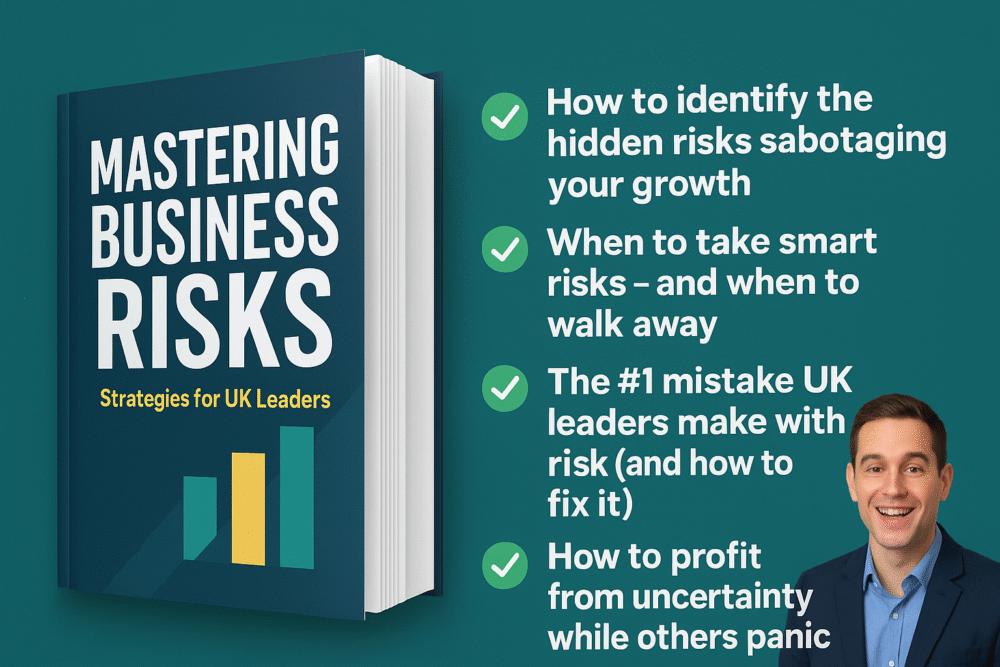
Introduction: Why Understanding Real Risks is the Key to Business Success
In today’s volatile business environment, only those who truly understand the real risks will manage them better. Many business leaders in the UK are operating with blind spots—unaware of the threats that could derail their growth or the opportunities they’re missing.
This book is not just about risk avoidance; it’s about risk mastery. It’s about preparing for the most valuable opportunities and dominating your marketplace. You already have what it takes to be greater than you’ve been so far — but you must overcome fear, stop waiting, and act now.
Whether you’re afraid of failure — or even success — this guide will help you break through barriers, identify the real risks, and turn them into advantages.
—
The Problem: Why UK Business Leaders Struggle with Risk Management
Many UK business leaders:
Lack deep knowledge of the risks affecting their industry.
Don’t know which risks to take to grow faster.
Don’t have the right experts to help them assess and control risks.
Underestimate internal risks (like leadership gaps or cash flow issues).
Overestimate external risks (like economic downturns or competition).
This knowledge gap leads to missed opportunities, slower growth, and unnecessary vulnerabilities.
—
Expanding the Problem: The Need for Innovation and Profitable Growth
Why should UK business leaders innovate? Because standing still is riskier than evolving. Companies that fail to adapt:
Lose market share to competitors.
Become irrelevant in changing industries.
Miss profitable expansion opportunities.
The solution? Strategic risk-taking. This book will show you how to expand sales more profitably by focusing on high-reward, low-risk strategies.
—
The Risk Management Solutions with BusinessRiskTV.com
You don’t have to navigate risks alone. BusinessRiskTV.com offers:
✅ Business Experts Hub – Network with risk management professionals.
✅ Risk Assessment Tools – Make smarter decisions.
✅ Online Marketplace – Connect buyers and sellers more cost-effectively.
By leveraging these resources, you can gain clarity, reduce uncertainty, and seize opportunities faster.
Insurer of Last Resort Failure: Implications for Businesses
California. 2025. Wildfires raged. Homes vanished. Insurance companies, battered by years of escalating losses, simply stopped writing new policies.Homeowners were left stranded, unable to secure coverage, their dreams of homeownership reduced to ash. This wasn’t a dystopian novel; it was a chilling glimpse into a potential future where the insurance landscape is dramatically shifting, leaving businesses and individuals alike facing unprecedented uncertainty.
2025 Insurance Crisis: Navigating the New Normal for Businesses
The insurance industry is in the midst of a perfect storm. Climate change is fuelling more frequent and intense natural disasters.Cyberattacks are growing in sophistication and scale. And inflation is squeezing insurers’ margins, making it harder to price risk accurately. As a result, insurers are becoming increasingly selective, cancelling policies for high-risk properties, withdrawing entirely from certain markets, and even refusing to cover specific perils. This leaves businesses and individuals facing a daunting question: who will insure the uninsurable?
Enter the “insurer of last resort.” This concept, while seemingly reassuring, is fraught with challenges. These entities, often government-backed programmes, are designed to step in when the private market fails. However, they are not immune to the same financial pressures that are crippling the private insurance sector. What happens when the insurer of last resort runs out of money? The consequences could be catastrophic, potentially leading to systemic failures within the insurance industry and a cascade of economic and social disruptions.
The global rise in bond yields on sovereign debt is further exacerbating the situation. As interest rates climb, the cost of capital for insurers increases, making it more expensive to invest reserves and potentially impacting their ability to offer competitive premiums. This could lead to a vicious cycle: higher premiums, reduced affordability, and ultimately, a decline in insurance coverage.
This crisis demands a multi-pronged approach. Governments must play a crucial role in mitigating climate change, improving disaster preparedness, and strengthening the regulatory framework for the insurance industry. Businesses, too, must adapt. Proactive risk management strategies, including robust cybersecurity measures and investments in climate resilience, are essential for navigating this uncertain landscape.
The good news is that there are concrete steps businesses can take to protect themselves. By diversifying their risk portfolios, exploring alternative risk transfer mechanisms, and building strong relationships with their insurers, businesses can enhance their resilience and navigate the evolving insurance landscape.
The insurance crisis is a stark reminder that the world is changing rapidly. The risks we face are evolving, and the traditional models of insurance may not be sufficient to address these challenges. By understanding the forces at play and taking proactive steps to mitigate risk, businesses can ensure their continued success in this era of unprecedented uncertainty.
The 2025 Insurance Crisis: A Deep Dive
The insurance industry is facing a confluence of challenges that threaten its very foundation. Climate change is no longer a distant threat; it is a harsh reality. Extreme weather events, from devastating wildfires to catastrophic floods, are becoming more frequent and intense, wreaking havoc on communities and straining the financial resources of insurers.
Cyberattacks are also escalating in frequency and severity.Sophisticated ransomware attacks can cripple businesses, disrupt critical infrastructure, and cause significant financial losses. The sheer scale and complexity of these attacks are pushing the limits of traditional insurance models.
Furthermore, inflation is squeezing insurers’ margins. The rising cost of claims, coupled with the increasing cost of capital, is making it difficult for insurers to price risk accurately and maintain profitability. This is particularly challenging in the face of emerging risks like pandemics and geopolitical instability.
As a result of these pressures, insurers are becoming increasingly selective in the risks they are willing to underwrite. They are canceling policies for properties deemed to be high-risk, such as those located in wildfire-prone areas or coastal zones. They are withdrawing from certain markets altogether, leaving homeowners and businesses without access to affordable coverage. And they are even refusing to cover specific perils, such as flood damage or cyberattacks, leaving policyholders exposed to significant financial losses.
This shift in the insurance landscape has profound implications for businesses and individuals. Homeowners are facing the terrifying prospect of being uninsurable, leaving them financially devastated in the event of a disaster. Businesses, meanwhile, are struggling to obtain adequate coverage for their operations, which can jeopardize their ability to compete and thrive.
The Insurer of Last Resort: A Flawed Solution?
The concept of an “insurer of last resort” is intended to provide a safety net when the private insurance market fails.These entities, often government-backed programmes, are designed to step in and provide coverage for those who cannot obtain it in the private market.
However, the insurer of last resort model faces significant challenges. These programmes are often underfunded and ill-equipped to handle the scale of potential losses in the face of catastrophic events. For example, in the aftermath of Hurricane Katrina, the National Flood Insurance Program (NFIP) faced a massive shortfall, leaving taxpayers on the hook for billions of dollars in losses.
Furthermore, relying solely on the insurer of last resort can create a moral hazard. If individuals and businesses know that they will be covered by a government-backed programme, they may be less incentivised to mitigate their own risks. This can lead to increased reliance on government assistance and potentially exacerbate the very problems that the insurer of last resort is intended to address.
The Impact of Rising Bond Yields
The global rise in bond yields on sovereign debt is adding further pressure to the insurance industry. As interest rates climb, the cost of capital for insurers increases. This makes it more expensive for them to invest their reserves and potentially impacts their ability to offer competitive premiums.
Higher interest rates can also lead to increased borrowing costs for businesses and homeowners. This can reduce their ability to afford insurance coverage, further exacerbating the problem of underinsurance.
Navigating the Crisis: A Call to Action
This crisis demands a multi-pronged approach. Governments must play a crucial role in mitigating climate change, improving disaster preparedness, and strengthening the regulatory framework for the insurance industry. This includes investing in renewable energy sources, implementing stricter building codes, and modernising disaster warning systems.
The insurance industry itself must also adapt. Insurers need to develop innovative products and pricing models that better reflect the evolving risk landscape. This could include using data analytics and artificial intelligence to more accurately assess risk and develop more personalised pricing models.
Businesses, too, must play an active role in mitigating risk. Proactive risk management strategies are essential for navigating this uncertain landscape. This includes:
Conducting thorough risk assessments:Identify and assess the potential risks facing your business, including natural disasters, cyberattacks, and supply chain disruptions.
Diversifying your risk portfolio: Explore alternative risk transfer mechanisms, such as captive insurance companies and catastrophe bonds, to diversify your risk exposure.
Building strong relationships with your insurers: Maintain open and transparent communication with your insurers to ensure that your coverage needs are adequately addressed.
Investing in climate resilience: Take steps to improve the resilience of your operations to climate change, such as relocating critical infrastructure to safer locations and investing in energy-efficient technologies.
Advocating for sound public policy: Engage with policymakers to advocate for policies that support a strong and resilient insurance market.
Embracing innovation: Explore innovative insurance products and technologies, such as parametric insurance and blockchain-based solutions, to address emerging risks.
Investing in employee training: Educate your employees on the importance of risk management and empower them to identify and report potential threats.
The insurance crisis is a stark reminder that the world is changing rapidly. The risks we face are evolving, and the traditional models of insurance may not be sufficient to address these challenges. By understanding the forces at play and taking proactive steps to mitigate risk, businesses can enhance their resilience and navigate the evolving insurance landscape.
This is not a time for complacency. The insurance crisis is a wake-up call for businesses and individuals alike. By working together, we can build a more resilient and sustainable future where everyone has access to the insurance coverage they need.
Disclaimer: This article is for informational purposes only and should not be construed as financial or legal advice.