
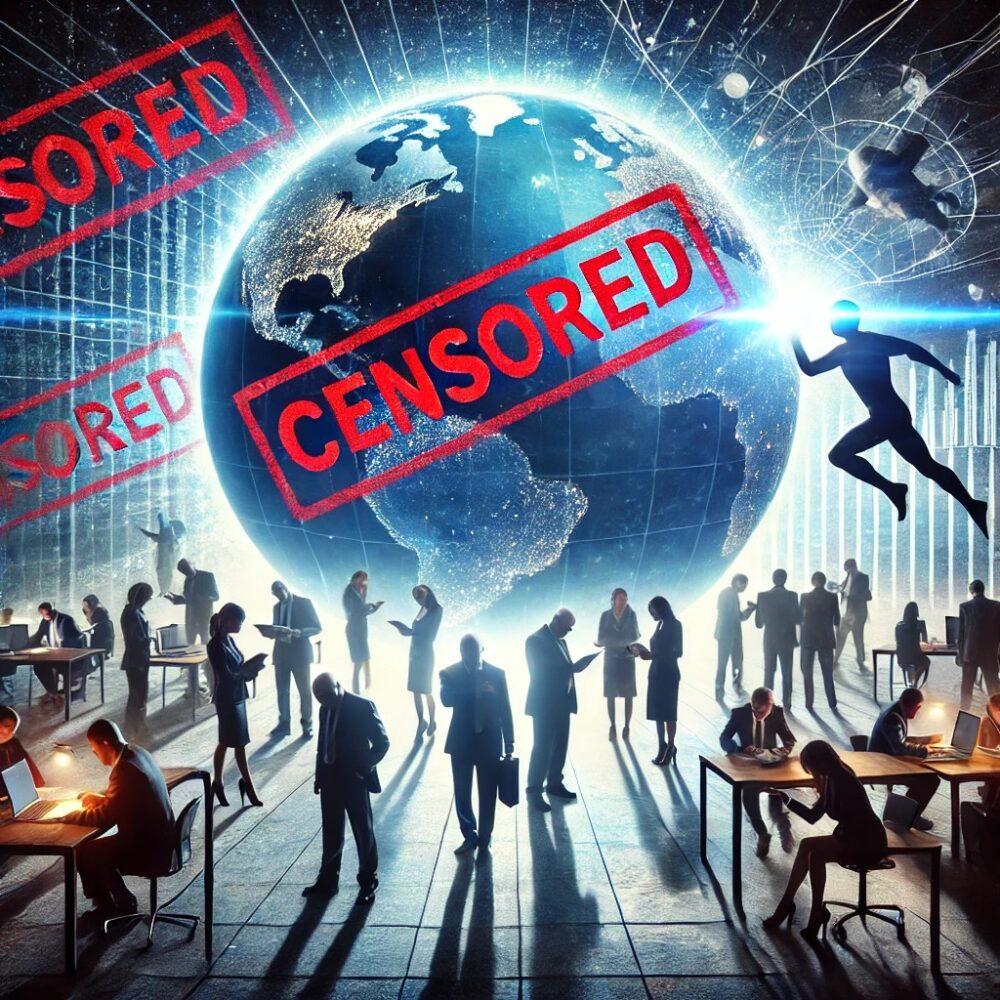
Freedom of Speech and Business Risk: A Vital Connection
Freedom of speech is the cornerstone of democracy, enabling the free exchange of ideas, information, and opinions. For business leaders, this freedom is essential in evaluating risks, assessing markets, and making informed decisions. The ability to speak openly, criticise policies, and question norms allows leaders to gather diverse perspectives, facilitating the identification of true business risks and the mitigation of potential threats.

However, when governments impose censorship, the free flow of information is compromised. George Orwell’s observation, “Journalism is printing what someone else does not want printed; everything else is public relations,” rings true, especially in the corporate world. Suppression of information prevents leaders from accessing accurate risk assessments, leaving them vulnerable to false perceptions that can hinder strategic planning. Without freedom of speech, business leaders are unable to gauge real threats, creating a facade of stability while underlying risks go unnoticed.
In business, risk management relies heavily on access to honest, unfiltered information. Without it, companies face decisions based on distorted realities, making them susceptible to unforeseen disasters. For instance, a company might enter a seemingly stable market, only to discover later that political unrest was censored, thus misjudging the risk. Understanding genuine business risks requires a transparent and open environment where information flows freely, enabling businesses to act preemptively and avoid potential crises.

19 Reasons Why Censorship is Detrimental to Business Risk Management
1. Distorted Market Perception: Censorship leads to the suppression of unfavourable market trends or political instability, creating a misleading view of the business environment.
2. Restricted Access to Critical Data: Business leaders are deprived of key information, such as economic data or political developments, that could impact their decisions.
3. Inability to Assess Political Risks: Governments that censor political dissent make it difficult to understand the underlying political risks that could destabilise markets or sectors.
4. Misinformation Proliferation: When free speech is stifled, misinformation and propaganda take its place, leading to poor business decisions based on false narratives.
5. Poor Investment Decisions: Without access to the truth, businesses may invest in unstable regions or industries without recognising the risks.
6. Undermined Trust: Censorship creates an environment of uncertainty and mistrust, as business leaders are unable to trust the information they receive from censored sources.
7. Innovation Suppression: In markets where free expression is limited, innovation is stifled, reducing opportunities for businesses to develop new products or services.
8. Erosion of Corporate Transparency: Companies in countries with strict censorship may be forced to comply with opaque government policies, reducing their own transparency and ethical standards.
9. Ethical Dilemmas: Businesses operating in censored environments may face ethical conflicts, especially if they are required to comply with censorship laws that conflict with their values.
10. Lack of Early Warning Signs: In censored regimes, the lack of open discourse prevents businesses from recognising early signs of social or political unrest, which could affect market stability.
11. Barriers to Global Collaboration: Censorship in one region can prevent companies from collaborating effectively with global partners who have access to more accurate information.
12. Limited Crisis Management: In crisis situations, real-time information is critical. Censorship delays or blocks access to vital information, hampering effective crisis management.
13. Regulatory Ambiguities: Censorship often comes with ambiguous regulations that are inconsistently enforced, creating legal risks for businesses operating in those regions.
14. Increased Corruption: Censorship often goes hand in hand with corruption, which increases operational risks for businesses in censored markets.
15. Poor Reputation Management: Censorship limits a business’s ability to manage its reputation, especially if false information about the company cannot be challenged in the public domain.
16. Workforce Demoralisation: Employees working under censorship may feel powerless to voice concerns or report wrongdoing, leading to poor morale and reduced productivity.
17. Unreliable Supply Chain Management: Businesses rely on accurate information to manage supply chains, especially in times of disruption. Censorship hides supply chain risks, leading to operational inefficiencies.
18. Consumer Misinformation: Censorship can distort consumer opinions and preferences, leading businesses to make misguided marketing decisions.
19. Overreliance on Government Data: In censored environments, business leaders may be forced to rely solely on government-provided data, which could be manipulated to conceal economic or political instability.
How Business Leaders Can Access Real Risk Analysis in Censored Environments
While government censorship presents a significant challenge to business risk management, there are several strategies that business leaders can adopt to access real risk analysis and make informed decisions.
1. Leverage Independent Media: Independent media outlets often provide uncensored news and insights. By diversifying news sources and focusing on independent journalism, businesses can gain a clearer understanding of political, economic, and social risks.
2. Collaborate with International Experts: Engaging with international analysts, consultants, and academic institutions can provide a more global perspective on local risks. These experts often have access to uncensored data and can provide insights that local sources might not.
3. Invest in Private Risk Assessments: Businesses can commission private risk assessments from independent firms that specialise in market analysis, political risks, and economic trends. These firms often have access to unfiltered information through their global networks.
4. Monitor Social Media and Online Communities: In many censored environments, dissenting voices find alternative channels of expression through social media, encrypted communication platforms, or online forums. Monitoring these platforms can provide early warning signals of unrest or instability.
5. Use Open-Source Intelligence (OSINT): OSINT involves collecting and analysing publicly available information from a variety of sources, including social media, public forums, satellite imagery, and international news outlets. OSINT can provide invaluable insights into emerging risks.
6. Engage Local Partners with Caution: Local partners with insider knowledge of censored regions can provide on-the-ground intelligence. However, it’s crucial to assess the reliability and motivations of these partners to ensure unbiased reporting.
7. Consult Think Tanks: Many think tanks operate independently and provide valuable research on political, social, and economic risks in censored regions. Their reports can offer a more transparent view of the business landscape.
8. Adopt Corporate Diplomacy: Building strong relationships with local governments, regulatory bodies, and international organisations can help businesses navigate censored environments more effectively. Corporate diplomacy enables leaders to gain insider knowledge and negotiate better terms for their operations.
9. Encourage Internal Whistleblowing: Within organisations, encouraging internal whistleblowing mechanisms can help businesses identify risks that might otherwise be concealed by external censorship. Ensuring employees feel safe to report concerns is essential for maintaining transparency.
10. Participate in Global Business Networks: Engaging with global business networks such as chambers of commerce, trade associations, and multinational corporations can offer a broader perspective on the risks associated with censored regions. These networks often share critical insights based on their own experiences.
11. Utilise Blockchain for Transparency: In environments where censorship affects financial and transactional transparency, blockchain technology can provide a decentralised, tamper-proof record of transactions, ensuring that businesses maintain clear oversight of their operations.
The Benefits of Independent Business Risk Analysis via BusinessRiskTV and the Business Risk Management Club
Given the limitations imposed by government censorship, accessing independent and reliable business risk analysis is more important than ever. This is where platforms like BusinessRiskTV and the Business Risk Management Club play a crucial role.
At BusinessRiskTV, we specialise in providing independent business risk insights that are free from the influence of government censorship. Our team of global risk experts offers real-time analysis, helping businesses to navigate complex markets and make informed decisions based on transparent and unbiased data. By joining the Business Risk Management Club, business leaders can access a wealth of knowledge, tools, and resources to better manage the risks associated with censored environments.
Here are some of the key benefits of independent business risk analysis via BusinessRiskTV and the Business Risk Management Club:
1. Access to Unfiltered Information: We provide insights into global markets that are not influenced by government propaganda or censorship, ensuring that business leaders receive accurate information.
2. Real-Time Risk Analysis: Our team monitors global trends in real-time, providing businesses with timely and relevant updates on political, economic, and social risks.
3. Expert Insights: Our network of analysts, consultants, and industry experts ensures that members receive comprehensive and diverse perspectives on potential risks.
4. Early Warning Systems: We identify early warning signs of instability in censored regions, allowing businesses to act proactively and mitigate potential risks.
5. Tailored Risk Assessments: BusinessRiskTV offers personalised risk assessments based on your specific industry, market, and business goals, ensuring that your business strategy is aligned with real-world risks.
6. Collaborative Risk Management: As a member of the Business Risk Management Club, you’ll have the opportunity to collaborate with other business leaders, share insights, and develop strategies for managing risks in challenging environments.
7. Ethical Business Practices: Our platform encourages ethical business practices and transparency, helping you to navigate the legal and moral challenges that come with operating in censored markets.
8. Educational Resources: BusinessRiskTV provides a wide range of educational resources, including webinars, reports, and case studies, to help business leaders stay informed about the latest trends in risk management.
By utilising independent business risk analysis through BusinessRiskTV, business leaders can gain a competitive edge, reduce uncertainty, and make more informed decisions. In an increasingly complex global landscape, the ability to access independent, uncensored information is not just a competitive advantage – it is essential for survival. In today’s interconnected world, the risks facing businesses are multifaceted and often hidden behind a veil of censorship, propaganda, and misinformation. Accessing real, accurate data allows companies to make decisions that are not only profitable but also sustainable in the long term.
Why Independent Business Risk Analysis Matters
For business leaders operating in a world of increasing censorship, having access to independent risk analysis is critical. The risks of relying solely on censored or biased information are too great. With false perceptions of stability, businesses may make poor investments, overlook political risks, and expose themselves to significant financial and operational hazards.
Moreover, independent risk analysis fosters transparency and trust—two pillars that are foundational to long-term business success. It helps companies operate ethically, making decisions that align with their values and ensuring that they are prepared for whatever challenges may arise.
Independent platforms like BusinessRiskTV not only provide an essential service for businesses seeking to navigate censored environments, but they also ensure that decision-making is based on objective, fact-driven insights. When businesses are equipped with accurate risk data, they can move confidently in their markets, mitigate potential crises before they escalate, and maintain their reputation even in the face of external pressures.
Joining BusinessRiskTV’s Business Risk Management Club: A Strategic Move for Business Leaders
For business leaders seeking to navigate the complex, and often opaque, global business environment, joining BusinessRiskTV’s Business Risk Management Club provides access to independent, reliable, and actionable risk insights. The club is designed to equip its members with the tools, knowledge, and networks needed to not only survive but thrive in the face of growing censorship and misinformation.
Through BusinessRiskTV’s global network of risk experts and partners, members can stay ahead of potential threats, identify emerging risks, and develop proactive strategies for managing uncertainty. The collaborative nature of the club also enables business leaders to share their experiences, learn from one another, and build a community of informed and empowered decision-makers.
Conclusion: The Power of Independent Business Risk Analysis
Censorship is a growing challenge for businesses worldwide, distorting the perception of risk and complicating decision-making processes. In an era where governments increasingly control the flow of information, the importance of independent business risk analysis cannot be overstated. Business leaders need reliable, uncensored data to accurately assess risks and avoid making decisions based on manipulated or incomplete information.
BusinessRiskTV’s Business Risk Management Club offers a solution to this challenge, providing business leaders with access to real-time, unbiased risk assessments that allow them to make informed, ethical, and strategic decisions. By leveraging independent analysis, businesses can protect their interests, build resilience, and ensure long-term success even in the face of global censorship.
Ultimately, the ability to navigate censorship, misinformation, and political risks will define the success of businesses in the future. By embracing independent risk analysis, business leaders can ensure they are prepared for the challenges ahead and are in a position to seize opportunities in an ever-changing world. Join BusinessRiskTV’s Business Risk Management Club today and equip your business with the insights it needs to succeed in a complex, censored world.
Join our Business Risk Management Club

Subscribe for free business risk alerts and risk reviews
Read more business risk management articles for free
Read more:
1. Impact of government censorship on business leaders
2. Freedom of speech and business risk management
3. How censorship affects global businesses
4. Independent business risk analysis platforms
5. Censorship risks for corporate decision-makers
6. George Orwell quote on journalism and censorship
7. Business challenges in censored environments
8. Why censorship is bad for business risk management
9. Real-time business risk analysis without censorship
10. BusinessRiskTV independent risk management analysis
Key Hashtags :
1. #BusinessRiskManagement
2. #FreedomOfSpeech
3. #CensorshipImpact
4. #CorporateRisk
5. #IndependentAnalysis
6. #GlobalBusinessRisk
7. #UncensoredBusiness
8. #TransparentLeadership
9. #BusinessRiskSolutions
10. #BusinessRiskTV

UK Free Speech and U.S. Delegation
In July 2025, a “US Free Speech Delegation” (likely led by figures such as US Vice President J.D. Vance, who has publicly criticized the UK on free speech issues) appears to be engaged in discussions and advocacy regarding what they perceive as a “retreat” of free speech in the UK and across Europe.
What are they doing and why is what they are saying important in the UK?
Critiquing UK laws and policies: The delegation, or at least prominent US voices, are highlighting specific instances they view as concerning for free speech in the UK. This includes:
The conviction of a pro-life activist for silent prayer near an abortion provider.
Concerns about the Online Safety Act (OSA), which some US figures see as empowering bureaucrats to dictate online content and being incompatible with a broad interpretation of free speech. They argue it mirrors “censorship frameworks” and could lead to “expansive restrictions” on online expression.
Broader concerns about what they perceive as a general “backslide away from conscience rights,” particularly for religious Britons.
The Foreign Influence Registration Scheme (FIRS), which launched on July 1, 2025, and requires registration for certain political and non-political activities directed by foreign powers, is another point of potential contention as it could be seen by some as impacting free expression.
Promoting a US perspective on free speech: The US approach to free speech, enshrined in the First Amendment, is generally considered more expansive than that in the UK, where freedom of expression is protected under Article 10 of the European Convention on Human Rights (as applied through the Human Rights Act 1998) but is subject to more limitations. The US delegation’s statements are important because they:
Highlight perceived differences: They draw attention to the differing legal frameworks and cultural attitudes towards free speech between the two nations.
Influence public and political debate: Their critiques can fuel existing debates within the UK about the appropriate balance between free expression, safety, and the prevention of harm, especially in the online sphere.
Exert diplomatic pressure: While not always explicit, such delegations can subtly pressure the UK to consider the US perspective on free speech, particularly given the strong bilateral relationship.
Raise awareness: They bring international attention to specific cases and broader trends in the UK regarding freedom of expression.
What UK citizens should do to protect free speech in the UK:
Protecting free speech in the UK involves a multi-faceted approach, engaging with existing legal frameworks and actively participating in public discourse:
Understand the Law: Familiarise yourself with Article 10 of the Human Rights Act 1998, which protects freedom of expression, and its limitations. Understand what constitutes lawful and unlawful speech under UK law (e.g., Public Order Act, hate speech laws, defamation).
Support and Engage with Civil Liberties Organisations: Organizations like Liberty and English PEN actively campaign for and defend free speech. Supporting them through donations, volunteering, or simply following their work can amplify efforts to protect these rights.
Participate in Public Discourse:
Engage in respectful debate: Actively participate in discussions about free speech, both online and offline, promoting a culture of open dialogue and critical thinking.
Challenge censorship and overreach: Speak out against instances where you believe free speech is being unduly restricted, whether by government, corporations, or other entities.
Support independent journalism and diverse media: A robust and free press is crucial for free speech. Support news outlets that uphold journalistic integrity and provide diverse perspectives.
Advocate for Legislative Changes:
Respond to government consultations: When new legislation or amendments that might impact free speech are proposed (like the Online Safety Act or proposals regarding hate crime laws), submit your views to government consultations.
Contact your elected representatives: Write to your Member of Parliament (MP) to express your concerns or support for free speech issues.
Be Mindful of Online Expression:
Understand platform terms of service: Be aware of the rules governing speech on social media platforms, as these are often distinct from legal restrictions.
Promote media literacy: Encourage critical evaluation of information and an understanding of how online content is moderated and amplified.
Support Academic Freedom: The Higher Education (Freedom of Speech) Act 2023 aims to strengthen free speech and academic freedom in universities. UK citizens can support efforts to ensure these duties are upheld and that universities remain places where diverse and even controversial ideas can be discussed.
Monitor Legal Cases: Pay attention to court cases that test the boundaries of free speech, as these can set important precedents for future protections.
By being informed, engaged, and proactive, UK citizens can play a vital role in safeguarding and strengthening free speech in the country.
#UKFreeSpeech
#ProtectFreeSpeech
#FreeSpeechUK
Join Business Risk Management Club