The Fed’s Pivot: Navigating a New Era of Financial Stability-Driven Policy

Discover why the Federal Reserve’s 2025 policy shift prioritises financial stability and managing US debt costs over traditional inflation targets. This analysis reveals the critical threats and opportunities for business leaders, with a focus on survival strategies for regional banks. Learn 6 essential risk management steps to protect your business, secure lower-cost debt, and gain competitive advantage in this new economic era. Essential reading for CEOs and strategists navigating increased volatility and regulatory change.

Decoding the Federal Reserve’s New Priority for Business Leaders

In December 2025, the Federal Reserve cut interest rates, citing a shift in the “balance of risks.” While inflation and employment remain stated goals, a deeper analysis reveals a critical new priority is guiding policy: managing systemic financial stability and the cost of government borrowing. For business leaders, particularly those in vulnerable sectors like regional banking, this is not a minor adjustment—it’s a fundamental shift in the economic rulebook. The Fed is effectively navigating a tri-lemma: balancing price stability, employment, and the prevention of financial system stress, with the latter gaining urgent prominence. This article provides a strategic roadmap for leaders to turn this systemic challenge into a competitive advantage.

The New Reality: Financial Stability as the Fed’s Unspoken Mandate

Recent Federal Reserve communications and regulatory actions strongly indicate a reorientation of priorities, confirming a more complex operating environment.

  • The Stated Mandate vs. The Emerging Focus: The FOMC’s statements continue to reaffirm the dual mandate. However, the November 2025 Financial Stability Report provides the key insight. It details an intense monitoring framework for systemic vulnerabilities—valuation pressures, excessive borrowing, and leverage—and explicitly states that “financial stability supports the objectives assigned to the Federal Reserve.” This positions financial stability not as a separate goal, but as a critical precondition for achieving the others.
  • A Regulatory Shift Confirms the Priority: This shift is most concretely seen in bank supervision. The Fed’s new supervisory principles instruct examiners to focus squarely on “material financial risks threatening the safety and soundness of banks” and to de-emphasise procedural issues. This “reorientation” is a direct response to systemic threats, aiming to make the banking system more resilient.
  • The Regional Bank Pressure Point: The plight of USA regional banks is central to this pivot. Many are grappling with the lingering impact of earlier rate hikes, unrealised losses on securities, and intense funding pressures. A systemic crisis in this sector is a clear and present danger. The Fed’s policy stance is now attuned to providing a lower-cost environment to help stabilise these critical institutions and prevent a broader credit crunch.

Strategic Implications: Threats and Opportunities for the Alert Leader

This new paradigm creates a distinct landscape of risks and rewards.

🔴 Primary Threats to Business Strategy

  • Prolonged Policy Uncertainty: With three competing priorities, the path of interest rates will become less predictable and more reactive to financial market stress, complicating long-term planning.
  • Asymmetric Regulatory Scrutiny: The focus on “material financial risk” means that risks capable of causing systemic harm or threatening a bank’s soundness will draw severe action, while other compliance issues may be downgraded.
  • Volatility from Financial Channels: Economic cycles may be increasingly driven by financial system vulnerabilities (e.g., debt defaults, bank stress) rather than traditional inflation, making forecasting more difficult.

🟢 Key Opportunities for the Proactive Leader

  • Strategic Capital in a Lower-Rate Window: A sustained lower-rate environment, even with elevated inflation, provides a critical window for strategic M&A, refinancing high-cost debt, or funding long-term capital projects.
  • Operational Efficiency Through Smart Compliance: The regulatory shift allows companies to streamline compliance, focusing resources only on mitigating material financial risks, thereby reducing costs and complexity.
  • Competitive Advantage for Strong Balance Sheets: Companies with robust liquidity and low leverage will be highly attractive to banks operating under the new supervisory principles, gaining better and more reliable access to credit.

6 Essential Risk Management Steps in the New Financial Stability Era

Business leaders must act now to future-proof their organisations.

1. Integrate Financial Shock Scenarios into Core Planning

Move beyond traditional recession models. Stress test your business against sharp asset price corrections, sudden credit crunches, and counterparty failures. Model how a regional banking crisis would impact your liquidity and supply chain.

2. Recalibrate Risk Management to the “Materiality” Standard

Audit your internal controls. Align your risk framework with the Fed’s new lens by ruthlessly prioritising risks that could cause material financial harm to your enterprise. De-prioritise non-material procedural issues to free up resources.

3. Fortify Liquidity with a “Bank-Stress” Assumption

Do not assume bank credit lines are infallible. Diversify your funding sources—explore direct capital markets access, asset-based lending, or strategic cash reserves. Treat your liquidity buffer as a strategic asset.

4. Proactively Engage with Your Banking Partners

Initiate discussions with your regional and national banks. Understand how the new supervisory principles are shaping their risk appetite and lending criteria. Position your company as a low-risk, “flight-to-quality” partner to secure essential credit.

5. Decode Fed Signals for Strategic Foresight

Closely monitor the Fed’s Financial Stability Reports and speeches by supervision-focused officials. These documents are no longer academic; they are early-warning systems for sectors the Fed views as vulnerable.

6. Identify Strategic Investments in a Dislocated Market

Proactively identify potential acquisition targets or assets that may become undervalued due to financial stress in their sector or reliance on troubled banks. Prepare to act when the Fed’s stability focus creates market dislocations.

Conclusion: Leading in the Age of the Tri-Lemma

The Federal Reserve’s elevated focus on financial stability and sovereign debt costs has irrevocably changed the strategic environment. For business leaders, success will no longer come from simply forecasting inflation or jobs data. It will come from understanding financial system vulnerabilities, building resilient balance sheets, and moving with agility when the Fed’s actions create new openings.

The businesses that thrive will be those that see this not merely as a threat to be managed, but as a landscape ripe with opportunity—where strong fundamentals are rewarded, strategic capital is deployed wisely, and risk management is a core competitive discipline. The era of the Fed’s tri-lemma has begun. It is time to lead accordingly.

#FedPivot #FinancialStability #BusinessStrategy #BusinessRiskTV #RiskManagement

Get help to protect and grow your business faster with BusinessRiskTV

Find out more about growing your business faster with BusinessRiskTV 

Subscribe for free business risk management ideas risk reviews and cost reduction tips

Connect with us for free business risk management tips

Read more business risk management articles and view videos for free

Connect with us for free alerts to new business risk management articles and videos 

The Fed’s Pivot: Navigating a New Era of Financial Stability-Driven Policy

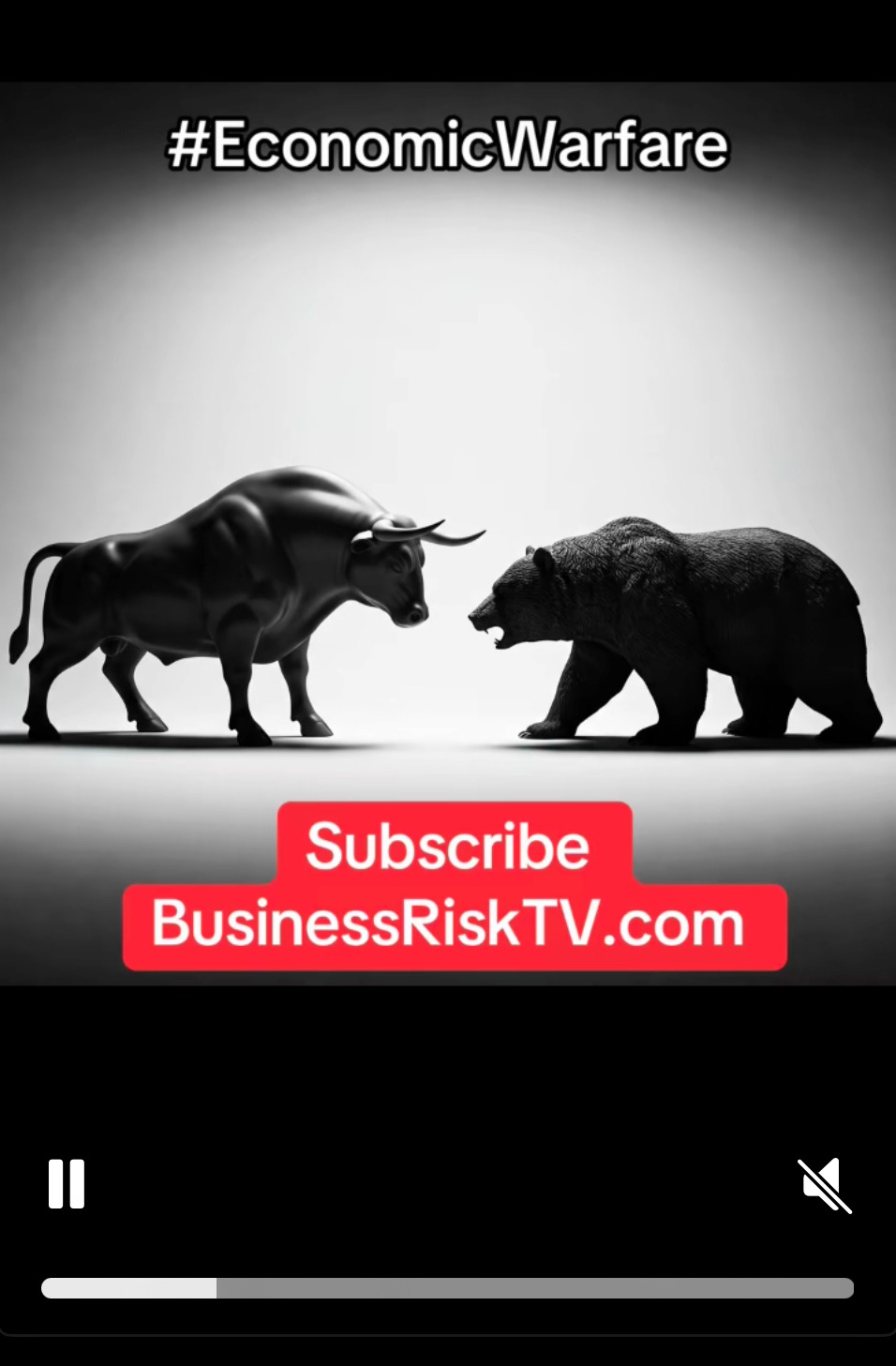
The Shadow of the Bear: Weaponising Fear for Economic Alchemy

Economic manipulation and potential consequences of geopolitical tensions

The air crackles. It’s not just geopolitical tension. It’s the subtle, insidious hum of economic machinery gearing up. We’ve seen this before, haven’t we? The post-2008 scramble, the pandemic’s deluge of freshly minted currency. Now, a new spectre looms – Russia. And with it, a narrative that could justify trillions in new debt, a narrative that threatens to further erode the very foundations of our financial stability. We’re talking about inflation, busting the budgets of families, and the silent theft of wealth.

My time here is short, what can I do!?

Let’s cut to the chase. Environmental taxes, have hit a ceiling. Public tolerance is waning. After the financial crisis and the pandemic, the well of excuses for reckless borrowing is dry. So, what’s the next act? A resurgent Russia, a convenient bogeyman. To fuel the military industrial complex, and to pump trillions into stagnant economies. New British Defence Bonds, EU Defence Bonds, they’re being whispered about. I’m telling you, it’s not a coincidence. It’s a calculated move.

The Inflationary Tsunami: Money Printing’s Deadly Toll

The link between excessive money printing and inflation isn’t a theory. It’s a brutal reality. Central banks, in their zeal to stimulate economies, have flooded markets with liquidity. This deluge of new currency dilutes the value of existing money. A simple supply and demand equation. More money chasing the same amount of goods and services? Prices surge. I’ve seen it, you’ve seen it. Your buying power shrinks. Your savings erode. It’s a silent tax, a hidden levy on everyone.

The proposed Defence Bonds? They’re just another twist in this inflationary spiral. Governments will borrow massive sums, further increasing the money supply. This, inevitably, will exacerbate inflationary pressures. The cycle deepens: more debt, less value, higher prices. The average citizen, the small business owner, they’re the ones left to pick up the pieces.

Nine Pillars of the Argument: Why This Rings True

  1. The Exhaustion of Other Narratives: Environmental taxes have reached their limits. Pandemic spending is unsustainable. A new, more potent justification is needed.
  2. Geopolitical Instability as a Convenient Tool: Russia’s actions, however reprehensible, provide a ready-made excuse for increased military spending and economic intervention.
  3. The Military-Industrial Complex’s Appetite: Defence contractors and related industries stand to gain immensely from increased military budgets, creating a powerful lobby for further spending.
  4. The Desire to Stimulate Stagnant Economies: Governments are desperate to kickstart growth, and military spending is seen as a way to inject capital into key sectors.
  5. The Appeal of Sovereign Debt: Defence bonds offer a seemingly safe way for governments to borrow vast sums, with the promise of future returns.
  6. The Erosion of Public Trust: The constant cycle of crises and bailouts has weakened public trust in economic institutions, making it easier to push through controversial policies.
  7. The Normalisation of Extraordinary Measures: The pandemic normalised unprecedented levels of government intervention, paving the way for further economic manipulation.
  8. The Power of Fear: Fear is a potent motivator. The perceived threat from Russia can be used to justify policies that would otherwise be unacceptable.
  9. The Delayed Impact of Inflation: The full effects of excessive money printing are often delayed, allowing governments to push through policies with minimal immediate backlash.

The Theatre of Threat: Manufacturing Consent

How do you convince a skeptical public to support massive military spending and increased debt? You create a sense of urgency, a palpable fear. You stage a theatre of threat. False red flags, carefully crafted narratives, and a compliant media.

  • Cyberattacks and Disinformation: Fabricated cyberattacks on critical infrastructure can create a sense of vulnerability, justifying increased security spending. Disinformation campaigns can sow fear and distrust, painting Russia as an imminent threat.
  • Staged Military Exercises: Highly publicised military exercises near borders can create a sense of tension and imminent conflict, driving public support for increased defence spending.
  • Intelligence Leaks: Carefully timed leaks of “intelligence” about Russian aggression can reinforce the narrative of an imminent threat, justifying drastic measures.
  • Media Amplification: A compliant media can amplify these narratives, creating a sense of widespread fear and urgency.
  • Political Rhetoric: Politicians can use inflammatory rhetoric to paint Russia as an existential threat, rallying public support for increased military spending.
  • Economic Sanctions and Countermeasures: Escalating economic sanctions and retaliatory measures can create a sense of economic warfare, further fuelling the narrative of conflict.

Protecting Your Assets: Navigating the Storm

In this environment of economic uncertainty and potential instability, businesses and consumers must take proactive steps to protect their assets.

  1. Diversify Investments: Don’t put all your eggs in one basket. Diversify your investments across different asset classes, including real estate, commodities, and foreign currencies.
  2. Hedge Against Inflation: Invest in assets that tend to hold their value during inflationary periods, such as gold, silver, cryptocurrency and real estate.
  3. Manage Debt Wisely: Avoid taking on excessive debt, especially variable-rate debt that could become more expensive as interest rates rise.
  4. Build Emergency Funds: Maintain a substantial emergency fund to cover unexpected expenses and economic downturns.
  5. Secure Supply Chains: Businesses should diversify their supply chains to reduce reliance on vulnerable regions and ensure continuity of operations.
  6. Invest in Cybersecurity: Protect your data and systems from cyberattacks, which are likely to increase in frequency and sophistication during periods of geopolitical tension.

The Power of War: A Transfer of Wealth and Control

Wars, despite their devastating human cost, are often a catalyst for significant shifts in power and wealth. Governments, during times of conflict, seize extraordinary powers, often at the expense of individual liberties.

  • Increased Government Control: Governments expand their control over the economy, industry, and media, often under the guise of national security.
  • Suspension of Civil Liberties: Civil liberties, such as freedom of speech and assembly, may be curtailed in the name of national security.
  • Nationalisation of Industries: Key industries may be nationalised to ensure the production of essential goods and services.
  • Rationing and Price Controls: Governments may impose rationing and price controls to manage scarce resources.
  • Increased Surveillance: Surveillance of citizens may increase under the guise of counterterrorism and national security.

The Winners and Losers: Following the Money

Wars create winners and losers. The military-industrial complex, defence contractors, and related industries often see their profits soar. Governments, while burdened with debt, gain increased control over their economies and societies.

  • Defence Contractors: Companies that produce weapons, military equipment, and related services see a surge in demand and profits.
  • Financial Institutions: Banks and financial institutions that underwrite government debt and manage defence contracts also benefit.
  • Governments: Governments gain increased control over their economies and societies, often at the expense of individual liberties.
  • The Average Citizen: The average citizen, burdened with increased taxes, inflation, and potential loss of civil liberties, often bears the brunt of the cost.

In Conclusion:

The spectre of Russian aggression is being weaponised to justify massive economic interventions, further fuelling inflation and eroding the value of hard-earned wealth. This is not a conspiracy theory; it’s a pattern of behaviour, a playbook that has been used throughout history. Businesses and consumers must be vigilant, proactive, and prepared to navigate the turbulent economic waters ahead. Diversification, hedging, and prudent financial management are essential for survival. And always, follow the money.

Get help to protect and grow your business faster with BusinessRiskTV

Find out more about Business Risk Management Club

Subscribe for free business risk management tips risk reviews and cost reduction ideas

Connect with us for free 

Read more business risk management articles and view videos for free

Connect with us for free

Business Risk Management Club Magazine article
Economic Warfare Mistakes

How can Web3 help your business grow or help you to start a new business in the UK?

Why high interest rates in 2025 could trigger a financial crisis

#PrivateSavingsRisk

Personal Finance Advice Forum BusinessRiskTV Money Advice Forum

We need to invest money in old ideas and new

Carbon Offsetting Is For Guilty People With More Money Than Climate Change Sense

Read more business risk management articles and view videos :

  1. Economic impact of new British defence bonds on UK inflation rates: the economic consequences of the proposed bonds.
  2. How manufactured Russian threat justifies excessive government borrowing: focusing on the controversial aspect of using geopolitical tension as an economic tool.
  3. Protecting business assets from inflation caused by military spending increases: practical, actionable advice targeting businesses seeking to safeguard their assets.
  4. Analysis of government power expansion during perceived wartime economic conditions: for users interested in the broader implications of increased government control and the erosion of liberties.
  5. Financial strategies to hedge against long term inflation from sovereign debt defence bonds: for those users seeking practical advice on how to protect their wealth from the potential impact of the new bonds.

Economic Warfare Mistakes

Relevant hashtags:

  1. #EconomicWarfare
  2. #InflationAlert
  3. #SovereignDebtCrisis
  4. #GeopoliticalEconomics
  5. #FinancialResilience
  6. #BusinessRiskTV 
  7. #ProRiskManager
  8. #RiskManagement
  9. #EnterpriseRiskManagement

The Shadow of the Bear: Weaponising Fear for Economic Alchemy