Critical Thinking Versus Collective Stupidity: Rise Above Groupthink in Business

Discover why critical thinking beats collective stupidity in business. Learn how to avoid groupthink pitfalls and make better decisions with BusinessRiskTV.com’s risk management resources.

Critical Thinking vs Collective Stupidity: Rise Above Groupthink in Business Decision-Making

The Thinking Crisis in Modern Business

In today’s complex business environment, we face a critical crossroads: apply disciplined critical thinking or succumb to the comfortable confines of collective groupthink. The pain of uncertainty often pushes business leaders toward the seeming safety of consensus opinions and mainstream solutions. However, this avoidance of independent thinking comes at a steep price—surrendering your competitive edge, innovation, and ultimately, your business success to the “collective stupidity” that occurs when groups prioritise harmony over accurate analysis.

When critical thinking is no longer deployed, it is replaced by this collective stupidity. Most people are more comfortable agreeing with the crowd instead of questioning the common narrative. Yet as the saying goes, “when everyone is thinking the same thing, no one is thinking properly.” This article explores how business leaders can cultivate genuine critical thinking, avoid the pitfalls of groupthink, and how BusinessRiskTV.com provides tools and communities to support this vital leadership capability.

What is Critical Thinking in Business? Beyond Judgement and Assumption

Defining Critical Thinking

Critical thinking is far more than just being critical; it is a disciplined process of actively analysing, synthesising, and evaluating information to guide decision-making. In its exemplary form, it is based on universal intellectual values including clarity, accuracy, precision, consistency, relevance, sound evidence, good reasons, depth, breadth, and fairness.

The Foundation for Critical Thinking defines it as “that mode of thinking—about any subject, content, or problem—in which the thinker improves the quality of his or her thinking by skillfully taking charge of the structures inherent in thinking and imposing intellectual standards upon them.” For business leaders, this means consistently questioning assumptions, analysing data from multiple sources, and considering decisions from various perspectives before reaching conclusions.

The Critical Thinking Framework in Practice

Understanding the components of critical thinking helps business leaders implement this approach systematically. Critical thinking combines both skills and mindset across several dimensions:

Analytical Thinking involves breaking down complex business problems into manageable components, examining ideas, identifying arguments, and understanding root causes. In practice, this means systematically evaluating market research, financial reports, and operational data rather than accepting surface-level explanations.

Evaluative Thinking requires assessing the credibility of claims and strength of arguments. Business leaders must judge vendor proposals, investment opportunities, or strategic initiatives based on evidence and logical reasoning rather than popularity or tradition.

Synthetic Thinking connects information from multiple sources to form new insights and conclusions. This enables developing innovative business strategies by combining customer feedback, competitive intelligence, and operational capabilities in novel ways.

Self-Disciplined Thinking means consistently applying intellectual standards to one’s own thinking processes. Successful leaders create decision-making frameworks that force examination of personal biases and assumptions before reaching conclusions.

Fair-Minded Thinking involves considering opposing viewpoints and challenging one’s own preconceptions. Organizations that excel at critical thinking actively seek out dissenting opinions in leadership meetings and establish “devil’s advocate” roles to ensure all perspectives are considered.

The Cost of Collective Stupidity: Groupthink in Business

Understanding Groupthink Dynamics

Groupthink is a term developed by social psychologist Irving Janis in 1972 to describe suboptimal decisions made by a group due to social pressures that lead to flawed outcomes. It occurs when the drive for consensus within a group becomes so powerful that it overrides realistic appraisal of alternatives and critical thinking.

This “collective stupidity” represents a form of structural rigidity where organisations continue failing approaches simply because “that’s how we’ve always done it.” As one business innovator noted, “We’d rather be stupid than different”—highlighting the perplexing preference for known failure over the perceived risk of change.

Symptoms and Impact of Groupthink

Irving Janis identified eight symptoms of groupthink that remain relevant to modern businesses:

The Illusion of Invulnerability creates excessive optimism and encourages unnecessary risk-taking while Collective Rationalisation causes members to discount warnings and not reconsider assumptions. The Belief in Inherent Morality leads groups to ignore ethical consequences of decisions while Stereotyped Views of Out-groups fosters negative or dismissive views of competitors or critics.

Direct Pressure on Dissenters emerges when members are pressured not to express arguments against group consensus, reinforced by Self-Censorship where doubts and deviations from perceived group consensus are not expressed. The Illusion of Unanimity falsely assumes the majority view is unanimous while Self-Appointed “Mindguards” protect the group from information that might problematize the consensus.

The impact on businesses can be devastating, resulting in poor decisions due to lack of opposition or critical evaluation, stifled creativity and innovation, overconfidence in flawed strategies, overlooking optimal solutions to business challenges, and building failure into budgets and operations rather than seeking better approaches.

Real-World Examples of Groupthink in Business

Multiple case studies demonstrate how groupthink prevails over evidence-based success:

Boston Scientific experienced a 53% increase in closed sales after piloting an innovative sales method, yet rejected adoption because the model was deemed “too controversial for easy adoption.”

Kaiser Permanente saw sales efficiency jump from 110 visits/18 closed sales to 27 visits/25 closed sales using a new approach, but maintained their existing compensation structure based on visit volume rather than success.

Proctor & Gamble rejected a dramatically more effective sales method because it would require adapting manufacturing and support systems—essentially refusing success due to anticipated implementation challenges.

These cases illustrate the powerful hold of “the way we’ve always done it” even when evidence clearly demonstrates superior alternatives.

How BusinessRiskTV.com Fosters Critical Thinking and Mitigates Business Risks

Breaking Free from Collective Hypnosis

BusinessRiskTV.com positions itself as an antidote to conventional business thinking, urging leaders to “break free from the collective hypnosis often presented as certain risk information.” Their approach emphasises that “playing it safe is the biggest risk of all” in today’s rapidly changing business environment.

Rather than offering standardised solutions, BusinessRiskTV.com provides diverse perspectives and critical analysis tools to help business leaders develop their independent thinking capacity. Their platform acknowledges that “if you do not think for yourself, someone else will think and act for you, but they may not have your best interests at heart”—highlighting the vital importance of independent critical thinking in business protection and growth.

Services and Resources for Critical Thinkers

BusinessRiskTV.com offers multiple resources designed specifically to combat groupthink and foster critical thinking:

The Risk Management Think Tank provides access to diverse perspectives beyond mainstream business thinking while the Enterprise Risk Management Magazine delivers practical insights for applying critical thinking to risk management. Business Risk Watch offers ongoing monitoring of emerging threats and opportunities complemented by Live Online Workshops featuring interactive sessions for developing critical thinking skills.

Networking Opportunities facilitate connections with leaders globally across multiple industries while Expert Briefings deliver unfiltered intelligence on global business risks. Their approach is built on the premise that “without innovation, without the risk of disruption in the name of success, continued failure is the only option”—directly challenging the groupthink mentality that maintains failing approaches.

What To Do Now: Join BusinessRiskTV.com Business Risk Management Club

Membership Options Explained

BusinessRiskTV.com offers three membership tiers to suit different organisational and individual needs:

The Basic Risk Manager plan is free and includes alerts to business risk management news, access to some Member Only business intelligence, and entry to selected deals and Flash Sales.

The Pro Risk Manager plan requires an annual fee but provides full service features including discounted products, ability to submit articles and advertorials, listing in sponsors directory, and access to comprehensive risk management tools.

The Corporate Member plan is free and includes alerts to business risk management content, access to corporate business intelligence, and entry to selected deals and Flash Sales.

Developing Your Critical Thinking Capacity

Beyond membership, BusinessRiskTV.com encourages developing personal critical thinking skills through these approaches:

Question Your Sources by regularly evaluating the credibility, accuracy, and potential biases of your information sources. Analyse Arguments Systematically by breaking down problems, identifying underlying assumptions, and examining evidence from multiple angles.

Encourage Dissenting Views by actively seeking out and rewarding alternative perspectives in your organisation. Apply Structured Evaluation Frameworks using established critical thinking frameworks for important business decisions. Embrace Intellectual Humility by recognizing that “no one is a critical thinker through-and-through” and remaining open to revising your thinking.

Choose Thinking Over Conformity

The discomfort of uncertainty is not a reason to accept someone else’s certainty. Just because the pain of your uncertainty is uncomfortable does not mean you should accept someone else’s certainty just to feel better. In business leadership, the easy path of following consensus and mainstream thinking often leads to mediocre results at best, and catastrophic failures at worst.

Critical thinking is difficult—which is precisely why most people judge rather than analyse, follow rather than lead. But this difficulty represents a competitive opportunity for those willing to develop this crucial skill. As the search results emphasize, “when everyone is thinking the same thing, no one is thinking properly.”

Business success in our complex, rapidly changing environment requires breaking free from collective stupidity and developing the courage to think independently. Are you ready to “step away from the crowd exhibiting collective stupidity and instead critically think about what is best for your business”? The first step is recognising that true leadership requires not just thinking, but thinking critically.

#CriticalThinking #Groupthink #BusinessRiskManagement #DecisionMaking #BusinessRiskTV

Get help to protect and grow your business faster with BusinessRiskTV

Find out more about growing your business faster with BusinessRiskTV 

BusinessRiskTV Business Risk Management Club Membership

Subscribe for free business risk management ideas risk reviews and cost reduction services

Connect with us for free business risk management tips

Contact Us To Subscribe BusinessRiskTV – Reach Global Decision Makers

Read more business risk management articles and view videos for free

Connect with us for free alerts to new business risk management articles and videos 

Critical Thinking Versus Collective Stupidity Groupthink in Business

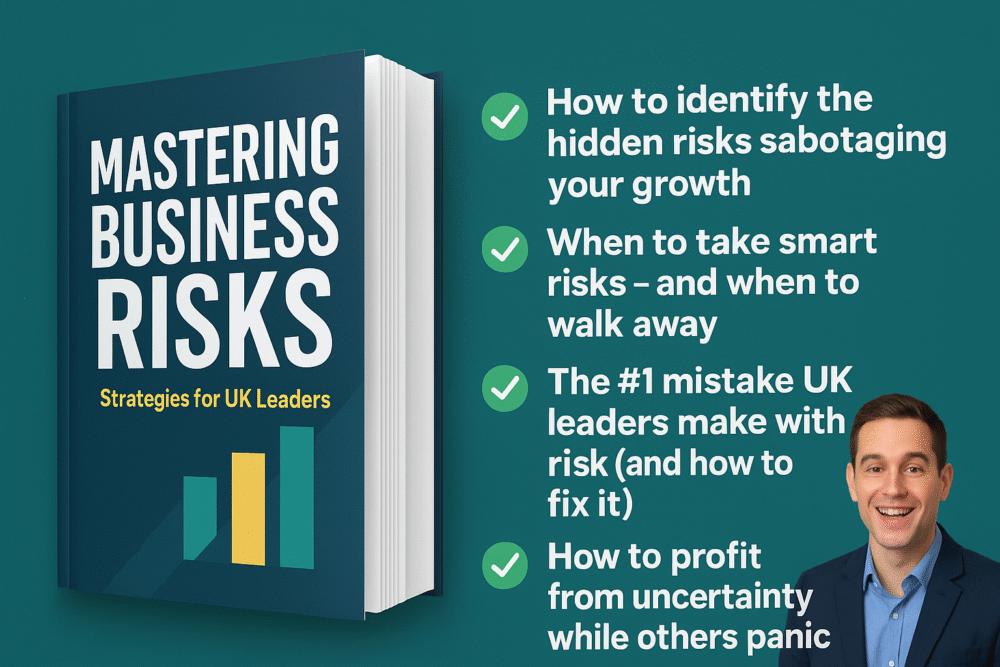
Mastering Business Risks

Best ways to grow a business faster with less risk UK

Mastering Business Risks: A Comprehensive Guide to Dominating Your Marketplace

By Keith Lewis

Published by BusinessRiskTV.com


Enterprise Risk Management Magazine articles on business growth and business protection
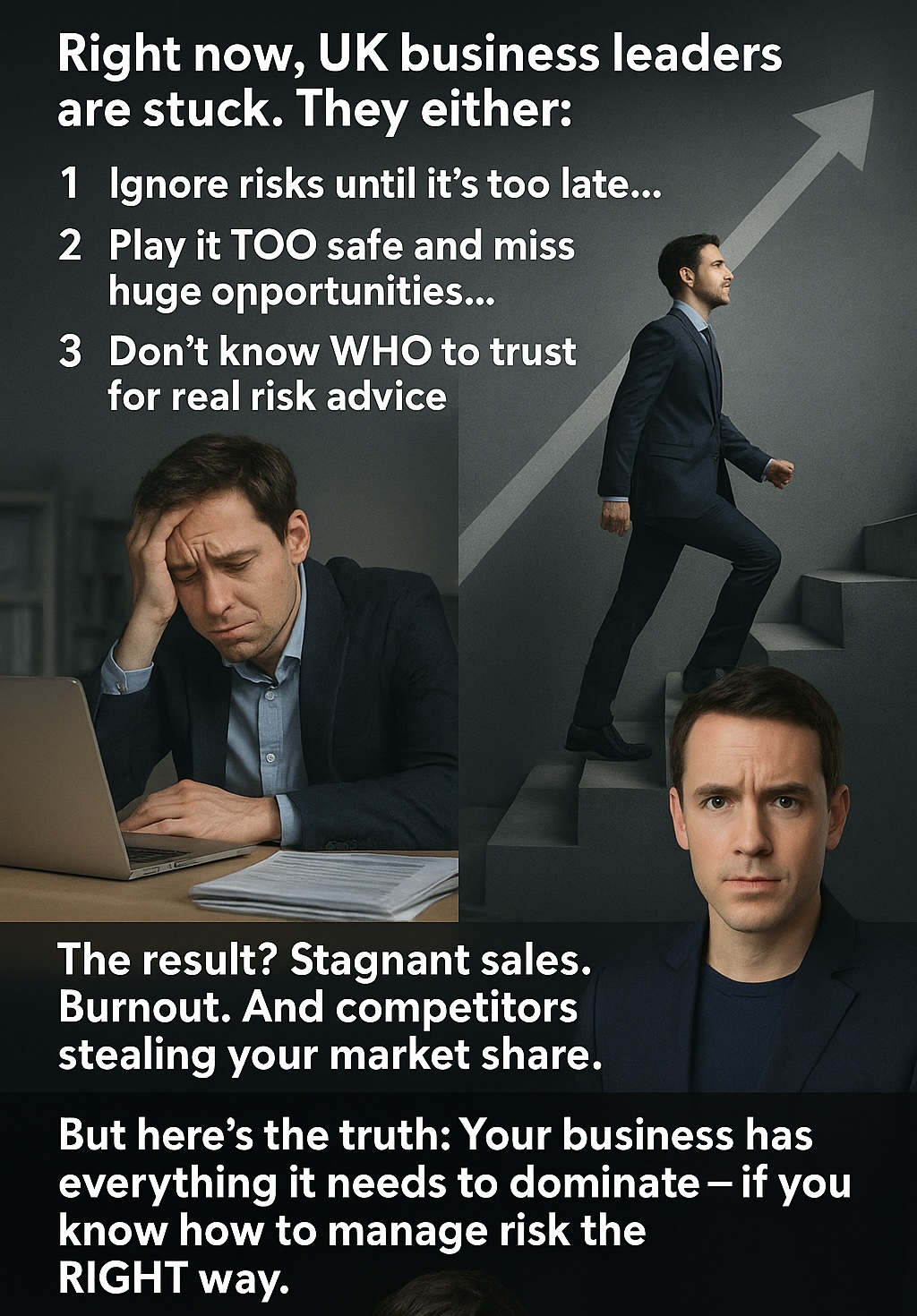
Right Now UK Business Leaders Are Stuck!

Table of Contents

  1. Introduction: Why Understanding Real Risks is the Key to Business Success
  2. The Problem: Why UK Business Leaders Struggle with Risk Management
  3. The Consequences of Ignoring Real Business Risks
  4. Internal vs. External Risks: What’s Really Threatening Your Business?
  5. Overcoming Fear of Failure — and Success
  6. Why Settling for the Status Quo is the Biggest Risk of All
  7. How to Identify the Real Risks to Your Business Survival and Growth
  8. Assessing Risks: Tools and Strategies for Better Decision-Making
  9. Controlling Risks: Turning Threats into Opportunities
  10. The Role of Innovation in Reducing Risk and Accelerating Growth
  11. Expanding Sales More Profitably in the UK Market
  12. The Power of Networking: Leveraging BusinessRiskTV.com’s Business Experts Hub
  13. Connecting Buyers and Sellers More Effectively Online
  14. Case Studies: Businesses That Mastered Risk and Dominated Their Markets
  15. Action Plan: Stop Waiting, Start Executing
  16. Conclusion: Elevate Your Business Above Uncertainty

Introduction: Why Understanding Real Risks is the Key to Business Success

In today’s volatile business environment, only those who truly understand the real risks will manage them better. Many business leaders in the UK are operating with blind spots—unaware of the threats that could derail their growth or the opportunities they’re missing.

This book is not just about risk avoidance; it’s about risk mastery. It’s about preparing for the most valuable opportunities and dominating your marketplace. You already have what it takes to be greater than you’ve been so far — but you must overcome fear, stop waiting, and act now.

Whether you’re afraid of failure — or even success — this guide will help you break through barriers, identify the real risks, and turn them into advantages.

The Problem: Why UK Business Leaders Struggle with Risk Management

Many UK business leaders:

  • Lack deep knowledge of the risks affecting their industry.
  • Don’t know which risks to take to grow faster.
  • Don’t have the right experts to help them assess and control risks.
  • Underestimate internal risks (like leadership gaps or cash flow issues).
  • Overestimate external risks (like economic downturns or competition).

This knowledge gap leads to missed opportunities, slower growth, and unnecessary vulnerabilities.

Expanding the Problem: The Need for Innovation and Profitable Growth

Why should UK business leaders innovate? Because standing still is riskier than evolving. Companies that fail to adapt:

  • Lose market share to competitors.
  • Become irrelevant in changing industries.
  • Miss profitable expansion opportunities.

The solution? Strategic risk-taking. This book will show you how to expand sales more profitably by focusing on high-reward, low-risk strategies.

The Risk Management Solutions with BusinessRiskTV.com

You don’t have to navigate risks alone. BusinessRiskTV.com offers:
Business Experts Hub – Network with risk management professionals.
Risk Assessment Tools – Make smarter decisions.
Online Marketplace – Connect buyers and sellers more cost-effectively.

By leveraging these resources, you can gain clarity, reduce uncertainty, and seize opportunities faster.

Stop Waiting—Act Now!

Enterprise Risk Management Magazine articles on business growth and business protection
Mastering Business Risks : Strategies for UK Leaders

This ebook provides a step-by-step roadmap to:

✔ Identify and assess your biggest risks.
✔ Innovate with confidence.
✔ Grow sales profitably.
✔ Dominate your market.

The time for hesitation is over. Master your risks, elevate your business, and leave competitors behind.

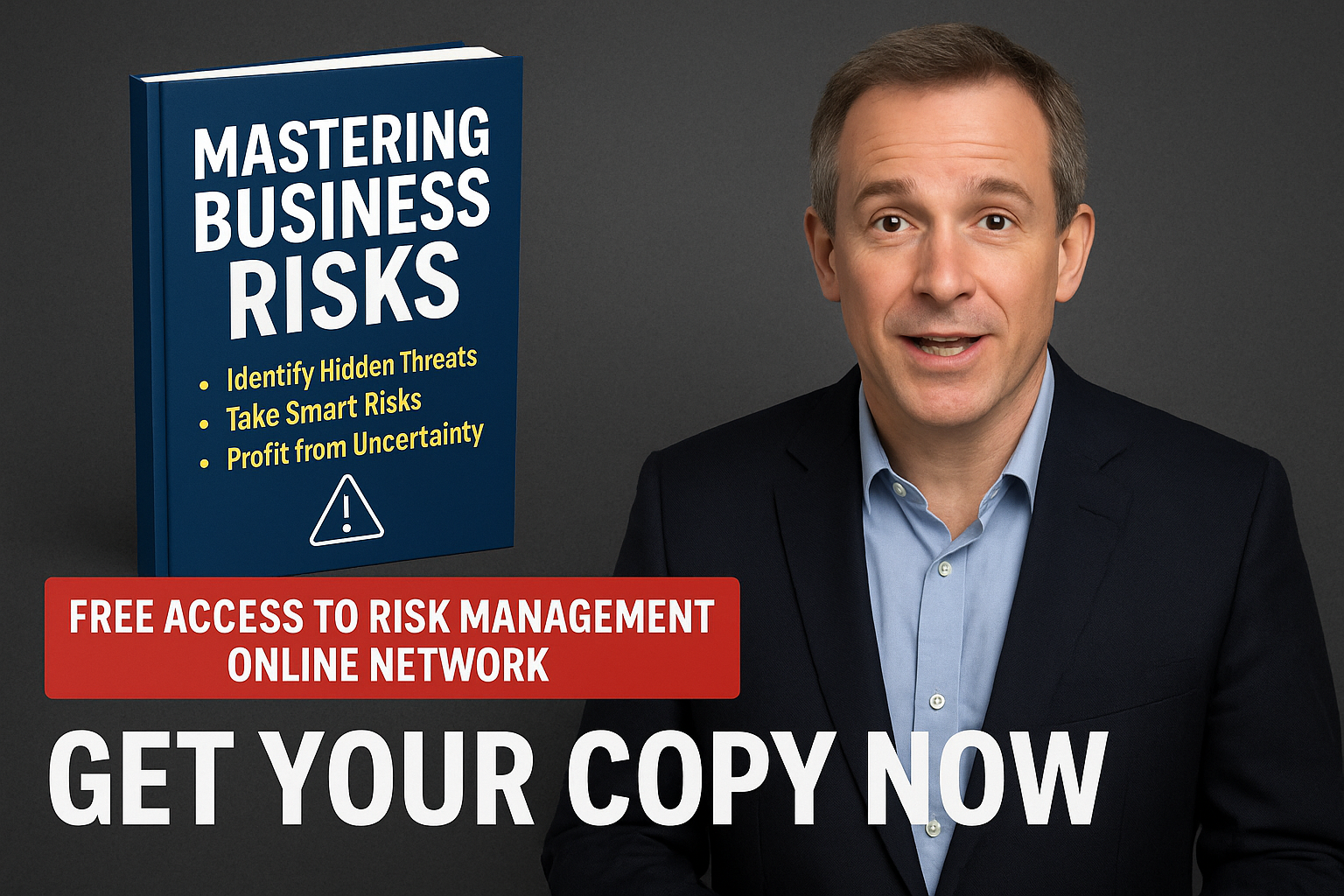
Get Your Copy Today and Start Dominating Your Marketplace!
Available now on BusinessRiskTV.com

Enterprise Risk Management Magazine articles on business growth and business protection
Buy Mastering Business Risks eBook

Get help to protect and grow your business faster with BusinessRiskTV

Find out more about Business Risks Management Club Membership 

Subscribe for free Business risk management tips risk reviews and cost cutting ideas

Connect with us for free business risk management tips

Read more business risk management articles and view videos for free

Connect with us for free business risk management articles and videos 

Read and view more:

  1. “How to identify and control business risks in the UK”
  2. “Best ways to grow a business faster with less risk UK”
  3. “Business risk management experts UK advice”
  4. “How to increase sales profitably in the UK market”
  5. “Overcoming fear of business failure and success UK”
  6. “Where to find business risk management help in the UK”

#UKBusinessGrowth #RiskManagementUK #BusinessSuccessUK #EntrepreneurMindsetUK #ProfitWithLessRisk #DominateYourMarket

Mastering Business Risks

12 strategies to improve business intelligence through risk management

Build a risk-aware culture for business success with BusinessRiskTV

12 Ways to Conquer Risk and Drive Success

“The only constant in business is change.” This isn’t just a cliché; it’s the undeniable truth. The business landscape is a dynamic and unpredictable terrain, riddled with hidden pitfalls and brimming with unexpected opportunities. Navigating this complex environment requires a sharp, proactive approach to risk management.

But here’s the thing: risk management shouldn’t be a burden, a box to tick. It should be the very foundation of your business intelligence (BI), driving informed decision-making and propelling you towards your most ambitious goals.

The key to unlocking this transformative power lies in the quality of your business risk information. Where are you sourcing this critical data? Are you truly harnessing its full potential?

This article will delve into 12 actionable strategies to enhance your BI, strengthen your risk management practices, and ultimately, achieve unprecedented business success. We’ll explore innovative ways to gather robust risk information, transform it into actionable insights, and leverage these insights to outmaneuver challenges and seize every opportunity that comes your way.

1. Go Beyond Gut Feelings: Embrace Data-Driven Decisions

Let’s be honest, relying solely on gut instincts in today’s data-rich world is like navigating a dense fog without a compass. While experience is invaluable, it’s not enough. You need concrete data to support your decisions.

Harness the Power of Internal Data:

  • Financial records: Analyse sales trends, profit margins, and cash flow to identify potential financial risks.
  • Operational data: Track production metrics, customer feedback, and employee performance to pinpoint operational bottlenecks and areas for improvement.
  • Customer data: Analyse customer demographics, purchase history, and preferences to understand market trends and anticipate customer needs.

Tap into External Data Sources:

  • Industry reports: Stay abreast of market trends, competitive landscapes, and emerging technologies.
  • Economic indicators: Monitor economic data, such as GDP growth, inflation rates, and interest rates, to assess the potential impact on your business.
  • Regulatory updates: Keep tabs on relevant regulations and compliance requirements to ensure your business remains compliant and avoids costly penalties.

2. Cultivate a Culture of Risk Awareness

Risk management isn’t just the responsibility of a specific department; it’s a collective endeavour. Foster a culture where every employee feels empowered to identify and report potential risks.

  • Encourage open communication: Create channels for employees to share their concerns and observations freely, without fear of reprisal.
  • Implement a formal risk reporting system: Provide employees with a clear and accessible process for reporting potential risks.
  • Recognise and reward risk awareness: Acknowledge and reward employees who actively identify and mitigate risks.

3. Leverage Technology to Enhance Your Risk Management Capabilities

In today’s digital age, technology can significantly enhance your risk management capabilities.

  • Invest in risk management software: Utilise software solutions to automate risk assessments, track key risk indicators (KRIs), and generate reports.
  • Embrace data analytics and visualisation tools: Leverage these tools to analyse large volumes of data, identify patterns and trends, and visualise risk information in a clear and concise manner.
  • Implement cybersecurity measures: Protect your sensitive data from cyber threats through robust cybersecurity measures, such as firewalls, intrusion detection systems, and employee training.

4. Conduct Regular Risk Assessments
Regular risk assessments are crucial for identifying and prioritising potential threats.

  • Perform thorough and comprehensive risk assessments: Conduct regular risk assessments across all areas of your business, including financial, operational, strategic, and reputational risks.
  • Prioritise risks effectively: Focus your attention on the most critical risks based on their likelihood and potential impact.
  • Develop and implement risk mitigation strategies: Develop and implement effective risk mitigation strategies to address identified risks.

5. Monitor and Track Key Risk Indicators (KRIs)

Continuously monitor and track key risk indicators (KRIs) to gain real-time insights into your risk exposure.

  • Identify and define relevant KRIs: Determine the key metrics that provide early warning signs of potential problems.
  • Establish clear thresholds and alerts: Set clear thresholds for each KRI and establish alert mechanisms to notify you of any deviations from acceptable levels.
  • Regularly review and update your KRI monitoring system: Regularly review and update your KRI monitoring system to ensure it remains relevant and effective.

6. Build Strong Relationships with Stakeholders

Effective risk management requires collaboration and communication with key stakeholders.

  • Engage with your board of directors: Regularly inform your board of directors about significant risks and the company’s risk management strategy.
  • Communicate effectively with customers and suppliers: Maintain open and transparent communication with customers and suppliers regarding potential risks and their impact.
  • Collaborate with regulators and other external parties: Work closely with regulators and other external parties to ensure compliance and address emerging risks.

7. Continuously Improve Your Risk Management Framework

Your risk management framework should be a living document that evolves alongside your business.

  • Regularly review and update your risk management policies and procedures: Ensure your risk management framework remains aligned with your business objectives and reflects the latest industry best practices.
  • Conduct regular internal audits: Conduct regular internal audits to assess the effectiveness of your risk management controls.
  • Learn from your mistakes: Analyse past incidents and learn from your mistakes to improve your risk management capabilities.

8. Embrace a Proactive Approach to Risk Management

Don’t wait for crises to happen; take a proactive approach to risk management.

  • Identify and address emerging risks: Stay ahead of the curve by identifying and addressing emerging risks, such as technological disruptions, climate change, and geopolitical uncertainty.
  • Develop contingency plans: Develop and test contingency plans for a range of potential scenarios, such as natural disasters, cyberattacks, and supply chain disruptions.
  • Invest in innovation and resilience: Invest in innovative solutions and build resilience into your business operations to better withstand shocks and capitalise on new opportunities.

9. Leverage the Power of Business Intelligence (BI)

Transform raw risk data into actionable insights by leveraging the power of business intelligence (BI).

  • Utilise BI tools to analyse risk data: Utilise BI tools to analyse large volumes of risk data, identify patterns and trends, and generate insightful reports.
  • Develop dashboards and scorecards: Develop dashboards and scorecards to visualise key risk indicators and monitor risk performance in real-time.
  • Integrate risk data with other business data: Integrate risk data with other business data, such as financial, operational, and customer data, to gain a holistic view of your business performance.

10. Foster a Culture of Continuous Learning

Continuously enhance your risk management knowledge and skills through ongoing learning and development.

  • Provide training and development opportunities for your employees: Provide training and development opportunities for your employees on risk management best practices.
  • Stay abreast of the latest industry trends and best practices: Stay abreast of the latest industry trends and best practices in risk management through industry publications, conferences, and professional development courses.
  • Seek expert advice when needed: Seek expert advice from risk management consultants and other professionals when needed.

11. Communicate Your Risk Management Approach to Stakeholders

Clearly communicate your risk management approach to all stakeholders, both internal and external.

  • Develop a clear and concise risk management communication strategy: Develop a clear and concise communication strategy to effectively convey your risk management approach to stakeholders.
  • Publish an annual risk management report: Publish an annual risk management report to provide stakeholders with transparency and assurance regarding your risk management practices.
  • Engage in proactive stakeholder engagement: Engage in proactive stakeholder engagement to address their concerns and build trust.

12. Celebrate Successes and Continuously Improve

Recognise and celebrate your risk management successes to motivate and inspire your team.

  • Acknowledge and reward employees who contribute to effective risk management: Acknowledge and reward employees who contribute to effective risk management.
  • Conduct regular reviews of your risk management performance: Conduct regular reviews of your risk management performance to identify areas for improvement.
  • Continuously strive for excellence in risk management: Continuously strive for excellence in risk management to gain a competitive advantage and achieve sustainable success.By implementing these 12 strategies, you can transform your approach to risk management, unlock the full potential of your business intelligence, and drive sustainable success in an ever-changing world.

In today’s dynamic and unpredictable business environment, effective risk management is no longer an option; it’s a necessity. By embracing a data-driven approach, cultivating a culture of risk awareness, and leveraging the power of technology and human intelligence, you can navigate challenges, seize opportunities, and achieve your most ambitious goals.

Disclaimer: This article is for informational purposes only and does not constitute financial, legal, or professional advice.

Join the Business Risk Management Club Today!

Ready to take your business risk management to the next level? Join the Business Risk Management Club today and gain access to exclusive resources, expert insights, and a community of like-minded professionals.

Visit BusinessRiskTV and discover how to:

  • Enhance your risk management capabilities
  • Improve your decision-making
  • Drive sustainable business success

Sign up today and experience the difference!

Get help to protect and grow your business faster

Find out more about Business Risk Management Club Corporate Membership 

Subscribe for free business risk management tips reviews and money saving ideas

Connect with us for free

Read more business risk management articles and watch videos

Connect with us for free

x