

Do you want Brazil expert business and economy news, risk analysis, risk insight, risk management advice and tips on the biggest risks on the horizon or affecting your business right now.
To keep up to speed with all the latest news reviews opinions money saving tips and comment, sign up to our free risk alerts, newsletters and risk reports by clicking here or follow us via your favourite social media app or subscribe to our webcast or podcast.
Do you have a story you’d like to share or have something to say? We want to hear all about it. Get in touch.
Want all the latest Brazil business risk management news and Brazil enterprise risk analysis? Sign up to our BusinessRiskTV Brazil newsletter, Brazil Business Risk Alerts and Brazil Business and Economic Risk Reports email editor@businessrisktv.com or follow us on your favourite social media account.
What are the biggest threats to businesses and the economy of Brazil? What are the opportunities for economic growth in Brazil? Network with top thought leaders in Brazil and around the world who want to work with Brazil.
Subscribe to BusinessRiskTV for free online Brazil marketplace magazine alerts bulletins and reviews to your inbox
Enter code #BrazilBusinessMagazine
Top 20 Things To Do In Brazil
20 things to do and see in Brazil
Brazil is a vast and diverse country that offers a multitude of experiences for visitors. From its vibrant cities to its beautiful beaches and natural wonders, there is no shortage of things to do and see in Brazil. Whether you are interested in culture, history, or outdoor adventure, here are the top 30 things to do and see in Brazil.
- Visit Rio de Janeiro: Rio de Janeiro is one of the most iconic cities in Brazil, known for its vibrant culture, beautiful beaches, and lively nightlife.
- Explore the Amazon Rainforest: The Amazon Rainforest is one of the world’s most biodiverse regions and home to an incredible array of wildlife and plant species.
- Enjoy the beaches of Florianopolis: Florianopolis is an island off the coast of Brazil known for its stunning beaches and relaxed vibe.
- Experience the Carnival of Brazil: Brazil’s Carnival is a celebration of music, dance, and culture that takes place in cities across the country, including Rio de Janeiro and Salvador.
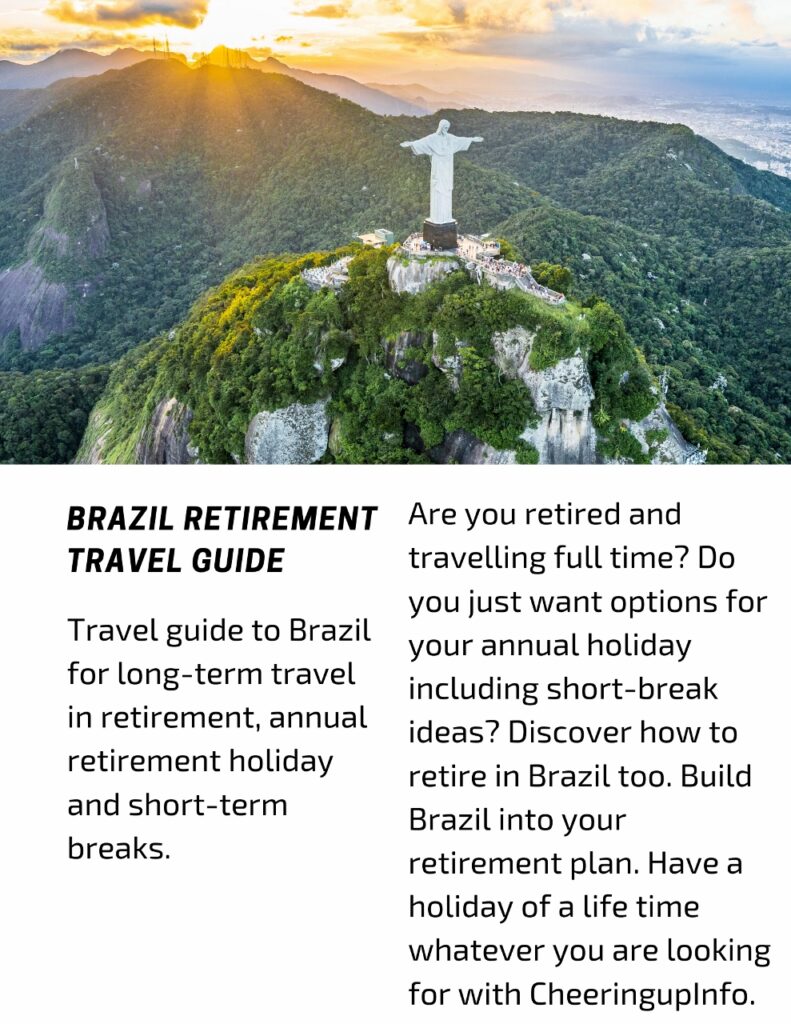
- Visit the Christ the Redeemer Statue: The iconic Christ the Redeemer statue in Rio de Janeiro is one of the most recognizable landmarks in Brazil.
- Take a tour of the historic city of Salvador: Salvador is a city known for its rich history and vibrant Afro-Brazilian culture.
- Visit the Iguazu Falls: The Iguazu Falls are a natural wonder that straddles the border between Brazil and Argentina.
- Go surfing in Ubatuba: Ubatuba is a coastal town known for its world-class surf breaks and beautiful beaches.
- Explore the colonial town of Paraty: Paraty is a charming colonial town on the coast of Brazil known for its historic architecture and beautiful beaches.
- Visit the Fernando de Noronha archipelago: The Fernando de Noronha archipelago is a group of islands off the coast of Brazil known for their stunning beaches and crystal-clear waters.
- Take a helicopter tour of Rio de Janeiro: A helicopter tour of Rio de Janeiro offers a unique perspective on the city’s famous landmarks, including Sugarloaf Mountain and Copacabana Beach.
- Visit the historic town of Ouro Preto: Ouro Preto is a colonial town in the state of Minas Gerais known for its beautiful baroque architecture and rich history.
- Go hiking in Chapada Diamantina National Park: Chapada Diamantina National Park is a stunning wilderness area in Bahia known for its waterfalls, caves, and hiking trails.
- Visit the historic city of Olinda: Olinda is a colonial town in the state of Pernambuco known for its vibrant cultural scene and colorful colonial architecture.
- Take a boat tour of the Pantanal: The Pantanal is a vast wetland region in Brazil known for its incredible wildlife, including jaguars, caimans, and anacondas.
- Explore the Chapada dos Veadeiros National Park: The Chapada dos Veadeiros National Park is a wilderness area in Goias known for its stunning waterfalls, rock formations, and hiking trails.
- Visit the São Paulo Museum of Art: The São Paulo Museum of Art is one of the most important art museums in Latin America and features an impressive collection of modern and contemporary art.
- Go on a safari in the Cerrado: The Cerrado is a vast savannah region in Brazil that is home to an incredible array of wildlife, including giant anteaters, maned wolves, and armadillos.
- Take a tour of the Pelourinho district in Salvador: The Pelourinho district is the historic heart of Salvador and is known for its vibrant cultural scene, colonial architecture, and lively nightlife.
- Visit the Rio Carnival Museum
Do you need a visa to get into Brazil if UK citizen?
No, British passport holders do not need a visa to enter Brazil for visits of up to 90 days for tourism, business, transit, artistic or sport activities, with no intention of establishing residence. You will be initially stamped with a 90-day permit which can be extended to up to 90 additional days at the Brazilian Immigration office. Your passport must be valid for a minimum period of six months from the date of entry into Brazil.
However, there are a few exceptions to this rule. You will need a visa if you are:
- Planning to stay in Brazil for more than 90 days.
- Working in Brazil.
- Studying in Brazil.
- Married to a Brazilian citizen.
- A descendant of a Brazilian citizen.
If you are unsure whether you need a visa, you should contact the Brazilian Embassy or Consulate in the UK.
Here are some other things to keep in mind when traveling to Brazil:
- You will need to have proof of yellow fever vaccination if you are arriving from a country with yellow fever transmission.
- You may need to pay a visa application fee.
- You may need to provide a letter of invitation from a resident of Brazil.
- You may need to provide a return ticket to your home country.
It is always a good idea to check with the Brazilian Embassy or Consulate in the UK for the latest visa requirements before you travel.
Best places to visit in Brazil
Brazil is a vast and diverse country, with something to offer everyone. From the world-famous Iguazu Falls to the bustling metropolis of São Paulo, there is no shortage of amazing places to visit in Brazil. Here are a few of the best:
- Iguazu Falls (Brazil Side): The Iguazu Falls are one of the most impressive waterfalls in the world. They are located on the border between Brazil and Argentina, and they are made up of over 275 individual waterfalls. The best way to see the falls is to take a boat trip or hike along the trails.
- Rio de Janeiro: Rio de Janeiro is a city of contrasts, with stunning beaches, lush rainforests, and iconic landmarks like Christ the Redeemer and Sugarloaf Mountain. It is also home to the world-famous Carnival, which is a must-experience for any visitor to Brazil.
- São Paulo: São Paulo is the largest city in Brazil and the financial capital of the country. It is a vibrant and cosmopolitan city with a diverse population. There are many things to see and do in São Paulo, from visiting the art museums and historical landmarks to exploring the bustling markets and food stalls.
- Copacabana and Ipanema Beaches: Copacabana and Ipanema are two of the most famous beaches in the world. They are located in Rio de Janeiro and are known for their white sand, clear waters, and lively atmosphere. They are also popular spots for surfing and sunbathing.
- Maranhão: Maranhão is a state located in the northeast of Brazil. It is known for its beautiful beaches, lush rainforests, and unique culture. The state is also home to the Lençóis Maranhenses National Park, which is a UNESCO World Heritage Site.
- Curitiba: Curitiba is the capital of the state of Paraná. It is known for its modern architecture, parks, and green spaces. The city is also home to a number of cultural attractions, such as the Oscar Niemeyer Museum and the Botanical Garden.
- Itacaré: Itacaré is a small town located in the state of Bahia. It is known for its beautiful beaches, laid-back atmosphere, and surfing. Itacaré is also a popular destination for yoga and wellness retreats.
- Jericoacoara: Jericoacoara is a small village located in the state of Ceará. It is known for its stunning beaches, white sand dunes, and relaxed atmosphere. Jericoacoara is a popular destination for kitesurfing and windsurfing.
These are just a few of the many amazing places to visit in Brazil. With its diverse landscapes, rich culture, and friendly people, Brazil is a country that is sure to amaze and surprise you.
Here are some additional tips for planning your trip to Brazil:
- The best time to visit Brazil is during the dry season, which runs from April to October.
- The official language of Brazil is Portuguese. However, English is widely spoken in tourist areas.
- Tipping is not expected in Brazil, but it is appreciated.
- Be sure to bargain when shopping at markets.
- Be aware of the risks of petty theft, especially in crowded places.
- Drink bottled water to avoid getting sick.
Best ways to travel around Brazil
There are many ways to travel around Brazil, depending on your budget and preferences. Here are some of the best options:
- Plane: This is the fastest and most convenient way to travel between major cities. However, it can be expensive.
- Bus: This is a more affordable option than flying. There are a variety of bus companies that offer regular services between cities. The journey times can vary depending on the distance and the type of bus.
- Train: There is a limited train network in Brazil, but it is a scenic way to travel and can be a cheaper option than flying.
- Shared taxis: These are a popular way to travel between towns and villages. They are relatively inexpensive and can be a good way to meet other travellers.
- Motorbike: This is a good option for those who want to explore the country at their own pace. However, it is important to be aware of the risks of driving in Brazil, as the roads can be dangerous.
- Hitchhiking: Hitchhiking is not a very common way to travel in Brazil, but it is possible. However, it is important to be aware of the risks of hitchhiking, as it can be dangerous.
The best way to travel around Brazil will depend on your individual needs and preferences. If you are on a tight budget, then shared taxis or buses are a good option. If you want to see the country at your own pace, then a motorbike or hitchhiking are good choices. And if you are short on time, then flying is the best option.
No matter which way you choose to travel, be sure to book your tickets in advance, especially if you are travelling during peak season.
Here are some additional tips for travelling around Brazil:
- Be sure to have a valid passport and visa.
- Get a travel insurance that covers medical expenses and lost luggage.
- Learn some basic Portuguese phrases.
- Be aware of the risks of petty theft, especially in crowded places.
- Tipping is not expected in Brazil, but it is appreciated.
Best places for backpackers to stay in Brazil
Here are some of the best places for backpackers to stay in Brazil:
- Rio de Janeiro: There are many hostels in Rio de Janeiro, but some of the best-rated ones are located in the Copacabana and Ipanema neighborhoods. These hostels are close to the beach and have a lively atmosphere.
- Salvador: Salvador is a popular destination for backpackers, and there are many hostels to choose from. The city is known for its vibrant culture and delicious food.
- Jericoacoara: Jericoacoara is a small village located in the northeast of Brazil. It is a popular destination for backpackers who are looking for a relaxed beach vacation.
- Fortaleza: Fortaleza is the capital of the state of Ceará and is a popular destination for backpackers. The city has a beautiful beach and a vibrant nightlife scene.
- Florianópolis: Florianópolis is an island located in the south of Brazil. It is a popular destination for backpackers who are looking for a beach vacation with a European flair.
When choosing a hostel in Brazil, it is important to consider your budget, your travel style, and your interests. If you are on a tight budget, there are many affordable hostels to choose from. If you are looking for a social hostel, there are many hostels that offer common areas and activities. And if you are looking for a hostel that is located in a specific area, such as the city centre or the beach, there are many hostels to choose from.
Here are some additional tips for choosing a hostel in Brazil:
- Read reviews online before you book.
- Ask other travelers for recommendations.
- Book your hostel in advance, especially if you are traveling during peak season.
- Be sure to bring your own towel and toiletries.
- Be respectful of other guests and the hostel staff.
Promote and market your business on BusinessRiskTV Brazil Online for 12 months

Put your products and services in front of new people already interested in your type of business offering before your competitors do.
Linking into your existing online sales process direct from BusinessRiskTV or use our eCommerce solutions to increase your sales cash flow and profit.
Increase the sources of your revenue streams more sustainably. Grow your business in Brazil faster with BusinessRiskTV.
Are you a business owner or manager in Brazil?
Do you want to sell more in Brazil? Want to export more from Brazil?
Showcase your business interests in Brazil. Promote your business products and services in Brazil. Export more to Brazil from UK. Trade more with the UK if your business is based in Brazil. Access the latest news views and business reviews for Brazil.
- Want to list your business in our online Brazil business directory?
- Are you running deals discounts or special offers in Brazil online you want more people to know about?
- Could you write an advertorial to advertise your business in Brazil and inform our readers?
Increase the demand for your products and services in Brazil. Get help to grow into Brazil from UK. Get ready to sell more in Brazil with help and advice from the Brazil business experts. Reach Brazil business customers and consumers here.
Find out whats good and bad about doing business in Brazil. Subscribe to Brazil Business Exhibitions

Brazil Exhibitions Conferences Expos Trade Fairs Online VTFs
Exporting from UK to Brazil. How to import to UK from Brazil. Trading abroad can support your new business development plans and increase your profitability. Seek our Brazil business development guidance on how to start selling more from the UK to Brazil. Get help to start selling to Brazilian businesses and consumers.
Access a range of export services support and Brazil exporting advice by getting in touch with Brazil business experts via BusinessRiskTV. Clinch Brazil export opportunities from UK. Find and apply for Brazil opportunities from Brazilian businesses and consumers looking for products or services like yours.
Brazil Business Risk Consulting
BusinessRiskTV Brazil Business Partners risk advisory practice provides guidance in such areas as governance risk and compliance GRC to help manage enterprise risks in rapidly changing risk environment.
Access Brazil business intelligence and enterprise risk management to develop risk knowledge to make more informed risk-based business decisions with help of our Brazil risk consulting services. Receive key information risks which businesses trading in Brazil may face. Tap into a Brazil business guide to help you avoid common mistakes.
Build your business resiliency and sustainability. Manage emerging risks better. Find out more about risk and insurance solutions for doing more business in Brazil.
Are you considering doing more business in Brazil? Find useful and up-to-date information about Brazil with our risk guide online events and workshops.
Both private and public sector executives can access services to increase their understanding of GRC. Find a business management consultant available through BusinessRiskTV. We can provide your business with top experts in a multitude of industries and countries.
Entrepreneurs understand the business threats but also see the opportunities
Brazil offers so much to its people and businesses.
Overseas businesses also have threats and opportunities of doing more business in Brazil.
- Access business intelligence and develop your risk knowledge.
- Sell more profitably in Brazil.
- Collaborate with like-minded business leaders.
Tap risk expert knowledge to inform your business decision making for more trading opportunities into and from Brazil.
The UK has much to offer Brazil. Buying from Brazil and selling to Brazil will increasingly become an opportunity for businesses in the UK and Brazil to grow faster more profitably.
If you are a strategic business thinker in Brazil or the UK you will want to work together on BusinssRiskTV.
Brazil TV Magazine: Brazil News Opinions Reviews Live Online

Get the latest news opinions and reviews on Brazil for free.
Best of Brazil Lifestyle: How to Protect and Grow Your Business in Brazil
Brazil, a vibrant nation known for its rich culture, breathtaking landscapes, and thriving economy, offers a unique lifestyle that captivates both locals and visitors alike. From the bustling streets of Rio de Janeiro to the lush Amazon rainforest, Brazil boasts a diverse and dynamic environment that attracts entrepreneurs looking to establish or expand their businesses. In this article, we will explore the best of Brazil’s lifestyle while delving into essential strategies to protect and grow your business in this promising market.
Section 1: Embracing Brazil’s Lifestyle
- The Allure of Brazil: An Overview of the Country’s Lifestyle
- The Best of Brazil: Cultural Heritage, Festivals, and Cuisine
- Exploring Brazil’s Breathtaking Natural Wonders
- Urban Life in Brazil: A Melting Pot of Opportunities
Section 2: Understanding the Brazilian Business Landscape
- Brazil’s Thriving Economy: Opportunities and Challenges
- Legal and Regulatory Environment: Navigating Business Compliance
- Key Industry Sectors in Brazil: Identifying Growth Potential
- The Importance of Understanding Local Consumer Behaviour
Section 3: Protecting Your Business in Brazil
- Risk Management in Brazil: Identifying and Mitigating Business Risks
- Legal Protection: Intellectual Property Rights and Contracts
- Establishing a Robust Financial Strategy: Currency Fluctuations and Taxation
- Building Strong Relationships: The Role of Networking and Partnerships
Section 4: Strategies for Business Growth in Brazil
- Market Entry and Expansion: Choosing the Right Approach
- Market Research and Analysis: Understanding Customer Needs
- Marketing and Branding: Connecting with the Brazilian Audience
- Innovation and Adaptability: Staying Competitive in a Dynamic Market
Section 5: Success Stories and Case Studies
- Notable Success Stories: Businesses Thriving in Brazil
- Lessons Learned: Challenges and Triumphs of Entrepreneurs in Brazil
- Tips from Industry Experts: Insights for Business Growth in Brazil
Brazil offers a Best of Lifestyle experience with its diverse culture, breathtaking landscapes, and promising business opportunities. However, entering and succeeding in the Brazilian market requires a strategic approach and careful consideration of the unique challenges it presents. By understanding and embracing Brazil’s lifestyle, and implementing effective strategies to protect and grow your business, you can unlock the vast potential of this captivating nation and achieve remarkable success in this dynamic market.
Want to have your say on Brazil lifestyle or business?

Become one of our Brazil Citizen Journalists. Reach more people with your views on life and business in Brazil with BusinessRiskTV.
BusinessRiskTV Brazil Business Exhibitions Conferences Expos Trade Fairs Magazine
Subscribe free to BusinessRiskTV Brazil Exhibitions: BusinessRiskTV and its business partners will contact you about Brazil business news opinions and risk analysis.
Unveiling the Enchantment of Brazil: Foz do Iguaçu to Rio de Janeiro (14 Days)
Embark on an extended exploration of Brazil’s captivating beauty with this 14-day itinerary. We’ll delve into the awe-inspiring Iguazu Falls, soak up the sun on iconic beaches, and discover the vibrant culture of Rio de Janeiro.
Days 1-3: Foz do Iguaçu – Witnessing the Falls’ Majesty
- Arrive in Foz do Iguaçu, the gateway to the magnificent Iguazu Falls. Settle into your hotel and acclimatise to the vibrant city.
- Dedicate two full days to experiencing the power and beauty of the falls from both the Brazilian and Argentinean sides.
- Explore the walkways and viewpoints on the Brazilian side, offering panoramic vistas.
- Opt for a thrilling boat ride beneath the falls for an unforgettable perspective (optional).
- Cross the border to Argentina and embark on trails leading to the heart of the falls, including the iconic Devil’s Throat.
Day 4: Foz do Iguaçu to Iguaçu National Park – Unveiling the Rainforest
- Delve deeper into the wonders of Iguaçu National Park with a guided hike through the lush rainforest.
- Discover hidden waterfalls, observe diverse plant and animal life, and immerse yourself in the vibrant ecosystem.
- In the afternoon, return to Foz do Iguaçu and enjoy some free time to explore the city at your own pace.
Day 5: Foz do Iguaçu to Bonito – A Crystal Clear Escape
- Take a morning flight to Bonito, a paradise known for its crystal-clear rivers, caves, and waterfalls.
- Check into your pousada (charming guesthouse) and spend the afternoon relaxing by the pool or exploring the town.
Days 6-7: Bonito – Unveiling Hidden Gems
- Dedicate two full days to exploring the wonders of Bonito. Options include:
- Snorkelling or diving in the crystal-clear Rio da Prata, teeming with colourful fish.
- Spelunking through the Gruta Azul, a magnificent cave adorned with stalactites and stalagmites.
- Kayaking or stand-up paddleboarding on the Rio da Prata, surrounded by lush vegetation.
- Visiting the Buraco das Araras, a sinkhole with a breathtaking waterfall cascading into a turquoise lagoon.
Day 8: Bonito to Pantanal – A Wildlife Encounter
- Fly from Bonito to the gateway town of the Pantanal wetlands, a haven for diverse wildlife.
- Check into your eco-lodge and embark on an afternoon boat safari, spotting birds like caimans, capybaras, and colorful birds.
Days 9-10: Pantanal – Unveiling the Wildlife Paradise
- Immerse yourself in the magic of the Pantanal with early morning and afternoon wildlife viewing expeditions.
- Traverse the waterways by boat, explore hidden lagoons on foot, and encounter a variety of animals in their natural habitat, including jaguars, monkeys, and anacondas (with a safe distance, of course!).
- In the evenings, relax at your eco-lodge, listening to the symphony of nocturnal creatures and enjoying the star-studded sky.
Day 11: Pantanal to Rio de Janeiro – Beachbound Bliss
- Take a morning flight from the Pantanal to Rio de Janeiro, the “Cidade Maravilhosa” (Marvelous City).
- Upon arrival, check into your hotel in either Copacabana, Ipanema, or Leblon, iconic beach neighborhoods.
- Spend the rest of the day soaking up the sun on the world-famous beaches, or take a refreshing dip in the turquoise waters.
Days 12-13: Unveiling Rio’s Treasures
- Dedicate two full days to exploring the vibrant tapestry of Rio de Janeiro. Some highlights include:
- Ascending Corcovado Mountain by train and marvelling at the awe-inspiring Christ the Redeemer statue.
- Taking a cable car ride to the top of Sugarloaf Mountain for breathtaking panoramic views of the city and its surroundings.
- Visiting the iconic Selarón Steps, a vibrant stairway masterpiece, and exploring the lively bars and restaurants in Lapa.
- Taking a charming tram ride through the bohemian neighbourhood of Santa Teresa, known for its colourful houses, art galleries, and trendy cafes.
- Immersing yourself in the vibrant samba scene with a captivating evening show.
Day 14: Farewell Rio, and Até Logo (See You Soon) Brazil!
- Depending on your departure time, spend the morning relaxing on the beach, browsing local markets for souvenirs, or visiting a museum like the Museu de Arte Moderna (Museum of Modern Art).
- Take a taxi or rideshare to the airport and bid farewell to Rio, carrying unforgettable memories of the captivating landscapes, vibrant culture, and warm hospitality of Brazil.
Additional Tips:
- Consider extending your stay in Rio to further explore hidden gems or nearby beaches like Barra da Tijuca or Grumari.
- If you’re interested in history and culture, dedicate a day to exploring the historic center with its colonial architecture and museums.
- For adrenaline junkies, there are options for paragliding over Copacabana beach, hang gliding, or exploring the Tijuca Forest on a Jeep tour.
Final Notes:
This itinerary is a flexible framework, allowing you to customise it based on your interests and preferences. With its diverse offerings, Brazil has something for everyone. From the thundering Iguazu Falls to the rainforests of Bonito, the wildlife haven of the Pantanal, and the captivating energy of Rio, this 14-day adventure promises an unforgettable immersion into the heart of Brazil.
Brazil Business News Lifestyle In Brazil Travel In Retirement Tips
Brazil Business Forum

- Discover the best of Brazil; or
- Sell more by exporting more from Brazil or selling more into Brazil.
Read more business risk management articles and view videos
Risk Management Jobs Board
Eurozone Business Magazine BusinessRiskTV Eurozone Business Risks
Enterprise Risk Management Magazine BusinessRiskTV ERM Magazine
BusinessRiskTV Business Risk Management Club Membership
Business Risk Academy
Risk Management Think Tank BusinessRiskTV Risk Experts
Business Development Consulting Services Growing Business Faster
Business Risk Management Marketplace BusinessRiskTV
Get help to protect and grow your business faster with BusinessRiskTV
Find out more about business risk management club here
Subscribe for free business risk management tips risk reviews and cost cutting ideas
Connect with us for free business risk management tips
#BusinessRiskTV #Brazil #Brasil #BrazilOnline #BrazilExhibitions #BrazilMarketplace #BrazilMagazine #BrazilMarketing #BrazilDirectory #BrazilJournalist #BrazilBusiness #BrazilEconomy #BrazilNews #BrazilOpinions #BrazilReview #BrazilReports #BrazilERM #CoronavirusBrazil #Covid19Brazil #BrazilLeaders
Discover better ways to protect and grow your business with BusinessRiskTV
Business Risk Analysis: Brazil-US Trade Conflict and Political Posturing – A Brewing Storm or a Storm in a Teacup?
July 2025 Snapshot and Forecast for End of 2025 – 2026
Brazil-US Trade War 2025-2026: Unprecedented Geopolitical Risk Analysis & Global Business Impact Forecast
The global economic landscape in July 2025 is already a high-wire act, grappling with persistent inflation, uneven recovery, and geopolitical tensions. Against this backdrop, the escalating trade conflict and political posturing between Brazil and the United States, particularly the recently announced 50% US tariffs on all Brazilian imports from August 1, 2025, represent not merely a hurdle, but a potential cataclysmic miscalculation that could send shockwaves far beyond bilateral trade, challenging the very foundations of globalised supply chains and consumer confidence.
The Current Implosion (July 2025):
The Trump administration’s “Tarifaço” – as it’s been dubbed in Brazil – is not a nuanced economic policy; it’s a blunt instrument wielded with audacious political intent. While previous tariffs were often framed in terms of trade imbalances, the explicit linkage to the “unfair criminal prosecution” of former Brazilian President Jair Bolsonaro is an unprecedented and deeply destabilising move. This isn’t just about economics; it’s about weaponising trade for political leverage, setting a dangerous precedent for international relations.
For Businesses:
Immediate Supply Chain Paralysis: Companies with established US-Brazil supply chains are already in a state of crisis. The 50% tariff renders many Brazilian exports immediately uncompetitive. Industries like steel, aluminum, machinery, wood products, auto parts, and even crude oil are facing a complete re-evaluation of sourcing strategies. General Electric has already projected a $500 million cost in 2025, while orange juice importer Johanna Foods is suing, anticipating a 25% price hike. This isn’t just about profit margins; for some, it’s about sheer survival.
Forced Diversification or Collapse: Brazilian exporters, particularly those with less fungible products, face a desperate scramble to redirect trade to Asia-Pacific or European markets. While commodities like crude oil might find alternative buyers (though at potentially lower margins), specialised manufactured goods will struggle immensely. This could lead to a permanent re-drawing of trade maps, with winners and losers determined by adaptability and access to new markets.
Investment Chill: The unpredictability of this politically driven protectionism is the ultimate deterrent to foreign direct investment. Why commit capital to either country when policy shifts can wipe out profitability overnight? Companies will adopt a wait-and-see approach, stifling innovation and growth.
Legal Labyrinth: The stated political motivations behind the tariffs open a pandora’s box of legal challenges. Brazil’s immediate response invoking its “Trade Reciprocity Law” signals a tit-for-tat escalation, but also the potential for complex and protracted disputes at the WTO – an organisation already struggling for relevance in an era of unilateral trade actions.
For Consumers:
Soaring Prices: US consumers will directly bear the brunt of these tariffs. Products containing Brazilian components, from vehicles to household appliances, are poised for significant price increases. This comes at a time when inflation remains a global concern, threatening to erode purchasing power further and potentially triggering consumer backlash and demand destruction.
Reduced Choice and Quality: As Brazilian imports become prohibitive, US consumers may face reduced product variety and potentially lower quality alternatives as businesses scramble to find new suppliers.
Confidence Erosion: Beyond direct price impacts, the very visible trade dispute, especially its political undertones, can erode consumer confidence, leading to a tightening of discretionary spending.
The Forecast: End of 2025 – 2026 – A Tightrope Walk on a Razor’s Edge
The trajectory of this conflict hinges on political will, both in Washington D.C. and Brasília.
Key Scenarios and Their Controversial Implications:
“The Grand Bargain” (Low Probability, High Impact):
Scenario: Under intense pressure from domestic industries and international allies, the US administration retracts or significantly scales back the tariffs, perhaps in exchange for a symbolic concession from Brazil on the Bolsonaro legal case, or a broader “trade deal” that, in reality, is more about political optics than fair trade.
Controversy: This would expose the true nature of the tariffs as political leverage, further undermining the principles of rules-based international trade and emboldening other nations to use similar tactics. While offering a reprieve for businesses, it sets a dangerous precedent for the future of global commerce, where political whims trump economic rationale.
Business Impact: A cautious sigh of relief, but with a lingering sense of fragility. Businesses would resume some trade, but long-term investment would remain hampered by the demonstrated unpredictability of US trade policy.
Consumer Impact: Potential stabilisation or slight reduction in prices of affected goods, but consumer confidence would remain volatile, having witnessed the fragility of supply chains.
“Mutually Assured Destruction” (Medium Probability, Catastrophic Impact):
Scenario: Brazil retaliates with its own tariffs on US goods, as its government has explicitly stated it would. This leads to a full-blown trade war, with each side escalating measures. The US might even expand its protectionist policies globally (as indicated by the “broader tariffs” scheduled for August 1, 2025, on other partners), leading to a fragmented global economy.
Controversy: This scenario, while seemingly logical in a tit-for-tat exchange, would be a suicidal economic strategy for both nations and a devastating blow to the already fragile global trading system. It would exemplify the triumph of short-sighted political agendas over long-term economic prosperity. The world could witness a de-globalisation acceleration, characterised by regional trade blocs and diminished overall trade volumes.
Business Impact: Widespread business failures, significant contraction of international trade, unraveling of complex supply chains, and a profound shift towards localised production, regardless of cost efficiency. Companies reliant on global markets would face existential threats.
Consumer Impact: Rampant inflation due to reduced supply and increased production costs, scarcity of goods, and a significant decline in living standards. Consumer sentiment would plummet, potentially leading to social unrest in both countries.
“Lingering Stalemate” (High Probability, Pervasive Damage):
Scenario: The tariffs remain in place, with sporadic, low-level negotiations yielding little progress. Both countries attempt to mitigate the damage by seeking alternative trade partners, but the fundamental friction persists. The US political climate in 2026, with the midterms, could exacerbate this, as President Trump’s centrality to the national conversation means his actions will continue to shape congressional candidates’ stances on trade. Brazil’s relatively stable political outlook (elections in 2026) may not be enough to override external pressures.
Controversy: This “new normal” of sustained protectionism, driven by political rather than economic factors, would lead to a creeping erosion of global economic efficiency and a quiet, yet profound, reshuffling of international alliances. The “Brazil cost” – already a known challenge due to high taxation and bureaucracy – would be significantly amplified by external trade barriers.
Business Impact: Companies will be forced into costly long-term adjustments, investing in new production facilities in alternative locations, re-engineering products to use different inputs, and navigating a far more complex and costly international trade environment. Smaller and medium-sized enterprises (SMEs) with limited resources for adaptation would be disproportionately affected.
Consumer Impact: Sustained higher prices for imported goods, reduced innovation as companies prioritise resilience over efficiency, and a general stagnation of consumer choice. Inflation in Brazil, already accelerating in April 2025, could worsen if essential imports from the US are hit.
Political Undercurrents: The Unseen Hands on the Lever
It is critical to acknowledge that the current US administration exhibits a clear inclination towards protectionist measures and the use of economic tools for political ends (“Project 2025” and its proposals for economic reform are a case in point). This suggests that even if the Brazil-US conflict finds a temporary resolution, the broader risk of geopolitical friction dictating trade policy will remain a dominant feature of the 2025-2026 landscape.
For Brazil, while the IMF and others project moderate growth, the ongoing fiscal risks and the challenge of implementing reforms amidst political opposition make it vulnerable to external shocks. The “Tarifaço” is not merely an inconvenience; it’s a test of Brazil’s economic resilience and its ability to diversify its trade relationships.
Conclusion: A Call to Arms for Business Decision-Makers
The Brazil-US trade conflict is not an isolated incident. It is a stark warning of a new era where geopolitics, rather than purely economic factors, will increasingly dictate the flow of goods and capital. Business decision-makers worldwide must abandon the complacent assumption of an open, rules-based trading system.
The controversial takeaway is this: Companies that fail to proactively de-risk their supply chains, diversify their market access, and develop robust contingency plans for politically motivated trade disruptions are not merely operating with sub-optimal strategies; they are negligent in their fiduciary duty. The coming years will reward agility, resilience, and a deep understanding of the intertwined dance between global politics and commerce. This is not a time for incremental adjustments; it is a time for radical re-evaluation and bold strategic shifts to navigate a world where trade wars are no longer a theoretical threat, but a tangible and often politically charged reality. The storm is not merely brewing; it has already broken. The question is, are you prepared to weather it, or will your enterprise be swept away by its unpredictable currents?
The volatile landscape painted by the Brazil-US trade conflict underscores the critical need for robust business risk management. For business leaders worldwide, here are three controversial yet professionally essential risk management tips:
1. Embrace “Strategic Redundancy” – The Anti-Efficiency Mandate
For decades, the mantra of business has been “lean and efficient.” This has often translated to single-sourcing, just-in-time inventory, and optimising for the lowest cost, irrespective of geopolitical stability. The Brazil-US conflict, however, brutally highlights the fallacy of this approach in a fractured world.
The Controversial Tip: Instead of relentlessly pursuing efficiency at all costs, embrace strategic redundancy. This means deliberately building slack, even if it appears “inefficient” on paper.
Multi-Sourcing to the Max: Don’t just have a “China Plus One” strategy; consider a “China, plus India, plus Mexico, plus Europe, plus domestic” approach. While this increases initial supplier management complexity and potentially per-unit costs, it drastically reduces the catastrophic impact of a single country or region becoming a geopolitical hotspot. This isn’t about finding the absolute cheapest supplier; it’s about finding reliable suppliers across diverse political and economic landscapes.
Buffer Stocks for Critical Components: Re-evaluate your just-in-time inventory systems for mission-critical inputs. Maintain higher-than-optimal buffer stocks of essential raw materials, components, or finished goods, particularly those susceptible to trade disputes or supply chain disruptions. This acts as a shock absorber, buying your company crucial time to adapt to unforeseen circumstances.
Regionalised Production Hubs: Instead of highly centralised manufacturing, consider developing smaller, regional production hubs. This allows you to serve specific markets with local production, reducing reliance on long, vulnerable international shipping lanes and mitigating the impact of trade barriers between distant countries. This may mean higher initial capital expenditure and potentially slightly higher operating costs, but it drastically improves resilience.
Why it’s controversial: It directly challenges deeply ingrained management principles of cost optimisation and lean operations. CFOs might balk at the seemingly “wasteful” allocation of capital to redundancy. However, the cost of disruption – lost revenue, damaged reputation, and forced market exit – far outweighs the perceived inefficiency of proactive de-risking. This is about investing in resilience as a core competitive advantage, not just a cost center.
2. Institutionalise “Geo-Political Intelligence” as a Core Business Function, Not an Afterthought
Many businesses view geopolitical analysis as something for national security agencies or specialised consultancies, far removed from daily operations. They react to geopolitical events rather than anticipating them. The politicisation of trade, as seen with Brazil and the US, makes this reactive stance a recipe for disaster.
The Controversial Tip: Establish a dedicated Geopolitical Intelligence Unit (GIU) or integrate advanced geopolitical risk assessment deeply into your strategic planning. This isn’t just about reading the news; it’s about sophisticated foresight.
Beyond News Headlines: Deep Dive Analysis: Your GIU should go beyond daily news feeds to analyse underlying political trends, policy shifts, leadership intentions, and potential flashpoints in key operating regions. This includes understanding internal political dynamics, economic vulnerabilities, and the ideological underpinnings of different regimes. Leverage experts in international relations, political science, and regional studies.
Scenario Planning for “Unthinkable” Futures: Develop and regularly update highly granular geopolitical scenarios, including “black swan” events. Don’t limit scenarios to mild disruptions; consider worst-case outcomes like full-blown trade wars, sanctions, political coups, or civil unrest in key markets. The goal is not to predict the future precisely, but to build a strategic muscle for responding to a wide range of possibilities.
Direct Engagement with Policy Makers (Cautiously): While staying apolitical is often preached, businesses must understand the nuances of political influence. This means engaging discreetly with trade associations, chambers of commerce, and diplomatic channels to convey business concerns and understand potential policy shifts. This isn’t lobbying for specific outcomes in foreign judicial systems, but rather ensuring that economic implications are understood by policymakers.
Why it’s controversial: It demands investment in a non-traditional business function and challenges the notion that business can operate independently of politics. CEOs might resist the idea of “political meddling” or perceive it as outside their purview. However, in an increasingly interconnected and politicised world, ignorance of geopolitical currents is no longer bliss; it’s a critical vulnerability. Proactive geopolitical intelligence transforms a reactive posture into a strategic advantage, allowing for early warning and adaptive planning.
3. Prioritise “Ethical Agility” Over Pure Profit Maximisation in Vulnerable Markets
The direct linkage of US tariffs to the legal situation of a former Brazilian president highlights a disturbing trend: trade becoming a blunt instrument for political pressure. This creates a moral dilemma for businesses operating in countries with evolving political landscapes or human rights concerns.
The Controversial Tip: Develop and adhere to a framework of ethical agility, where short-term profit maximisation in politically fraught environments is consciously balanced against long-term reputation, consumer trust, and adherence to international ethical standards.
Due Diligence on Political Risk, Beyond Financials: When entering or expanding in markets, conduct rigorous due diligence on political stability, rule of law, and human rights records, not just economic potential. Understand the potential for political interference in commercial disputes or the weaponisation of legal systems.
Supply Chain Transparency and Ethical Sourcing: Ensure radical transparency within your supply chains, extending beyond first-tier suppliers to understand the entire ecosystem. This helps identify and mitigate risks associated with forced labour, unethical environmental practices, or reliance on state-owned enterprises in politically sensitive regions. Consumers and regulators are increasingly demanding this level of scrutiny.
Contingency Planning for “Divestment” or “Market Exit”: While often a last resort, businesses must have clear, actionable plans for scaling down operations or exiting markets if geopolitical risks become untenable or ethical lines are crossed. This includes understanding the legal implications, protecting assets, and managing employee transitions responsibly. The cost of a messy, reputational-damaging exit can far outweigh the cost of proactive planning.
Why it’s controversial: It challenges the singular focus on shareholder value at the expense of broader societal considerations. It implies that businesses might choose to forgo lucrative opportunities in certain markets due to ethical or political risks, even if seemingly profitable in the short term. However, in an age of instant global communication and highly engaged consumers, a tarnished reputation due to association with a politically compromised regime or an ethically dubious supply chain can lead to boycotts, investor flight, and long-term brand damage that far outweighs any short-term gains. Ethical agility isn’t about altruism; it’s about pragmatic, long-term value preservation in a hyper-aware world.
#GlobalTradeShock
#GeopoliticalBusinessRisk
#BrazilUSTariffs2025
Business Risk Management Club